Share on Facebook
 Share on X
 Share by Email
 Share on Google Classroom
The invasion of Canada in 1775–76 was the first offensive campaign of the American Revolution. Although American rebels captured Montreal in November 1775, an attack on Quebec City in December failed. The Americans maintained a siege over the winter but were routed in the spring with the arrival of British reinforcements. Montreal was abandoned in May 1776 and, after a defeat at Trois-Rivières in June, the invaders retreated to New York. The rebel failure was the result of logistical problems, harsh conditions and illness, particularly smallpox. Although some habitants supported the invaders, most remained neutral. Both British and American forces were aided by Indigenous allies.

Why Invade Canada?
Many English-speaking Protestants in the Thirteen Colonies viewed Quebec as a threat. For about a century, Protestant Britain and Catholic France had fought for hegemony in North America. When the Seven Years’ War concluded in 1763, Quebec became part of the British Empire. The Quebec Act of 1774 guaranteed religious freedom for Catholics in Quebec and enlarged its territory, frustrating the desires of many Anglo-Americans to expand westward. American rebels were also concerned that the British could use Quebec as a base and attack from the north.
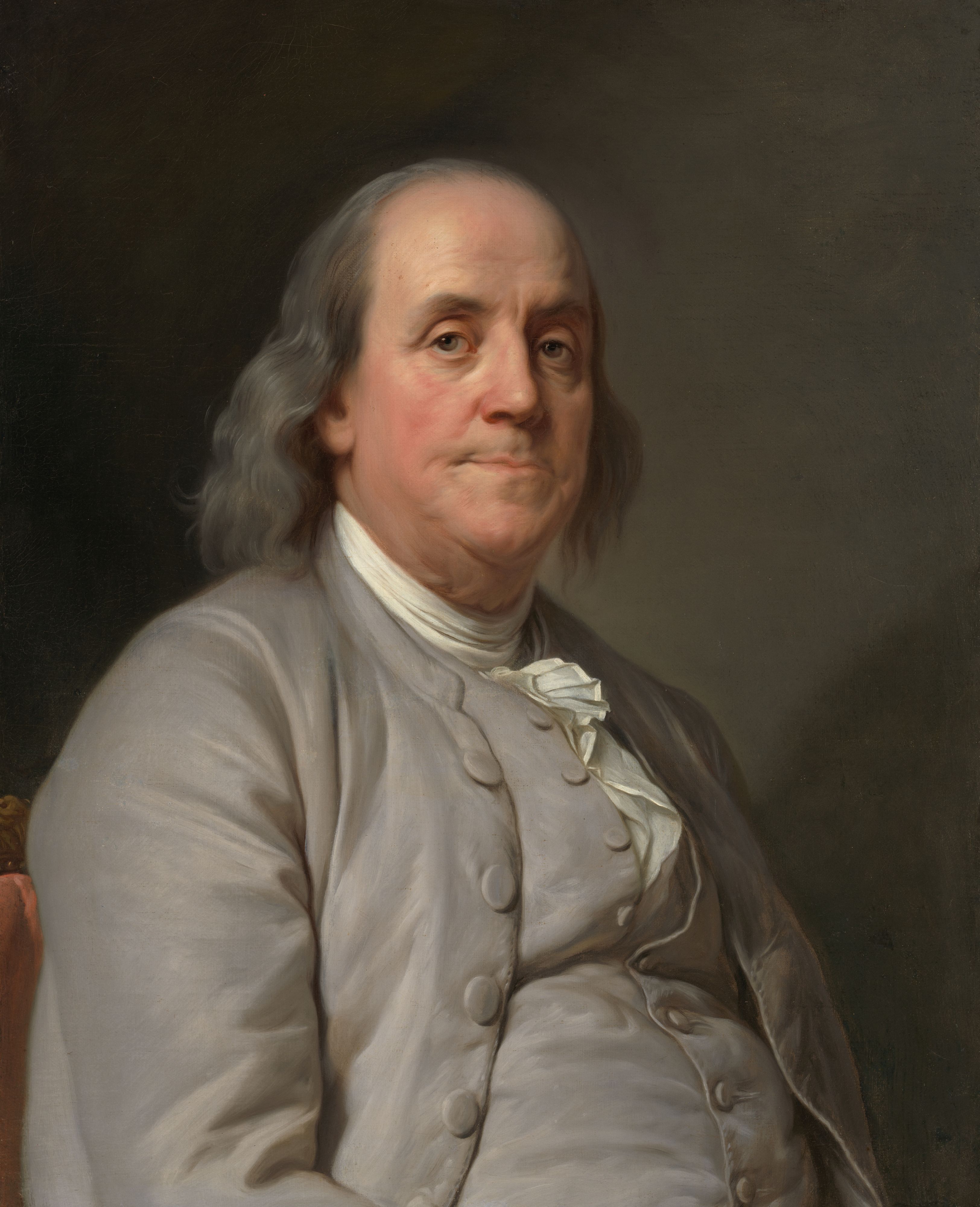
At the same time, the Continental Congress saw French Canadians as potential allies and believed that many would embrace the revolutionary cause. Some, including Benjamin Franklin, believed that Quebec deserved to join the American union. Beginning in 1774, American rebels began sending letters to the inhabitants of the Province of Quebec, exhorting them to join the cause. (See The Propaganda War in Canada During the American Revolution.)
Capture of Fort Ticonderoga and Crown Point
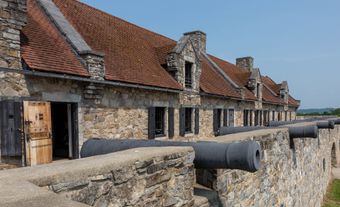
Open war broke out between American rebels and British forces on 19 April 1775 at Lexington and Concord in Massachusetts. Less than a month later, a small group of rebels under Ethan Allen and Benedict Arnold attacked the British garrison at Fort Ticonderoga. The fort was located at the confluence of Lake Champlain and Lake George and controlled access between Montreal and Albany.
Arnold and Allen planned a surprise night attack, crossing Lake Champlain from Vermont in small boats. In the early morning of 10 May 1775, about 85 rebels crossed the lake and attacked the fort. The garrison of 50 men surrendered quickly. Allen then sent a contingent of his Green Mountain Boys to capture the British fort at Crown Point, which surrendered the following day. The captured guns were later transported to Boston, where they were used against British forces. Benedict Arnold and his men garrisoned Fort Ticonderoga until June 1775, when they were relieved by a larger force.
Invasion of Canada: Two-Pronged Attack
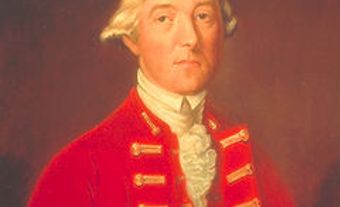
The capture of Fort Ticonderoga and Crown Point emboldened American rebels. On 27 June 1775, the Continental Congress approved the invasion of Canada. The invasion would be led by General Philip Schuyler, a major general in the newly formed Continental Army. His orders were to mount an invasion up the Richelieu River, capture Île aux Noix and the forts at Saint-Jean and Chambly and then attack Montreal. A second column under Benedict Arnold would travel across country toward Quebec. Canada was defended by a small force of British regulars, militia and Indigenous allies under Sir Guy Carleton, governor and commander in chief of British forces in Canada.
First Phase
The first phase of the invasion began in August 1775. Richard Montgomery, Philip Schuyler’s second-in-command, ordered 1,200 men mustered at Fort Ticonderoga to march into Quebec. On 4 September, they arrived at Île aux Noix in the Richelieu River, where they established a base. The following day, Schuyler sent out Ethan Allen and Major Brown to meet with American sympathizer James Livingston and distribute a proclamation to the inhabitants of Quebec. (See The Propaganda War in Canada during the American Revolution.)
On 6 September, the American force sailed down the Richelieu River to attack Fort Saint-Jean. When they landed near the fort, they were attacked by a patrol of about 100 Indigenous warriors (mostly Kanyen’kehà:ka from Kahnawake), forcing them to retreat. The rebels would soon return, however, as Saint-Jean controlled access to Montreal.
Did you know?
Although the Seven Nations and Six Nations tried at first to remain neutral during the American Revolution, many were drawn into the conflict. While some, like Joseph Brant (Thayendanegea), supported the British, others took the side of the rebel colonists. One of the best known was Louis Cook (Atiatoharongwen), a Black Abenaki man who served as scout and messenger during the invasion of Quebec. Cook was later granted a lieutenant-colonel’s commission by the Continental Congress.
Siege of Fort Saint-Jean
On 16 September, Philip Schuyler delegated command of the rebel army to Richard Montgomery because of his illness. On 17 September, Montgomery army laid siege to Fort Saint-Jean, where Sir Guy Carleton had concentrated his small force of British regulars following the capture of Fort Ticonderoga. The garrison of 750 men included 500 British regulars, about 100 Canadian volunteers and some Kanyen'kehà:ka warriors. Conditions were difficult for both the garrison and the rebel army, and the siege wore on as supplies diminished and men became sick.
First Attack on Montreal
During the siege of Fort Saint-Jean, General Richard Montgomery ordered two detachments under Ethan Allen and Major John Brown to secure the bank of the St. Lawrence River and prevent Sir Guy Carleton from relieving the fort. On 24 September, however, Allen and about 110 men launched an attack on Montreal. When Carleton raised the alarm, a small force of 35 British regulars, 200 Canadian militia and some Indigenous allies turned out in Montreal’s defence. Allen and his men were quickly defeated and captured in what became known as the Battle of Longue-Pointe.
Fort Chambly Captured
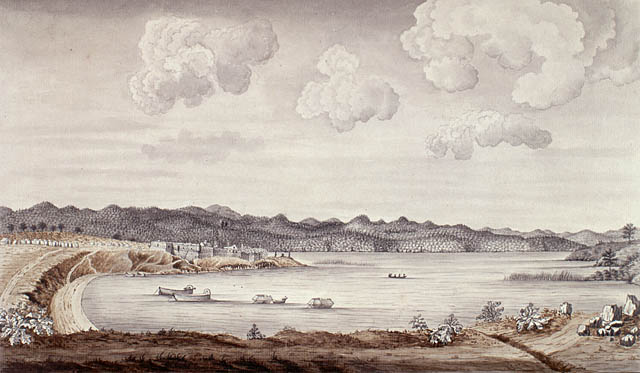
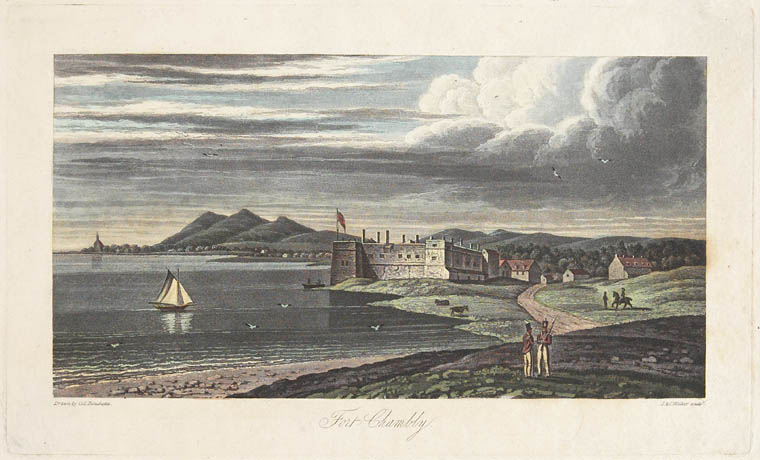
As the siege of Fort Saint-Jean continued, Montgomery sent a small force to attack Fort Chambly, about 16 km down river. The attackers comprised 50 American rebels and 300 Canadians recruited by American sympathizer James Livingston. The rebels attacked on 16 October and forced the small garrison to surrender only two days later.
Fort Saint-Jean and Montreal Captured
Using stores, arms and ammunition from Chambly, General Montgomery renewed the siege on Fort Saint-Jean. On 30 October, Sir Guy Carleton tried to land a relief force of about 1,000 at Longueuil but was repulsed by American guns. The garrison at Fort Saint-Jean surrendered on 3 November, opening the road to Montreal. Carleton and his small force of about 150 British regulars withdrew from the city on 11 November. Two days later, Montgomery and his men occupied Montreal without a fight. Carleton fled to Quebec City, where he immediately began preparing the fortifications and defenders.

Arnold’s Wilderness Trek
Around the same time that Richard Montgomery set siege to Fort Saint-Jean, the second rebel army began its journey. On 19 September 1775, Benedict Arnold and his force of 1,100 men left Newburyport, Massachusetts. To reach Quebec City, the rebel army would travel up the Kennebec and Chaudière rivers through the Maine forests. Although Arnold thought the journey would be over in 20 days, it took nearly two months.
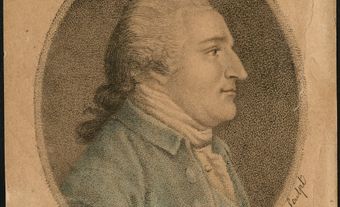
The men struggled through swamps and wilderness and soon ran out of provisions. Some died of starvation and exhaustion; others had to be sent back because of illness. Approximately 300 to 450 men abandoned the invasion, including Colonel Roger Enos. By the time Arnold arrived outside Quebec City on 13 November 1775, he had fewer than 700 men left. He tried to draw out the British defenders but was unsuccessful; his demands to surrender were ignored. Arnold therefore withdrew to Pointe-aux-Trembles (now Neuville, Quebec) to await Montgomery and his men.
Battle of Quebec
On 3 December 1775, Richard Montgomery and 300 rebel soldiers arrived at Pointe-aux-Trembles, where they joined Benedict Arnold and his men. The combined army numbered 1,200 men, including about 200 Canadian volunteers. By this time, Quebec was defended by a garrison of 1,800 British soldiers and militiamen (many of them untrained) under Sir Guy Carleton.
On 4 December, the Americans advanced toward Quebec and encamped outside the city. Although they tried to dig siege lines, the ground was frozen hard and they were forced to build walls of snow and ice instead. The rebel force had to contend with an outbreak of smallpox as well as the extreme cold. Many of the men were anxious to return home, since they had enlisted only to the end of the year. If the Americans were going to attack, it had to happen soon.
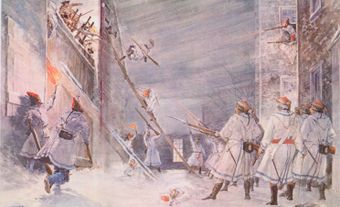
Montgomery and Arnold decided to attack during a blizzard in the early morning of 31 December. Although the snow provided cover for the attackers, it was also disorienting, and some of the men lost their way. Moreover, Quebec’s defenders knew of the rebel plans, thanks to information from American deserters.
The Americans attacked Quebec’s Lower Town from two directions. Montgomery and his men left from Cap Diamant in the south. A force of British sailors and Canadian militia caught sight of them and fired at close range, killing Montgomery and his leading officers. Arnold’s force attacked from Saint-Roch in the north and penetrated some distance into the Lower Town, but Arnold himself was wounded in the leg and carried away from the fighting.
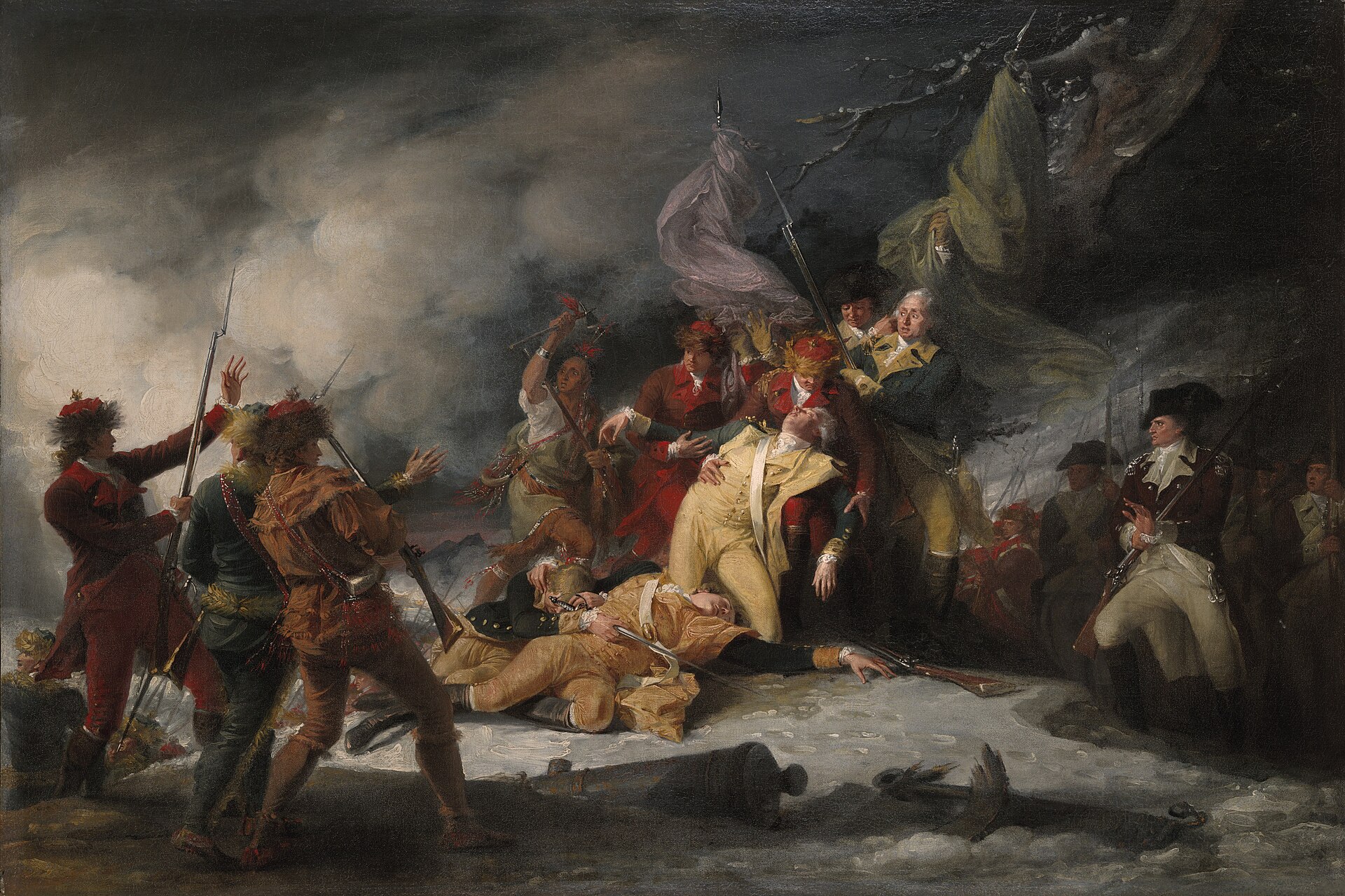
Now under General Daniel Morgan’s command, Arnold’s men fought British defenders in the streets of the Lower Town. However, they soon ran out of ammunition and were surrounded. At around 9:00 a.m., Morgan and about 400 rebels surrendered to the British. In total, approximately 50 rebel soldiers were killed and 35 wounded during the battle. The British suffered about 20 casualties, including five killed.
Siege of Quebec, 1776
Although the rebels had failed to capture Quebec City, the British position was still precarious. Sir Guy Carleton decided not to attack the Americans encamped outside the town, who maintained a siege of Quebec throughout the winter and early spring. The rebel army received reinforcements but remained under 2,000 thanks to desertions and the end of militia enlistment periods. Many soldiers were ill, suffering from smallpox and other diseases. Although the Americans could maintain a siege, they couldn’t attack the town with such a small force. Yet the siege isolated Quebec and, by March, provisions were scarce. The only hope was British reinforcements, who could not reach Quebec until the spring thaw and the opening of transport routes.
Relief of Quebec and Counterattack
Help was on its way, however. The British government responded to rebel attacks in Quebec and Massachusetts by assembling two armies: a force of 25,000 men to relieve British forces under Sir William Howe in Boston and a smaller army of 9,000 to relieve Quebec and then attack south along Lake Champlain and the Hudson River. The army for Canada was composed of about 3,000 men from Germany and more than 5,000 from the British Army (including a regiment that would be transferred from Howe’s army). The assembly of such a large force took time, however, and the main fleet only set sail on 4 April 1776. By that time, British soldiers and Loyalists in Boston had been forced to evacuate to Halifax, Nova Scotia, and the situation in Quebec was precarious.
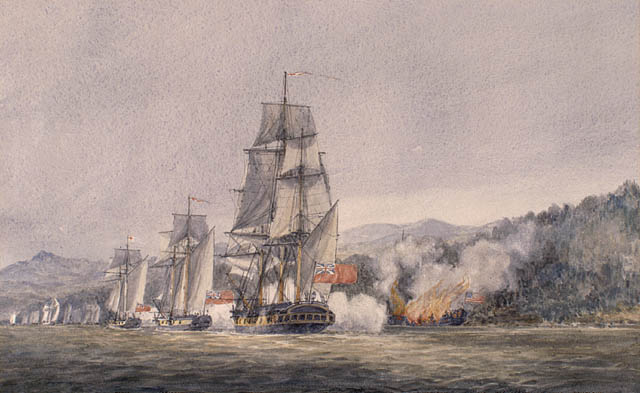
The British government knew that food was running out at Quebec City and the rebels might be reinforced before the main army could arrive. It therefore sent an advance fleet of three ships with supplies and 200 British soldiers from the 29th Regiment of Foot. HMS Isis, Surprise and Martin left British waters in March 1776 and sailed quickly across the Atlantic, passing huge icebergs. They arrived the second week of April in the Gulf of St. Lawrence, where they were blocked by a massive ice field. Captain Douglas of the Isis decided to batter his way through, ramming his ship against the ice until it cracked and parted. The other two ships followed in its wake, but progress was slow. On 6 May 1776, the little fleet arrived at Quebec City. The siege was over. Two days later, HMS Niger arrived from Halifax with three transports bearing the 47th Regiment. More ships and men arrived on 10 May.
Sir Guy Carleton decided to go on the offensive, following the demoralized rebels as they fled south. John Burgoyne and the main body of reinforcements landed at Quebec City on 29 May 1776 and soon caught up with Carleton and his army. The Americans tried to drive the British back but were defeated at Trois-Rivières on 8 June 1776. As they fled, they burned the forts at Sorel and Chambly before arriving at Crown Point on the southern end of Lake Champlain.
Battle of Valcour Island
Control of Lake Champlain was vital for the British, who planned to transport troops south by boat and link up with the British army under William Howe, now in New York. If they managed to separate New England from New York, the rebellion could be defeated. The American rebels understood the importance of Lake Champlain and were determined to slow down the British advance. They decided to build a fleet of ships at Crown Point under the leadership of Benedict Arnold. At the north end of Lake Champlain, the British assembled their own fleet. On the morning of 11 October 1776, the two navies met in battle. Most of the American ships were captured or destroyed, and the British landed Indigenous warriors on Valcour Island and on the lakeshore to prevent the Americans from retreating to land.
Part of the rebel fleet escaped and returned to Crown Point, which they set afire before retreating to Fort Ticonderoga. Although the American fleet was defeated, the rebel defence of Lake Champlain delayed British plans to advance farther south. With winter coming, Sir Guy Carleton decided to withdraw his forces to Canada.
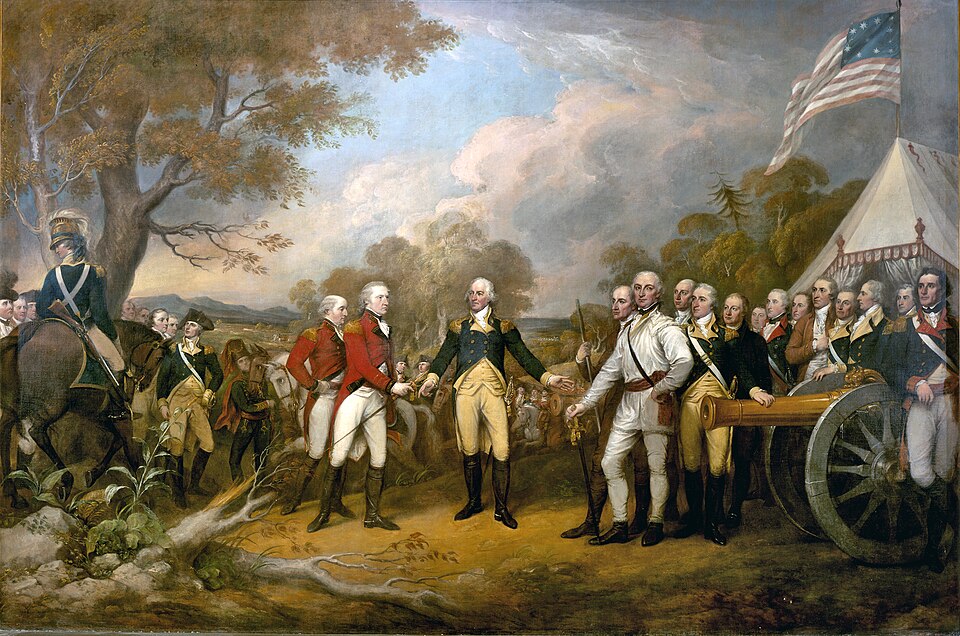
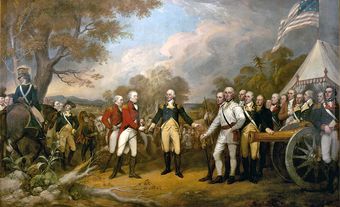
The following summer, John Burgoyne led a counter-invasion south from Quebec via Lake Champlain. His army of 9,000 men was composed of British regulars, German auxiliaries, Loyalist militia and Indigenous warriors. Burgoyne, however, overextended himself. In the first great American victory of the Revolutionary War, his army was defeated and surrendered at Saratoga on 17 October 1777.