


Reconciliation in Canada
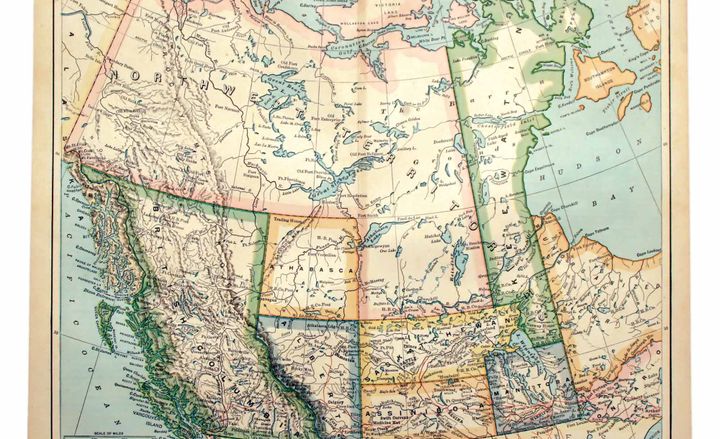
In 2015, the Truth and Reconciliation Commission of Canada defined reconciliation as the process of “establishing and maintaining a mutually respectful relationship between Aboriginal and non-Aboriginal peoples in this country.” Reconciliation is often discussed in relation to the history of residential schools in Canada, but it’s also a way of addressing other events in Canadian history that had harmful effects on Indigenous peoples. It usually involves efforts to educate people about the history of colonization in Canada or to make meaningful change to help address negative impacts from these policies and events (see Colonialism in Canada). This collection brings together resources on The Canadian Encyclopedia related to reconciliation, including articles, timelines, quizzes and videos. For more collections related to histories of Indigenous peoples, see Indigenous Peoples, First Nations, Métis, Inuit, Indigenous Treaties in Canada and Indian Act.
<\/a>\" by <a rel=\"noopener noreferrer\" href=\"https:\/\/www.flickr.com\/photos\/28853433@N02\">BiblioArchives \/ LibraryArchives<\/a> is licensed under <a rel=\"noopener noreferrer\" href=\"https:\/\/creativecommons.org\/licenses\/by\/2.0\/?ref=openverse\">CC BY 2.0<\/a>.)<\/p>","conversion_urls":{"original":"https:\/\/d3d0lqu00lnqvz.cloudfront.net\/MohawkInstitute\/15054127924_92486c0870_o.jpg"},"url":"https:\/\/d3d0lqu00lnqvz.cloudfront.net\/MohawkInstitute\/15054127924_92486c0870_o.jpg","credit":"<p class=\"attribution\">(\"<a rel=\"noopener noreferrer\" href=\"https:\/\/www.flickr.com\/photos\/28853433@N02\/15054127924\">Mohawk Institute, Brantford, Ontario \/ Institut mohawk, Brantford (Ontario)<\/a>\" by <a rel=\"noopener noreferrer\" href=\"https:\/\/www.flickr.com\/photos\/28853433@N02\">BiblioArchives \/ LibraryArchives<\/a> is licensed under <a rel=\"noopener noreferrer\" href=\"https:\/\/creativecommons.org\/licenses\/by\/2.0\/?ref=openverse\">CC BY 2.0<\/a>.)<\/p>","pivot":{"mediable_type":"App\\Models\\Collection","mediable_id":"a2c0c85b-f827-4ada-bb28-7e95aa0bb129","media_id":"9ff6aae5-845a-419b-bcc7-3844f35ec5b9","tag":"feature","order":1},"translations":[{"id":"9ff6ab39-f054-4f50-897a-01671888f29d","media_id":"9ff6aae5-845a-419b-bcc7-3844f35ec5b9","title":"Mohawk Institute","alt":"Mohawk Institute","caption":"The Mohawk Institute is one of the first and longest-running residential schools in Canada. In total, the residential school was open for 141 years.","creator":null,"source":"<p class=\"attribution\">(\"<a rel=\"noopener noreferrer\" href=\"https:\/\/www.flickr.com\/photos\/28853433@N02\/15054127924\">Mohawk Institute, Brantford, Ontario \/ Institut mohawk, Brantford (Ontario)<\/a>\" by <a rel=\"noopener noreferrer\" href=\"https:\/\/www.flickr.com\/photos\/28853433@N02\">BiblioArchives \/ LibraryArchives<\/a> is licensed under <a rel=\"noopener noreferrer\" href=\"https:\/\/creativecommons.org\/licenses\/by\/2.0\/?ref=openverse\">CC BY 2.0<\/a>.)<\/p>","locale":"en","credit":"<p class=\"attribution\">(\"<a rel=\"noopener noreferrer\" href=\"https:\/\/www.flickr.com\/photos\/28853433@N02\/15054127924\">Mohawk Institute, Brantford, Ontario \/ Institut mohawk, Brantford (Ontario)<\/a>\" by <a rel=\"noopener noreferrer\" href=\"https:\/\/www.flickr.com\/photos\/28853433@N02\">BiblioArchives \/ LibraryArchives<\/a> is licensed under <a rel=\"noopener noreferrer\" href=\"https:\/\/creativecommons.org\/licenses\/by\/2.0\/?ref=openverse\">CC BY 2.0<\/a>.)<\/p>"},{"id":"a0905f8f-9965-4bd3-8d1e-bbb9a137fa45","media_id":"9ff6aae5-845a-419b-bcc7-3844f35ec5b9","title":"Mohawk Institute","alt":"Mohawk Institute","caption":"Le Mohawk Institute est l\u2019un des plus anciens pensionnats indiens du Canada et celui qui a eu la p\u00e9riode d\u2019activit\u00e9 la plus longue. Il a fonctionn\u00e9 pendant 141 ans en tout.","creator":null,"source":"(\u00ab <a href=\"https:\/\/www.flickr.com\/photos\/28853433@N02\/15054127924\">Mohawk Institute, Brantford, Ontario \/ Institut mohawk, Brantford (Ontario)<\/a> \u00bb de <a href=\"https:\/\/www.flickr.com\/photos\/28853433@N02\">BiblioArchives\/LibraryArchives<\/a> est sous licence <a href=\"https:\/\/creativecommons.org\/licenses\/by\/2.0\/deed.fr\">CC BY 2.0<\/a>.)","locale":"fr","credit":"(\u00ab <a href=\"https:\/\/www.flickr.com\/photos\/28853433@N02\/15054127924\">Mohawk Institute, Brantford, Ontario \/ Institut mohawk, Brantford (Ontario)<\/a> \u00bb de <a href=\"https:\/\/www.flickr.com\/photos\/28853433@N02\">BiblioArchives\/LibraryArchives<\/a> est sous licence <a href=\"https:\/\/creativecommons.org\/licenses\/by\/2.0\/deed.fr\">CC BY 2.0<\/a>.)"}]})
Featured Articles
Reconciliation in Canada
Article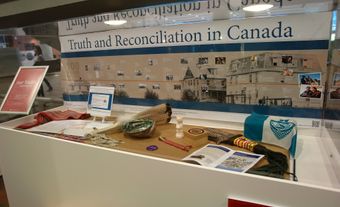

Residential Schools in Canada
Article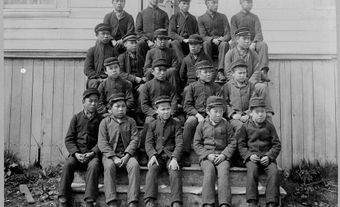
Timelines
Residential Schools
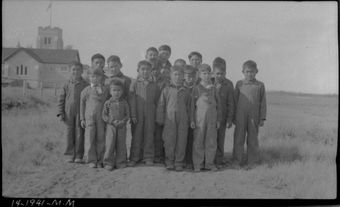
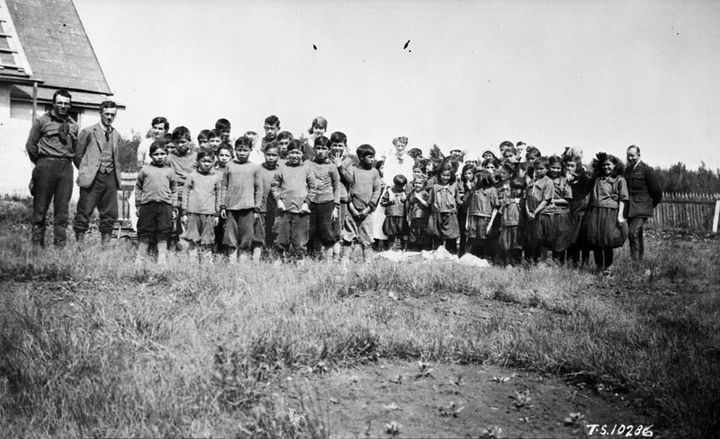
Residential schools were established by Christian churches and the federal government to assimilate Indigenous children into Euro-Canadian society.
The Indian Act
The Indian Act is the principal law through which the federal government administers Indian status, local First Nations governments and the management of reserve land and communal monies. The Indian Act does not include Métis or Inuit peoples. The Act came into power on 12 April 1876. It consolidated a number of earlier colonial laws that sought to control and assimilate Indigenous peoples into Euro-Canadian culture. The Indian Act has been amended many times over the years to do away with restrictive and oppressive laws. However, the Act has had historic and ongoing impacts on First Nations cultures, economies, politics and communities. It has also caused inter-generational trauma, particularly with regards to residential schools.
Education Guides
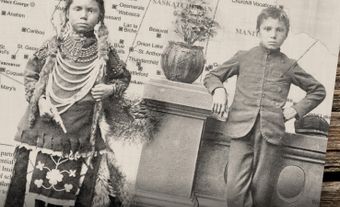
Residential Schools in Canada Education Guide
Education Guide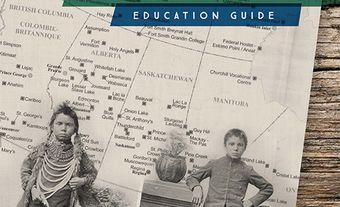
Voices from Here Education Guide
Education Guide
Quizzes
Indigenous Peoples
Quiz
Gallery
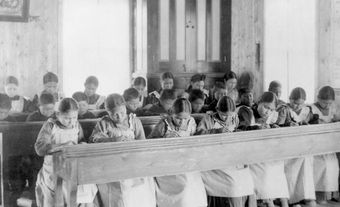
","conversion_urls":{"original":"https:\/\/d3d0lqu00lnqvz.cloudfront.net\/media\/media\/a042133-v6.jpg"},"url":"https:\/\/d3d0lqu00lnqvz.cloudfront.net\/media\/media\/a042133-v6.jpg","credit":"(courtesy Library and Archives Canada \/ PA-042133)","pivot":{"mediable_type":"App\\Models\\Collection","mediable_id":"a2c0c85b-f827-4ada-bb28-7e95aa0bb129","media_id":"017a7e8a-0621-4bfe-a826-ce9845261afb","tag":"gallery","order":1},"translations":[{"id":"881eed1c-52ad-4b2d-9c49-125b1a50761c","media_id":"017a7e8a-0621-4bfe-a826-ce9845261afb","title":"Roman Catholic Residential School","alt":"Roman Catholic Residential School","caption":"Roman Catholic Residential School Study Time, Fort Resolution, Northwest Territories.","creator":null,"source":"(courtesy Library and Archives Canada \/ PA-042133)","locale":"en","credit":"(courtesy Library and Archives Canada \/ PA-042133)"},{"id":"26290e55-b16b-4f82-98ae-e4c9a052b7d9","media_id":"017a7e8a-0621-4bfe-a826-ce9845261afb","title":"Pensionnat indien","alt":"Pensionnat indien","caption":"P\u00e9riode d'\u00e9tude au pensionnat indien de Fort Resolution, Territoires du Nord-Ouest.","creator":null,"source":"(avec la permission de Biblioth\u00e8que et Archives Canada \/ PA-042133)","locale":"fr","credit":"(avec la permission de Biblioth\u00e8que et Archives Canada \/ PA-042133)"}]} "Roman Catholic Residential School")
Roman Catholic Residential School
","conversion_urls":{"original":"https:\/\/d3d0lqu00lnqvz.cloudfront.net\/media\/media\/86457bd9-5e52-4288-a765-42d9611c9554.jpg"},"url":"https:\/\/d3d0lqu00lnqvz.cloudfront.net\/media\/media\/86457bd9-5e52-4288-a765-42d9611c9554.jpg","credit":"(courtesy H. J. Woodside. Library and Archives Canada, PA-123707\/)","pivot":{"mediable_type":"App\\Models\\Collection","mediable_id":"a2c0c85b-f827-4ada-bb28-7e95aa0bb129","media_id":"15015","tag":"gallery","order":2},"translations":[{"id":"12767d02-ec3a-4c2c-a43b-3cf82c6f09c5","media_id":"15015","title":"Residential School Students","alt":"Residential School Students","caption":"A group of nuns with Indigenous students, Port Harrison, Quebec, circa 1890","creator":"","source":"(courtesy H. J. Woodside. Library and Archives Canada, PA-123707\/)","locale":"en","credit":"(courtesy H. J. Woodside. Library and Archives Canada, PA-123707\/)"},{"id":"96ecdb2a-0efe-491d-90a5-a1e4ab7b7a6b","media_id":"15015","title":"\u00c9l\u00e8ves d\u2019un pensionnat","alt":"\u00c9l\u00e8ves d\u2019un pensionnat","caption":"Groupe de religieuses accompagnant des \u00e9l\u00e8ves autochtones, Port Harrison, Qu\u00e9bec, vers 1890.","creator":"","source":"(avec la permssion de H. J. Woodside\/Biblioth\u00e8que et Archives Canada\/PA-123707\/)","locale":"fr","credit":"(avec la permssion de H. J. Woodside\/Biblioth\u00e8que et Archives Canada\/PA-123707\/)"}]} "Residential School Students")
Residential School Students
","conversion_urls":{"original":"https:\/\/d3d0lqu00lnqvz.cloudfront.net\/media\/media\/a118765.jpg"},"url":"https:\/\/d3d0lqu00lnqvz.cloudfront.net\/media\/media\/a118765.jpg","credit":"(courtesy O.B. Buell \/ Library and Archives Canada \/ PA-118765)","pivot":{"mediable_type":"App\\Models\\Collection","mediable_id":"a2c0c85b-f827-4ada-bb28-7e95aa0bb129","media_id":"fba7fff2-706f-409d-8fcd-4dfd21b903b7","tag":"gallery","order":3},"translations":[{"id":"8772bb47-6605-43bf-97f4-bf0423c024ae","media_id":"fba7fff2-706f-409d-8fcd-4dfd21b903b7","title":"Government School","alt":"Government School","caption":"Father Joseph Hugonnard, principal, with staff and Indigenous students of the Industrial School, May 1885, Fort Qu'Appelle, Saskatchewan.","creator":null,"source":"(courtesy O.B. Buell \/ Library and Archives Canada \/ PA-118765)","locale":"en","credit":"(courtesy O.B. Buell \/ Library and Archives Canada \/ PA-118765)"},{"id":"7ea86efd-9f51-48cb-83a8-88c2d7b7b411","media_id":"fba7fff2-706f-409d-8fcd-4dfd21b903b7","title":"\u00c9cole publique","alt":"\u00c9cole publique","caption":"P\u00e8re Joseph Hugonnard, le directeur, avec le personnel et les \u00e9tudiants autochtones de l'Industrial School, mai 1885, Fort Qu'Appelle, Saskatchewan.","creator":null,"source":"(avec la permission de O.B. Buell \/ Biblioth\u00e8que et Archives Canada \/ PA-118765)","locale":"fr","credit":"(avec la permission de O.B. Buell \/ Biblioth\u00e8que et Archives Canada \/ PA-118765)"}]} "Government School")
Government School
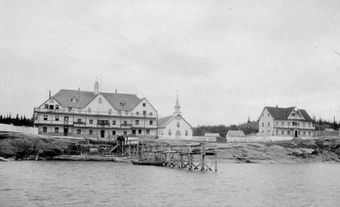
<\/a>\" by <a rel=\"noopener noreferrer\" href=\"https:\/\/www.flickr.com\/photos\/28853433@N02\">BiblioArchives \/ LibraryArchives<\/a> is licensed under <a rel=\"noopener noreferrer\" href=\"https:\/\/creativecommons.org\/licenses\/by\/2.0\/?ref=openverse\">CC BY 2.0<\/a>.)<\/p>","conversion_urls":{"original":"https:\/\/d3d0lqu00lnqvz.cloudfront.net\/MohawkInstitute\/15054127924_92486c0870_o.jpg"},"url":"https:\/\/d3d0lqu00lnqvz.cloudfront.net\/MohawkInstitute\/15054127924_92486c0870_o.jpg","credit":"<p class=\"attribution\">(\"<a rel=\"noopener noreferrer\" href=\"https:\/\/www.flickr.com\/photos\/28853433@N02\/15054127924\">Mohawk Institute, Brantford, Ontario \/ Institut mohawk, Brantford (Ontario)<\/a>\" by <a rel=\"noopener noreferrer\" href=\"https:\/\/www.flickr.com\/photos\/28853433@N02\">BiblioArchives \/ LibraryArchives<\/a> is licensed under <a rel=\"noopener noreferrer\" href=\"https:\/\/creativecommons.org\/licenses\/by\/2.0\/?ref=openverse\">CC BY 2.0<\/a>.)<\/p>","pivot":{"mediable_type":"App\\Models\\Collection","mediable_id":"a2c0c85b-f827-4ada-bb28-7e95aa0bb129","media_id":"9ff6aae5-845a-419b-bcc7-3844f35ec5b9","tag":"gallery","order":4},"translations":[{"id":"9ff6ab39-f054-4f50-897a-01671888f29d","media_id":"9ff6aae5-845a-419b-bcc7-3844f35ec5b9","title":"Mohawk Institute","alt":"Mohawk Institute","caption":"The Mohawk Institute is one of the first and longest-running residential schools in Canada. In total, the residential school was open for 141 years.","creator":null,"source":"<p class=\"attribution\">(\"<a rel=\"noopener noreferrer\" href=\"https:\/\/www.flickr.com\/photos\/28853433@N02\/15054127924\">Mohawk Institute, Brantford, Ontario \/ Institut mohawk, Brantford (Ontario)<\/a>\" by <a rel=\"noopener noreferrer\" href=\"https:\/\/www.flickr.com\/photos\/28853433@N02\">BiblioArchives \/ LibraryArchives<\/a> is licensed under <a rel=\"noopener noreferrer\" href=\"https:\/\/creativecommons.org\/licenses\/by\/2.0\/?ref=openverse\">CC BY 2.0<\/a>.)<\/p>","locale":"en","credit":"<p class=\"attribution\">(\"<a rel=\"noopener noreferrer\" href=\"https:\/\/www.flickr.com\/photos\/28853433@N02\/15054127924\">Mohawk Institute, Brantford, Ontario \/ Institut mohawk, Brantford (Ontario)<\/a>\" by <a rel=\"noopener noreferrer\" href=\"https:\/\/www.flickr.com\/photos\/28853433@N02\">BiblioArchives \/ LibraryArchives<\/a> is licensed under <a rel=\"noopener noreferrer\" href=\"https:\/\/creativecommons.org\/licenses\/by\/2.0\/?ref=openverse\">CC BY 2.0<\/a>.)<\/p>"},{"id":"a0905f8f-9965-4bd3-8d1e-bbb9a137fa45","media_id":"9ff6aae5-845a-419b-bcc7-3844f35ec5b9","title":"Mohawk Institute","alt":"Mohawk Institute","caption":"Le Mohawk Institute est l\u2019un des plus anciens pensionnats indiens du Canada et celui qui a eu la p\u00e9riode d\u2019activit\u00e9 la plus longue. Il a fonctionn\u00e9 pendant 141 ans en tout.","creator":null,"source":"(\u00ab <a href=\"https:\/\/www.flickr.com\/photos\/28853433@N02\/15054127924\">Mohawk Institute, Brantford, Ontario \/ Institut mohawk, Brantford (Ontario)<\/a> \u00bb de <a href=\"https:\/\/www.flickr.com\/photos\/28853433@N02\">BiblioArchives\/LibraryArchives<\/a> est sous licence <a href=\"https:\/\/creativecommons.org\/licenses\/by\/2.0\/deed.fr\">CC BY 2.0<\/a>.)","locale":"fr","credit":"(\u00ab <a href=\"https:\/\/www.flickr.com\/photos\/28853433@N02\/15054127924\">Mohawk Institute, Brantford, Ontario \/ Institut mohawk, Brantford (Ontario)<\/a> \u00bb de <a href=\"https:\/\/www.flickr.com\/photos\/28853433@N02\">BiblioArchives\/LibraryArchives<\/a> est sous licence <a href=\"https:\/\/creativecommons.org\/licenses\/by\/2.0\/deed.fr\">CC BY 2.0<\/a>.)"}]} "Mohawk Institute")
Mohawk Institute
<\/p>","conversion_urls":{"original":"https:\/\/d3d0lqu00lnqvz.cloudfront.net\/MohawkInstitute\/MohawkInstitute_resized.jpg"},"url":"https:\/\/d3d0lqu00lnqvz.cloudfront.net\/MohawkInstitute\/MohawkInstitute_resized.jpg","credit":"<p class=\"attribution\">(\"<a rel=\"noopener noreferrer\" href=\"https:\/\/commons.wikimedia.org\/w\/index.php?curid=29022934\">MohawkInstitute<\/a>\" by <a rel=\"noopener noreferrer\" href=\"https:\/\/commons.wikimedia.org\/wiki\/User:Illustratedjc\">Illustratedjc<\/a> is licensed under <a rel=\"noopener noreferrer\" href=\"https:\/\/creativecommons.org\/licenses\/by-sa\/3.0\/?ref=openverse\">CC BY-SA 3.0<\/a>.)<\/p>","pivot":{"mediable_type":"App\\Models\\Collection","mediable_id":"a2c0c85b-f827-4ada-bb28-7e95aa0bb129","media_id":"9ff6aae5-cbe1-426e-8bc3-2f06254db5ce","tag":"gallery","order":5},"translations":[{"id":"9ff6abe0-ed30-4b30-958c-466d6352f760","media_id":"9ff6aae5-cbe1-426e-8bc3-2f06254db5ce","title":"Former Mohawk Institute","alt":"Former Mohawk Institute","caption":"The Mohawk Institute closed as a residential school in 1970. After the institute was fully vacated by the government, the building and land was returned to Six Nations of the Grand River. In 1972, the Woodland Cultural Centre was established on the site for the former residential school.","creator":null,"source":"<p class=\"attribution\">(\"<a rel=\"noopener noreferrer\" href=\"https:\/\/commons.wikimedia.org\/w\/index.php?curid=29022934\">MohawkInstitute<\/a>\" by <a rel=\"noopener noreferrer\" href=\"https:\/\/commons.wikimedia.org\/wiki\/User:Illustratedjc\">Illustratedjc<\/a> is licensed under <a rel=\"noopener noreferrer\" href=\"https:\/\/creativecommons.org\/licenses\/by-sa\/3.0\/?ref=openverse\">CC BY-SA 3.0<\/a>.)<\/p>","locale":"en","credit":"<p class=\"attribution\">(\"<a rel=\"noopener noreferrer\" href=\"https:\/\/commons.wikimedia.org\/w\/index.php?curid=29022934\">MohawkInstitute<\/a>\" by <a rel=\"noopener noreferrer\" href=\"https:\/\/commons.wikimedia.org\/wiki\/User:Illustratedjc\">Illustratedjc<\/a> is licensed under <a rel=\"noopener noreferrer\" href=\"https:\/\/creativecommons.org\/licenses\/by-sa\/3.0\/?ref=openverse\">CC BY-SA 3.0<\/a>.)<\/p>"},{"id":"a090625e-aadb-4702-9074-a58774e13d2c","media_id":"9ff6aae5-cbe1-426e-8bc3-2f06254db5ce","title":"Ancien Mohawk Institute","alt":"Ancien Mohawk Institute","caption":"L\u2019Institut Mohawk, qui \u00e9tait autrefois un pensionnat, a ferm\u00e9 ses portes en 1970. Apr\u00e8s son \u00e9vacuation compl\u00e8te par le gouvernement, le b\u00e2timent et le terrain ont \u00e9t\u00e9 restitu\u00e9s aux Six Nations de la rivi\u00e8re Grand. En 1972, le Centre culturel Woodland a \u00e9t\u00e9 \u00e9tabli sur le site de l\u2019ancien pensionnat.","creator":null,"source":"(\u00ab <a href=\"https:\/\/commons.wikimedia.org\/w\/index.php?curid=29022934\">MohawkInstitute<\/a> \u00bb de <a href=\"https:\/\/commons.wikimedia.org\/wiki\/User:Illustratedjc\">Illustratedjc<\/a> est sous licence <a href=\"https:\/\/creativecommons.org\/licenses\/by-sa\/3.0\/deed.fr\">CC BY-SA 3.0<\/a>.)","locale":"fr","credit":"(\u00ab <a href=\"https:\/\/commons.wikimedia.org\/w\/index.php?curid=29022934\">MohawkInstitute<\/a> \u00bb de <a href=\"https:\/\/commons.wikimedia.org\/wiki\/User:Illustratedjc\">Illustratedjc<\/a> est sous licence <a href=\"https:\/\/creativecommons.org\/licenses\/by-sa\/3.0\/deed.fr\">CC BY-SA 3.0<\/a>.)"}]} "Former Mohawk Institute")