
Browse "Communities & Sociology"
-
List
30 Notable Women’s Rights Activists in Canada
To celebrate its 30th anniversary, The Canadian Encyclopedia created 30 lists of 30 things that make us proud to be Canadian, from famous people and historic events, to iconic foods and influential artists.
"https://d3d0lqu00lnqvz.cloudfront.net/media/media/a7c708ef-3e7b-4890-a1ad-f637397985a6.jpg" // resources/views/front/categories/view.blade.php
https://d3d0lqu00lnqvz.cloudfront.net/media/media/a7c708ef-3e7b-4890-a1ad-f637397985a6.jpg
-
Article
Abenaki of the St Lawrence Valley
In the late 1670s, during a period of conflict with the New England colonies, several hundred Abenaki found refuge in the St Lawrence Valley. They first settled in the Québec region along the Chaudière River before migrating west at the end of the 17th century.
"https://thecanadianencyclopedia.ca/images/tce_placeholder.jpg?v=e9dca980c9bdb3aa11e832e7ea94f5d9" // resources/views/front/categories/view.blade.php
https://thecanadianencyclopedia.ca/images/tce_placeholder.jpg?v=e9dca980c9bdb3aa11e832e7ea94f5d9
-
Article
History of Indigenous Art in Canada
The history of Indigenous art in Canada begins sometime during the last Ice Age between 80,000 and 12,000 years ago. To date, however, the oldest surviving artworks (excluding finely crafted, aesthetically significant stone tools) are datable to no earlier than 5,000 years ago.
"https://d3d0lqu00lnqvz.cloudfront.net/media/media/06e7249a-54e7-4a6c-8255-e51ff1401fec.jpg" // resources/views/front/categories/view.blade.php
https://d3d0lqu00lnqvz.cloudfront.net/media/media/06e7249a-54e7-4a6c-8255-e51ff1401fec.jpg
-
Article
Indigenous Cultural Landscape
Traditional knowledge provides the best way of identifying Indigenous (Aboriginal) cultural landscapes. An on-going oral tradition and continuing traditional practices sustain interaction between people and the land.
"https://thecanadianencyclopedia.ca/images/tce_placeholder.jpg?v=e9dca980c9bdb3aa11e832e7ea94f5d9" // resources/views/front/categories/view.blade.php
https://thecanadianencyclopedia.ca/images/tce_placeholder.jpg?v=e9dca980c9bdb3aa11e832e7ea94f5d9
-
Article
Indigenous-British Relations Pre-Confederation
With the end of the Seven Years’ War in 1763, Britain replaced France as the dominant colonial power in Canada. In doing so, they assumed the legacy of Indigenous-French relations. Relations under British rule continued for some decades along the lines established during the French era. From the Great Lakes eastward, commercial and military interactions dominated the interchanges between Indigenous and immigrant peoples. In the 19th century, these links would be replaced by a different form of association — policies that advocated assimilation, subjugation and even destruction — as European settlement pushed westward. (See also Indigenous Peoples and Government Policy in Canada.)
"https://d3d0lqu00lnqvz.cloudfront.net/media/media/0729607a-735a-424b-a138-3e76e6053763.jpg" // resources/views/front/categories/view.blade.php
https://d3d0lqu00lnqvz.cloudfront.net/media/media/0729607a-735a-424b-a138-3e76e6053763.jpg
-
Article
Arctic Indigenous Peoples in Canada
The term Arctic peoples in Canada generally refers to the Inuit population. The Inuit are descendants of the Thule people, who lived in the Arctic from 400 to 1,000 years ago. The Inuit refer to their homeland as Inuit Nunangat. In 2021, there were 70,545 Inuit in Canada. According to that census, 69 per cent of all Inuit lived in Inuit Nunangat.
"https://d3d0lqu00lnqvz.cloudfront.net/media/media/c2d6c124-118d-48ab-8885-4339202966e8.jpg" // resources/views/front/categories/view.blade.php
https://d3d0lqu00lnqvz.cloudfront.net/media/media/c2d6c124-118d-48ab-8885-4339202966e8.jpg
-
Article
Communications of Indigenous People
Prior to the 1960s, only a few periodicals were published for Indigenous people, mainly by non-Indigenous missionary and government organizations. Notable examples were the Chinook-language Kamloops Wawa (1891-1905) and the Inuktitut-language Oblate publications of the 1940s and 1950s.
"https://d3d0lqu00lnqvz.cloudfront.net/media/media/e4cbee12-06ff-4b3a-b2ea-3bfd1df981e6.JPG" // resources/views/front/categories/view.blade.php
https://d3d0lqu00lnqvz.cloudfront.net/media/media/e4cbee12-06ff-4b3a-b2ea-3bfd1df981e6.JPG
-
Article
Indigenous Peoples and Government Policy in Canada
For most of the history of political interaction between Indigenous people and the Canadian government (and its colonial predecessors) government policy has focused on First Nations. The Inuit were barely acknowledged until the 1940s, while special responsibility for Métis and Non-Status Indians was largely denied until 2016. The early history of Indigenous policy in Canada is characterized by the presence of both France and Britain as colonizing powers. British colonial policy acknowledged Indigenous peoples as sovereign nations. Post-Confederation Canadian Indigenous policy initially was based on a model of assimilation, with one of its main instruments being the Indian Act. Since the late 1960s, government policy has gradually shifted to a goal of self-determination for Indigenous peoples, to be achieved through modern-day treaties and self-government agreements.
"https://d3d0lqu00lnqvz.cloudfront.net/media/media/4bdede30-06f1-4f71-9047-c7db15051829.jpg" // resources/views/front/categories/view.blade.php
https://d3d0lqu00lnqvz.cloudfront.net/media/media/4bdede30-06f1-4f71-9047-c7db15051829.jpg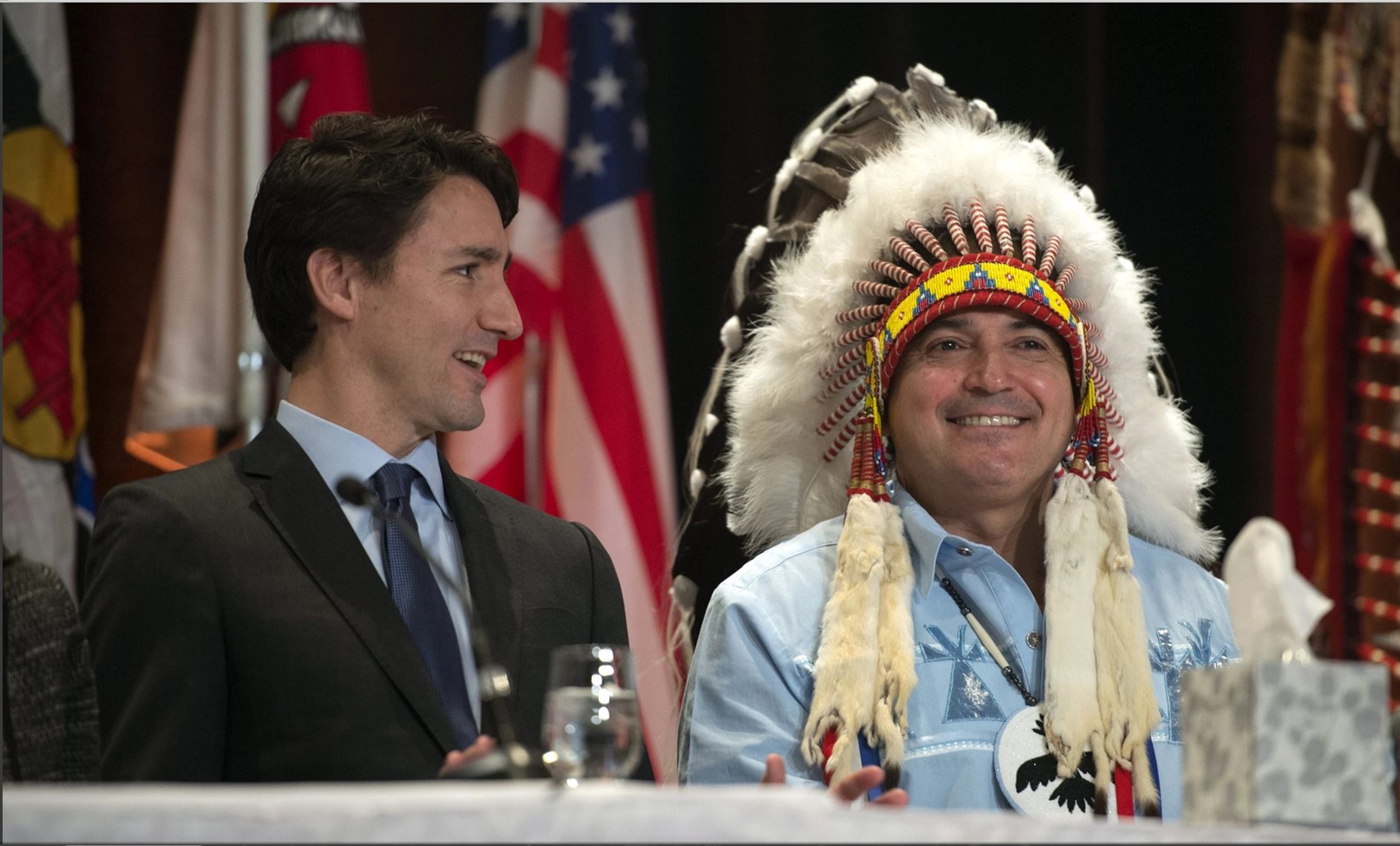
-
Article
Plains Indigenous Peoples in Canada
The Plains cultural area is a vast territory that extends from southern Manitoba and the Mississippi River westward to the Rocky Mountains, and from the North Saskatchewan River south into Texas. The term “Plains peoples” describes a number of different and unique Indigenous nations, including the Siksika, Cree, Ojibwe, Assiniboine (Nakota) and Dakota.
"https://d3d0lqu00lnqvz.cloudfront.net/media/media/f0d6d303-6351-493b-a6c0-4fb8693f8d8a.jpg" // resources/views/front/categories/view.blade.php
https://d3d0lqu00lnqvz.cloudfront.net/media/media/f0d6d303-6351-493b-a6c0-4fb8693f8d8a.jpg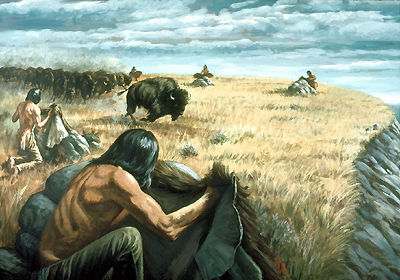
-
Article
Plateau Indigenous Peoples in Canada
There are six cultural areas contained in what is now Canada, unrestricted by international boundaries. The Plateau cultural area consists of the high plateau between the British Columbia coastal mountains and the Rocky Mountains, and extends south to include parts of Washington State, Oregon, Idaho, and Montana. At lower elevations it is comprised of grasslands and subarctic forests. Plateau Indigenous peoples include, among others, the Secwepemc, Stl’atl’imc, Ktunaxa, and Tsilhqot’in. (See also Interior Salish.)
"https://d3d0lqu00lnqvz.cloudfront.net/media/media/13f3b321-1e0f-49e9-ab51-3a4be778a335.jpg" // resources/views/front/categories/view.blade.php
https://d3d0lqu00lnqvz.cloudfront.net/media/media/13f3b321-1e0f-49e9-ab51-3a4be778a335.jpg
-
Article
Indigenous Political Organization and Activism in Canada
Political activism among Indigenous people in Canada since the late 19th century has largely reflected attempts to organize political associations beyond the band level to pursue common interests. In the wake of persistent criticism of the federal government’s proposed “White Paper” policy (1969), major Indigenous organizations, most notably the Assembly of First Nations, gained political recognition and became established players on the national scene. These organizations were joined in 2012 by the national movement Idle No More. This article describes Indigenous political organization as it relates to Canadian federal, provincial or territorial political bodies, not the political structures of specific Indigenous communities, which often predate interaction with Europeans and subsequent colonial infrastructure.
"https://d3d0lqu00lnqvz.cloudfront.net/media/media/73c1f655-bfcc-4aa6-9251-c0d5c550fde4.jpg" // resources/views/front/categories/view.blade.php
https://d3d0lqu00lnqvz.cloudfront.net/media/media/73c1f655-bfcc-4aa6-9251-c0d5c550fde4.jpg
-
Article
Subarctic Indigenous Peoples in Canada
The term “Subarctic Indigenous peoples” describes a number of different ethnic and linguistic groups, including the Dene, Cree, Ojibwe, Atikamekw, Innu and Beothuk. The Subarctic region consists largely of a five million square kilometre zone of boreal forest extending from the arctic tundra south to the mountains, plains and deciduous forest in the mid-section of the country. West to east, it extends from the Bering Sea to Labrador. The Subarctic is one of six cultural areas contained in what is now Canada. Unlike provinces and countries, these cultural areas do not have strict boundaries, and instead refer to areas in more general terms.
"https://d3d0lqu00lnqvz.cloudfront.net/media/media/aaade293-e5e4-4d2c-a714-b1bc09661bb1.jpg" // resources/views/front/categories/view.blade.php
https://d3d0lqu00lnqvz.cloudfront.net/media/media/aaade293-e5e4-4d2c-a714-b1bc09661bb1.jpg
-
Article
Rights of Indigenous Peoples in Canada
It is difficult to generalize about definitions of Indigenous rights because of the diversity among First Nations, Métis and Inuit peoples in Canada. Broadly speaking, however, Indigenous rights are inherent, collective rights that flow from the original occupation of the land that is now Canada, and from social orders created before the arrival of Europeans to North America. For many, the concept of Indigenous rights can be summed up as the right to independence through self-determination regarding governance, land, resources and culture.
"https://d3d0lqu00lnqvz.cloudfront.net/media/media/174cee51-4aca-4a67-ac60-f72697d35862.jpg" // resources/views/front/categories/view.blade.php
https://d3d0lqu00lnqvz.cloudfront.net/media/media/174cee51-4aca-4a67-ac60-f72697d35862.jpg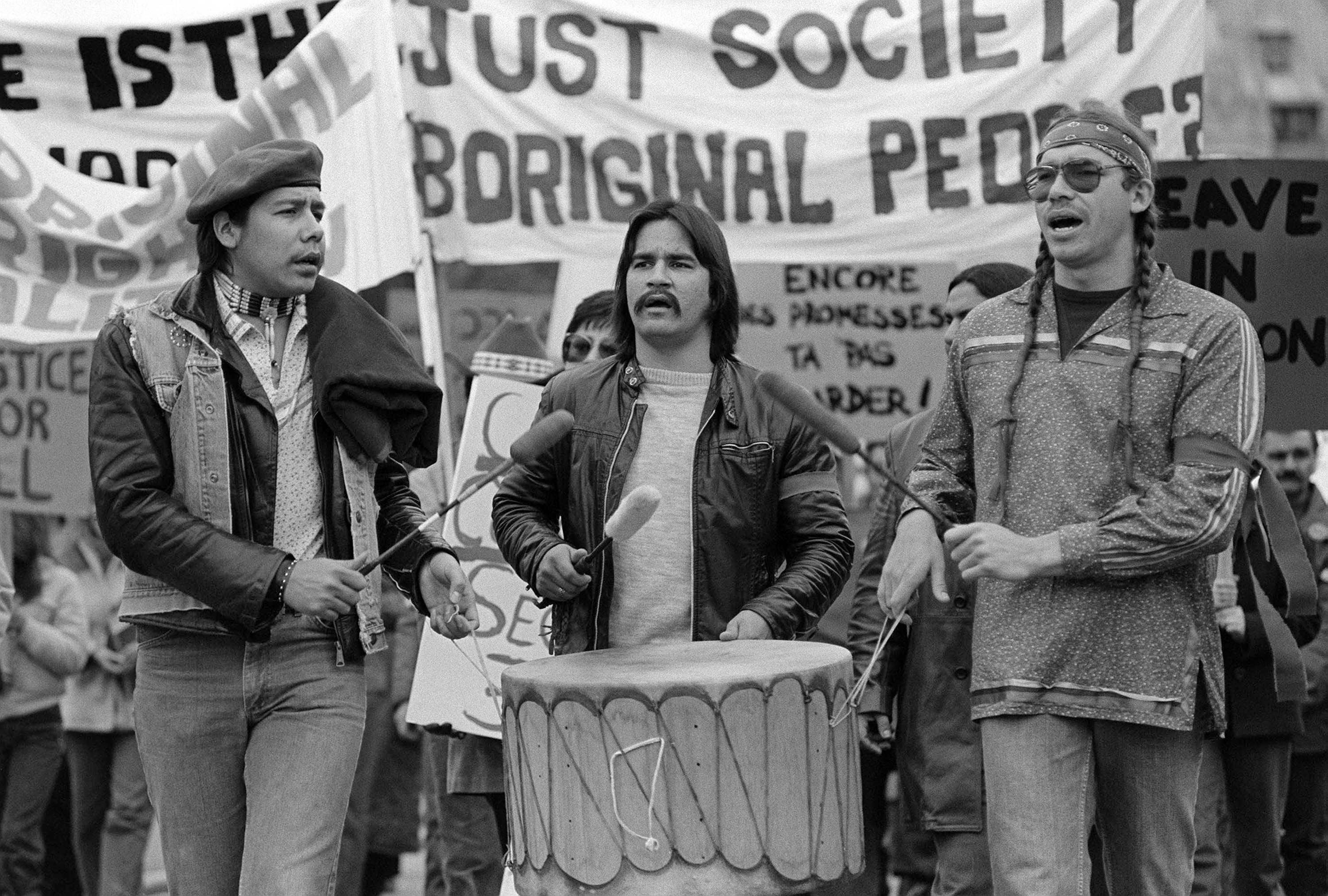
-
Article
Abraham Feinberg
Abraham Feinberg, né Nisselevicz, rabbi, singer, peace activist (b at Bellaire, Ohio 14 Sept 1899; d at Reno, Nev 5 Oct 1986). Raised and educated in the US, he held rabbinical pulpits there in the 1920s.
"https://thecanadianencyclopedia.ca/images/tce_placeholder.jpg?v=e9dca980c9bdb3aa11e832e7ea94f5d9" // resources/views/front/categories/view.blade.php
https://thecanadianencyclopedia.ca/images/tce_placeholder.jpg?v=e9dca980c9bdb3aa11e832e7ea94f5d9
-
"https://d3d0lqu00lnqvz.cloudfront.net/Acadians-6.jpg" // resources/views/front/categories/view.blade.php
https://d3d0lqu00lnqvz.cloudfront.net/Acadians-6.jpg