Share on Facebook
 Share on X
 Share by Email
 Share on Google Classroom
Benjamin Franklin, writer, publisher, scientist, inventor, statesman, diplomat (born 17 January 1706 in Boston, Massachusetts; died 17 April 1790 in Philadelphia, Pennsylvania). For over three decades (1751 to 1783), Benjamin Franklin argued that Canada (or Province of Quebec) should be joined to the British-American colonies. In 1776, he led a mission to Montreal during the occupation of that city by rebel forces during the American Revolution. Franklin failed both in 1776 and during peace negotiations in 1782 to make Canada part of the United States.
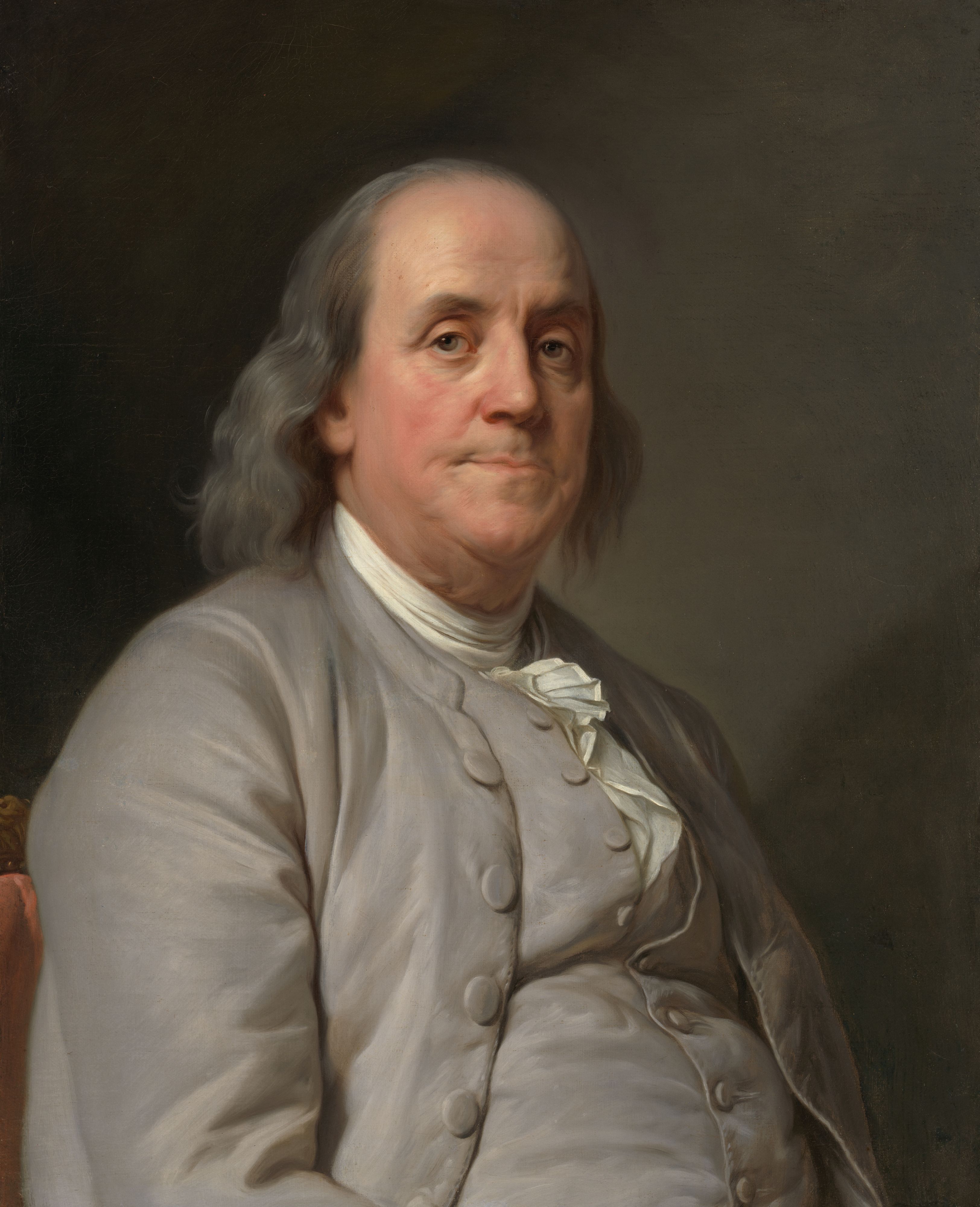
Who Was Benjamin Franklin?
Benjamin Franklin had a long and varied career, including printer, newspaper publisher, postmaster-general of British North America, delegate to the Pennsylvania assembly and agent for some of the American colonies in London. His experiments in electricity had made him famous in Britain and France. Franklin briefly led a militia regiment during the Seven Years’ War (1756–63), which ended with the British conquest of New France and the Treaty of Paris 1763. He became a delegate to the Continental Congress during the American Revolution and is considered one of the Founding Fathers of the United States.
Security Concerns
Benjamin Franklin frequently cited the need for security in his arguments for joining Canada to the American colonies. When Franklin was growing up in Boston, New France was seen as a threat to the security of the British-American colonies, especially Massachusetts, New Hampshire and Maine. (The French did not want to tangle with the powerful Haudenosaunee [Iroquois] Confederacy in the colony of New York.) Raiding parties made up of French military officers, French colonists and their Indigenous allies would sweep down from the north and attack British forts and colonial settlements, burning homes, scalping settlers and soldiers and taking hostages. British soldiers, colonists and their Indigenous allies responded in kind. This was part of the broader struggle between the imperial powers for global supremacy, which included control of North America.
Expansion Argument
Benjamin Franklin also cited population growth and expansion in his arguments to annex Canada. In a 1751 essay on population growth in the colonies titled Observations Concerning the Increase of Mankind, Peopling of Countries &c., he talked of American colonists settling the vast “Territory of North America” and the need for Britain to “secure room enough” for them to expand. Austrian-American historian Gerald Stourzh called Franklin’s argument “the first conscious and comprehensive formulation of ‘Manifest Destiny.’” The essay was published almost a century before New York City journalist John Louis O’Sullivan used the term in 1845 to suggest that Americans had the right to expand across North America.
In 1754, Franklin wrote a proposal to settle lands in the Ohio Valley, territory the French considered part of Canada or New France. The British-American colonists considered the same territory theirs by right of ancient charters. In his Plan for Settling Two Western Colonies, Franklin made both the security and destiny arguments. The French were already making “open encroachments on these territories, in defiance of our known rights,” he wrote. If they were allowed to continue, the French would increase in population and power, threatening the existing colonies.
There was a financial aspect to Franklin’s proposal to take over this corner of Canada or New France: he envisioned land settlement companies would be given grants for the land, which they would then sell to settlers. Franklin would later become involved in one of the land speculation schemes.
Canada Pamphlet
Benjamin Franklin again laid out these arguments in 1760, when he urged Britain to keep Canada rather than Guadeloupe when it negotiated treaty terms with France at the end of the Seven Years’ War. In The Interest of Great Britain Considered, also known as the Canada Pamphlet, he maintained that a continued French presence on the borders of the British-American colonies would be a constant threat because the French would encourage “barbarous tribes of savages” to attack British-American colonists, as they had done in the past.
Franklin also repeated the argument made in Observations that more land would lead to a larger population, saying, “with Canada in our possession, our people in America will increase amazingly.” As he was writing for a British audience, he added that the population increase would lead to a larger market for British manufacturers, increased trans-Atlantic trade and greater naval power. Conversely, leaving the French in Canada would check the growth of the colonies and that of the British Empire.
American Revolution
Britain decided to keep Canada, but relations with its American colonists soured during the 1760s and early 1770s when it attempted to raise taxes in the colonies to pay for debts incurred during the Seven Years’ War. The American Revolution began in April 1775. Benjamin Franklin, still determined that Canada should be joined with the other American colonies, became a delegate to the Continental Congress. In July 1775, he read his proposed Articles of Confederation to his fellow delegates. This was a plan of union for the colonies. It included a clause that said any British colony in North America could apply to join the confederation, including “Quebec, Canada, St. John’s (P.E.I.), Bermudas and the East and West Floridas.”
Mission to Montreal
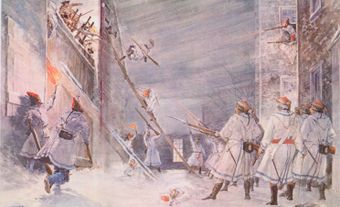
Benjamin Franklin led a three-man mission to Montreal in April 1776 at the request of the Continental Congress. The city was occupied by soldiers from the 13 American Colonies, who had invaded the British colony known as Canada or the Province of Quebec in September 1775 and captured Montreal and Trois-Rivières, two of the three major population centres. After a failed assault on Quebec City on 31 December 1775, the invaders continued their siege but were in dire straits because of a lack of food, clothing, money and equipment and the spread of smallpox. Congress wanted Franklin to restore order to the army, help set up a new government, and make Canada into the 14th colony.
Franklin, then 70 years old, was chosen because of his “his great Experience in Life, his Wisdom, Prudence, Caution,” according to John Adams, who, like Franklin, was a delegate to the Continental Congress and a future founding father. Adams also thought Franklin was fluent in French (he wasn’t), which would have been an advantage when 99 percent of the inhabitants of the British colony were French-speaking Catholics.
The other commissioners were Charles Carroll of Carrollton, a wealthy Catholic from Maryland, and Samuel Chase, a congressional delegate who had been vocal about the need to secure Canada for the 13 American Colonies. The trio was accompanied by a Catholic priest, John Carroll (a relative of Charles Carroll) and Fleury Mesplet, a French-speaking printer who had a printing press.
The three commissioners arrived in Montreal on 29 April and quickly realized their mission was doomed unless the Continental Congress sent more money, men, and provisions to its stricken army in Canada. They wrote a series of increasingly despondent letters to John Hancock, then president of the Continental Congress, begging for immediate support. These requests became moot on 6 May, when British warships carrying reinforcements and supplies appeared on the St. Lawrence River in front of Quebec City. The siege was broken and the invaders scattered, leaving behind weapons, equipment and food. A British officer reported finding plates of warm food on a table, which his regiment sat down and ate.
News of the British arrival reached Franklin in Montreal on 10 May. He left for Philadelphia the next day. His fellow commissioners, Carroll and Chase, stayed until 29 May before deciding their mission was hopeless. Only Fleury Mesplet, the printer, remained. He would later found the Montreal Gazette newspaper.
Proposal to Purchase Canada
After the failure of his Montreal mission, Benjamin Franklin suggested buying Canada. Franklin is believed to be the author of Sketch of Propositions for a Peace (1776), which suggested the United States buy Canada, St. John’s, Nova Scotia, Bermuda, East and West Florida and the “Bahama islands” from Britain. The document was not written in Franklin’s hand but was consistent with views he had expressed elsewhere. The proposal noted that it would be worthwhile to buy the colonies because it would probably cost more to conquer them. “It is absolutely necessary for us to have them for our security,” he wrote. There is no indication that he gave the proposal to Congress.
Peace Negotiations
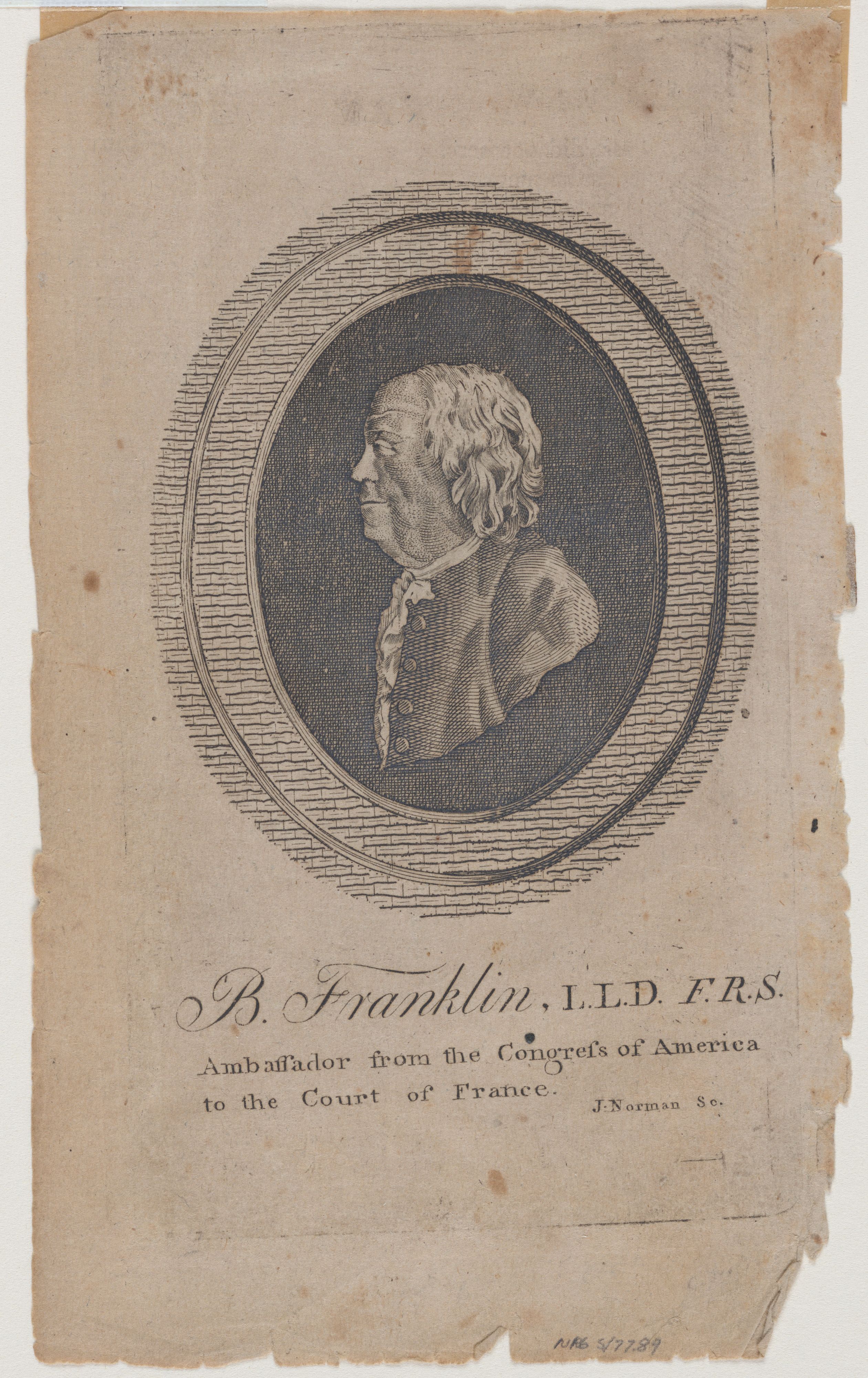
Benjamin Franklin made one last attempt to secure Canada after he travelled to Paris to negotiate French support for the revolution and, eventually, the peace treaty with Britain that would end the American Revolution. During his conversations with Richard Oswald, one of the British negotiators, he repeatedly mentioned his desire that Britain give Canada to the United States. Franklin “again mentioned the affair of Canada, and said there would be no solid peace, while it remained a British colony,” Oswald wrote on 8 July 1782 to Lord Shelburne, the British prime minister. Two days later, Franklin presented Oswald with eight conditions for peace, divided into four that were absolutely necessary and four that were advisable. “Giving up every part of Canada” was included in the second group. It was later dropped as a condition for peace by Franklin and his fellow negotiators.
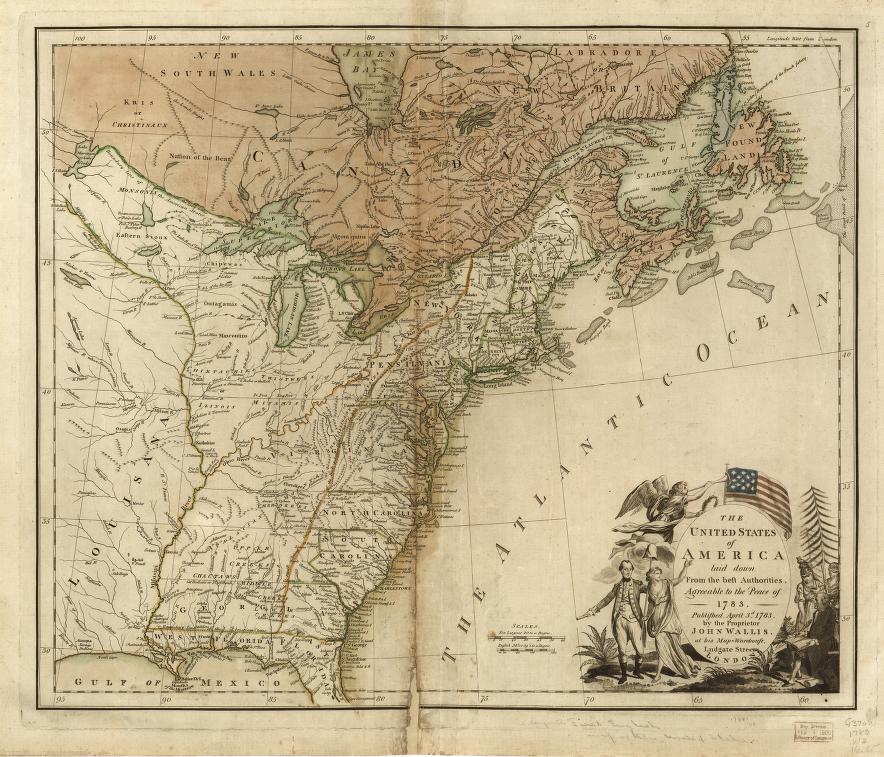
Franklin did not realize his ambition of turning all of Canada or the Province of Quebec into an American colony. But he and his fellow negotiators convinced the British to cede a large territory below the Great Lakes to the United States of America. (See Treaty of Paris 1783.)