Share on Facebook
 Share on X
 Share by Email
 Share on Google Classroom
American colonists conducted a propaganda campaign in the British colony of Canada prior to and during the American Revolution. Its aim was to persuade French Canada become the 14th colony and join the rebellion against Britain. The propaganda initially took the form of appeals. The core message was that Britain was tyrannizing its colonies and that joining the rebellion would deliver liberty and happiness to French Canadians. American agents and sympathizers in Canada helped spread the message, often adding rumours of British plans to raise taxes or deport French Canadians. The propaganda campaign helped weaken support for British rule prior to the American invasion of 1775, but it lost traction in the face of counterpropaganda by British authorities and growing public hostility to invading American troops, who seized goods and plundered properties.
Background
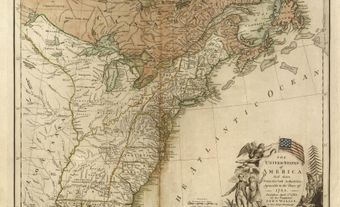
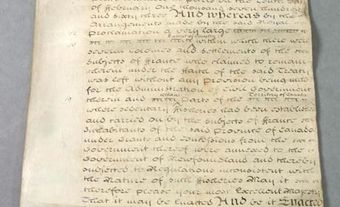
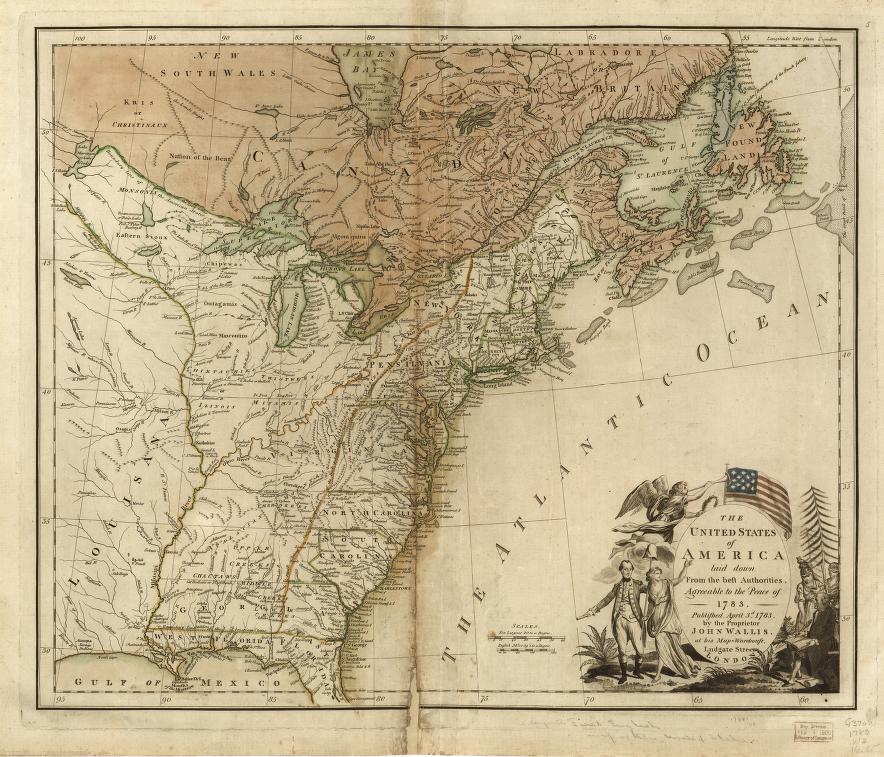
Relations between Britain and her American colonies were already tense in 1774 when the British parliament passed the Quebec Act. The Act was an attempt to appease the French-Canadian majority in the colony by allowing them to practise Roman Catholicism, despite anti-Catholic laws in Britain and its colonies, and retain their traditional laws in civil matters. The Act also expanded the boundaries of Canada, which Britain called the Province of Quebec, to more closely resemble those of New France, the name for Canada under the French regime.
These moves angered American colonists who expected that Canada would become an English-speaking, Protestant colony like theirs, constrained within the more restrictive borders set by Britain when it officially took possession of Canada in 1763. A rumour spread that Britain intended to arm the French Canadians to attack the 13 Colonies. Worried congressional delegates decided they had to act.
Letters from Continental Congress
The Continental Congress wrote the first in a series of open letters to Canadians on 26 October 1774, inviting them to join the 13 Colonies in fighting what the letter described as British tyranny depriving the colonists of their liberty. In the letter, Congress extolled the virtues of representative government and British laws and instructed the French Canadians on rights it said were being withheld by the British government. Stark religious differences between the largely Protestant colonies and the largely Roman Catholic French Canadians were glossed over. The appeal suggested the proposed union would resemble the Swiss Cantons, where Catholic and Protestant states lived together “in the utmost concord and peace.” It invited them to send delegates to the next meeting of the Continental Congress in May 1775. It also asked French Canadians to consider whether they wanted the American colonists to be “unalterable friends, or your inveterate enemies.” Congress sent similar letters on 29 May 1775 and 24 January 1776.
Addresses from Colonies and Military Leaders
The Massachusetts Congress echoed the message of friendship coupled with menace in its letter to Canadians on 21 February 1775. The New York Provincial Congress added its voice on 26 May 1775. Rebel military leaders George Washington, Philip Schuyler and Richard Montgomery chimed in with separate missives as the Continental Army began an invasion of Canada in September 1775. After France joined the American fight, the Marquis de La Fayette and Charles-Hector, count d’Estaing made separate appeals to the French Canadians, emphasizing their common French heritage and the friendly intentions of the Americans. Letters written after 4 July 1776, switched from wanting grievances redressed to calling for outright independence.
A Personal Plea
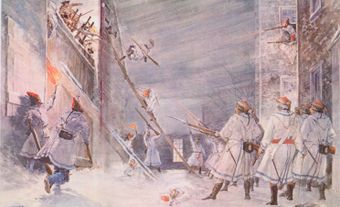
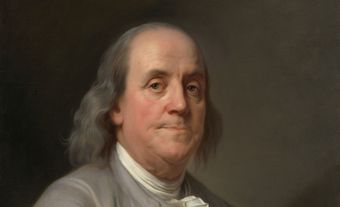
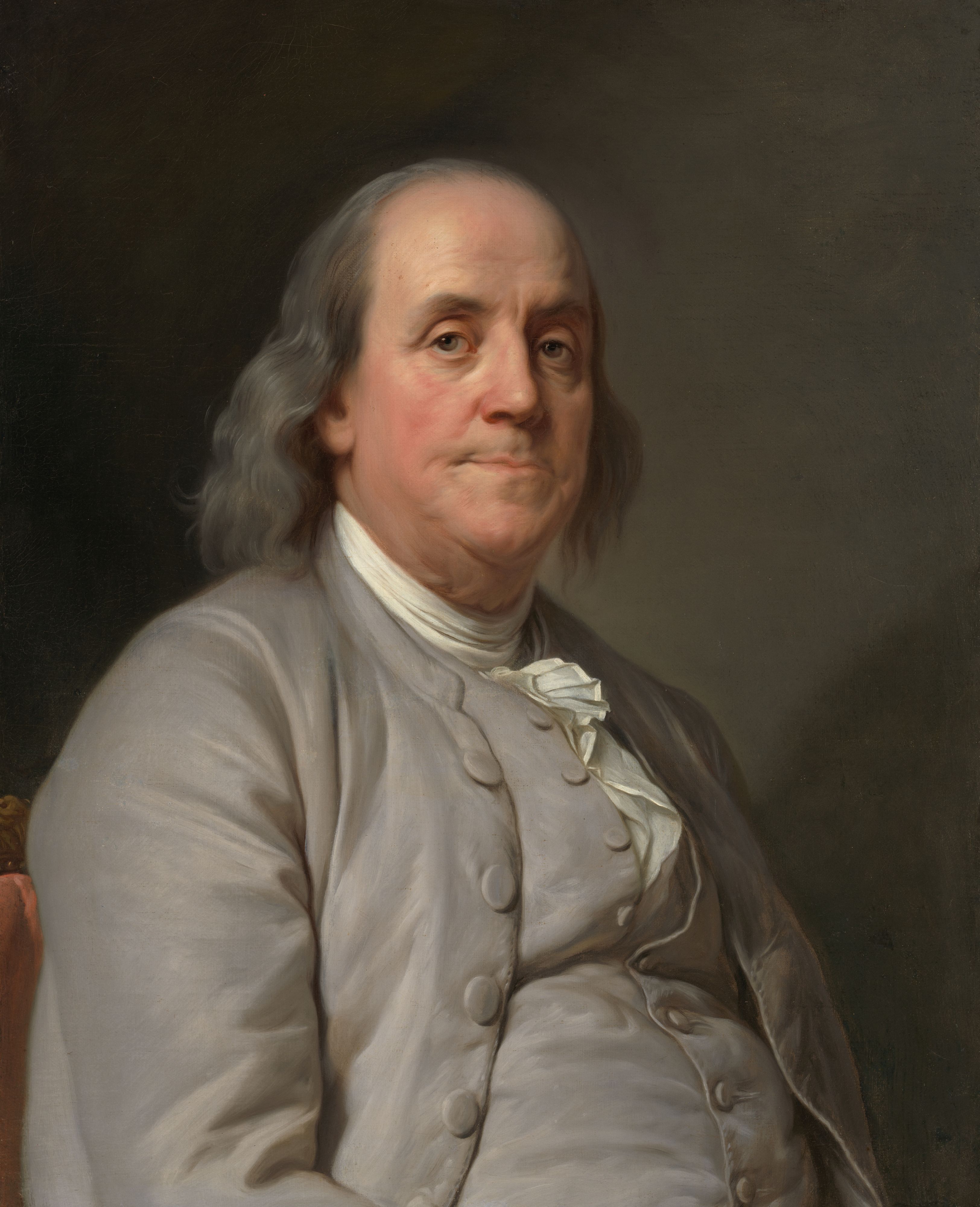
In the absence of an answer from the Canadians, the Continental Congress decided on 15 February 1776 that Benjamin Franklin, Samuel Chase and Charles Carroll of Carrollton should travel to Montreal to make the case in person. American troops occupied Montreal and Trois-Rivières and were laying siege to Quebec City at the time. Congress asked that the mission include a Catholic priest, who could intercede with the local clergy, and a French printer, who could use his printing press for their propaganda.
Theirs was to be a softer approach. The commissioners were instructed by Congress to promise Canadians their religion and property would be respected if they put themselves under the protection of the United Colonies. “Endeavour to stimulate them by motives of glory as well as interest, to assume a part in a contest, by which they must be deeply affected; and to aspire to a portion of that power, by which they are ruled; and not to remain the mere spoils and prey of conquerors and lords.”
Network of Agents and Sympathizers
Appeals from the American colonists were carried into Canada by a network of agents and spread with the help of sympathetic residents, many of whom were American merchants who had moved north after Canada became a British colony. John Brown, a lawyer from Massachusetts, was one of the early messengers. He travelled to Canada in March 1775, bringing copies of the first appeal by Congress, plus a personal letter from the Massachusetts Congress addressed to Montreal merchants Thomas Walker, Isaac Todd, John Black, James Price and the brothers Heywood. Their names and others would appear on a list compiled by the British governor, Guy Carleton, in 1777 of the 28 persons “who very zealously served the Rebels in the Winter, 1775 and 1776.” Brown and his fellow agents visited various communities under the guise of horse or grain traders.
There were French Canadians among the sympathizers as well. Among them was Christophe Pélissier, director of the Saint Maurice ironworks, the largest industry in the colony. He wrote Congress in January 1776, advising delegates on how to win over French Canadians. Prudent Lajeunesse, another French Canadian, travelled to Philadelphia in February 1776 to offer his advice, including that Congress needed to send personal representatives to Canada. Franklin, Chase and Carroll were appointed shortly afterward. There were also some French-Canadian women, known collectively as the Queens of Hungary in reference to the outspoken Queen of Austria, who urged residents in their respective villages to side with the American invaders.
The Empire Fights Back
British authorities and their supporters were aware of the American propaganda circulating in the colony and responded with some of their own. They enlisted the help of Roman Catholic clergy, who had been won over by provisions in the Quebec Act that allowed the practice of Roman Catholicism and protected the rights of the clergy and seigneurs. Jean-Olivier Briand, bishop of Quebec, issued several supportive declarations, including a pastoral letter of 22 May 1775 that urged the faithful to “close their ears” to sedition and remain loyal to the British king. Étienne Montgolfier, vicar-general of Montreal, outlined a sermon for use by local priests that supported Briand’s declarations.
A succession of supportive anonymous letters appeared in the government-owned Quebec Gazette in 1775, taking issue with various American claims. These letters pointed out that Congress had denounced the Catholic religion in a separate letter sent to the people of Britain in October 1774 just days before it sent the first letter to the residents of Canada. Britain also had some vocal supporters among French Canadians. Among them was Simon Sanguinet, a notary from Montreal, who wrote an open letter in March 1776 chastising his fellow Canadians for being ingrates and bowing to the tyrannical Bostonnais, a common term for American colonists.

Early Success
The American propaganda had minimal impact on the colonial elite, whose concerns had been addressed in the Quebec Act. But it found fertile ground among ordinary people (see also Habitant). Carleton said in a June 1775 letter to London that the seigneurs were unable to rally the militia because the minds of the people had been “poisoned by the same Hypocrisy and Lies practised with so much Success in the other Provinces, and which their Emissaries and Friends here have spread abroad with great Art and Diligence.” The rumour of new taxes was particularly potent. William Hey, chief justice of the colony, told his superiors in August 1775 that a mixture of fear, ignorance, credulity and prejudice had led the Canadians to believe rumours spread by the Americans that the governor had sold them to the Spanish or that he planned to send them to Boston to fight the Americans.
Canadian Sentiment Sours
The balance shifted in Britain’s favour when the American troops ran out of money to pay for food and equipment and either tried to pay for it with a new continental paper currency, which the French Canadians refused to take, or seized goods without payment. Past promises to respect French-Canadian property were forgotten. Moses Hazen, a Canadian resident who fought for the Americans, acknowledged in a letter written 1 April 1776 that “the peasantry in general have been ill-used” by the American troops and now regarded the United Colonies as bankrupt. The invasion began to unravel in earnest on 6 May 1776, when British warships carrying reinforcements appeared on the St. Lawrence River.
British governor Sir Guy Carleton feared the propaganda would continue even after the last of the American troops were chased out of Canada in June 1776. He issued orders on 4 August 1776 that letters or messages from “Rebels, Traitors in Arms against the King, Rioters, Disturbers of the Public Peace, Plunderers, Robbers, Assassins, or Murderers, are on no Occasion to be admitted” and that emissaries should be seized and confined unless they had come to implore the king’s mercy.
The propaganda left an imprint in Canada. Carleton wrote in a 9 May 1777 letter to his superiors in London there was now a “Spirit of Licentiousness and Independence” in the colony. It would take some time, he said, to reduce the French Canadians to “the state of obedience which they formerly paid their ancient government.”