Share on Facebook
 Share on X
 Share by Email
 Share on Google Classroom
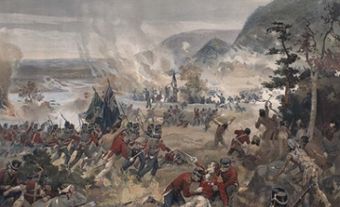
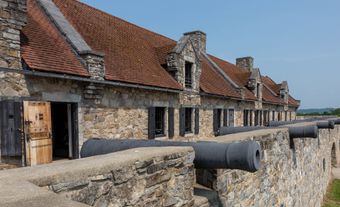
Fort Chambly is a historic fort located on the Richelieu River at Chambly, Quebec. It was an important defensive post in the Iroquois Wars, Anglo-French Wars (including the War of the Spanish Succession and the Seven Years’ War), American Revolution, War of 1812 and Rebellions of 1837–38. In 1920, it was designated a national historic site. The Fort Chambly National Historic Site includes a museum and interpretive centre.
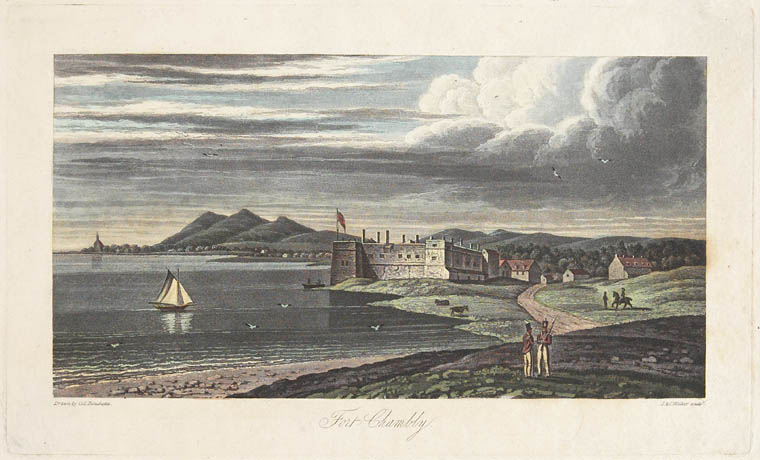
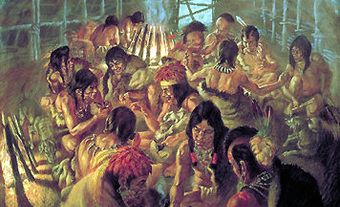
Fort Chambly was established in 1665 as Fort Saint-Louis by the French Carignan-Salières Regiment on the Richelieu River near modern Chambly, Quebec. The original wooden fortifications were built as a barrier to attacks by the Haudenosaunee (Iroquois). (See Iroquois Wars.)
Beginning in the late 1680s, New France faced another threat as conflict between Britain and France spilled over into North America. By 1709, strategic considerations demanded that Fort Chambly be strengthened, and a stone fort replaced the original wooden structure. (See also War of the Spanish Succession.) Chambly subsequently became a warehouse and supply depot for other forts on the Richelieu.
In September 1760, the crumbling and weakly defended Chambly surrendered to the British without a shot being fired. (See The Conquest of New France.) Early in the American Revolution, Chambly was captured by the colonial rebels, but in June 1776 the British reoccupied it, and for the rest of the conflict Chambly was not threatened.
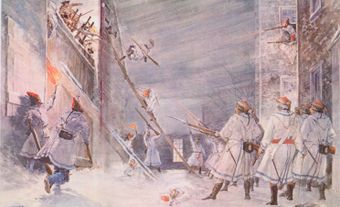
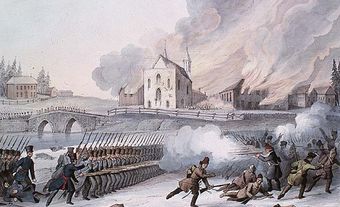
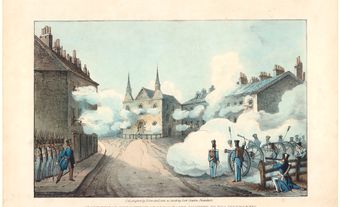
In 1813, during the War of 1812, the British constructed a vast military complex of about 40 buildings at Fort Chambly. As many as 6,000 soldiers were stationed there during the war. Fort Chambly was also an important base during the rebellions of 1837–38. With the development of new fortifications at Saint-Jean, however, Fort Chambly declined in importance. Insufficient maintenance reduced Chambly to a dilapidated condition, and it was abandoned in 1851.
Private restoration in 1882–83 preserved the site, which was designated a national historic site in 1920. Parks Canada restored the fort in 1983. Fort Chambly Historic Site now includes a museum and interpretation centre.