
 Share on Facebook
 Share on X
 Share by Email
 Share on Google Classroom
Benedict Arnold, merchant, army officer (born 14 January 1741/42 in Norwich, Connecticut; died 14 June 1801 in London, England). Benedict Arnold fought for the rebel Continental Army during the American Revolution and played a leading role in the invasion of Canada in 1775–76. He rose to the rank of major general but defected to the British in 1780. Arnold became a brigadier general in the British Army and led the American Legion, a provincial regiment. He later settled in England.
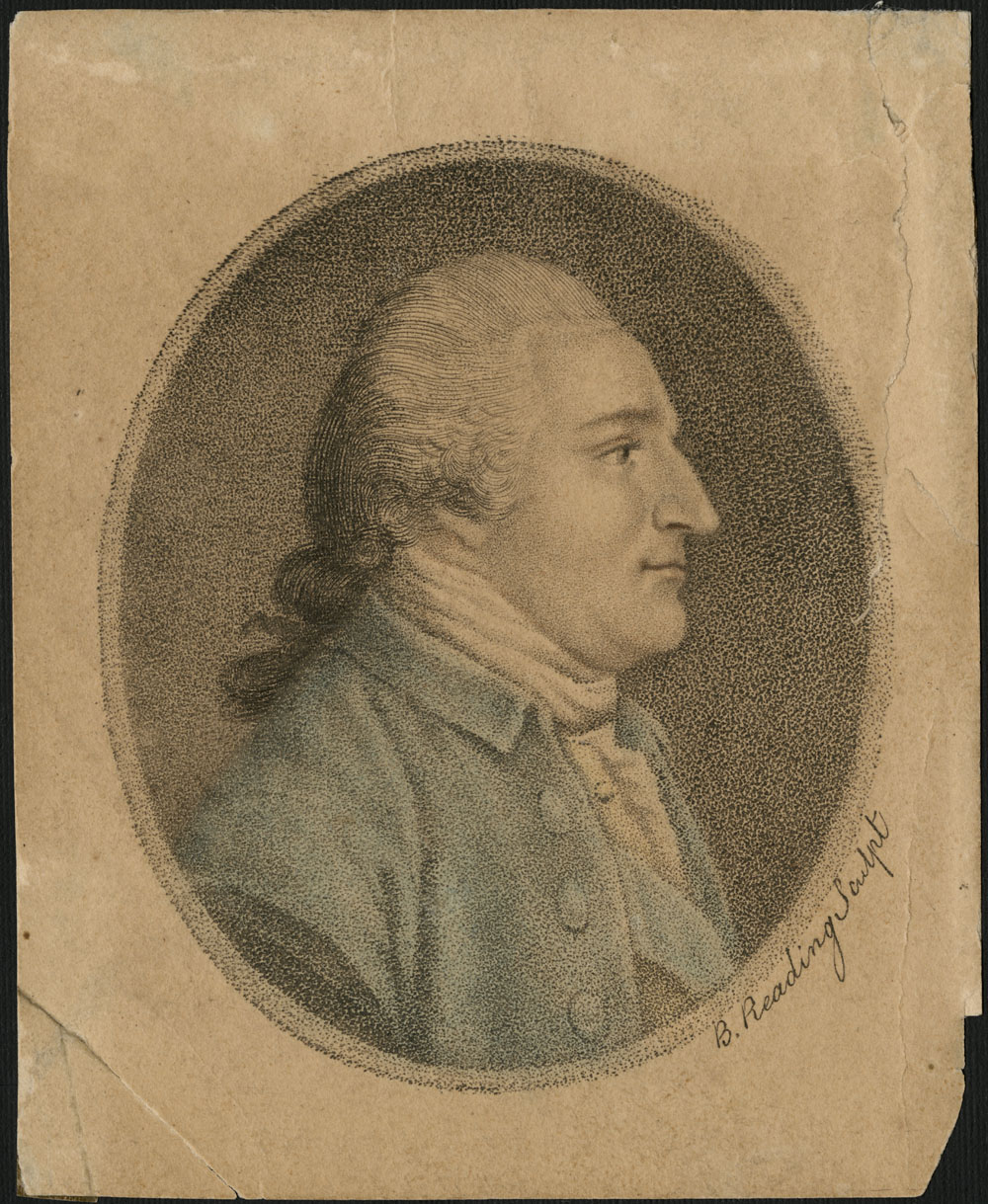
American General
Born in Connecticut, Benedict Arnold apprenticed as an apothecary but ran away to join a New York company serving in the Seven Years' War. He later established a trading business in New Haven. After hearing news of the Battle of Lexington at the onset of the American Revolution, he mustered the local militia. On 10 May 1775, he launched a successful attack on Ticonderoga with Ethan Allen and his men.
As part of the 1775–76 campaign to invade Canada, Arnold led an expedition along the Kennebec, Dead and Chaudière rivers, arriving before the town of Quebec with only 700 of his original troop of 1,100 men. He assumed command when General Richard Montgomery was killed on the ill-fated attack on December 31 and remained camped before Quebec until he was transferred to Montreal in April. He was in full retreat by June 1776 and saw further action on Lake Champlain and in the 1777 Saratoga campaign, each time distinguishing himself with conspicuous bravery.
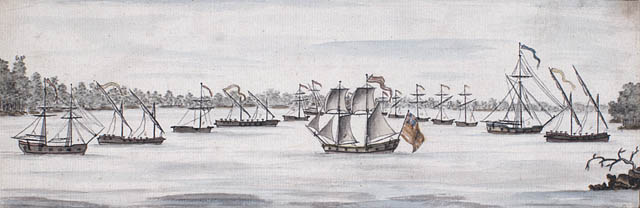
Defection to British
In 1780, Benedict Arnold defected to the British. Historians suggest he was influenced by his Loyalist wife Margaret (Peggy) Shippen, who was a close friend of British Major John André, head of the British spy network in New York. Arnold’s plans to turn over West Point were discovered, however, and he fled to the British (André was captured and hanged). Though Arnold stated that he had never supported full independence, his defection was likely motivated by disappointment at being passed over for promotion, by a reprimand for using his office for personal gain, and by money.
The British awarded Arnold £6315 and a generous pension for his defection. He was also made a brigadier general and authorized to raise a Loyalist battalion, the American Legion. He moved to England in 1781 and to Saint John, New Brunswick, in 1786, departing in 1791 amid further controversy, resentment and legal entanglements. In 1798, he was awarded a large grant of land in Upper Canada but never took up residence there. He was an arrogant, ambitious man, whose military accomplishments have largely been obscured by his controversy, and his name remains synonymous in American lore with treason and infamy.