Share on Facebook
 Share on X
 Share by Email
 Share on Google Classroom
Shipbuilding and ship repair are among Canada's oldest industries. The long inland waterways and coastlines, rich timber supplies, fisheries and offshore oil, together with the need to export natural resources, have generated a demand for ships. Though Canadians have demonstrated high-quality workmanship in both enterprises, and at times innovation on a world scale, success has been cyclical. Since 2010, the National Shipbuilding Strategy has provided stability to the marine industry.

Shipbuilding in New France
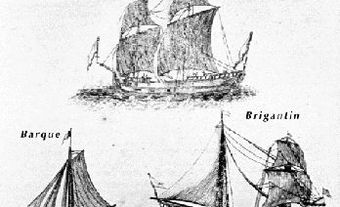
The first sailing ships built in what is now Canada were two small craft launched at Port-Royal, Acadia, by François Gravé du Pont in 1606. The first recorded seagoing vessel, Galiote, was built in New France in 1663. Some building continued under Jean Talon and others at Quebec City, and a brisk industry was recorded in 1715 despite the mercantilist system that discouraged industry in the colony. As a result of encouragement by French Minister of Marine de Maurepas, Intendant Gilles Hocquart gave the industry a real impetus with the establishment of a shipyard in 1732 on the Saint-Charles.
The 10 merchant vessels built there that year may be termed the true start of the industry as a commercial enterprise in Canada. These merchant ships impressed French authorities, and warships were also ordered for the French navy, including a ship-of-the-line mounting 70 guns built in 1750.
In 1677–78, Cavelier de la Salle presaged the development of a transportation system on the Great Lakes with the building on Lake Ontario of a single-decked barque of 10 tons, Frontenac, and three other vessels. This achievement was eclipsed by the construction in 1679 at Cayuga Creek on the Niagara River of the ill-fated Griffon, 20 m overall, perhaps 60 tons burden, to further fur trade interests on the Upper Great Lakes. Between 1732 and 1745, a number of vessels were built, six for Lake Ontario and one for Lake Superior. In the Seven Years' War, the French war fleet on Lake Ontario consisted of four vessels. Two were rated as corsairs, Marquise de Vaudreuil of 14 guns and La Hurault of 12 guns, launched in 1756 and 1755, respectively.
Shipbuilding in British North America
The end of the Seven Years’ War in 1763 led to a downturn in the demand for ships. At the same time, the ready supply of timber for shipbuilding attracted artisans and shipwrights to the colonies after the Conquest. George Heriot in his travels (1807) stated that vessels "from fifty to a thousand tons burthen" were constructed at Quebec City and commercial vessels at Kingston. The War of 1812 generated a flurry of shipbuilding. The St. Lawrence, built in Kingston in 1814, was a three-decker mounting 102 guns and was larger than Nelson's Victory.
The early years of the 19th century saw the rapid growth of ship construction in the British colonies. Vessels were built on creeks, rivers and coves in every colony of British North America: at Alma on the Bay of Fundy; at the Ellis-Yeo property in Prince Edward Island, now a historical restoration; and at shipyards extending for 20 km on both sides of the Miramichi River in New Brunswick.
The expansion of the timber trade in the early 19th century stimulated a rapid expansion of shipbuilding. The Columbus and Baron of Renfrew, built in 1824 and 1825, respectively, were built of heavy timbers near Quebec, sailed to England to be broken up and sold as timber in order to evade a British tax. Though freak vessels at over 90 m length, they could claim to be the largest sailing ships in the world at the time and for 30 years after. Many conventional vessels were also built, and Lévis to Lauzon in Quebec became a vast timber yard and shipyard.
The construction of fishing vessels was more of a cottage industry than a commercial enterprise. A natural response to demand throughout the colonies, these vessels were built of a size and type suited to the fishery, whether inshore or offshore. Among them was Jenny, built in Newfoundland in 1783, the first recorded tern (three-masted) schooner in the world.

Nineteenth Century Shipbuilding Boom
The most colourful and profitable days of Canadian shipbuilding were from 1849 to 1895, when many famous full-rigged ships and barques were built. In 1853, some 80 ships of between 1,000 and 2,000 tons each were launched in the Canadas and the Maritimes. In 1858, 64 of the 100 sailing ships of 1,200 tons or more that cleared Liverpool, England, for Australia were Canadian-built. The Shipping Register of Liverpool showed that more than 85 per cent of the ships over 500 tons were built in British North America.
In 1875, the peak year, nearly 500 ships were built in Canadian shipyards. A prominent vessel of that glorious period was Marco Polo, built at Saint John in 1851. She was big (1,625 tons), strong, and for a time "the fastest ship in the world." Another was W.D. Lawrence, 2,458 tons, built in 1874 at Maitland, Nova Scotia, the largest Canadian-built full-rigged ship afloat. By that time, Nova Scotia was one of the most successful shipbuilding regions in the British Empire, with major shipyards at Pictou, Shelburne and Lunenburg.
The Canadian merchant fleet in 1878 numbered 7,196 vessels, of 1,333,015 aggregate tonnage, making Canada the fourth-largest ship-owning nation in the world, a position that has been regained on two occasions since, in 1918 and in 1944. The industry gave employment to craftsmen and lumbermen and provided ships for transport of goods and immigrants. Perhaps the greatest commercial advantage was the favourable influence on the balance of payments; at times, ships were the most valuable exports of the colonies.
Between 1786 and 1920, over 4,000 wooden sailing ships exceeding 500 tons were built in eastern Canada. The fast passages made by Canadian-built ships, their great size and innovative design made them popular among British owners and contributed to Britain's commercial conquest of the seas.

Steel and Steam
As iron- and steel-hulled sailing ships and steamships built in Britain, Germany and Denmark replaced wooden square-riggers, Canada found it harder and harder to compete. By 1895, the Canadian builders were out of the big-ship business, although construction of fishing schooners and coasters continued for many years. Tens of thousands of men skilled in marine ironworking, sail-making, wood-shaping, etc., were put out of work.
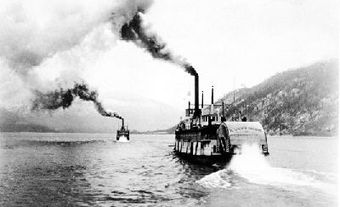
In 1809, the first Canadian steamboat, Accommodation, was built and launched in Montreal by John Molson adjacent to his brewery. The vessel was 26 m in length and carried passengers between Montreal and Quebec City. Steam engines of greater strength were rapidly developed. The 100-hp (horsepower) engine of the Montreal tug Hercules (1823) was at the time the largest in the world. The paddle steamer Royal William was built at Anse au Foulon, Quebec, in 1831, with a 200-hp engine made in Montreal. In 1833, she was the first merchant vessel to make a transatlantic voyage (from Pictou to Gravesend) largely under steam. One of her owners was Samuel Cunard of Halifax, founder of the Cunard Company. As well as pioneering the building of marine steam engines, Canada produced the first compound steam engine. The Saint John River steamboat Reindeer had a 43-hp compound engine built in Fredericton, New Brunswick, and installed in 1845.
Collingwood Shipyards (1902), now at Collingwood, Ontario, was the first Canadian steel shipbuilding yard on the upper lakes. The shipyard at Port Arthur (Thunder Bay) was built in 1912 and the next year produced the passenger steamer Noronic. By then, 1,980 steamers aggregating 415 089 grt (gross register tonnage) were registered in Quebec and Ontario ports compared with only 598 steamers totalling 89,079 grt registered in the Maritime ports.
The Canadian shipyards of this period exhibited a versatility that remains their strength to this day, in the construction of vessels of many diverse types and special purposes, including bulk grain, coal and ore lake carriers, passenger ships, coasters, ferries, icebreakers and government patrol vessels. Tugs, dredges and hopper barges, many still in service, were also built in the prewar years. The dimensions of the vessels for the St. Lawrence Seaway and the upper lakes were controlled by the size of the locks. As such, they were long, slender vessels efficient for that trade but unsuitable for open sea, although many of these ships did ply the North Atlantic during the First World War and Second World War.
First World War
The need for ships to transport supplies overseas during the First World War led the Imperial Munitions Boardto place many orders for ships in Canadian yards. In 1917–18, approximately 60 steel cargo steamers of 1,700 to 5,800 grt were built, as well as submarine chasers, tugs, drifters and minesweeping trawlers. (See also Canada and Antisubmarine Warfare in the First World War.) Because of the urgent demand, wooden shipbuilding was revived as well. In British Columbia alone, 134 vessels comprising 20 wooden schooners, 69 wooden steamers and 45 steel steamers were built by West Coast shipyards. Wooden steamers were also built in Montreal, Trois-s, Quebecand Saint John. Some steel vessels built on the lakes were constructed in halves in order to pass through the St Lawrence Seawayand then joined together at Montreal.At the end of the First World War, the Canadian Government Merchant Marine Ltd. was incorporated in an effort to maintain shipyard employment and to continue Canada's position in ocean shipping. As the vessels became obsolete, they were not replaced, and they were sold off during the Great Depression. By 1936, the fleet had ceased to exist. From 1930 to 1939, Canadian shipyards built only 14 steamers exceeding 46 m in length, but in the same period many vessels for the lakes and canal trade were imported from Britain.
Second World War Expansion
Canada's response to the Allies' need for ships in the Second World War was immediate, effective, and on a much larger scale than that of the First World War. This quick expansion under the direction of the Department of Munitions and Supply was managed by a cadre of resident Canadian shipbuilders and naval architects, a delegation of shipbuilders sent by the British Admiralty, and experienced managers from other Canadian industries recruited for the duration. War production peaked in 1943 and, though for a time building barely kept pace with sinkings, a stage was reached where construction had to be phased down because of a surplus of ships.
At peak, there were seven shipyards building 10,000-tonners, three producing 4,700-tonners, 10 engaged in naval work, and 62 producing tugs, lighters and landing craft. In total, 398 merchant ships and 393 naval vessels were built. The naval vessels were primarily corvettes, minesweepers, frigates and eventually destroyers. The cargo vessels were operated by the Park Steamship Company, a crown corporation. They were sold off after the war, many to Canadian ship owners in an attempt to maintain a Canadian merchant fleet; if resold, the proceeds went into escrow for the construction of new Canadian registered vessels. Most went to foreign owners (see Shipping Industry).

Shipbuilding in Canada 1945–90
After 1945, the Canadian shipbuilding industry was significantly reduced. Various subsidy programs, accelerated depreciation allowances, export development grants, and import duties helped the industry, but not sufficiently to meet the competition from abroad assisted by more generous subsidies, foreign-exchange rates and lower wage scales.
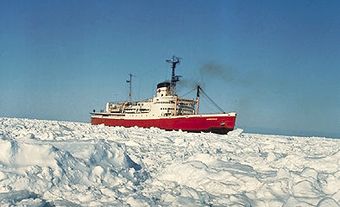
Canadian shipyards of necessity could not concentrate on multiple production of vessels of standard design or on a limited range of special service vessels. Instead, they had to capable of adapting to a very wide range of vessel types, many of them prototypes. They specialized in high-quality construction for inland and coastal trade and in government service and naval vessels. They were preeminent in ice-capable vessels, including the icebreaking car ferry Abegweit, built in 1947 for the Northumberland Strait, which established design standards for welded steel icebreakers with diesel-electric propulsion and multiple propellers. The 23,200-hp icebreaking supply vessel Terry Fox was built in 1983 to support oil exploration in the Beaufort Sea. ( See Icebreakers.)
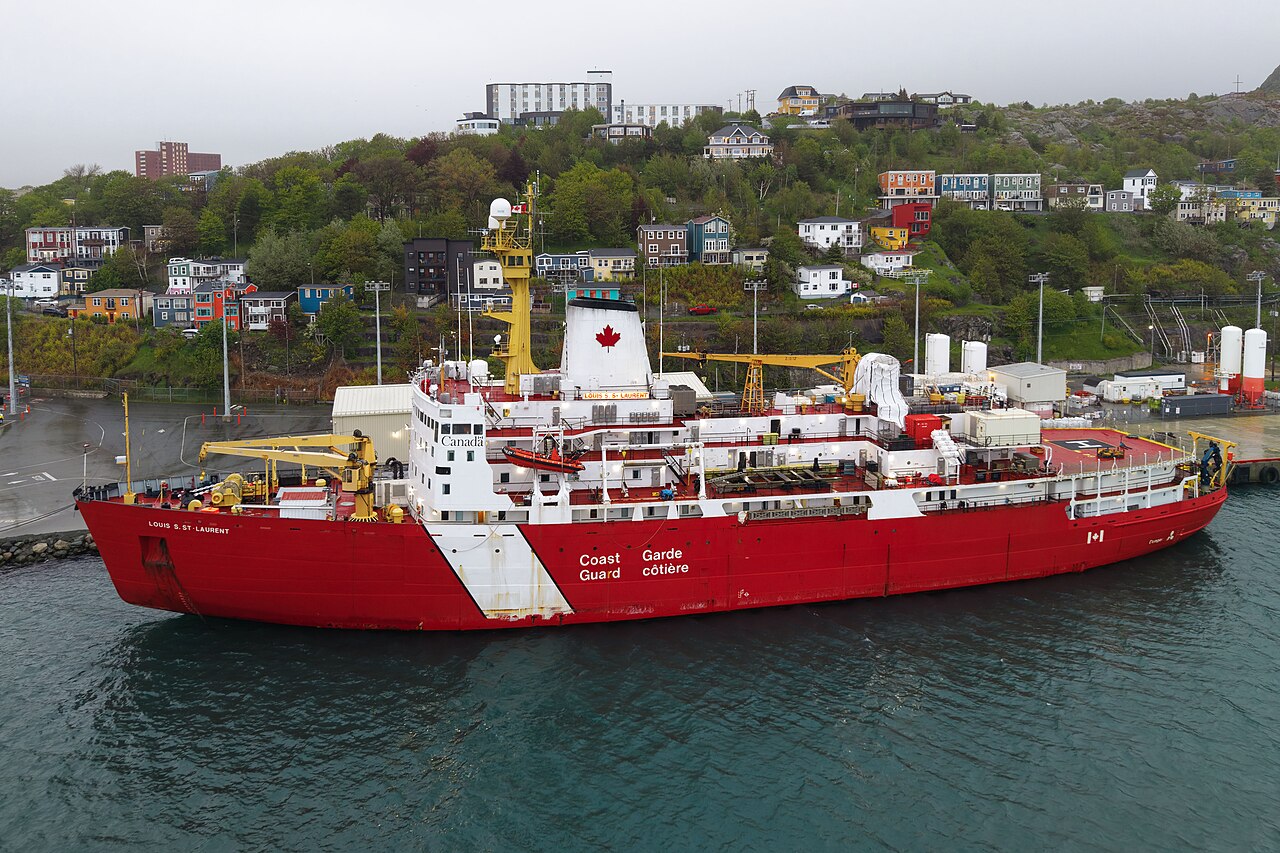
Other examples of Canadian innovation were the thorough design effort devoted to the Arctic Pilot Project; the proposed 395 m, 140 000 m3 Arctic class 10 LNG carrier; vessels for oceanographic, hydrographic and fisheries research; the development of tug-and-barge operations on the West Coast and, in particular, self-dumping log barges.
The development of hydrofoil craft, begun in Canada with the early experiments of Alexander Graham Bell in Cape Breton, was brought to success with Bras d'Or in 1964, a prototype of advanced design despite metallurgical faults in the foils material. Canadian shipyards were also active in the construction of offshore oil exploration platforms, from semisubmersible rigs built by Victoria Machinery Depot Ltd. in the late 1960s to jack-up rigs built at Davie Shipbuilding Company Ltd. In the 1970s and 1980s, Halifax Shipyards Ltd and Saint John Drydock and Shipbuilding were active in semisubmersible vessel construction.
Naval Construction, 1950–2000
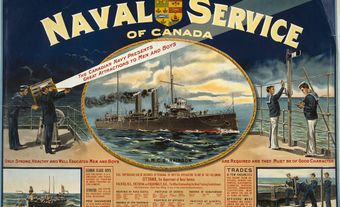
Naval construction continued after the Second World War. Canada's NATO role of submarine hunting and escort tasks has been met by a series of destroyer construction programs. From the "Tribal" class of the end of the war to the Canadian-designed St. Laurent class of the 1950s was a quantum leap in design and production to provide an escort vessel that was the envy of other navies. The Mackenzie class of the 1960s followed, then the Iroquois-class destroyers and the Halifax-class frigates. A variety of service vessels ranging from the Protecteur-class auxiliary oiler replenishment ships (constructed in the 1960s) to the Kingston-class coastal defence vessels (1990s) were also built.

Decline
Major contracts dried up after construction of the Halifax class of patrol frigates. Declining demand for big ships and competition from Asian companies led to a steep decline in the country’s shipbuilding industry. In 1990, the industry employed 12,000 workers; by 2000, only 5,000 were working in shipbuilding and repair. Many companies closed, including Saint John Shipbuilding, builder of the Halifax-class frigates, which ceased operations in 2000 and closed permanently three years later. From 48 shipyards in 1990, the industry shrank to 26 in 1996 and only 12 in 1999. Government consultations with industry leaders identified financing and international subsidies and restrictions as major challenges. In 2001, the Canadian government established the Structured Financing Facility program to stimulate activity in the industry. It also lobbied other countries to curb government subsidies and open their markets to Canadian-built ships.
National Shipbuilding Strategy
These measures were insufficient, however. The declining capacity of Canada’s shipbuilding industry meant that Royal Canadian Navy (RCN) and Canadian Coast Guard (CCG) vessels had to be kept in service beyond their expected life. This meant higher maintenance costs and, correspondingly, fewer funds for new vessels. In 2010, the federal government announced a national strategy to support Canada’s marine industry and end the “boom and bust” cycle. The National Shipbuilding Strategy aims to renew the RCN, CCG and Transport Canada fleets while stimulating investment and employment through predictable, long-term contracts with shipyards.
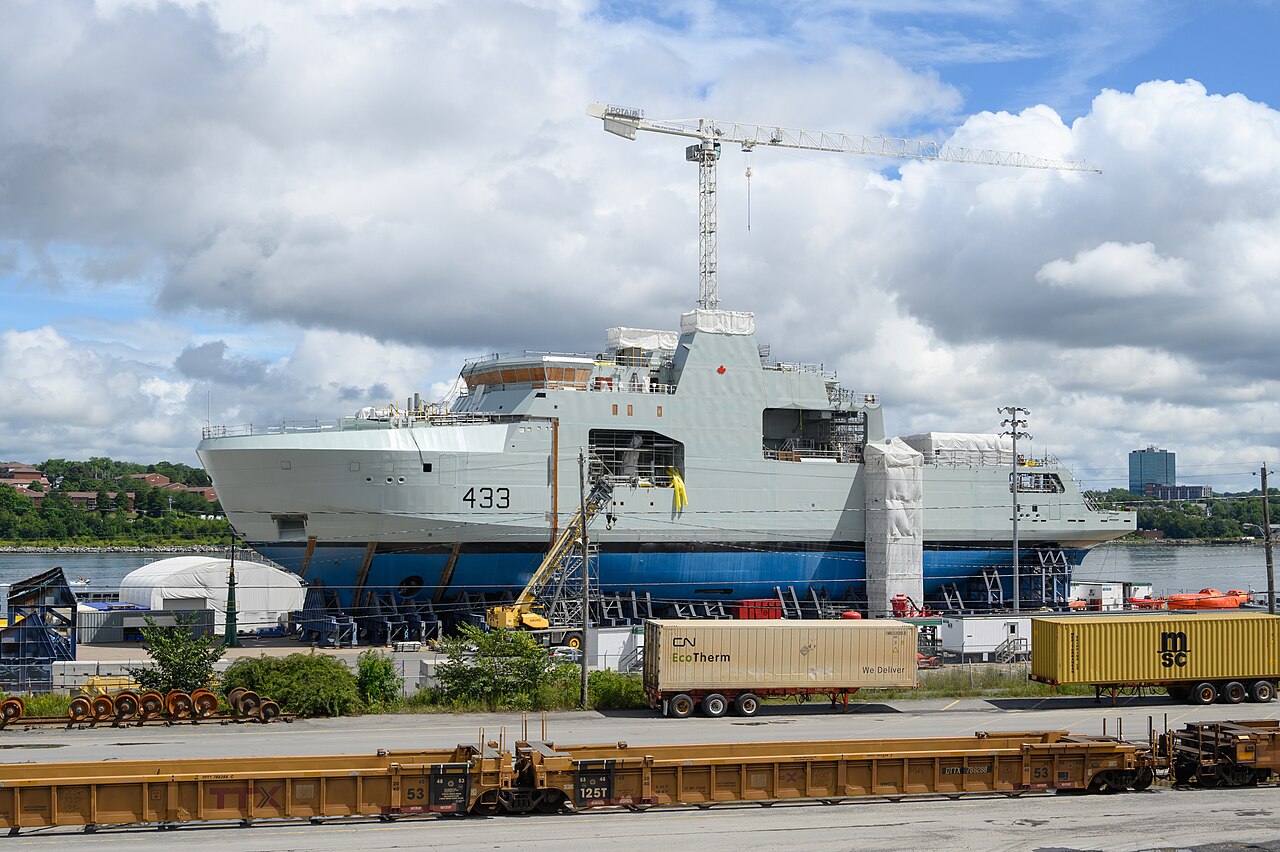
The first pillar of this strategy is construction of large vessels. Since 2010, the federal government has signed agreements with Irving Shipbuilding Inc. (Nova Scotia), Seaspan’s Vancouver Shipyards (British Columbia) and Chantier Davie Canada Inc. (Quebec) to construct large combat and noncombat ships over 20 to 30 years. Vancouver Shipyards has delivered three offshore fisheries science vessels (2019–20) and an oceanographic science vessel (2025) to the CCG under the program. It is building two joint support ships for the RCN and one polar icebreaker for the CCG and has a contract for up to 16 multipurpose icebreakers. Chantier Davie is building one polar icebreaker and has a contract for six program (medium and heavy) icebreakers for the CCG and two ferries for Transport Canada. Irving has delivered six Arctic and Offshore Patrol Vessels to the RCN (2020–25) and is building another two for the CCG; it will also build 15 River-class destroyers for the RCN.
The second pillar of the strategy is the construction of smaller vessels (less than 1,000 tons of displacement) such as tugs, dive tenders, hydrographic survey vessels, multimission vessels, fishery research vessels, police coastal patrol ships and search-and-rescue lifeboats. These will be built by shipyards across the country, including Kanter Marine in Ontario, Chantier Naval Forillon in Quebec and Ocean Pacific Marine Supply in British Columbia.
The third pillar is repair, refit and maintenance. Predictable contracts to service and modernize RCN and CCG vessels have allowed shipyards across the country to invest in facilities and employee training.
Ship Repair in Canada
Ship repairing is a necessary service wherever ships ply and, as an exporting nation, Canada must provide such facilities. Naval strategic requirements have a bearing on the location of drydocks and repair shops on Canada's coasts; repair installations also provide employment for essential shipbuilding technical staff, managers and tradespeople during slack times between new building contracts.
The industry has undergone significant change over the years. On the Great Lakes, large drydocks at Port Arthur, Collingwood and Port Weller, all associated with shipyards and capable of docking large lake carriers, are now gone. Docks at Kingston, and the St. Lawrence Dry Dock and Cantin Dry Dock at Montreal for the 245-ft. canalers also closed. Saint John Shipbuilding & Dry Dock Co Ltd., built in 1914, was the largest in the world for 40 years but closed in 2003.
The National Shipbuilding Strategy, however, has stabilized the ship repair industry in Canada. In 2026, there were approximately 15 shipyards offering drydocking and repair on the Pacific and Atlantic coasts, the Great Lakes and along the St. Lawrence River.
Newdock St. John’s Dockyard Limited is one of the oldest shipyards in Canada. Located virtually in the middle of the North Atlantic shipping lanes, the Newfoundland dockyard was built of wood in 1884 and later replaced by a stone graving dock. Subsequent improvements included a ship-lift system for the repair of deep-sea factory trawlers and offshore supply vessels.
In addition to Newdock, DF Barnes Ltd. and Pennecon Marine also offer repair and refit services in Newfoundland and Labrador. Major drydocks in Nova Scotia include Shelburne Ship Repair and Canadian Maritime Engineering’s Pictou shipyard. British Columbia’s ship repair facilities include Seaspan’s Vancouver Drydock and Victoria Shipyards, Point Hope Maritime and Intercon Marine Inc. in Victoria, and Allied Shipbuilders Ltd. in North Vancouver. Ontario Shipyards (previously Heddle Marine Service Inc.) runs major shipyards at Hamilton and Port Weller (St. Catharines). In Quebec, Chantier Davie operates major drydocks at its shipyard in Lévis while Ocean Group has shipyards at Charlevoix, Quebec and Les Méchins.
Shipbuilding Association
The Canadian Shipbuilding and Ship Repair Association was formed in 1944 to ensure the continuance of a viable industry after the war and to prevent repetition of the gradual dissolution of the dearly won industry in the early 1920s. The industry is now represented by the Canadian Marine Industries and Shipbuilding Association (CMISA).