Share on Facebook
 Share on X
 Share by Email
 Share on Google Classroom
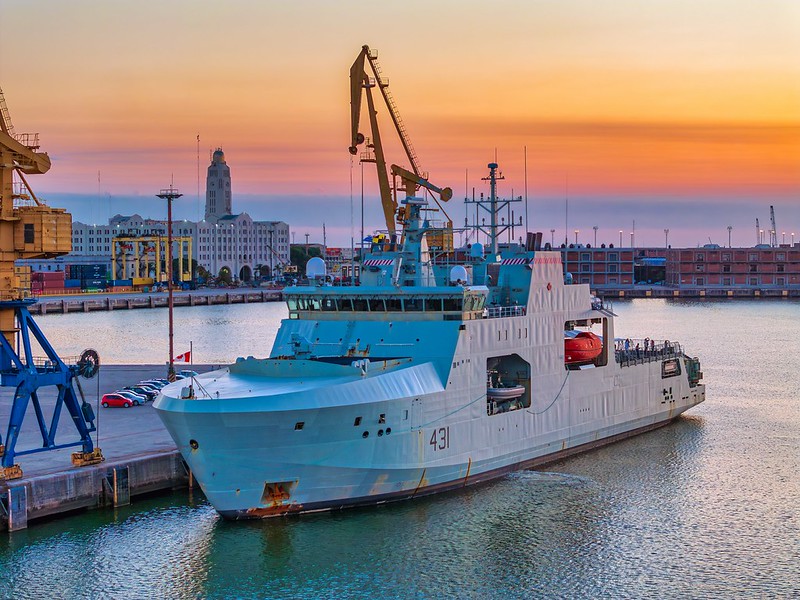
The Harry DeWolf class of Arctic and Offshore Patrol Vessels (AOPVs) are multipurpose, ice-capable ships of the Royal Canadian Navy (RCN). There are six ships in the class. The fleet was conceived in response to increased interest and vessel traffic in the Northwest Passage and is intended to enhance surveillance in the region. The Harry DeWolf class entered service in the 2020s. The Canadian Coast Guard (CCG) will also have two modified arctic and offshore patrol ships to support operations on the Atlantic coast and the low Arctic.
Specifications
|
Displacement
|
6,660 tons
|
|
Length
|
103 m
|
|
Beam
|
19 m
|
|
Maximum Speed
|
17 knots (31 km/h)
|
|
Range
|
6,800 nautical miles
|
|
Crew
|
65 + 20 mission (RCN), 31 (CCG)
|
|
Armament
|
BAE 25mm MK 38 remotely operated machine gun system incorporating an M242 Cannon (RCN), 2 x .50 cal. heavy machine guns (RCN)
|
|
Aircraft
|
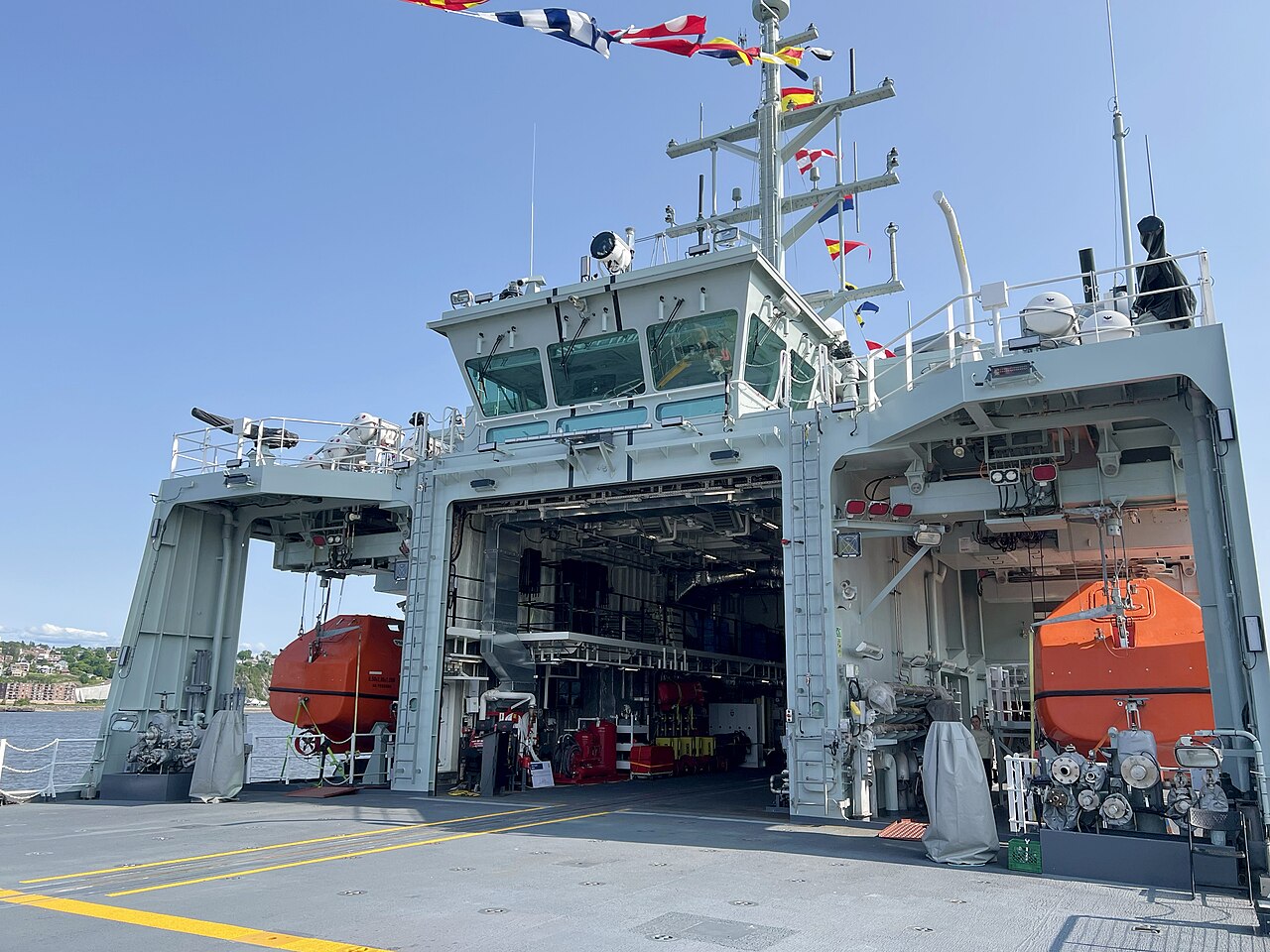
Helicopter pad and hangar can accommodate a CH-148 Cyclone (RCN), Bell 429 (CCG) or Bell 412EPI (CCG)
|
Purpose
The primary functions of the Harry DeWolf AOPVs are surveillance operations in Canadian waters, including the Arctic, and helping enforce Canadian sovereignty. The ships also participate in international operations related to security, anti-smuggling and anti-piracy. They can also conduct search and rescue operations and provide assistance during disasters and emergencies.
Context
The Harry DeWolf class was conceived in response to increased vessel traffic and competition in the Northwest Passage. Arctic ice has been melting, a development many scientists attribute to climate change. Summer ice may disappear as early as 2031, according to some estimates. This would open a commercially viable corridor for shipping, which would cut thousands of kilometres from some current shipping routes. Canada considers the Northwest Passage to be internal waters, as it cuts between the Arctic Archipelago. However, the US and other countries argue that the passage is an international strait.
In 2007, the federal government under Prime Minister Stephen Harper announced that up to eight Polar Class 5 Arctic Offshore Patrol Ships would be acquired for the RCN. The icebreaking vessels would help ensure surveillance and enforcement of Canadian sovereignty, among other responsibilities. Procurement would follow the National Shipbuilding Policy, which required the vessels to be built, repaired and refit in Canada.
Canada has a choice when it comes to defending our sovereignty over the Arctic. We either use it or lose it. And make no mistake, this Government intends to use it. Because Canada’s Arctic is central to our national identity as a northern nation. It is part of our history. And it represents the tremendous potential of our future. (Prime Minister Stephen Harper, 2007)
Construction
It would be several years, however, before a contract was awarded and construction began. Preliminary work started in 2008 through the Defence Ship Design Group in the Department of National Defence. From 2009, the department was assisted by BMT Fleet Technology Ltd. of Kanata, Ontario.
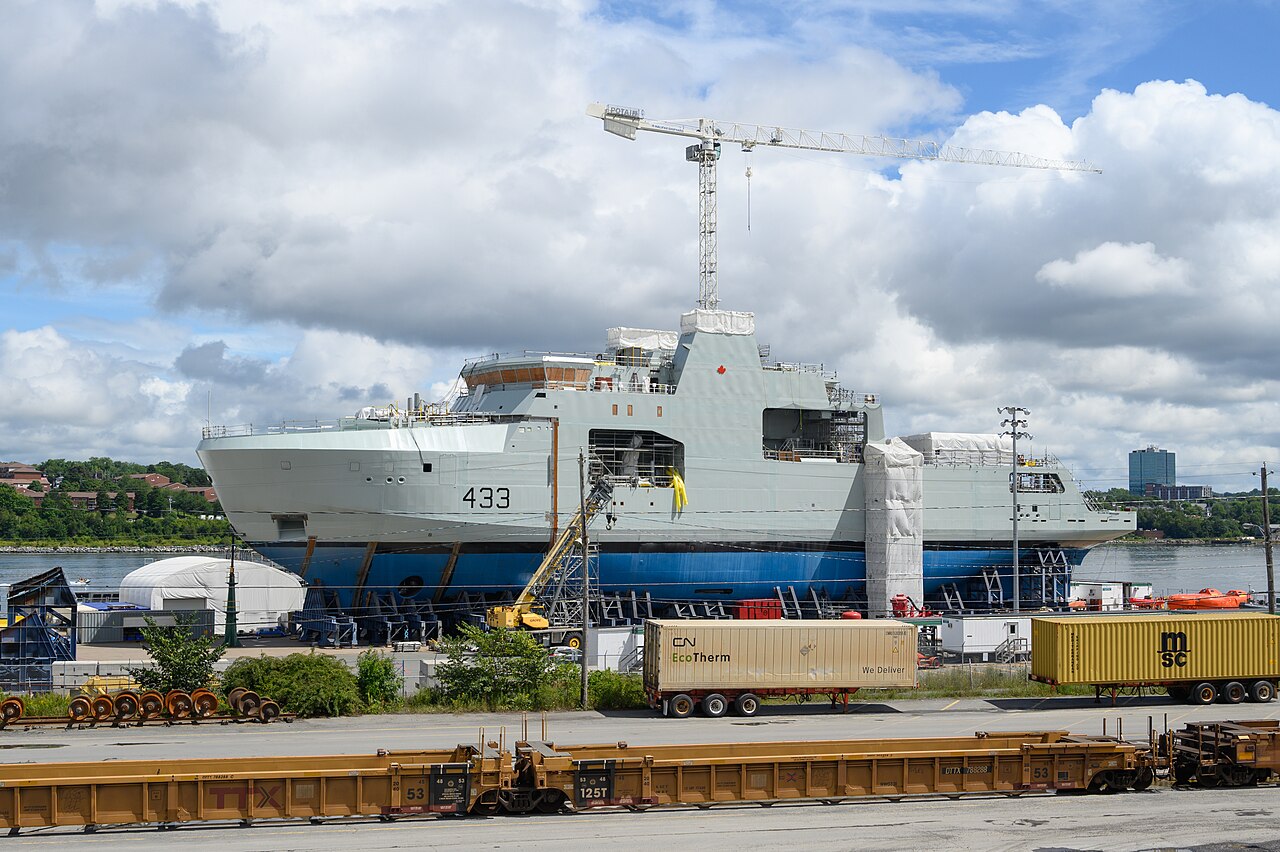
In 2010, the government announced the National Shipbuilding Procurement Strategy (NSPS) to replace and enhance the surface fleets of the RCN and CCG and create thousands of jobs within Canada. In October 2011, Irving Shipbuilding Inc. of Halifax, Nova Scotia, was chosen under the NSPS to build the RCN’s new combat fleet of six AOPVs and 15 Canadian Surface Combatant warships; the umbrella agreement was signed in February 2012. Irving began design work and construction planning for the AOPVs in 2013. In December 2014, the Canadian government awarded Irving the contract to build six arctic and offshore patrol vessels for the RCN. Although the initial contract was valued at $2.3 billion (for five ships), costs quickly increased. A 2023 estimate put the costs at $4.98 billion for six AOPVs.
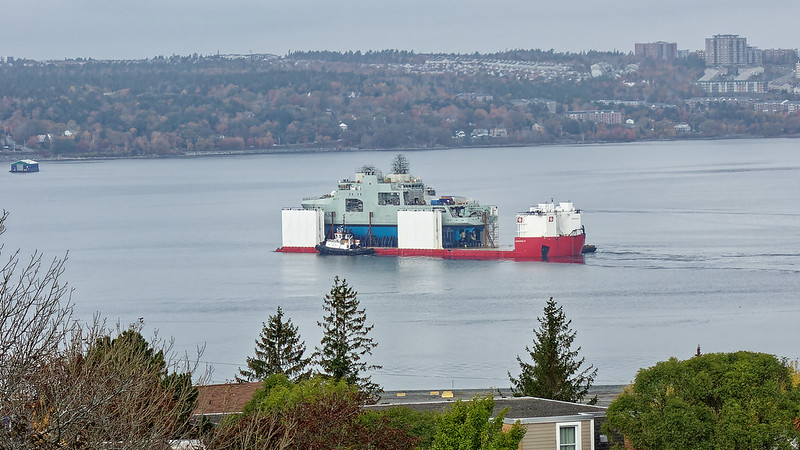
Construction on the lead ship, HMCS Harry DeWolf (Hull No. 430), began in 2015. It was delivered in 2020 and commissioned into the RCN in 2021. HMCS Margaret Brooke (431) was delivered in July 2021, HMCS Max Bernays (432) in 2022, HMCS William Hall (433) in 2023, HMCS Frédérick Rolette (434) in 2024 and HMCS Robert Hampton Gray (435) in 2025. As of September 2026, all have been commissioned into the RCN and are in active service except the Robert Hampton Gray.
What’s in a Name?
The Harry DeWolf class is the first class of RCN ships to be named after a prominent figure in the Canadian navy. Vice-Admiral Harry DeWolf was a distinguished naval officer and veteran of the Second World War. All other ships in the class are named after Canadian naval figures who served with distinction: Lieutenant-Commander (Nursing Sister) Margaret Brooke, Acting Chief Petty Officer Max Bernays, Petty Officer 1st Class William Hall, Lieutenant Frédéric Rolette and Lieutenant Robert Hampton Gray.
Northern Affiliations
Harry DeWolf class ships are affiliated with six Inuit regions in the North. The purpose of Northern Affiliation is to build connections between each ship and its associated region through community events and initiatives.
|
HMCS Harry DeWolf
|
Qikiqtani
|
|
HMCS Margaret Brooke
|
|
|
HMCS Max Bernays
|
Kitikmeot
|
|
HMCS William Hall
|
Kivalliq
|
|
HMCS Frédérick Rolette
|
|
|
HMCS Robert Hampton Gray
|
Canadian Coast Guard AOPS
In 2019, the Canadian government announced that two Arctic and Offshore Patrol Ships would be built for the CCG by Irving Shipbuilding Inc. The future CCGS Donjek Glacier was launched in April 2026. Delivery of the second ship, the future CCGS Sermilik Glacier, is expected in 2027. The CCG AOPS are intended for fisheries surveillance and offshore search and rescue on Canada’s east coast and in the low Arctic. They will also support icebreaking operations on the Atlantic coast in the winter and the low Arctic in the summer. Outfitted with a medical cabin, crane and shipping container accommodation, they will be able to support community resupply, humanitarian aid, navigation operations and scientific research.