Share on Facebook
 Share on X
 Share by Email
 Share on Google Classroom
Ladybugs, otherwise known as lady beetles or ladybird beetles, are insects in the family Coccinellidae. Although “ladybug” is the most widely used term in Canada, these insects are not true bugs. They are beetles in the order Coleoptera, with hardened forewings called elytra that protect the more delicate hindwings used in flight. Ladybugs are among the most recognizable insects in Canada. Many people know the familiar red beetle with black spots, but that image represents only part of the country’s ladybug diversity.
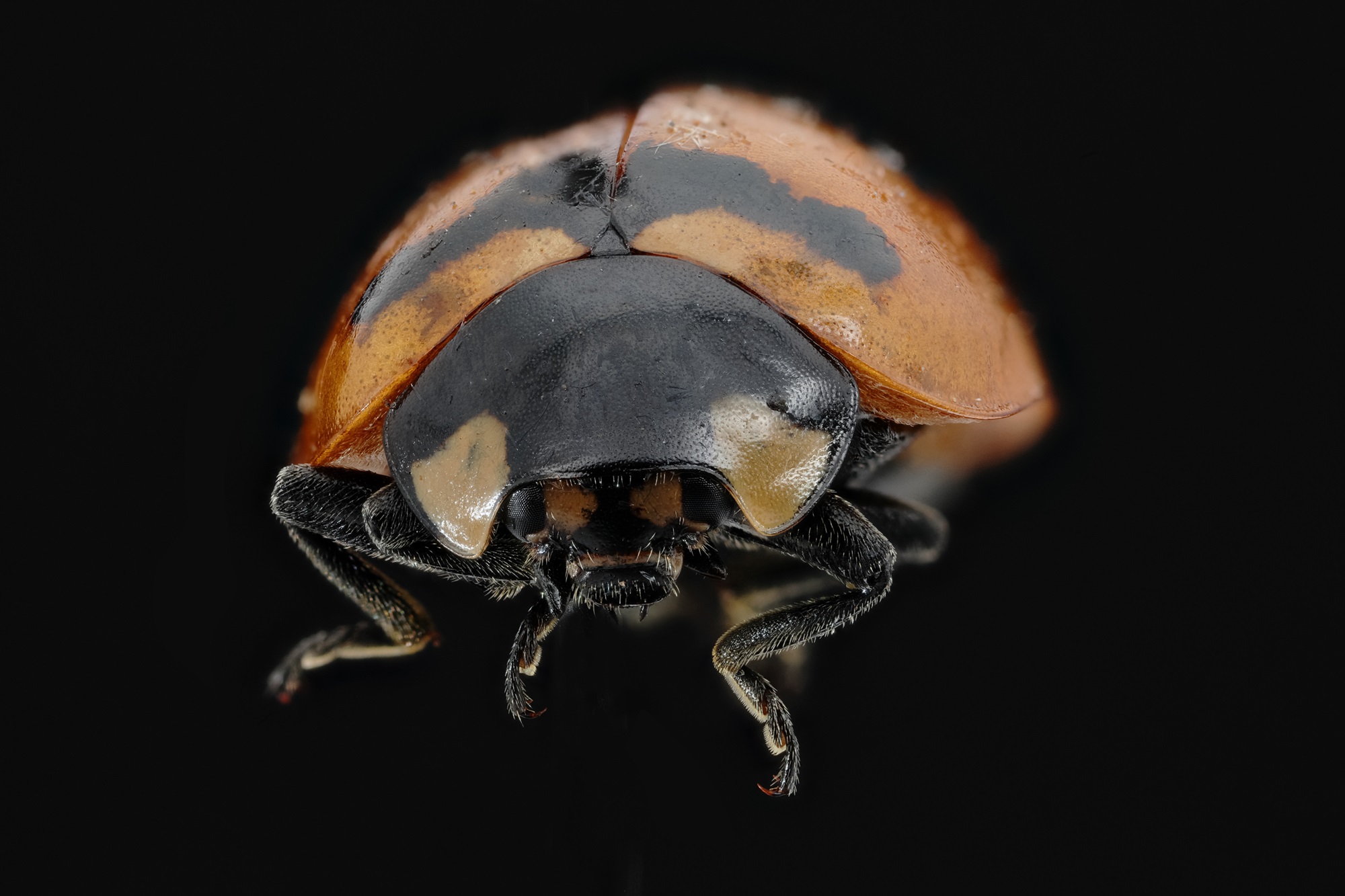
Key Terms
Elytra — Elytra refer to the hardened forewings, which serve as wing cases, in beetles.
Pronotum — The pronotum is the dorsal plate of an insect’s prothorax, which is the forward-most segment of an insect’s thorax.
Species Diversity
Globally, ladybugs include more than 6,000 described species in roughly 360 genera. As of 2010, about 160 species in 60 genera had been recorded in Canada, including at least nine established non-native species.
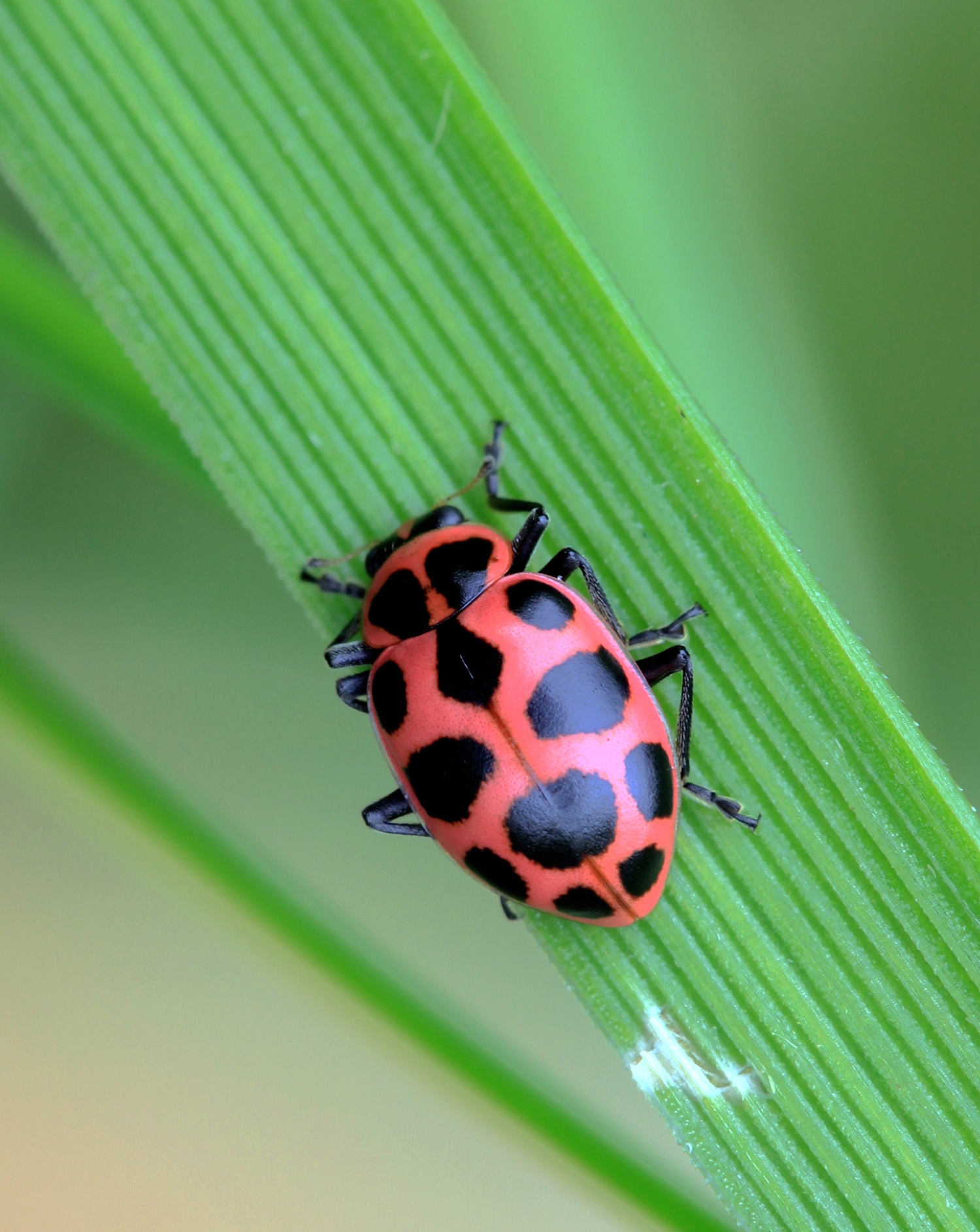
In southern Canada, many of the ladybugs most often noticed by people are non-native, especially the seven-spotted ladybug (Coccinella septempunctata) and the multicoloured Asian ladybug (Harmonia axyridis). Some of the most commonly seen native species are the spotted pink ladybug (Coleomegilla maculata), the twenty-spotted ladybug (Psyllobora vigintimaculata) and the eye-spotted lady beetle (Anatis mali).
Description
Adult ladybugs are usually small beetles with rounded or oval bodies, a dome-like back and a flat underside. Most are between 1 and 10 mm long. Their elytra meet in a straight line along the back, covering the abdomen and the folded hindwings. The thin, membranous hindwings, which are used in flight, are folded and fully hidden by the elytra while at rest.
Ladybugs also have a prominent pronotum, a shield-like segment on the thorax under which the head can be partly withdrawn. The pale marks on the pronotum of some species are sometimes mistaken for eyes, but the true eyes are smaller and located on the head.
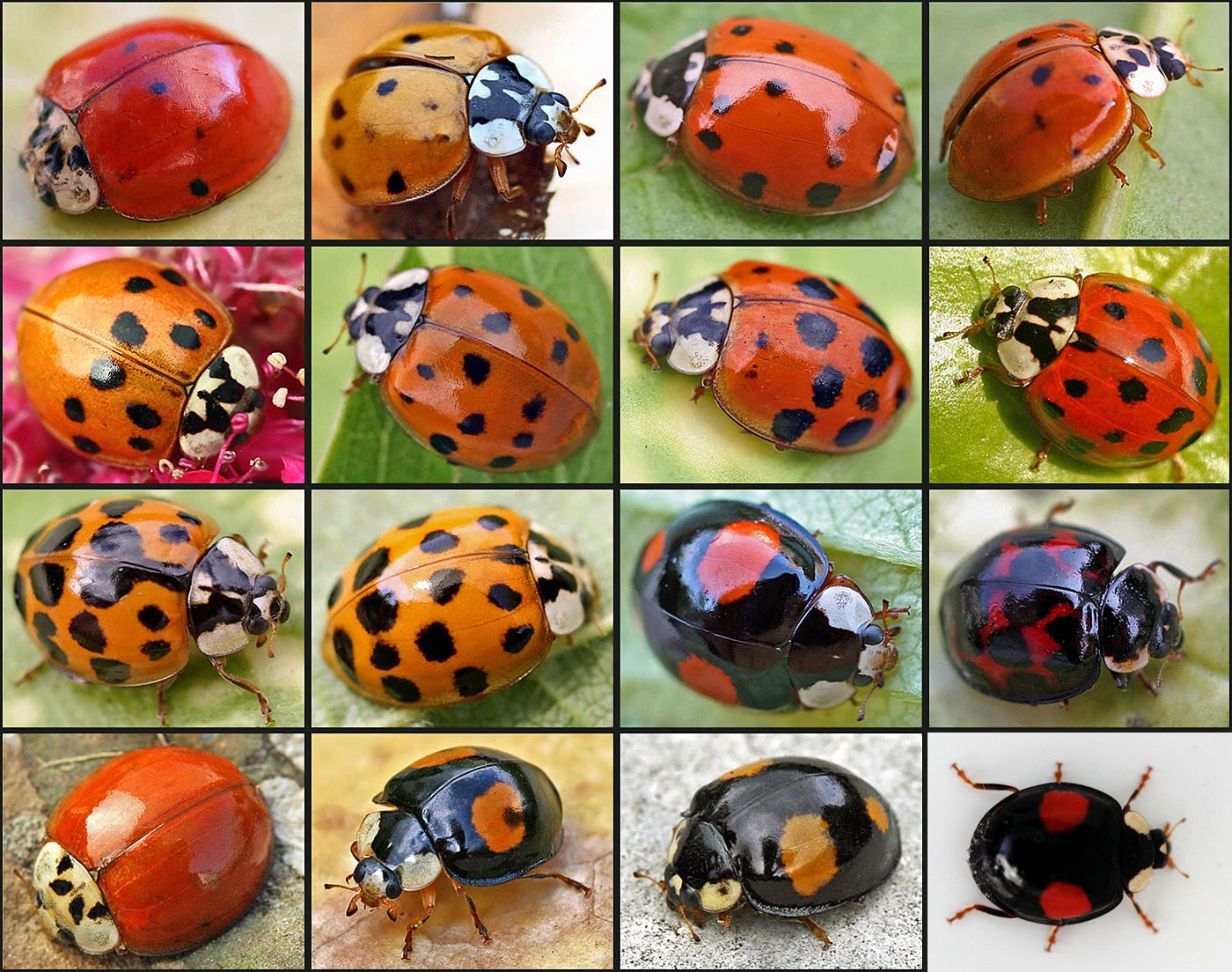
Ladybugs come in a wide variety of colours and patterns. Some are red, orange or yellow with black spots, while others are black, brown, greyish, pink or patterned in less familiar ways. Only about one third of Canadian ladybug species are the larger, brightly coloured species most familiar to the public; many others are small black or brown beetles and are rarely noticed.
Some ladybugs can be identified by their colours and patterns, but others are more difficult because individuals within the same species can vary greatly. The multicoloured Asian ladybug is especially variable. It may be pale or nearly spotless, orange or red with many black spots, or black with red markings. The nine-spotted ladybug usually has nine black spots, but the number and size of its spots can vary, and some western individuals may lack spots. With so much diversity and variation, some species require expert examination to confirm the identification.
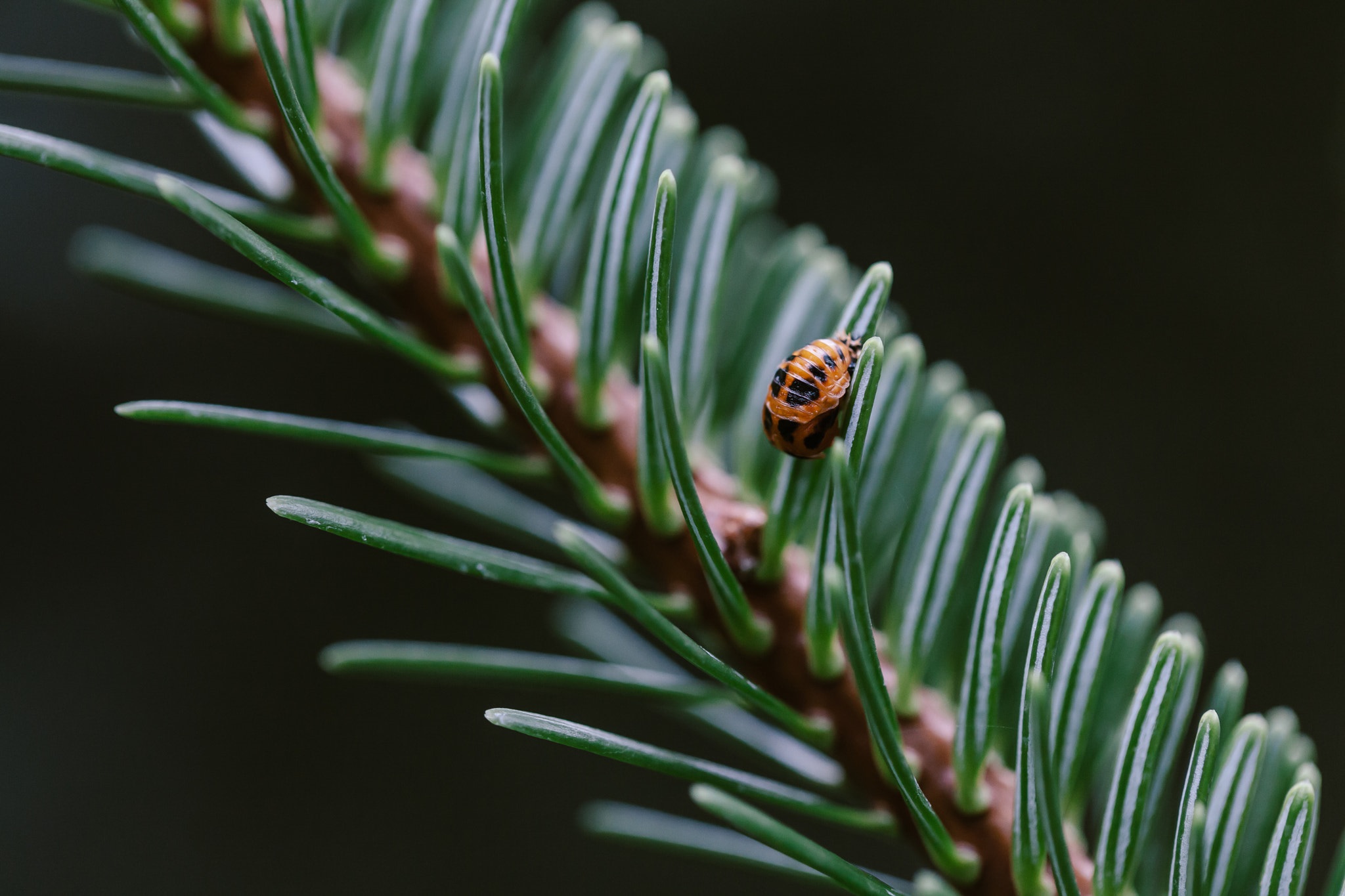
Ladybug larvae look very different from adults. They have elongated, soft bodies with six legs and are often covered with bumps or small spines. Many are dark with orange, yellow or pale markings, and are sometimes described as looking like tiny alligators.
Distribution and Habitat
Ladybugs occur throughout Canada, including in northern boreal regions. They are found in every province and territory.
Some species are generalists that can move between many habitats. Others are specialists, associated with particular prey, plants, trees, wetlands or ant-attended aphid colonies. Ladybugs can be found in farmland, parks, gardens, urban green spaces, wetlands, grasslands, forests, riparian areas and northern landscapes.
A few species are closely tied to particular habitats. The high-country lady beetle, Coccinella alta, can only be found in high altitudes, such as in the Rocky Mountains, while the boreal ladybug (Anisosticta borealis) is associated with sedges and grasses in marshes and wetlands of the taiga and Arctic.
Diet and Predators
Most ladybugs are predators. Aphids are a major food source, but ladybugs also eat scale insects, adelgids, psyllids, whiteflies, mealybugs, mites, insect eggs and other small, soft-bodied invertebrates. A smaller number feed on fungi or plants, while some predatory species will supplement their diet with pollen, nectar or other foods.
Ladybugs are distasteful to many predators. Their bright colours are an example of aposematism, in which conspicuous colours warn that an animal may be unpleasant or harmful to eat. Many brightly coloured ladybugs contain defensive alkaloids, which make them bitter, and pyrazines, which give them a strong odour. When disturbed, some practise reflex bleeding, releasing foul-tasting yellowish haemolymph from their leg joints. Another common defence is to drop from a plant, fold the legs tightly against the body and remain motionless until the threat passes.
Despite these defences, some species will still eat ladybugs, including birds, spiders, other ladybug species and predatory insects. For example, beetles in the genus Enoclerus actively hunt ladybugs, and it has been hypothesized that they may sequester ladybug chemical defences for their own use.
Reproduction and Development
Like all beetles, ladybugs undergo complete metamorphosis, passing through four life stages: egg, larva, pupa and adult. Females usually lay clusters of yellow, orange or cream-coloured eggs on plants, often near aphids or other larval food sources.
Development time varies with species and temperature, with warmer temperatures leading to faster development. In many species, the larvae will hatch after 3–5 days, feed actively, grow and shed their skin three times before pupating. Pupae attach to a surface and remain mostly still, although they may twitch if disturbed.
Overwintering and Swarming Habit
Most Canadian ladybugs overwinter as adults, emerging in the spring to mate and lay eggs. They shelter under bark, leaf litter, stones, vegetation or in human-made structures. Some gather in large numbers at overwintering sites.
The multicoloured Asian ladybug is especially well known for entering houses and other buildings in autumn, sometimes in large numbers. Prevention is usually the best response. Sealing entry points, improving window and door seals and using door sweeps can reduce indoor numbers. Ladybugs already inside can usually be removed with a vacuum cleaner.
Cultural Significance
Ladybugs have long been valued as biological control agents of pests. Several non-native species, including the seven-spotted ladybug and the multicoloured Asian ladybug, have been intentionally brought to Canada for this purpose. Gardeners can also buy ladybugs for release, but purchased beetles may disperse quickly, include non-native species or carry parasites and pathogens.
In many European cultures, ladybugs are considered lucky, especially in matters of romance. They appear in poems, stories, folktales and nursery rhymes, and have also been associated with predicting future events, such as sunny weather or harvest quality.
Ladybugs also appear in Indigenous storytelling in Canada. One example is the Cowichan story “Ladybug and the Flood,” in which Smuyqwa, the ladybug, teaches Stutsun a song and promises to save him from a great flood. When the Cowichan Valley floods, Stutsun sings the song, and Smuyqwa drinks the floodwaters, rescuing Stutsun, Syalutsa and the future Cowichan people.
Conservation
Despite their familiarity, many Canadian ladybug species remain poorly known. Of those that have been assessed, two Canadian ladybugs are listed under the federal Species at Risk Act: the nine-spotted lady beetle, Coccinella novemnotata and the transverse lady beetle, Coccinella transversoguttata (see Species at Risk Legislation in Canada).
The nine-spotted lady beetle is listed as Endangered. It was once common across southern Canada, from Vancouver Island through the Prairies to southern Quebec, but is now rarely seen. The transverse lady beetle is listed as Special Concern. Formerly common through most of the country, it began declining in the 1970s and is now absent from southern Ontario and the Maritimes, although it remains common in parts of its western and northern range.
The causes of declines in native ladybugs are not fully understood. Several declines coincide with the establishment of non-native ladybugs, which may have outcompeted native species in some areas. Other possible contributors include pesticide use, habitat change, urban expansion, farmland abandonment and changes in prey availability.
Ecological Importance
The ecological roles of ladybugs vary by species, habitat and prey availability. Generally, as predators, ladybugs help control the populations of plant-eating insects in gardens, farms, forests, wetlands and other habitats. This can reduce stress on plants and support broader ecosystem health.