Share on Facebook
 Share on X
 Share by Email
 Share on Google Classroom
The Eastern ribbonsnake (Thamnophis saurita) is a striped, non-venomous snake native to eastern North America. Four subspecies are recognized across its range, but the Northern ribbonsnake (Thamnophis saurita septentrionalis) is the only subspecies native to Canada. In Canada, it is found in southern and central Ontario, extreme southern Quebec and southwestern Nova Scotia. It is classified as a species at risk under Canada’s Species at Risk Act.
Description
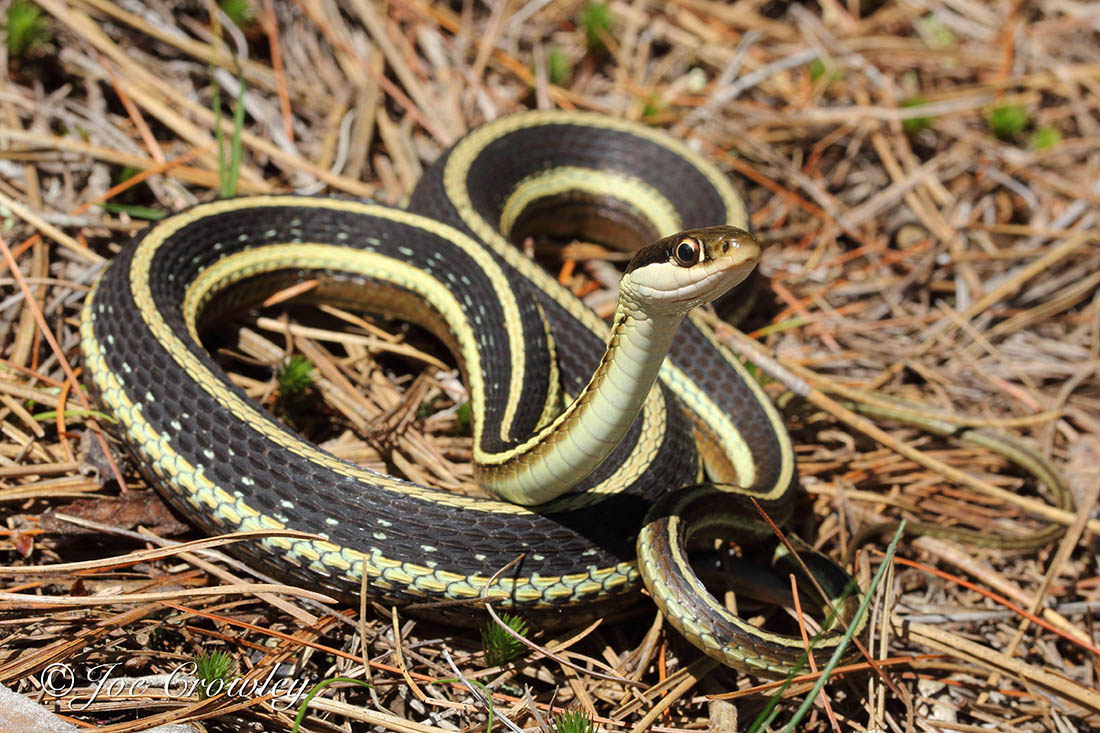
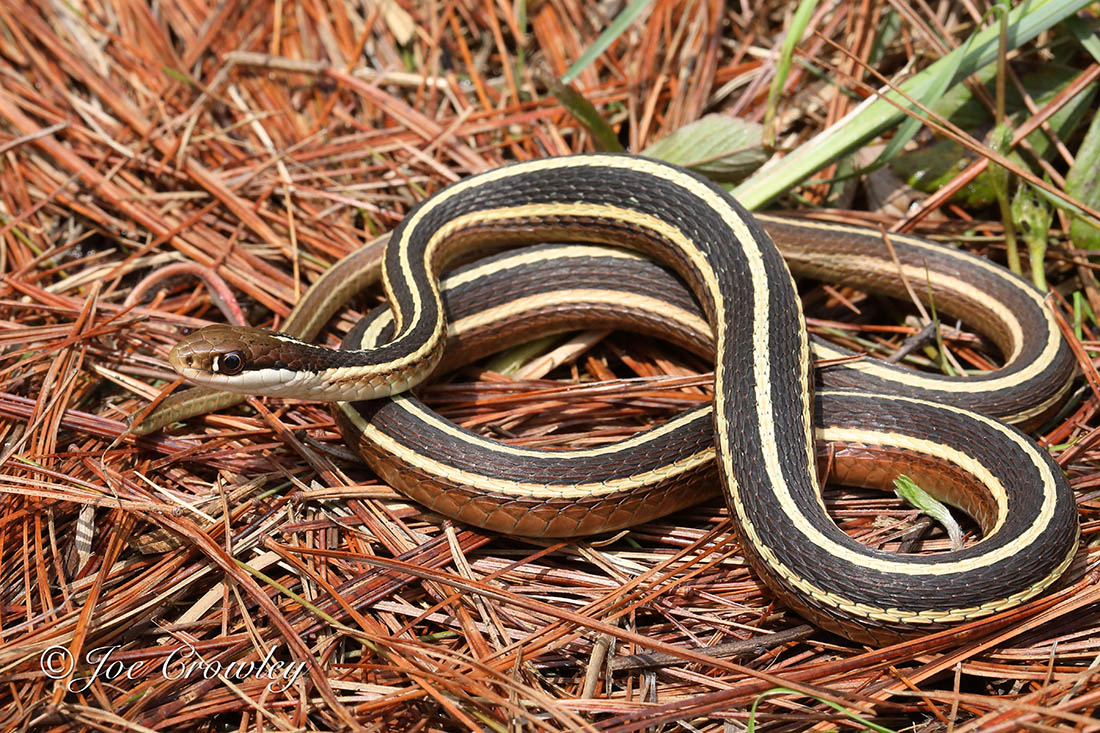
The Eastern ribbonsnake is a slender, medium-sized snake that can grow to just over a metre in length, although most individuals are much smaller than this. Females are larger than males. The scales are “keeled,” meaning each scale has a central ridge, giving the snakes a rough look and feel. Individuals are typically black or dark brown, with three yellow to yellowish-white stripes that extend from the neck to the tip of the tail. One stripe runs down the middle of the snake’s back and the other two along each of its sides on the third and fourth scale rows. A reddish-brown stripe on the lower sides runs along the first and second scale rows and edges of the belly. The chin and scales around the mouth are white to cream-coloured. A distinct, white-to-cream-coloured vertical bar is present in front of each eye. The centre of the belly is usually white, cream-coloured or pale yellow.
Distribution and Habitat
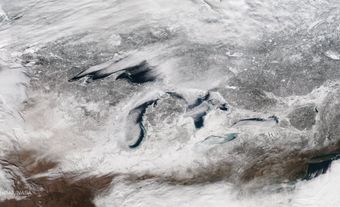
In Canada, the Eastern ribbonsnake is found in southern and central Ontario, extreme southern Quebec and southwestern Nova Scotia. Populations in Nova Scotia are isolated from the rest of the species’ range, with the closest population being more than 700 km away by land. The Eastern ribbonsnake is widespread throughout the eastern United States, ranging from Maine south to the Florida Keys and west to Wisconsin and Louisiana, although it is absent from large areas throughout the central portion of its distribution.
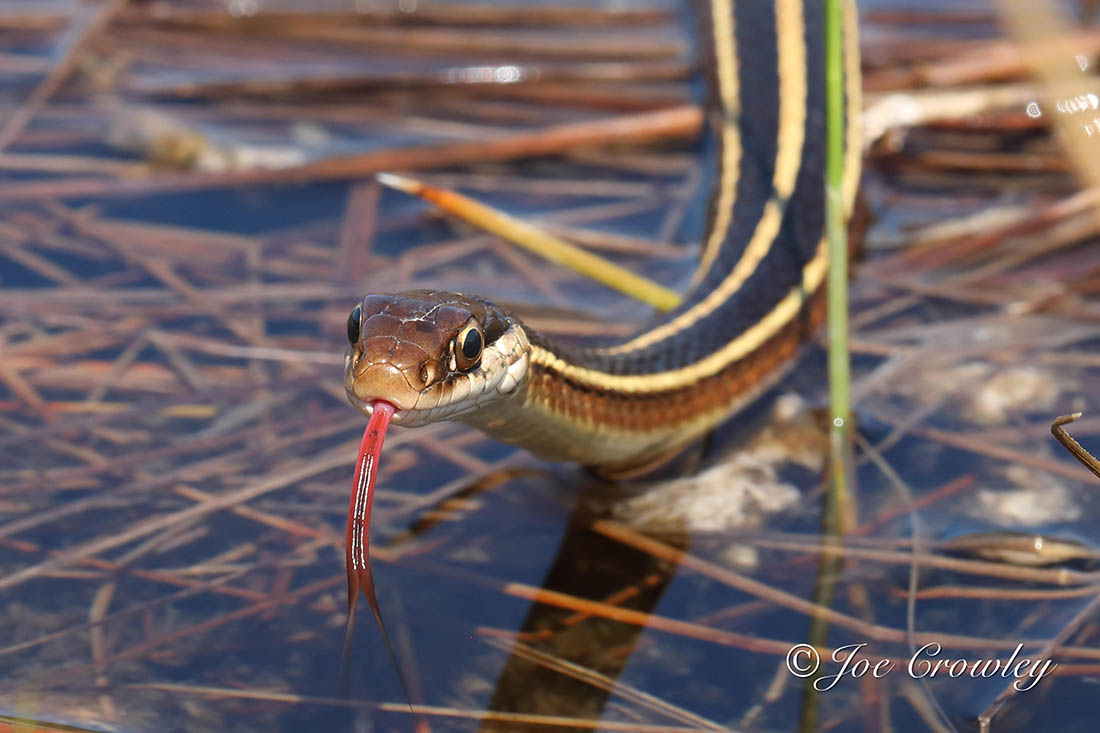
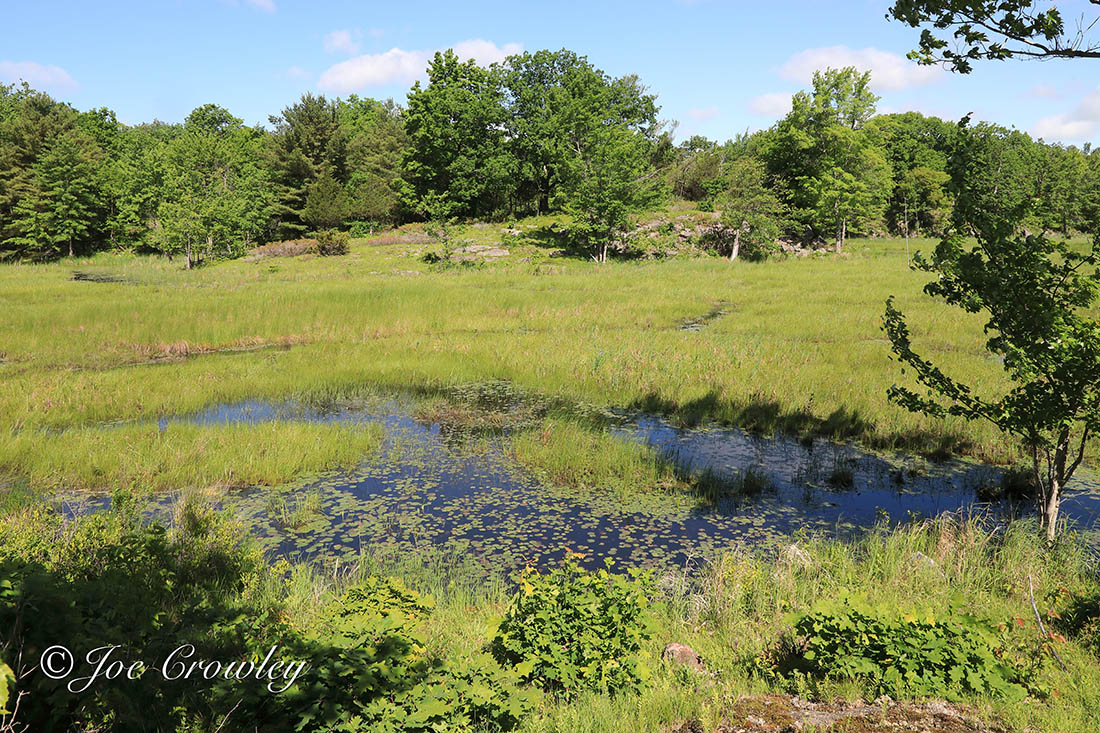
Eastern ribbonsnakes are semi-aquatic and live in wetlands (bogs, marshes, swamps) and along the shorelines of lakes, rivers, streams and ponds. They are most commonly found along shorelines with abundant vegetation such as grasses, sedges and shrubs. Although they spend most of their time near the water, they may occasionally move into nearby forests, fields or other terrestrial habitats to give birth, shed or seek cover from harsh weather. Eastern ribbonsnakes spend the winter hibernating underground in places like rock crevices, mammal burrows, ant mounds or the foundations of old buildings. These locations allow the snakes to get below the frost line and avoid freezing temperatures.
Did you know?
Eastern ribbonsnakes climb into shrubs and other low-lying vegetation to bask in the sun. Individuals can occasionally be found several meters off the ground, often overhanging the water. If potential predators approach, they are quick to dive into the water and swim away.
Reproduction and Development
In Canada, Eastern ribbonsnakes are typically active from late March or April until October or early November. Mating usually occurs in the spring after individuals emerge from hibernation, though some individuals may mate in the fall. Females give birth to 2–26 young, although maximum litter size may be a little lower than this in Canada. In Canada, the young are born from mid-July to mid-September. The newborn snakes are about 14–24 cm in total length. Eastern ribbonsnakes reach sexual maturity at two or three years of age. Individuals are capable of living for longer than 10 years in captivity, but the typical lifespan of wild individuals is unknown.
Diet and Predation
Eastern ribbonsnakes are most active during the day. They primarily search for prey in the mornings and early evenings, although they may also forage at night. Amphibians, particularly frogs and tadpoles, make up the majority of their diet. Other prey items include fish, leeches, insects and spiders. Eastern ribbonsnakes search for prey by sight and smell. After locating their prey, they give chase, capture the animal in their mouth and swallow it whole.
Predators of the Eastern ribbonsnake include wading birds (e.g., herons), mammals (e.g., raccoons, mink) and other snakes. Young Eastern ribbonsnake are prey for a variety of other wildlife such as large fish, frogs, turtles and crayfish.
Did you know?
Eastern ribbonsnakes are excellent swimmers. They can often be observed foraging in shallow water habitats such as wetlands and along the shorelines of lakes and rivers.
Threats
The destruction of wetlands and shoreline habitat is the primary threat to the Eastern ribbonsnake in Canada. Agricultural expansion, urban sprawl and cottage development are the main causes of this habitat loss. The death of snakes on roads is another serious threat to this species, particularly in southern Ontario, where road densities and traffic volumes are high. The invasive European common reed (Phragmites australis), which invades shallow-water habitats, is spreading rapidly across southern Ontario and degrading the species’ wetland and shoreline habitats (see Invasive Species in Canada: Plants). Other threats include increased predator abundance (e.g., raccoons) in many human-settled areas, intentional persecution of snakes by humans and diseases such as snake fungal disease.
Status and Conservation
Globally, the Eastern ribbonsnake is listed as a species of least concern by the International Union for Conservation of Nature (IUCN). This species faces a variety of threats and has already disappeared from some areas where it previously occurred, particularly in southern Ontario. Because of this, the Eastern ribbonsnake is listed as a species of Special Concern under the Canadian Species at Risk Act. Supporting wetland habitat protection and restoration initiatives within the Canadian range of the Eastern ribbonsnake is one of the most important ways that individuals and organizations can contribute to the recovery of this species.