Share on Facebook
 Share on X
 Share by Email
 Share on Google Classroom
Akami-Uapishkᵁ-KakKasuak-Mealy Mountains National Park Reserve in Newfoundland and Labrador is the largest national park in eastern Canada, spanning 10,700 km2 along the eastern coast of Labrador. Designated as the 46th national park on 31 July 2015, this park houses boreal forest, marine habitat, mountain terrain and an abundance of unique species. The conservation and management of the park is shared by the Indigenous communities who call these lands home: the Innu Nation, the Nunatsiavut Government, the NunatuKavut Community Council and the Innu of Quebec.
Name
The traditional names of the park hold significant meaning for the Indigenous communities in the area. Akami-Uapishkᵁ is an Innu word meaning white mountains across, while KakKasuak is a Labrador Inuit word for mountain.
Landscape
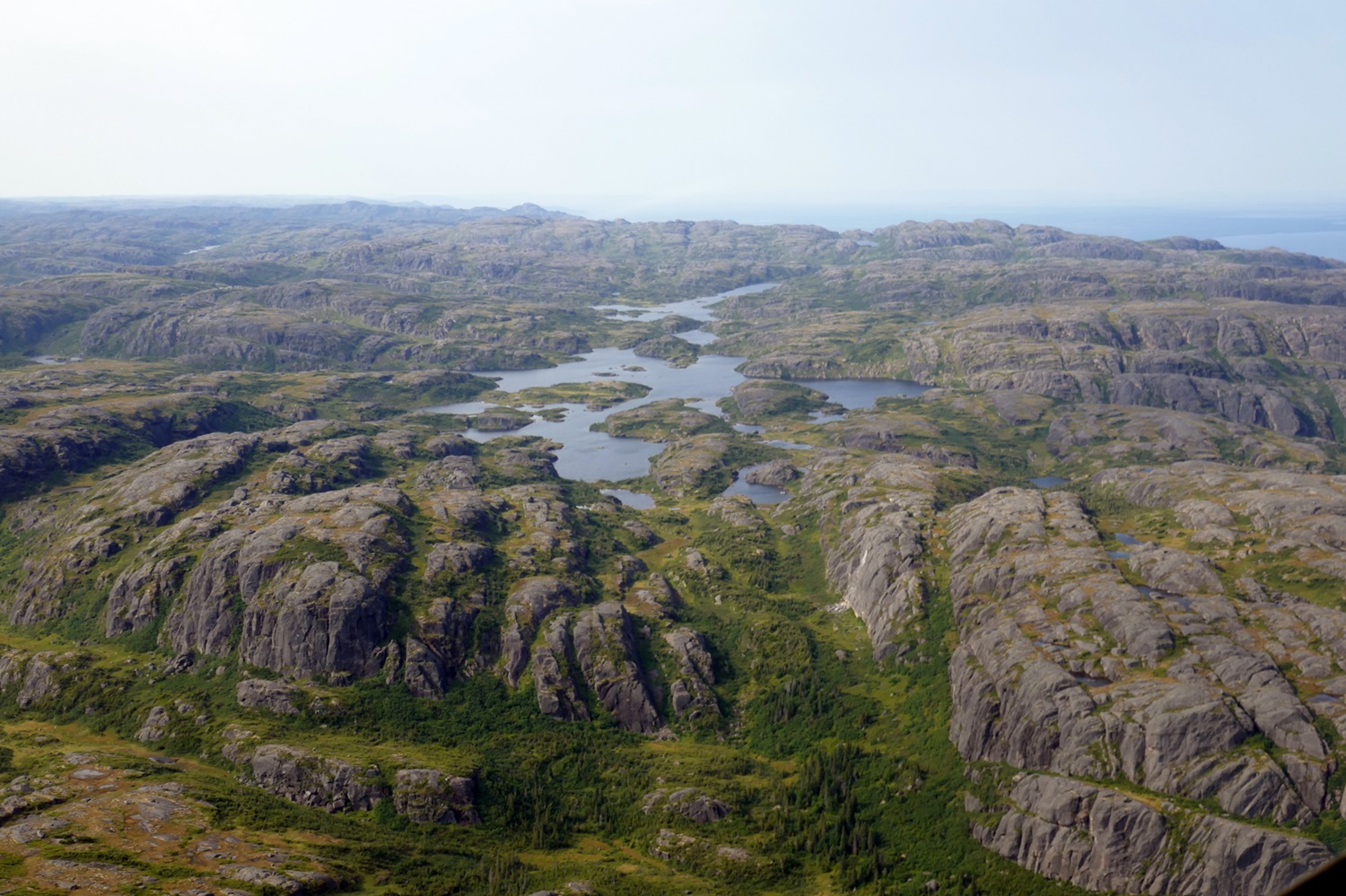
Akami-Uapishkᵁ-KakKasuak-Mealy Mountains National Park Reserve has a wide range of terrain and habitat, making the park diverse in animal and plant life. From the boreal forest along the mountainous landscape, to the coastal habitat and flowing rivers, this park allows for the protection of countless species.
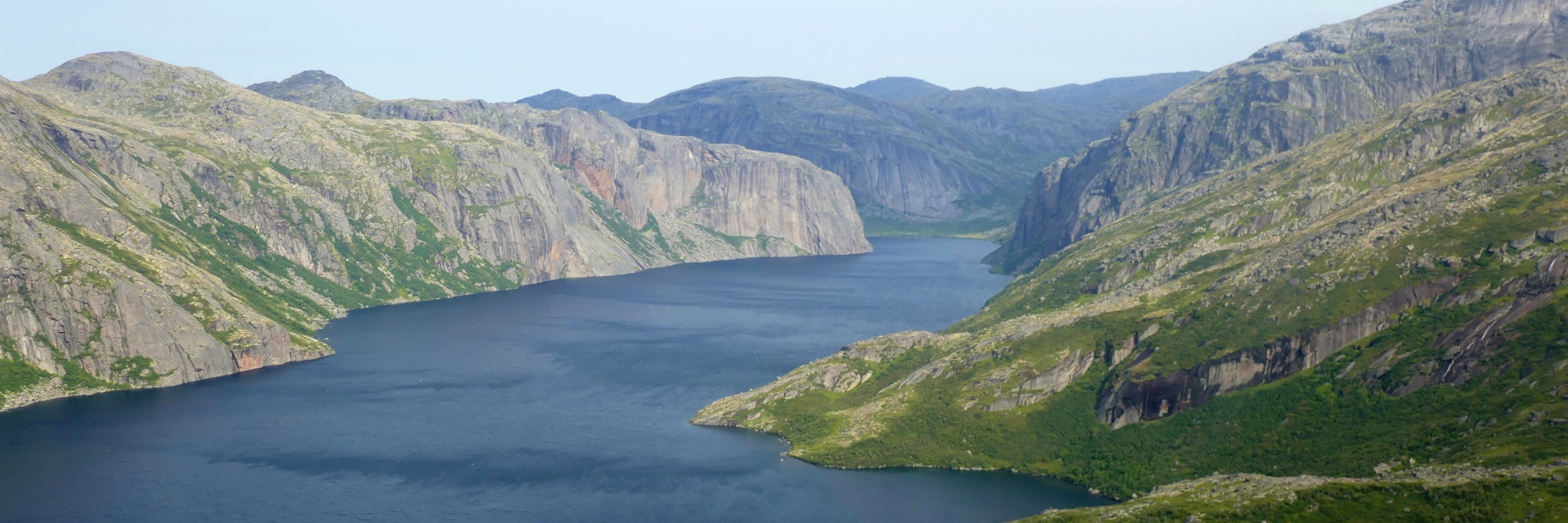
The Mealy Mountains tower over the park and overlook the vast Lake Melville, which sits just outside the park boundaries. Flowing rapids and waterfalls cascade off the mountains and into the Labrador Sea.
Wildlife and Plants
The White Bear, North and English rivers flow through the park, housing a large population of Atlantic salmon and trout.
The boreal section of this park houses multiple species, including wolves, moose, coyotes, snowshoe hares, beavers, porcupines, black bears, martens and foxes. These lands also provide vital protected habitat for the threatened Mealy Mountains caribou herd, a subpopulation of boreal woodland caribou. Further south, as the terrain turns to wetlands, multiple migratory birds, like ducks and geese, are found throughout the park. The coastline is also an ideal habitat for a variety of birds like common eiders, razorbills and various sandpipers.
Did you know?
Three subspecies of caribou can be found in Canada: the Peary caribou, the woodland caribou and the barren ground caribou. The threatened Mealy Mountains caribou herd belongs to the woodland subspecies (Rangifer tarandus caribou). Historically, Canada was also home to one other subspecies of caribou, the Dawson’s caribou of Haida Gwaii, which went extinct in the early 20th century, potentially due to the combined pressures of overhunting and habitat loss.
The boreal landscape is covered in a variety of plant life, including tamarack, white spruce, Labrador tea, common juniper, bunchberry, seaside pea and various lichens and mosses. Among the most unique plants found in the region are the non-photosynthetic ghost pipe and the carnivorous round-leaved sundew (see Carnivorous Plants of Canada).
Recreation
These lands have multiple recreational opportunities, including hiking, backcountry camping, kayaking and canoeing. With spanning mountains perfect for hiking and flowing rivers ideal for water activities, this park is an outdoor adventurer’s dream destination.
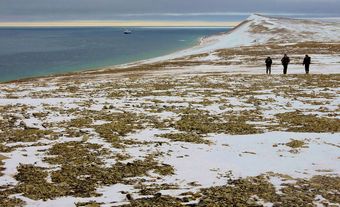
As the park meets the Labrador Sea, a 50-km stretch of sandy beaches known as the Wunderstrands offers visitors a chance to relax and explore the coastal environment. These beaches are only accessible by boat from Cartwright or Rigolet, two small communities near the park. Cartwright is accessible by highway, whereas Rigolet is only accessible by boat or plane.
Park Management and Visitor Facilities
Akami-Uapishkᵁ-KakKasuak-Mealy Mountains National Park Reserve is a completely remote park with no road access. Visitors can travel to the nearest communities — Happy Valley-Goose Bay, Sheshatshiu, North West River, Rigolet, Cartwright, Paradise River and Mud Lake — from which they can get access to the park through a tourism provider. In order to visit the park, visitors must first register with Parks Canada.
The park was officially established as the country’s 46th national park on 31 July 2015, and the lands were officially transferred by the Province of Newfoundland and Labrador on 10 July 2017. As a national park reserve, park management is dedicated to protecting a nationally significant example of the East Coast Boreal Natural Region (see Natural Regions), as well as the wildlife that exists within it.
Did you know?
As of 2025, Canada has 48 national park and national park reserves, and one national urban park, in 30 different natural regions. In total, the parks cover more than 340,000 km2, which is over 3 per cent of Canada’s land mass. In addition to this, there are currently 14 marine protected areas in Canada, covering over 480,000 km² or 8 per cent of Canada's marine and coastal areas.
Indigenous Significance
The Innu and Inuit people have lived on this land for at least 7,000 years, with thousands of archaeological sites dotted throughout the province to document their history. As a national park reserve, the park shares management responsibilities with Indigenous communities. The Innu Nation are most heavily involved in the management and conservation plans of the entire park, while the Nunatsiavut Government, NunatuKavut Community Council, and the Innu of Quebec are involved in various sections of the park.
Working within collaborative frameworks, the park’s first management plan will ensure sustainability of the land through traditional land uses, develop an understanding of the heritage and conservation values of the park and share the story of this special place with others.