Share on Facebook
 Share on X
 Share by Email
 Share on Google Classroom
Labrador tea (Ledum groenlandicum and Ledum palustre), also called Hudson's Bay or Indian tea, is a shrub of the heath family (Ericaceae).
Description
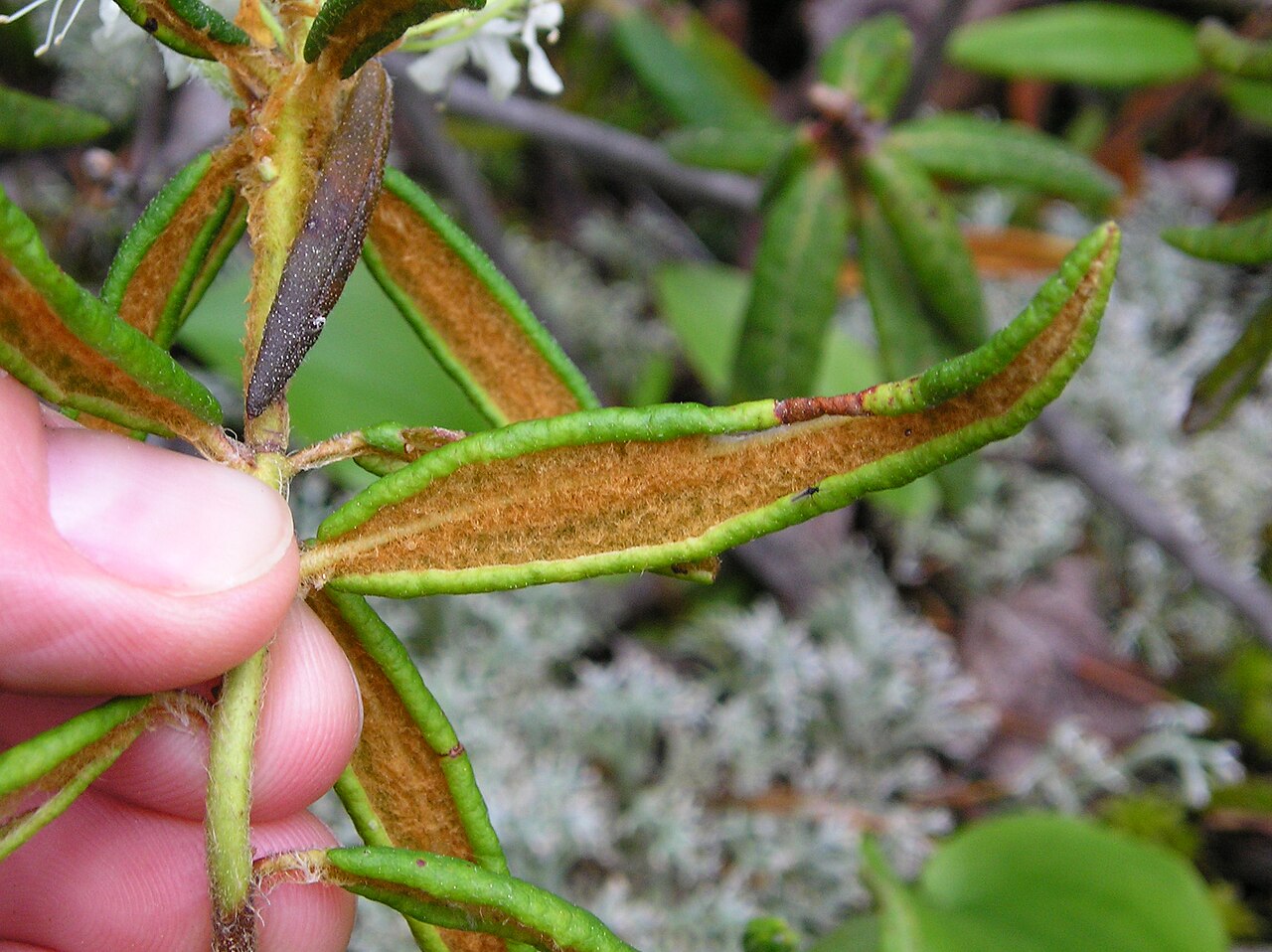
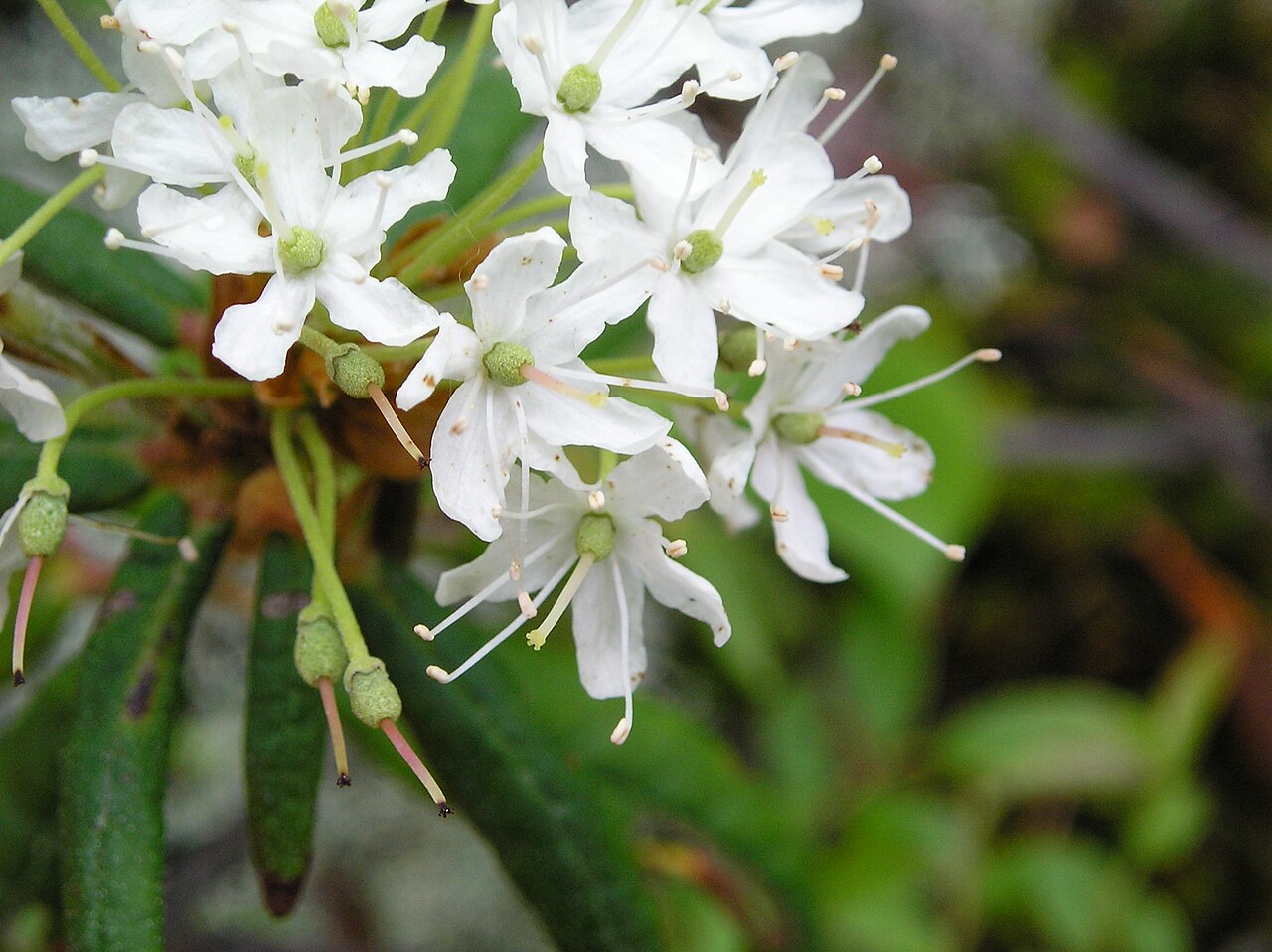
Labrador tea leaves are elliptical, up to 6 cm long, with revolute (backward-rolled) margins and dense, whitish to rust-coloured fuzz on the lower surfaces. The flowers are white and clustered.
Habitat and Distribution
Labrador tea grows up to 2 m high in wet, acidic soil throughout much of northern Canada and in peat bogs to the south.
Some four species of genus Ledum exist worldwide, three of them in Canada.
Uses
Ledum glandulosum (trapper's tea) is sometimes used for tea. The genus is closely related to Rhododendron, and contains compounds that can be harmful in high concentrations. There are poisonous look-alikes such as swamp laurel (Kalmia spp), which has pink flowers.
The aromatic young twigs, leaves and flowers have been used, fresh or dried, as an herbal tea by Indigenous Peoples and settlers. Tea should be weak; a small handful of leaves steeped in boiling water for 5 min yields a pleasant beverage.
(See also Traditional Plants and Indigenous Peoples in Canada.)