
Browse "Things"
-
Article
Canada and the Cold War (Plain Language Summary)
During the Cold War, most of the world was divided into two camps. The "West" was led by the US and the "East" was led by the Soviet Union. Canada sided with the West. The Cold War started after the Second World War. It ended in 1991 when the Soviet Union collapsed. There was no direct or "hot" war between the two superpowers. But tensions were high, and people were afraid of nuclear war. Some smaller wars were fought, like the Korean War. (This article is a plain-language summary of the Cold War. If you are interested in reading about this topic in more depth, please see our full-length entry, Canada and the Cold War.)
"https://d3d0lqu00lnqvz.cloudfront.net/media/new_article_images/CubanMissileCrisis/7322067464_e858ddfc17_z.jpg" // resources/views/front/categories/view.blade.php
https://d3d0lqu00lnqvz.cloudfront.net/media/new_article_images/CubanMissileCrisis/7322067464_e858ddfc17_z.jpg
-
Article
Canada and the Development of the Polio Vaccine
During the first half of the 20th century, poliomyelitis, a.k.a. polio or “The Crippler,” hit Canada harder than anywhere else. Successive polio epidemics peaked in a national crisis in 1953. By that time, however, scientists at Connaught Medical Research Laboratories of the University of Toronto had made key discoveries that enabled American medical researcher and virologist Jonas Salk to prepare the first polio vaccine. Connaught Labs also solved the problem of producing the vaccine on a large scale. Canada went on to play an important role in the development of the oral polio vaccine and international efforts to eradicate the disease.Click here for definitions of key terms used in this article.
"https://d3d0lqu00lnqvz.cloudfront.net/media/new_article_images/PolioVaccine/Acc1260.jpg" // resources/views/front/categories/view.blade.php
https://d3d0lqu00lnqvz.cloudfront.net/media/new_article_images/PolioVaccine/Acc1260.jpg
-
Article
Canada and the Dutch Hunger Winter
The Dutch Hunger Winter was a severe food crisis that took place in the Netherlands in 1944–45, during the Second World War. By the time the country was liberated by Canadian and Allied forces in May 1945, around 20,000 Dutch people had died from the famine. With liberation came an influx of food and other provisions for the starving population. The Canadian role in liberating the Netherlands resulted in a lasting relationship between the two countries. (See also The RCAF and Operation Manna.)
"https://d3d0lqu00lnqvz.cloudfront.net/media/media/f65416f8-4c4e-4571-b46b-702d8051055c.jpg" // resources/views/front/categories/view.blade.php
https://d3d0lqu00lnqvz.cloudfront.net/media/media/f65416f8-4c4e-4571-b46b-702d8051055c.jpg
-
Article
Canada and the Iraq War
The Iraq War (2003–11) was fought against Iraq by a coalition of 46 countries led by the United States and the United Kingdom. The decision to go to war was based in part on faulty intelligence and assumptions about the Iraqi manufacture and storage of weapons of mass destruction (WMD). The war was conducted in two phases, a brief conventional one in March and April 2003 and a much longer counterinsurgency operation, which ended in December 2011. Despite American and British pressure, Canadian Prime Minister Jean Chrétien refused to publicly support the war. Ostensibly, this was because there was no United Nations (UN) Security Council resolution authorizing the operation, although several other factors were involved.
"https://d3d0lqu00lnqvz.cloudfront.net/media/media/b3532769-6fc5-4950-bcff-36d917baf2bc.jpg" // resources/views/front/categories/view.blade.php
https://d3d0lqu00lnqvz.cloudfront.net/media/media/b3532769-6fc5-4950-bcff-36d917baf2bc.jpg
-
Article
Canada and the Korean War (Plain-Language Summary)
The Korean War began on 25 June 1950, when North Korea invaded South Korea. The fighting lasted until 27 July 1953, when a ceasefire was signed. North and South Korea are still technically at war because they didn’t sign a peace treaty. Canada was part of a United Nations force that supported South Korea in the 1950s. About 27,000 Canadians fought in the war from 1950 to 1953. Seven thousand served as peacekeepers between 1953 and 1957. During the war, 516 Canadians died and over 1,200 were wounded. This article is a plain-language summary of the Korean War. If you are interested in reading about this topic more in depth, please see our full-length entry, Canada and the Korean War.
"https://d3d0lqu00lnqvz.cloudfront.net/The-Memory-Project/image/14337_original.jpg" // resources/views/front/categories/view.blade.php
https://d3d0lqu00lnqvz.cloudfront.net/The-Memory-Project/image/14337_original.jpg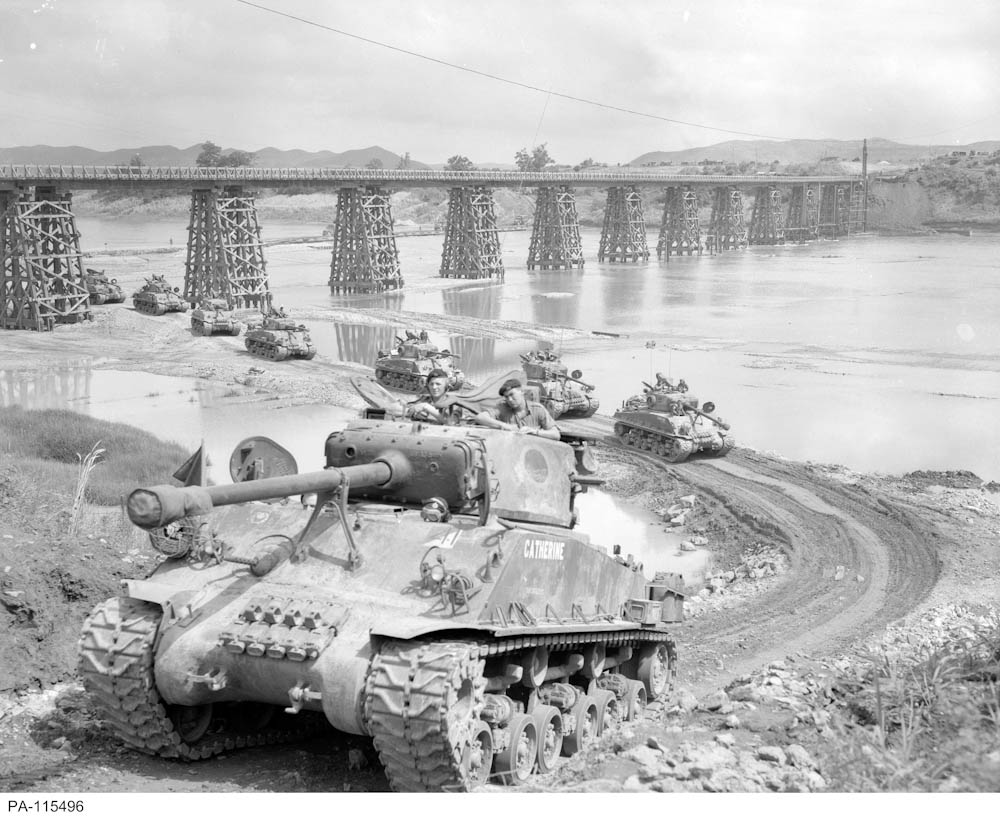
-
Article
Canada and the Liberation of Apeldoorn
Canadian soldiers liberated the city of Apeldoorn in the Netherlands on 17 April 1945, shortly before the Second World War ended in Europe. The Netherlands had been occupied by German forces since 1940 and was not completely liberated by Allied forces until May 1945. The Apeldoorn operation began on 11 April 1945 when 1st Canadian Infantry Division crossed the Ijssel River and advanced towards the city. The German defenders, fearing encirclement, withdrew without significant fighting. The Canadians captured the city with minimal loss of civilian lives or property damage, but suffered 506 casualties during the operation. Nearly 80 years later, the people of Apeldoorn still commemorate the Canadian soldiers who liberated their city. In 2005, Apeldoorn became twinned with the city of Burlington, Ontario.
"https://d3d0lqu00lnqvz.cloudfront.net/Apeldoorn/Children-Apeldoorn.jpg" // resources/views/front/categories/view.blade.php
https://d3d0lqu00lnqvz.cloudfront.net/Apeldoorn/Children-Apeldoorn.jpg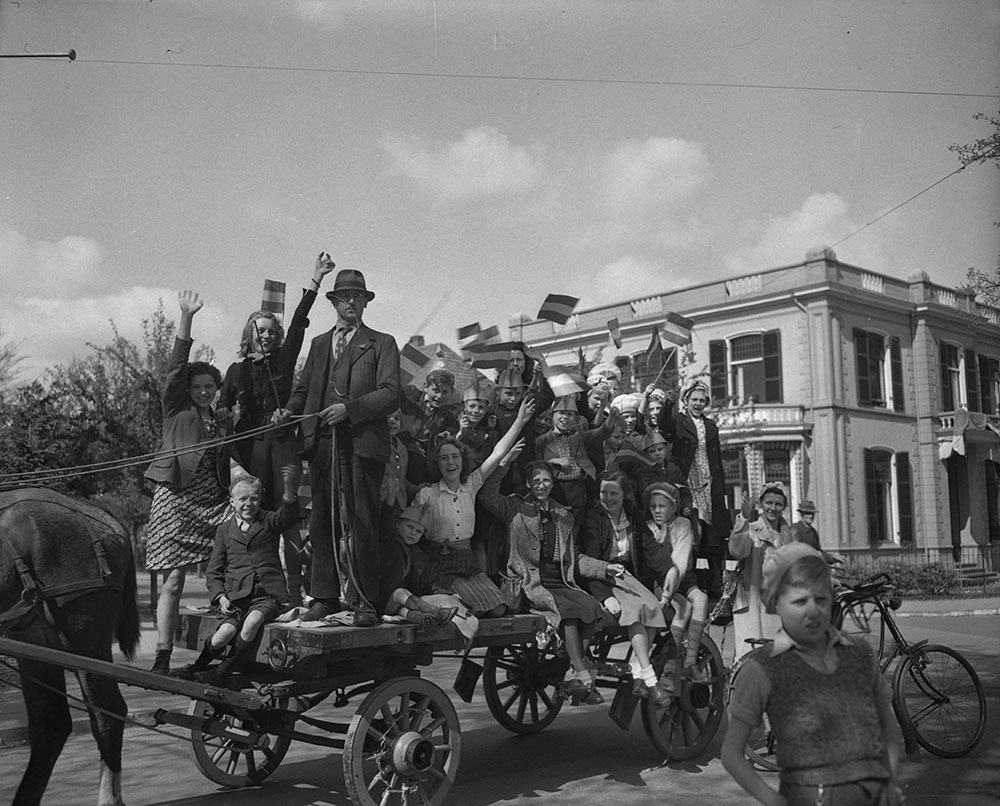
-
Article
Canada and the Manhattan Project
Canada helped develop the world’s first nuclear reactors and nuclear arms. During the Second World War, Canada participated in British research to create an atomic weapon. In 1943, the British nuclear weapons program merged with its American equivalent, the Manhattan Project. Canada’s main contribution was the Montreal Laboratory, which later became the Chalk River Laboratory. (See Nuclear Research Establishments). This Allied war effort produced the atomic bombs dropped on the Japanese cities of Hiroshima and Nagasaki in 1945. It also led to the development of Canada’s nuclear energy industry. Click here for definitions of key terms used in this article.
"https://d3d0lqu00lnqvz.cloudfront.net/media/new_article_images/CanadaandtheManhattanProject/Chalk_River1947.jpg" // resources/views/front/categories/view.blade.php
https://d3d0lqu00lnqvz.cloudfront.net/media/new_article_images/CanadaandtheManhattanProject/Chalk_River1947.jpg
-
Article
Canada and the Responsibility to Protect (R2P)
The Responsibility to Protect (R2P) is a non-binding political commitment made by United Nations Member States to protect populations from genocide, crimes against humanity, ethnic cleansing and war crimes. Canadian leadership was instrumental in the establishment of the International Commission on Intervention and State Sovereignty (ICISS) in 2000, which led to the development and eventual adoption of R2P at the 2005 UN World Summit (see also Canada and Peacekeeping).
"https://d3d0lqu00lnqvz.cloudfront.net/media/media/b52c2243-2c08-4941-9163-e8feea5c4cd3.jpg" // resources/views/front/categories/view.blade.php
https://d3d0lqu00lnqvz.cloudfront.net/media/media/b52c2243-2c08-4941-9163-e8feea5c4cd3.jpg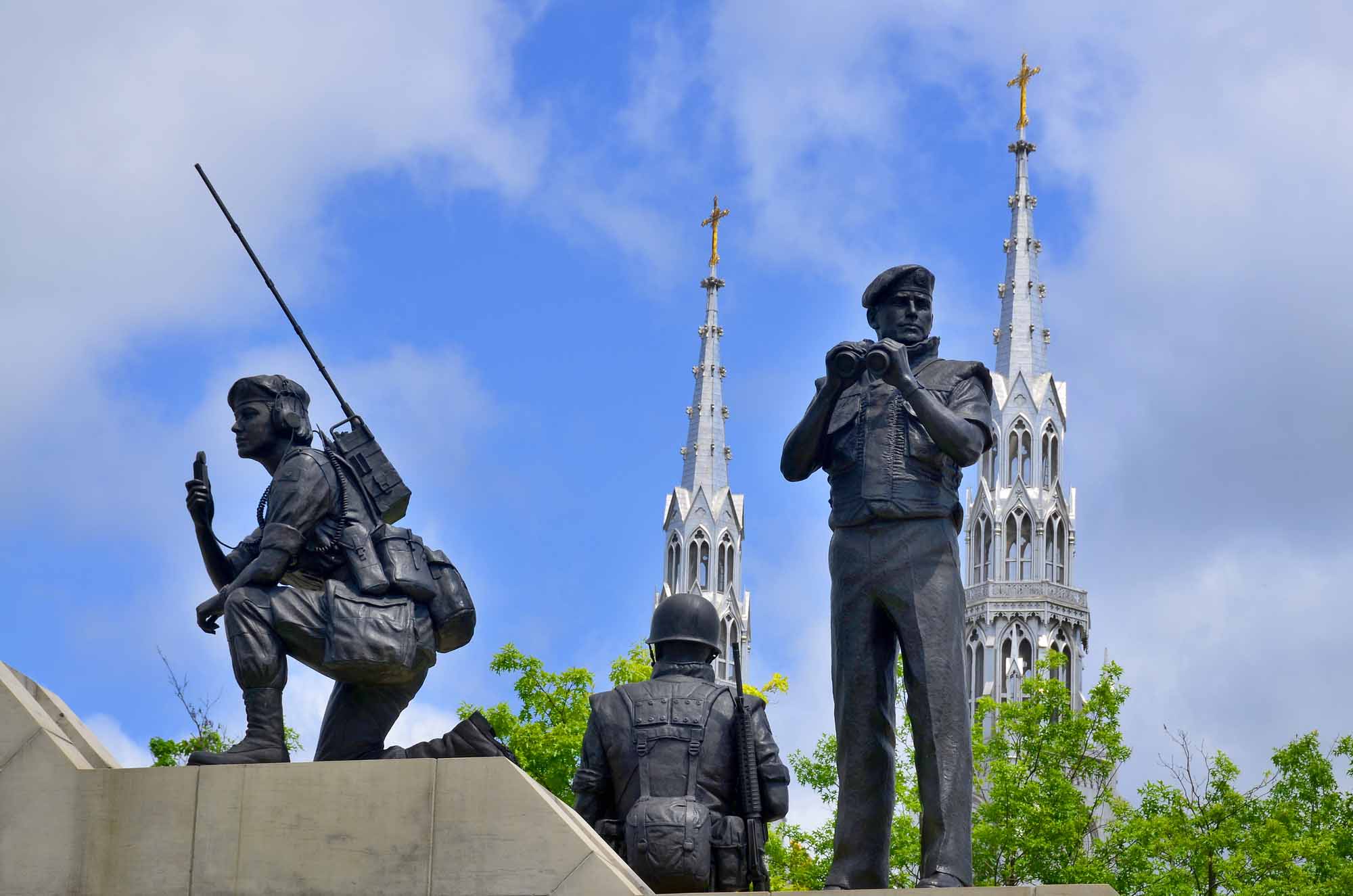
-
Article
Canada and the Role 3 Hospital in Kandahar
The NATO Role 3 Multinational Medical Unit (R3MMU) was a trauma hospital at the Kandahar Airfield in southern Afghanistan (2005 to 2021). The hospital was staffed by seven nations and led by Canada from 7 February 2006 to 15 October 2009. It was the first NATO multinational field hospital involved in combat operations. The R3MMU provided specialized surgical care to coalition forces, Afghan National Security Forces and civilians. More than 850 Canadian medical personnel served at the hospital between 2006 and 2011. In 2012, Canada received the Dominique-Jean Larrey Award in recognition of its medical achievements in Afghanistan.
"https://d3d0lqu00lnqvz.cloudfront.net/R3MMU/WMC-Role3-02.jpg" // resources/views/front/categories/view.blade.php
https://d3d0lqu00lnqvz.cloudfront.net/R3MMU/WMC-Role3-02.jpg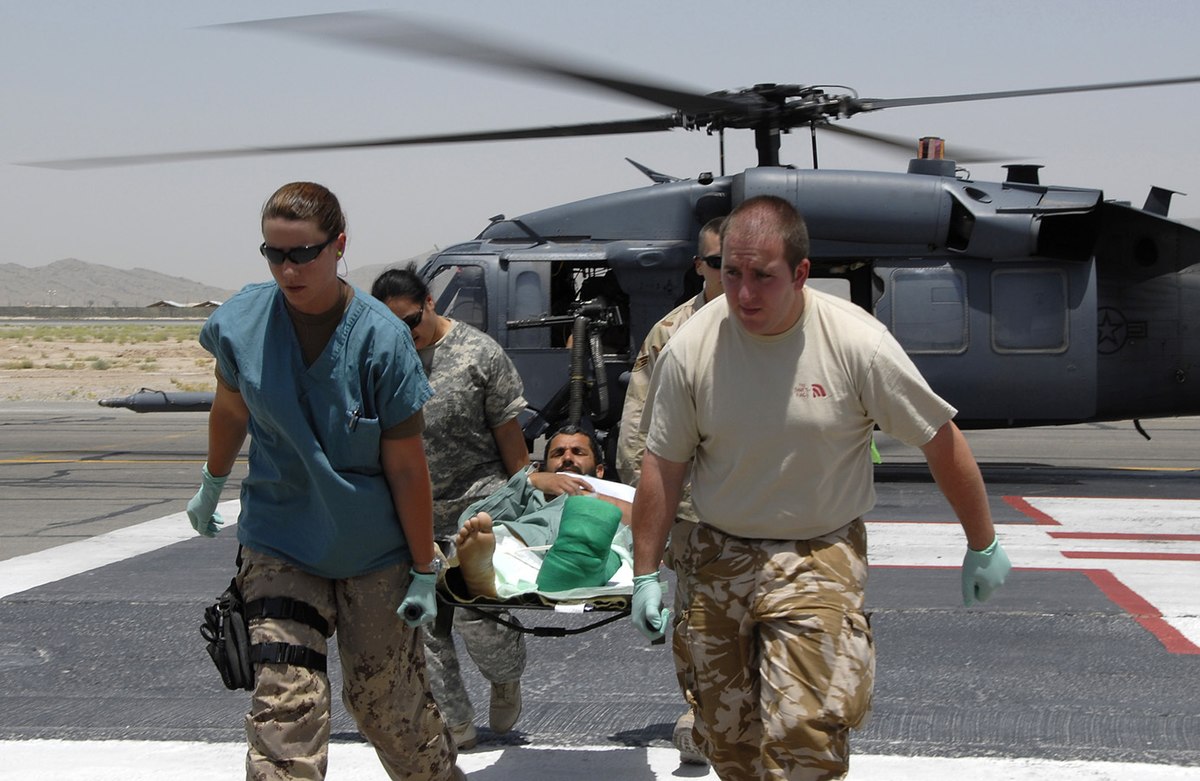
-
Article
Canada and the Spanish Civil War
Canada was officially neutral in the Spanish Civil War (1936–39), which was fought between the Republican government of Spain and the Nationalist rebels led by General Franco. However, many Canadians supported the Republican cause. Despite the Foreign Enlistment Act of 1937, which banned Canadians from participating in foreign wars, approximately 1,700 volunteered to fight for the Republican cause in the International Brigades. Canadians served in American or British units until July 1937, when the Mackenzie-Papineau Battalion was formed. An estimated 400 to 750 Canadians died during the Spanish Civil War.
"https://d3d0lqu00lnqvz.cloudfront.net/SpanishCivilWar/Crossing-Ebro.jpg" // resources/views/front/categories/view.blade.php
https://d3d0lqu00lnqvz.cloudfront.net/SpanishCivilWar/Crossing-Ebro.jpg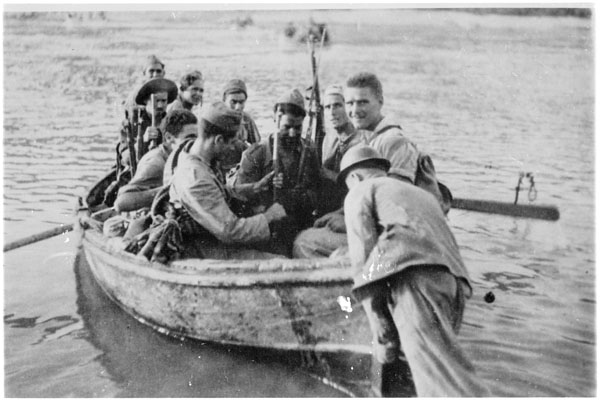
-
Article
Canada and the United States
"The Americans are our best friends whether we like it or not." This statement, uttered in the House of Commons by Robert Thompson, the leader of the Social Credit Party early in the 1960s, perhaps best captures the essence of Canada's complex relationship with its nearest neighbour.
"https://d3d0lqu00lnqvz.cloudfront.net/media/new_article_images/CanadianAmericanRelations/Trump Trudeau 2019 .jpg" // resources/views/front/categories/view.blade.php
https://d3d0lqu00lnqvz.cloudfront.net/media/new_article_images/CanadianAmericanRelations/Trump Trudeau 2019 .jpg -
Macleans
Canada and the US Explore Joint Defence
This article was originally published in Maclean’s magazine on September 12, 2005. Partner content is not updated. FOR THE FIRST TIME SINCE the attacks of Sept. 11, 2001, Canadian and American officials will sit down across the table from one another this month and begin delicate negotiations over the future of their joint military institutions.
"https://thecanadianencyclopedia.ca/images/tce_placeholder.jpg?v=e9dca980c9bdb3aa11e832e7ea94f5d9" // resources/views/front/categories/view.blade.php
https://thecanadianencyclopedia.ca/images/tce_placeholder.jpg?v=e9dca980c9bdb3aa11e832e7ea94f5d9
-
Article
Canada and the War in Afghanistan (Plain-Language Summary)
The War in Afghanistan (2001–14) was Canada’s longest war. It was Canada’s first major combat mission since the Korean War. The war started after the 9/11 attacks. The goal was to fight al-Qaeda and the Taliban in Afghanistan. The Taliban lost power but continued to fight. More than 40,000 Canadian troops served in Afghanistan; 165 Canadians were killed. Many veterans suffered from post-traumatic stress disorder (PTSD). This article is a plain-language summary of the War in Afghanistan. If you are interested in reading about this topic in more depth, please see our full-length entry, Canada and the War in Afghanistan.
"https://d3d0lqu00lnqvz.cloudfront.net/media/media/553ab440-c0e6-4662-a19d-fca316914feb.jpg" // resources/views/front/categories/view.blade.php
https://d3d0lqu00lnqvz.cloudfront.net/media/media/553ab440-c0e6-4662-a19d-fca316914feb.jpg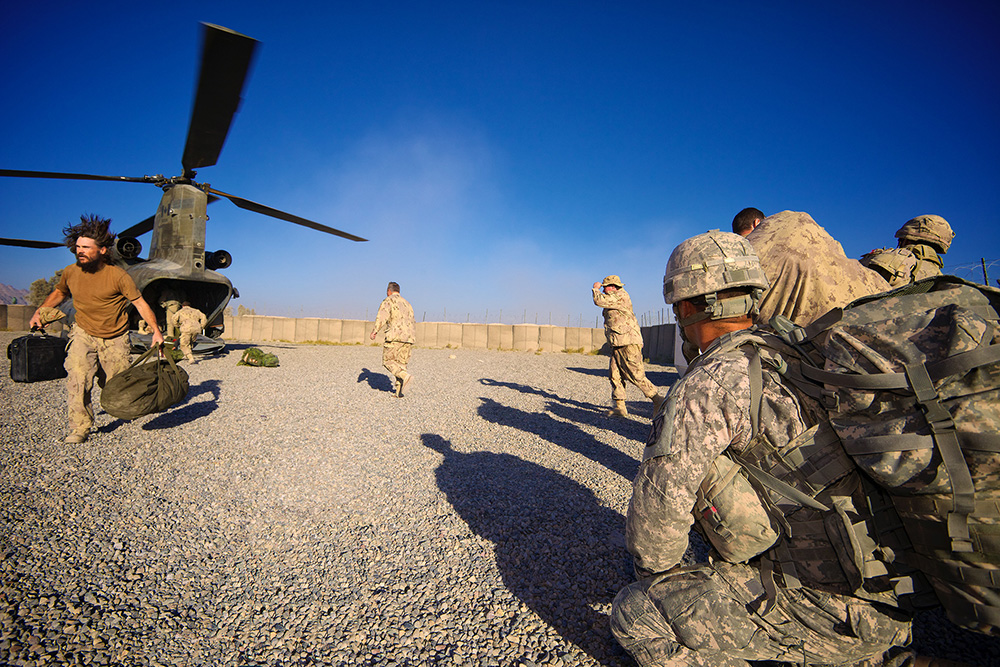
-
Article
Canada and Weapons of Mass Destruction
Canada has a long, complicated history with weapons of mass destruction (WMDs). Canadian soldiers have been attacked with chemical weapons and have used them offensively. (See Canada and Gas Warfare.) Canada has researched chemical, biological and nuclear weapons; but also, ways to defend against them. Some chemical weapons were tested in Canada and against Canadians with long-term consequences. Canada played a crucial role in the development of nuclear weapons. (See Canada and the Manhattan Project.) The country employed nuclear weapons primarily as defensive weapons during the Cold War. Canada signed international documents limiting the use of these weapons. Canada no longer has weapons of mass destruction. However, Canada is a member of the North Atlantic Treaty Organization and NORAD — alliances that employ nuclear weapons and other weapons of mass destruction.
"https://d3d0lqu00lnqvz.cloudfront.net/media/media/fe8757c3-dd58-4969-92f1-316d16aa4e6c.jpg" // resources/views/front/categories/view.blade.php
https://d3d0lqu00lnqvz.cloudfront.net/media/media/fe8757c3-dd58-4969-92f1-316d16aa4e6c.jpg
-
Article
Canada at the 2020 Olympic Summer Games
Due to the COVID-19 pandemic, the 2020 Olympic Summer Games were the first Olympic Games to be postponed. They were held in Tokyo, Japan, from 23 July to 8 August 2021. Canada sent 371 athletes (225 women, 146 men) and finished 11th in the overall medal standings with 24 (seven gold, six silver, 11 bronze). It is the most Canada has ever won at a non-boycotted Olympic Summer Games. Of the 24 medals, 18 were won by Canadian women. The seven gold medals tied Canada’s record at a non-boycotted Olympic Summer Games. Highlights for Canada at the Tokyo Games included Penny Oleksiak becoming Canada’s most decorated Olympian; Andre De Grasse winning three medals, including gold in the men’s 200 m dash; the Canadian women’s soccer team winning gold for the first time in dramatic fashion; and gold medallist Damian Warner becoming only the fourth athlete in Olympic history to score more than 9,000 points in the decathlon.
"https://thecanadianencyclopedia.ca/images/tce_placeholder.jpg?v=e9dca980c9bdb3aa11e832e7ea94f5d9" // resources/views/front/categories/view.blade.php
https://thecanadianencyclopedia.ca/images/tce_placeholder.jpg?v=e9dca980c9bdb3aa11e832e7ea94f5d9
