Share on Facebook
 Share on X
 Share by Email
 Share on Google Classroom
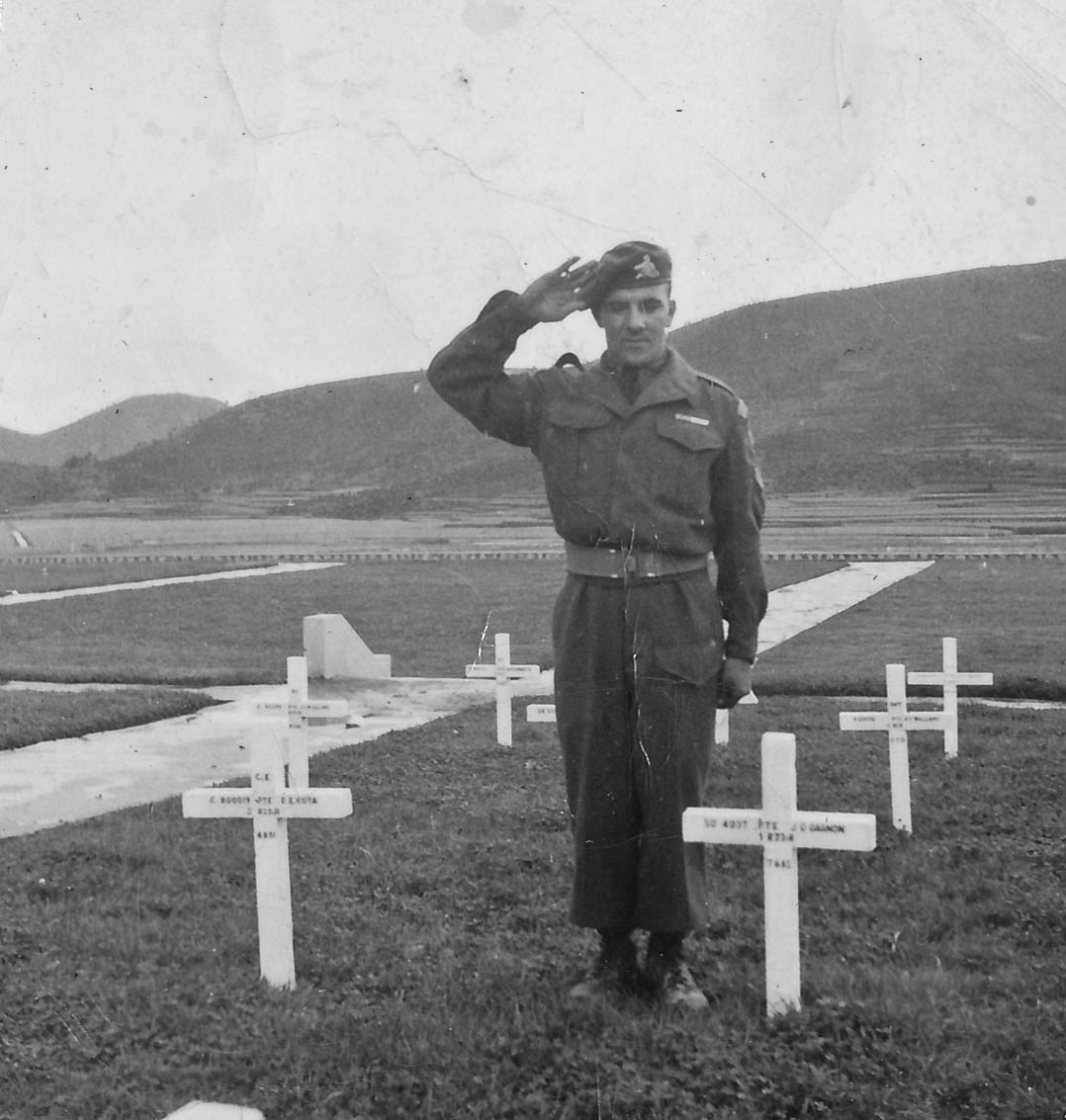
The Korean War began on 25 June 1950, when North Korea invaded South Korea. The fighting lasted until 27 July 1953, when a ceasefire was signed. North and South Korea are still technically at war because they didn’t sign a peace treaty. Canada was part of a United Nations force that supported South Korea in the 1950s. About 27,000 Canadians fought in the war from 1950 to 1953. Seven thousand served as peacekeepers between 1953 and 1957. During the war, 516 Canadians died and over 1,200 were wounded.
This article is a plain-language summary of the Korean War. If you are interested in reading about this topic more in depth, please see our full-length entry, Canada and the Korean War.
Background
Korea was governed by Japan from 1910 to 1945. It was freed by Soviet and American armed forces during the Second World War. After the war, Korea was divided along the 38th parallel. The Soviet Union controlled the north. The United States controlled the south. No one could agree to form a single government. In 1948, two separate countries were formed: the Republic of Korea (South Korea) and the Democratic People’s Republic of Korea (North Korea).
Both sides wanted to reunite Korea. This led to conflict in the late 1940s. In June 1950, North Korea invaded South Korea. China and the Soviet Union supplied North Korea with weapons and equipment.
United Nations Response
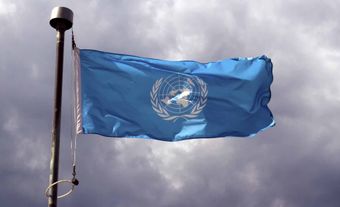
The United Nations decided to help South Korea. The UN military force would be led by the United States. Canada supported the UN decision. The Soviet Union was part of the UN Security Council. But it could not veto (reject) its decision. It was boycotting the UN Security Council because the council refused to include communist China.
Canada’s Response
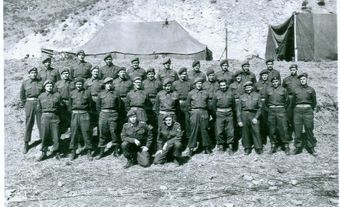
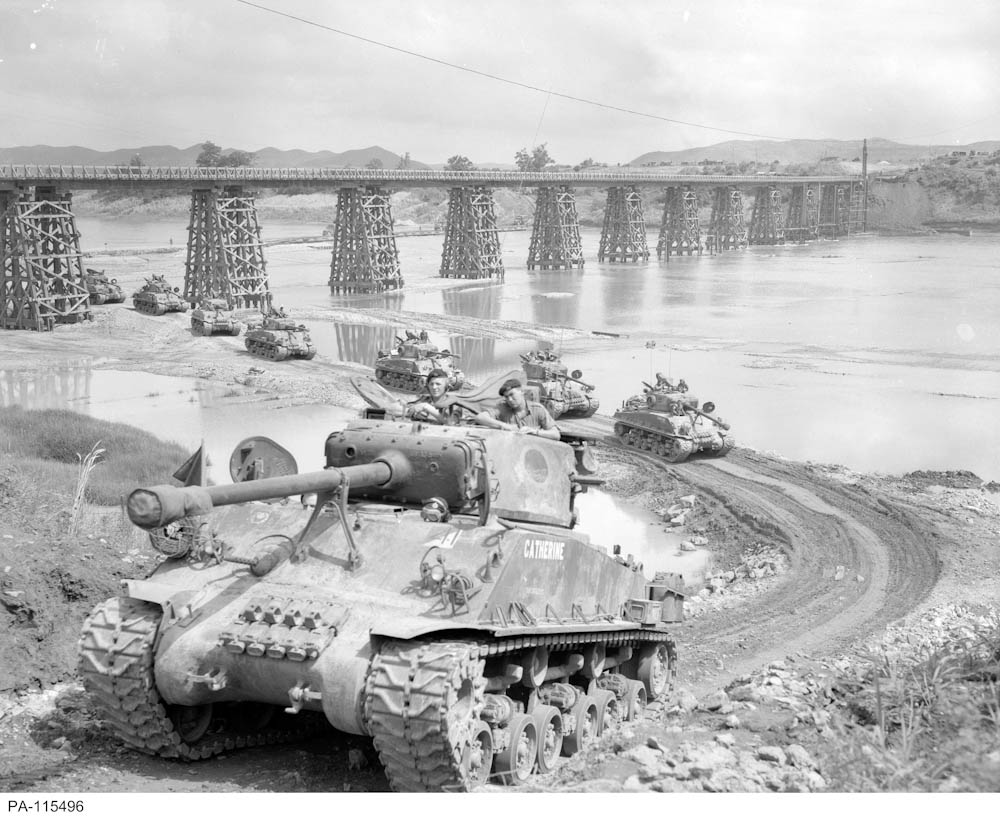
At the start of the war, Canada sent three navy destroyers and an air force transport squadron. In August 1950, a Canadian Army Special Force was created. It later became the 25th Canadian Infantry Brigade Group. In 1951, it joined the 1st Commonwealth Division. The division included troops from Britain, Australia, New Zealand and India.
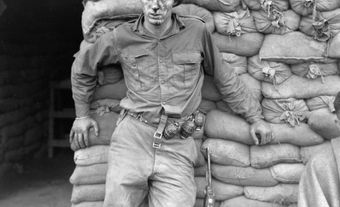
The first Canadian soldiers arrived in Korea in late 1950. The first unit was 2nd Battalion, Princess Patricia’s Canadian Light Infantry. It took part in the Battle of Kapyong. The rest of the Canadian brigade arrived in May 1951. By mid-1951, the fighting slowed. The front lines became fixed near the 38th parallel. The rest of the war was mainly patrols and raids across “No Man’s Land” (the territory between enemy lines). Canadians also fought in battles at Hill 355 and Hill 187.
Eight Canadian warships helped protect UN carriers and attack enemy targets. The Royal Canadian Air Force transported people and supplies. Some Canadian pilots flew jet fighters with the US Air Force.
End of the War
An armistice was signed on 27 July 1953. This ended the fighting. By that time, about 27,000 Canadians had served in the Korean War. After the ceasefire, about 7,000 Canadians stayed as peacekeepers. They guarded the Demilitarized Zone between North and South Korea. The last Canadian military personnel left in 1957.