Share on Facebook
 Share on X
 Share by Email
 Share on Google Classroom
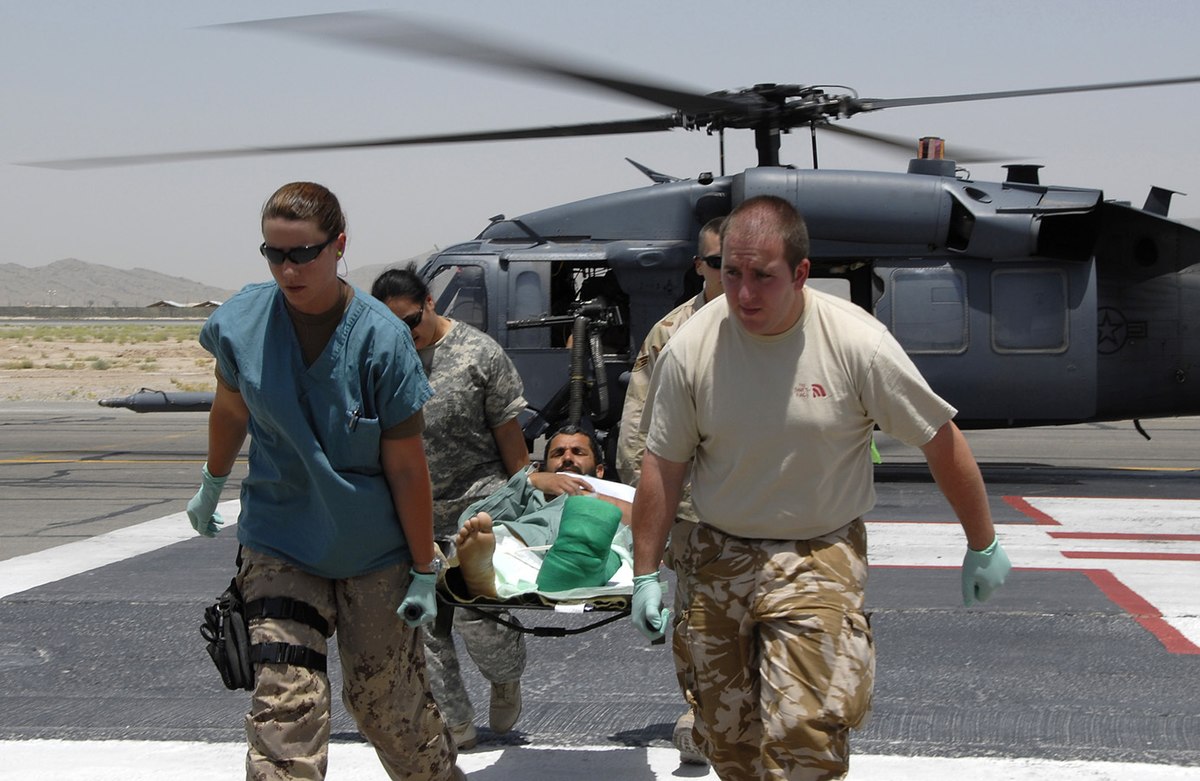
The NATO Role 3 Multinational Medical Unit (R3MMU) was a trauma hospital at the Kandahar Airfield in southern Afghanistan (2005 to 2021). The hospital was staffed by seven nations and led by Canada from 7 February 2006 to 15 October 2009. It was the first NATO multinational field hospital involved in combat operations. The R3MMU provided specialized surgical care to coalition forces, Afghan National Security Forces and civilians. More than 850 Canadian medical personnel served at the hospital between 2006 and 2011. In 2012, Canada received the Dominique-Jean Larrey Award in recognition of its medical achievements in Afghanistan.
Context: War in Afghanistan
The war in Afghanistan was Canada’s longest war (2001–14). In the aftermath of terrorist attacks on the US in 2001, Canada joined an international coalition that invaded Afghanistan to destroy the al-Qaeda terrorist network and the Taliban regime that had sheltered it. In August 2003, Canada became part of the International Security Assistance Force (ISAF), which was created after the fall of the Taliban regime to help the Afghan government establish a stable and secure environment. In 2005, the ISAF began to expand across Afghanistan from its original base in Kabul. At that point, Canada began conducting operations in Kandahar in the south. The country’s role included leadership of a combat mission (Operation Medusa), mentoring Afghan security forces and responsibility for the main military hospital in the region.
Role 3 Multinational Medical Unit at Kandahar Airfield
The R3MMU was situated at the Kandahar Airfield and provided medical care not only to combat troops but also to Afghan security forces and civilians. The mission of the R3MMU was treatment of coalition soldiers and civilians injured during the conflict, as well as the treatment of civilians with other conditions threatening the loss of life, limb or eyesight.
Medical support in NATO missions is organized by different “roles” or “echelons.” Role 1 medical support refers to care at the level of the small unit (e.g., battalion), and includes first aid, resuscitation and triage. Role 2 refers to medical support at the larger unit level (e.g., brigade), and includes evacuation from Role 1 facilities, triage, and the treatment of patients until they can return to duty (or be evacuated). Role 3 support is provided at the division level and beyond, with specialist surgical and medical care, diagnostic resources, preventive medicine and dentistry. Role 4 usually refers to hospital care in a patient’s home country.
Marc Dauphin, the last Canadian officer in charge of R3MMU, described the hospital in an interview published in Maclean’s magazine in 2013:
It was ramshackle. It was made out of plywood. It was held together with duct tape. The holes in the wall from shrapnel were [also] patched up with duct tape. The floors were linoleum, held together with duct tape. But the working conditions were good. There were more ER docs than in a normal civilian emergency room. […] We got to be quite a robust team over there.
In 2013, Dundurn Press released Dauphin’s Combat Doctor: Life and death Stories from Kandahar’s Military Hospital.
Canadian Leadership at R3MMU
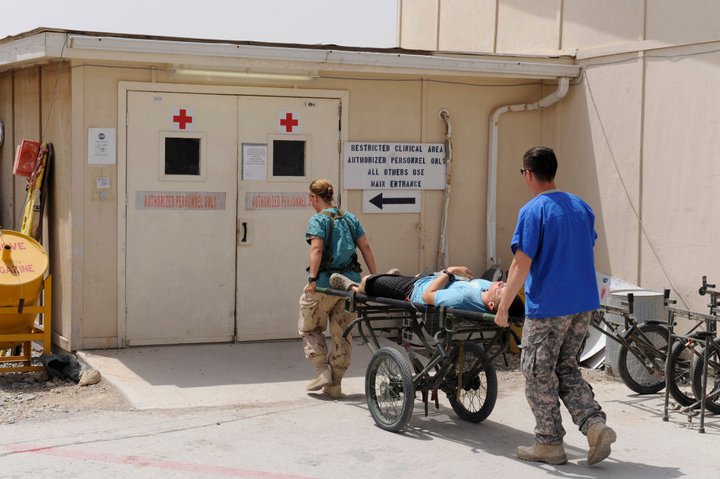
In February 2006, Canada became the lead nation at the R3MMU, with assistance from military medical teams from the United States, United Kingdom, New Zealand, Denmark and the Netherlands. The hospital replaced and expanded upon care that had been provided by a surgical detachment of a United States Army Combat Support Hospital during Operation Enduring Freedom.
Under Canadian leadership, the hospital nearly tripled in size, with three operating rooms, 20-30 inpatient beds, and 5-8 critical care beds. By October 2009, the hospital also had two CT scanners, endoscopy capability, digital radiography and ultrasonography, as well as a blood bank. Hospital staff included two orthopedic surgeons, two general surgeons, a neurosurgeon, oral/maxillofacial surgeon, radiologist, intensivist-internist and mental health team.
The hospital was led by the Canadian Forces Health Services until October 2009, when it handed over to the US Navy. Canada continued to provide medical personnel, however, making up about a third of hospital staff in December 2010. In 2011, Canadian combat operations ended in Afghanistan. The 3RMMU was led by the US Navy and Army until 2021, when American forces withdrew from Afghanistan.
Injuries and Medical-Surgical Care
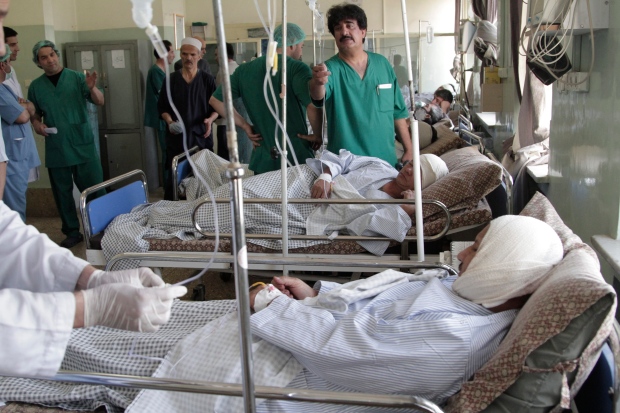
The hospital served a population of more than 15,000 soldiers and civilian workers at the Kandahar Airfield, tens of thousands of coalition soldiers stationed elsewhere in Afghanistan, as well as Afghan civilians and members of the Afghan army and police forces. They also treated Taliban fighters.
Hospital staff dealt with complex trauma cases, with many arriving at the same time. The most common source of injury was improvised explosive devices (IEDs), followed by gunshot wounds, vehicle crashes, and wounds from artillery, mortars or rockets. A survey of hospital records between 1 May and 15 October 2009, for example, revealed that IEDs (46 per cent) and gunshot wounds (26 percent) were the main causes of ICU admissions at the hospital in that period. Many patients had multiple amputations. According to military surgeon Andrew Beckett, hospital staff treated 19 patients with triple amputations (usually both legs and an arm) between October 2009 and December 2010 alone.
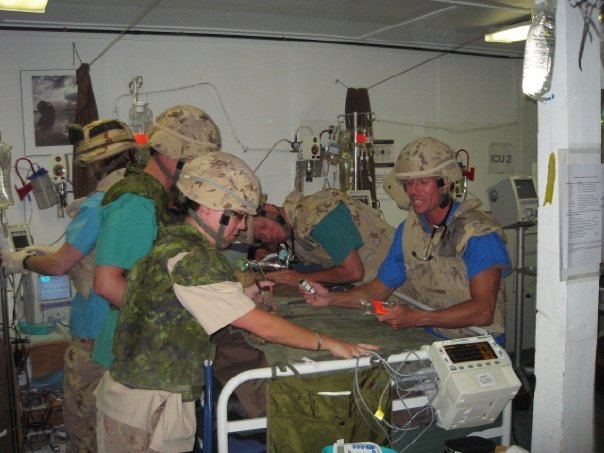
Under Canadian leadership (February 2006 to October 2009), hospital staff treated 4,134 patients and performed 6,735 procedures. NATO military forces accounted for one-quarter of hospital patients during this period, while the rest were members of Afghan security forces or Afghan civilians. Survival rates were high, with 98 per cent of soldiers and 95 per cent of Afghan patients transferred or discharged from hospital. This success has been credited to the hospital’s multidisciplinary approach to trauma care. Trauma teams included a team leader, nurses, general and specialty surgeons, lab technicians, and a radiologist, who could provide immediate diagnostic feedback and quickly arrange advanced imaging. The establishment of a “walking blood bank” was also a contributing factor to high survival rates.
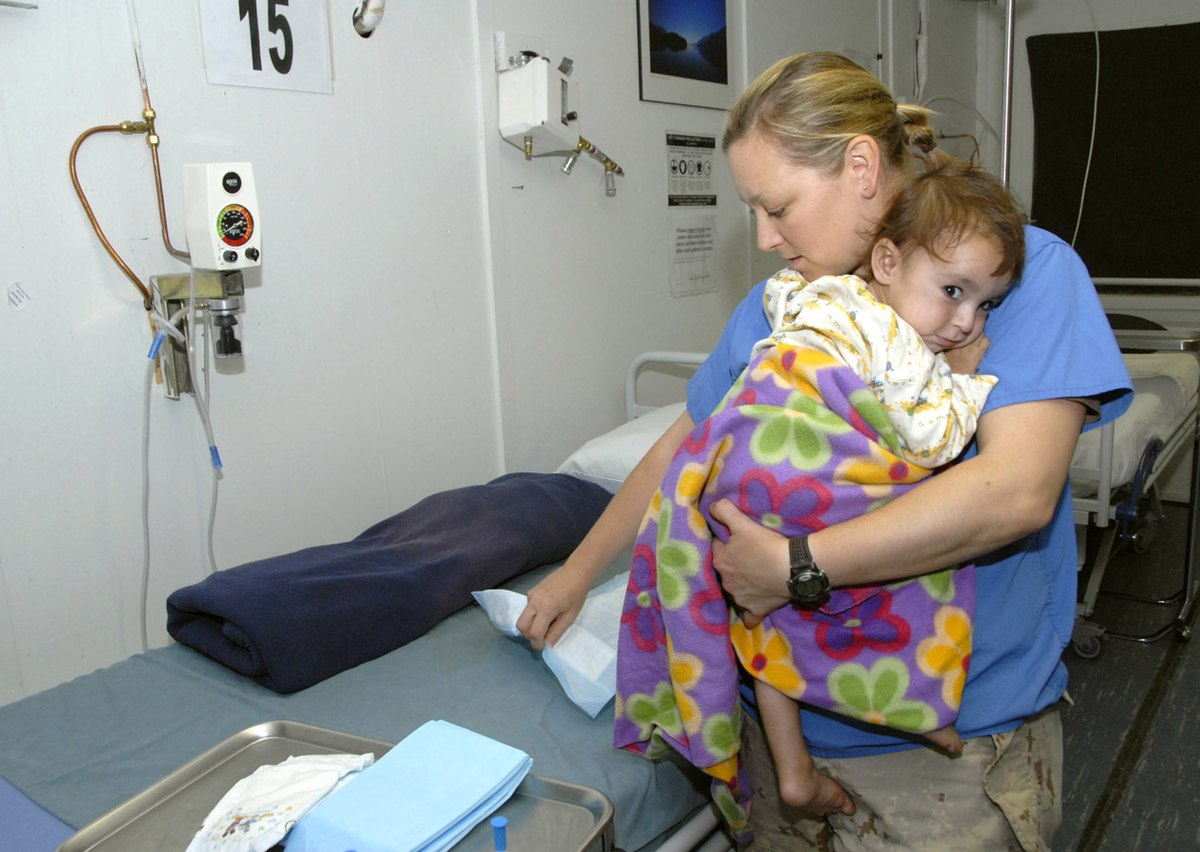
Canadians continued to serve at the R3MMU after handing over leadership to the US Navy. From October 2009 to December 2010, approximately 30 Canadian Forces healthcare personnel were working at the hospital, including a general dentistry team. Overall, R3MMU staff treated 2,599 trauma patients in that period: 1,407 NATO soldiers, 312 members of the Afghan security force, 581 locals, 102 civilian contractors, and 197 children.
Significance
In 2012, NATO awarded the Dominique-Jean Larrey Award to Canada for its establishment and command of the R3MMU in Kandahar. The Canadian forces were honoured for their leadership and the “extraordinary clinical success…with the highest survival rate for war victims recorded to date.” The lessons learned in Kandahar were applied during earthquake relief efforts in Haiti in 2010 and in disaster preparedness in civilian hospitals in Canada and the United States.
Did you know?
In June 2011, Global Television aired the first of 13 episodes of the series “Combat Hospital,” based on the R3MMU and set in 2006. The cast included Canadian actor Elias Koteas as the unit’s commanding officer. The first season was picked up by the US ABC Network, but when ABC did not renew the series, Global was forced to follow suit.