Share on Facebook
 Share on X
 Share by Email
 Share on Google Classroom
La Maison Simons (also known as Simons) is a department store and fashion retailer based in Quebec City. Established as a dry-goods store in 1840, it began to expand outside of Quebec City in 1999 and has grown to operate locations across Canada. The company has been owned throughout its existence by the descendants of its founder, now stretching, as of 2026, into its fifth generation.
La Maison Simons
Shoppers in a Simons store at CF Fairview Pointe Claire in Pointe-Claire, Quebec, 5 May 2022.
(photo by Christinne Muschi/Bloomberg, via Getty Images)
Origins
John Simons, the son of a Scottish farmer who emigrated to Lower Canada in 1812, opened a small dry-goods store in Quebec City in 1840 at the age of 17. (See also Scottish Canadians.) It initially specialized in importing Scottish and Irish knitwear. According to company legend, he personally made at least 72 transatlantic sailings over three decades to acquire merchandise.
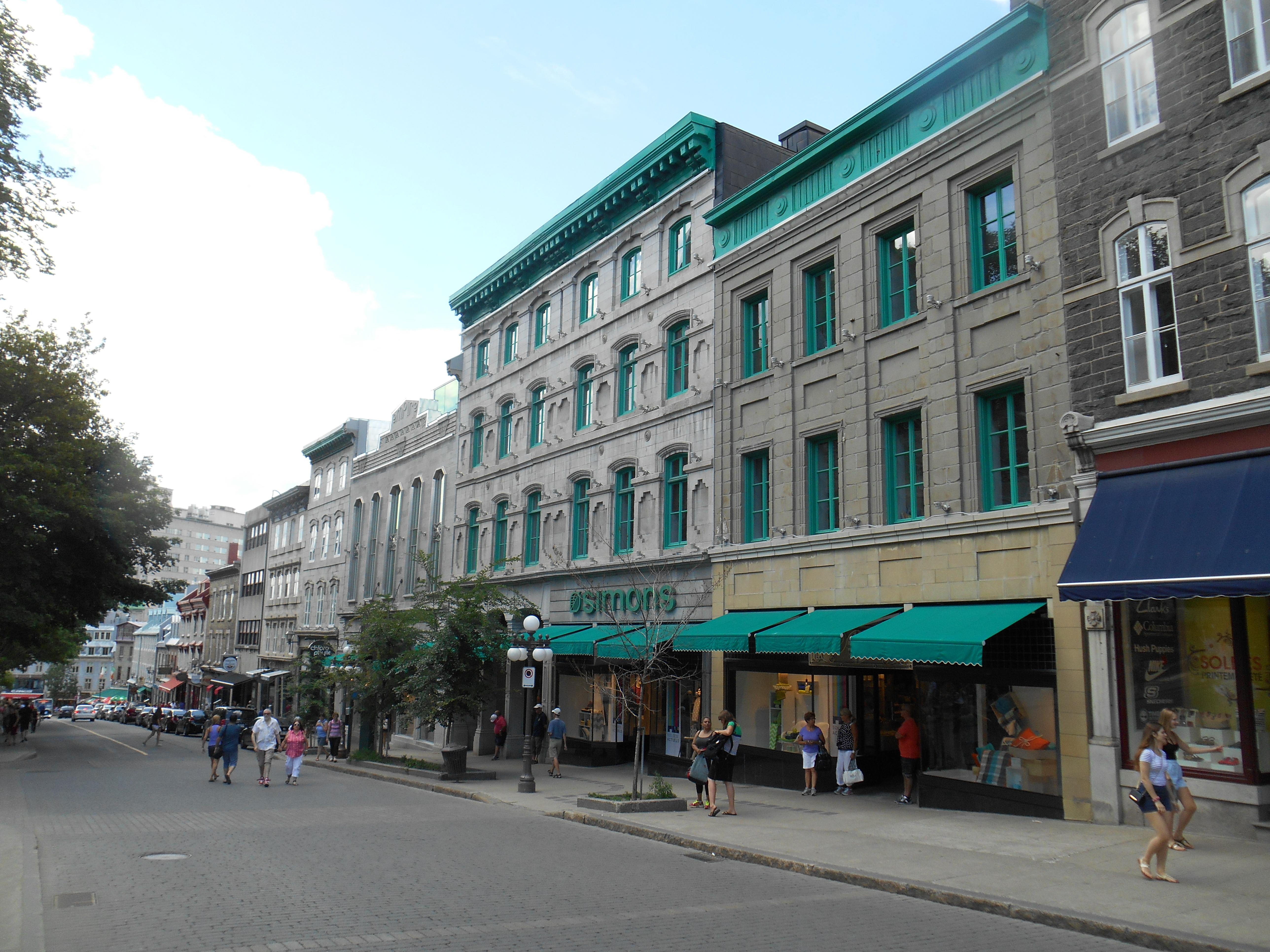
The business moved to its current flagship location and head office site at 20 Côte de la Fabrique in 1870.
During the 1960s, under the leadership of Donald Simons, the store launched its primary in-house fashion brands, which were influenced by the designers and trends of the era and remain their core lines: Twik (aimed at women aged 16 to 25), Contemporaine (for women aged 30 to 40) and Le 31 (menswear).
The chain slowly expanded into Quebec City’s suburbs, opening locations at Place Ste-Foy shopping centre in 1961 and Galeries de la Capitale in 1981.
Expansion
Peter Simons became the fifth generation of the family to run the business when he became president and chief executive officer (CEO) in 1996, while his brother Richard Simons served as the vice-president of merchandising.
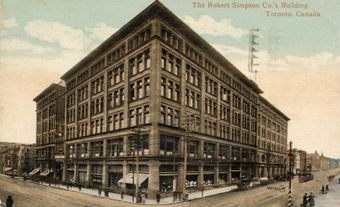
Simons opened its first stores outside Quebec City in 1999, with locations in downtown Montreal (in the former Simpsons department store on Sainte-Catherine Street, which had sat vacant for years) and Sherbrooke. Two additional stores opened in suburban Montreal in the early 2000s.
"I believe we’ve bitten off quite enough," Peter Simons told the Montreal Gazette in a 1999 interview. "The goal is not to be big but to do things properly."
Did you know?
To celebrate Quebec City’s 400th anniversary in 2008, the Simons family donated the Fontaine de Tourny, which was originally cast to celebrate the new water supply system in Bordeaux, France, in the 1850s. The fountain was restored and placed in front of the Parliament Building. (See also National Assembly.)
Simons launched its current website in 2010. Since 2019, the chain has been named several times on Leger’s WOW Digital Study for best online customer experience.
In 2012, Simons’ first location outside the province of Quebec was opened at the West Edmonton Mall in Edmonton, Alberta. The $40-million-plus store’s opening was delayed twice due to its complex design (which included fitting rooms that descended from the ceiling) and a tight labour market for specialized tradespeople.
Simons subsequently entered British Columbia in 2015, Ontario in 2016 and Nova Scotia in 2024. These stores were a mix of new builds and refurbishments of department stores that had exited these markets, such as Sears Canada and Nordstrom.
In 2018, the company took on outside investments for the first time in its history when the Caisse de dépôt et placement du Québec, the Quebec provincial government, and other institutional investors, invested a combined $125 million to assist in the construction of a new distribution centre outside Quebec City.
Simons appointed its first president and CEO outside of the Simons family in March 2022, when Bernard Leblanc was appointed to the position.
Controversies
In August 2008, Simons withdrew a fashion catalogue that it commissioned after it was criticized by the public for depicting models who were too thin. Peter Simons apologized for the publication, telling the press that its images were "destructive to a more vulnerable portion of the population, which is exposed to anorexia." Yves Bolduc, Quebec’s minister of health and social services, praised the prompt reaction, saying the decision sent a healthy message to teenage women.
In September 2018, Peter Simons apologized to former Supreme Court of Canada justice Beverley McLachlin after she complained about the use of her name as one of the inspirations for a line of bras. The campaign — which also featured bras named after suffragist Nellie McClung, author Gabrielle Roy and former foreign affairs minister Flora MacDonald — was suspended and a promise was made to support a women’s shelter in Ottawa.
Store Architecture and Art
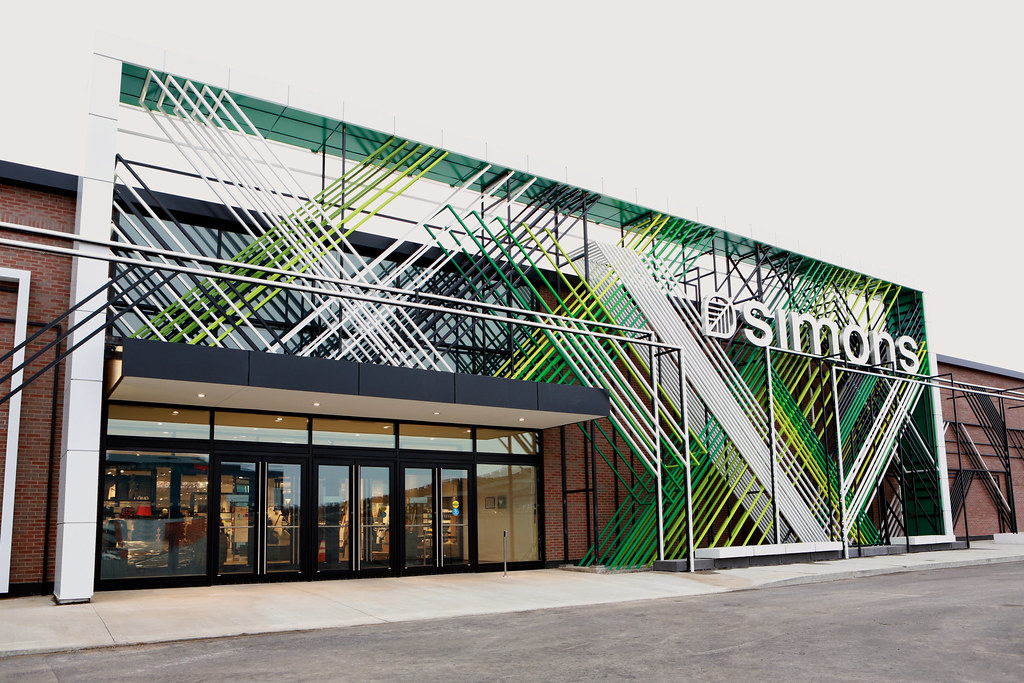
Simons has long hired innovative architects for its stores, with the belief that none of them should look alike. "Our stores are beautiful, and they are probably too expensive, but I’m proud that we are putting effort into them and making them unique,"Peter Simons said in a 2016 interview with Financial Post Magazine.
One of its first major architectural achievements was its Sherbrooke store. The design, by Quebec City-based LemayMichaud, drew inspiration from Frank Gehry’s Guggenheim Museum Bilbao in Spain.
The Halifax store’s facade was designed to evoke the sails of the Bluenose schooner. In West Vancouver, the Park Royal South location used a relief designed by Coast Salish artist Jody Broomfield that evoked the Squamish Nation, whose territory the store was in.
In a 2015 interview with NUVO magazine, Peter Simons expressed his belief that the goal of art was "the ability of beauty to inspire you and to bring you to somewhere else. It’s a physical manifestation of hope and inspiration."
Among the artists who have contributed works and installations are Guido Molinari (downtown Montreal), Philip Beesley (West Edmonton Mall), Shayne Dark (CF Rideau Centre), Douglas Coupland (Park Royal South) and Maya Gohill (The Core).
Environmental Initiatives
When its Galeries de la Capitale location moved in 2018, the new Simons store was designed to be Canada’s first net zero store through the use of elements such as geothermal wells and solar panels. Several stores implemented green roofs with beehives.
The chain’s Vision program, as its website notes, "embodies all the efforts we make to reduce our environmental impact and uphold our commitment to respect human rights. It's also our way of supporting the economies and cultures of the communities we work with." Among its initiatives are environmentally sensitive fabrics, the use of textile scraps and manufacturing processes that reduce water use and carbon dioxide emissions.