Share on Facebook
 Share on X
 Share by Email
 Share on Google Classroom
Jacob Laurence “J.L.” Cohen, lawyer and labour relations champion (born 4 June 1897 in Manchester, England; died 24 May 1950 in Toronto, ON). J.L. Cohen was one of the first Canadian specialists in labour law and the leading labour lawyer of the 1930s and 1940s. He championed workers’ and civil rights, supported all major trade unions of his time and was instrumental to the development of labour legislation in Canada.

Early Life and Education
Jacob Laurence Cohen (known as J.L. Cohen outside his family) was born in England to Lithuanian Jewish immigrants. His parents, Esther Cohen, née Kreengle, and Philip Cohen, had each fled discrimination and persecution in Lithuania before they met in Manchester. Both worked in the garment industry. Jacob was the first of their six children. He was a sickly boy but excelled in school. Despite their poverty, his parents dressed him well, and even as an adult, J.L. Cohen would be known for his impeccable appearance and expensive attire.
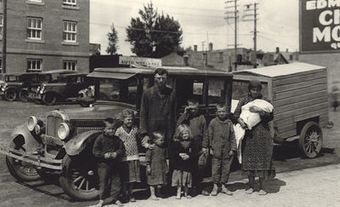
In 1905, Philip Cohen emigrated to Canada in search of better opportunities. Esther and the children followed him to Toronto in the summer of 1907. They were part of a large influx of eastern European Jewish immigrants to Toronto at the time. The family settled easily into the community, which included a number of Jewish institutions — schools, bookstores, kosher grocery stores and restaurants. (See Jewish Canadians.) Philip Cohen quickly found employment in a cap factory. When the factory burned down, he became a traveling salesman and was successful enough to move the family into a larger home.
Philip Cohen died in 1910, when Jacob was only 13. Friends helped the family set up a small grocery store to support themselves, and Jacob Cohen, now the oldest male in the family, became its bookkeeper. A year later, he dropped out of school and took a clerk’s job in a law firm. He now worked two jobs and took evening classes so he could complete his high school education. At 16, he enrolled in correspondence courses at Queen’s University for two years and went on to study at the Law Society of Upper Canada, all while continuing to work at the law office. In 1918, after having graduated third in his class, he was called to the bar.
Early Career and Marriage
Following his graduation, J.L. Cohen stayed with the law firm, where he worked in criminal and commercial law. Now on a lawyer’s salary, he could secure his four siblings’ education. After a few years, he opened his own law office, taking some of his existing clients with him. It soon became financially sustainable, and he employed two of his siblings.
In 1923, Cohen married Dorothy Aidman, a social worker from New York whom he had met on a business trip. Thanks to Cohen’s professional success, the couple soon moved out of the Cohen family home into a large house on Lawrence Avenue, an affluent neighbourhood in North Toronto. Their daughter, Phyllis, was born in 1924. Cohen’s biographer Laurel Sefton MacDowell suggests that by moving out of the Jewish area of the city and expanding his networks, Cohen likely experienced anti-Semitism, since Toronto society largely saw itself as British and Christian and excluded Jewish professionals from many institutions and positions. However, his personal records contain no mention of this.
Labour Specialization
Through business trips to New York City, J.L. Cohen became interested in the American labour movement. Labour organization in the US achieved significant legislation by 1933 (Roosevelt’s New Deal); in contrast, unions in Canada struggled to adapt to new industries and technologies in the 1920s and were seen by many, including political leaders, as a Bolshevist threat.
Cohen supported labour organization, since he believed that relations between employees and employers should be democratic. But his social conscience increasingly conflicted with his success as a commercial lawyer. In the mid-1920s, Cohen suffered a nervous breakdown caused by financial stress and overwork. According to his biographer MacDowell, his condition improved when he began aligning his work to his beliefs and representing workers and unions. Many of his clients came from the Toronto garment and textile industries.
Association with CPC
In 1927, Cohen was retained by the Canadian Labour Defense League (CLDL), a legal aid organization affiliated with the Communist Party of Canada (CPC), to defend five CPC members who had been arrested at a protest. Against his friends’ warnings about these ‘radicals,’ he accepted the case and became the regular counsel for the CPC over the next few years. Although he lost most of these cases, he became quickly known within left-wing and union circles as one of the first Canadian specialists in labour law. A client is cited as saying that “the magistrates were all afraid of Cohen because he knew more law than they did and did not hesitate to show it.”
Despite his strong ties to the CPC in the late 1920s, Cohen never became a member. Moreover, he continued to work for business clients. This led to conflicts and in 1931 the end of his collaboration with the CPC. In 1934, he cut all ties with his business clients and focused his work exclusively on the unions’ side, paving the way for the distinction between union and company lawyers in employment law today.

Labour Disputes in the 1930s
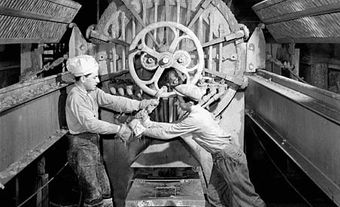
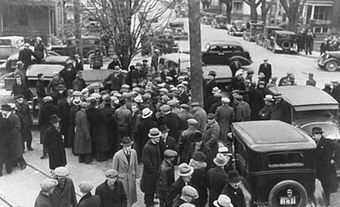
The 1930s were characterized by violent labour struggles. Workers and the unemployed suffered disproportionately from the economic hardships of the Great Depression. Factory and business owners tried to suppress their protests, while the federal and provincial governments provided inadequate relief and often sided with employers. The traditional craft unions refused to organize unskilled workers or the unemployed, so they could not address the widespread suffering. Consequently, labour organization shifted toward industrial unionism.
As a labour specialist, J.L. Cohen played an important role in this process. His work was linked to all the turning points of 1930s labour organization, such as the Regina Riots (1935) and the first sit-down strike in Sarnia, Ontario (1936). These cases often received high publicity and established his status as Canada’s leading labour lawyer.
One of Cohen’s most significant cases was the 1937 strike at the General Motors (GM) plant in Oshawa, Ontario. The autoworkers’ demands included recognition of their union, United Automobile Workers (UAW), which was affiliated with the US-based Committee for Industrial Organization (CIO). GM, aggressively supported by Ontario premier Mitchell Hepburn, wanted to prevent CIO activity in Ontario. Cohen conducted the negotiations for the union local. He crafted an agreement that met all the workers’ demands but recognized only the local. Formally, Hepburn and GM won; in practice, it was a de facto recognition of UAW and CIO and therefore a breakthrough for industrial unionism. This encouraged the founding of CIO-sponsored unions in other workplaces, many of which Cohen assisted. By the end of the 1930s, he represented every major union and was involved in almost every major industrial dispute.
Labour Legislation
In 1938, J.L. Cohen was contracted by Ontario premier Hepburn, his former adversary in Oshawa, to draft provincial legislation on unemployment insurance (UI). Cohen’s efforts became obsolete when UI was constitutionally subsumed under federal jurisdiction, but they equipped him with valuable experience and government contacts. Hepburn’s successor, Gordon Conant, hired him in 1942 to draft a collective bargaining bill for Ontario. Cohen resigned when his draft was not adopted even after revisions. But the bill that did become law (Ontario Collective Bargaining Act, 1943) contained some of his ideas — most notably, the establishment of a labour court, one of the first institutions in Canada to enforce collective bargaining. Cohen himself would frequently argue cases there before the court was replaced by a board in 1944, in line with new federal legislation.
This federal framework, order-in-council PC 1003, bore Cohen’s fingerprints as well. In 1943, Prime Minister William Lyon Mackenzie King appointed him as labour representative to the National War Labour Board (NWLB) to help prepare a federal labour code. As labour organization increased during the war but employers remained hostile, this was an urgent matter. However, conflicts arose between Cohen and the two other board members, and Cohen was fired. Still, his contribution secured the adequate representation of labour’s perspective in the NWLB’s input for the new bill; for instance, in his minority report, Cohen argued against wage control and recommended a flexible policy to adjust wages to the cost of living, while the majority report advocated wage control to combat inflation. (See also Wage and Price Controls.)
Controversy, Conviction and Disbarment
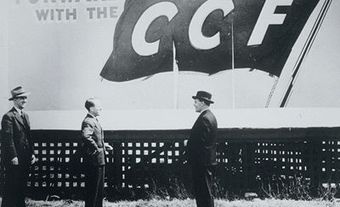
Towards the end of the Second World War, J.L. Cohen’s life took a turn for the worse. His physical and mental health declined. In 1944, he attempted to run for Parliament as a Labour-endorsed CCF candidate and caused a public controversy because Labour, the CCF and the Communists, who also endorsed him, were politically divided. (Cohen eventually withdrew his candidacy.) In 1946, he was charged with physically assaulting his secretary — who was also his lover — at a union convention in Kirkland Lake, Ontario, the previous year. He was convicted and received a six-month prison sentence. The discipline committee of the Law Society of Upper Canada disbarred him in 1947.
Banned from practicing law, Cohen worked as a consultant and served on conciliation and arbitration boards. He also fought to be reinstated and was readmitted to the bar in 1950. However, he died just four months later of unknown causes.
Legacy
J.L. Cohen was a well-known figure in his time. His dramatic courtroom manner and the kind of cases he took on — often defending the “underdog” — made him a press favourite. Beyond the spotlight, he contributed to the very foundation of Canada’s modern democracy by helping to define and shape labour relations. Administrative structures — labour-relations boards, industry-standards tribunals — are based on Cohen’s ideas and suggestions; Cohen’s legal language permeates many contracts, agreements and decisions that are still in place or relevant today. His biographer Laurel Sefton MacDowell names him an “architect” of the Canadian labour-relations system.
Cohen was a champion of civil liberties, defending minorities whose civil rights were violated, e.g. under wartime legislation. This included groups as diverse as Communists, pro-Communist Ukrainians and Jehovah’s Witnesses. He also advocated gender equality in wages at a time when labour struggles addressed class and ethnic, but not gender, discrimination. In this sense, he was ahead of his time, envisioning a law based solely on human rights.
While Cohen’s personal life was troubled and complex, his career was dedicated to empowering workers and disadvantaged groups. His daughter, Phyllis Clarke, a professor of politics, carried on his legacy as a labour activist and civil rights champion until her death in 1988.