Share on Facebook
 Share on X
 Share by Email
 Share on Google Classroom
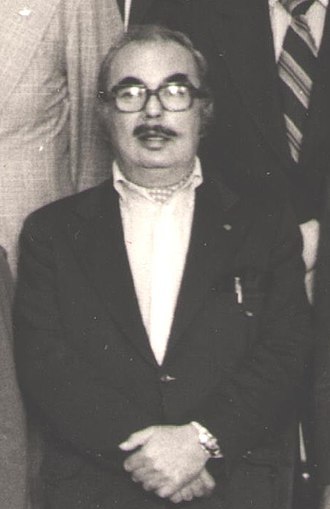
Sydney Cecil Newman (né Nudelman), OC, television executive, producer, administrator, writer, director, editor (born 1 April 1917 in Toronto, ON; died 30 October 1997 in Toronto). Sydney Newman was an influential television producer and executive in Canada and Britain. He began his career at the National film Board (NFB) in 1941 and worked on more than 300 films in 11 years. In 1952, he left to work for the CBC, where he became one of the architects of Canadian television, establishing the foundation for sports broadcasts and live drama. Lured to Britain in 1958, Newman helped create iconic British TV series The Avengers and Doctor Who. He then returned to Canada and served a tumultuous term as chairman of the NFB from 1970 to 1975. A keen judge of talent, Newman nurtured such artists as Harold Pinter, Arthur Hailey, Ken Loach and Ted Kotcheff. He was made an Officer of the Order of Canada in 1981.
Early Life and Education
Sydney Newman was the youngest child of a working-class Jewish family in downtown Toronto. His parents, Mordecai and Bessie Nudleman, were recent Russian immigrants. A terrible student, Newman loved movies as a kid and gravitated toward the visual arts. He was so determined to attend art classes at the Art Gallery of Toronto (now the Art Gallery of Ontario) that were held on the Sabbath that he pressured his devout father until he granted permission. The gallery classes were led by Group of Seven member Arthur Lismer, an enthusiastic teacher who had a huge impact on Newman. Lismer gave Newman the assignment of making a documentary about the gallery’s educational activities, which set him on his career path.
Early Career at NFB
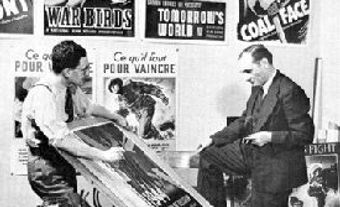
Following stints as a graphic artist and set designer (and an ill-fated sojourn in Hollywood that ended in deportation), Newman used his art gallery documentary to gain employment at the recently created NFB. There were only four other employees when he was hired in 1941.
Newman was deeply influenced by NFB commissioner John Grierson’s belief in film’s educational and social potential. But Newman was also a fiery, passionate showman who strove to keep the audience in mind. Doggedly anti-elitist, he produced work that was both contemporary and accessible.
Newman began as a film editor but soon began writing, directing and producing. During his 11 years at the NFB (1941–52), Newman worked on some of the organization’s most significant film series, including the monthly wartime newsreel Canada Carries On.
Personal Life
While working at the Film Board, Newman met his wife, Betty (Elizabeth) McRae, one of the first women to be trained as an editor by the NFB. She also wrote plays and teleplays, some for series produced by her husband. They married in 1944 and had three daughters together: Deidre, Gillian and Jennifer.
Career at the CBC
In 1949–50, Sydney Newman was loaned to NBC in New York to study the emerging medium of television. Newman’s time there led to a job as a producer at the recently established television department of the CBC in 1952. At first, Newman focused on live sporting events and produced the first two seasons of Hockey Night in Canada (now Canada’s longest-running television program and the Guinness World Record holder as the longest-running TV sports program). Newman was the initial architect for how hockey games were shot for television. He also produced the first broadcast of the Grey Cup in November 1952.
By 1953, Newman was producing General Motors Theatre, a live drama series. The BBC eventually purchased 26 episodes of it. Newman sought homegrown writers, original scripts and contemporary subjects (reflecting his documentary background). He also urged his directors to tell a story visually and through editing instead of relying entirely on dialogue. At the CBC, Newman mentored various young directors who went on to have lengthy and impressive careers. They included Ted Kotcheff, Silvano Narizzano, Arthur Hiller, Charles Jarrott and Paul Almond. Newman’s greatest writing discovery was British expatriate Arthur Hailey, later a bestselling novelist.
Career in British Television
In 1957, Sydney Newman was recruited by ABC TV (Associated British Corporation) to produce the live drama program Armchair Theatre. As at the CBC, Newman sought emerging writers, including Harold Pinter, Alun Owen, Clive Exton and Peter Luke. Newman soon rose to head of drama, where he was essential to the creation of one of the 1960s’ most iconic series: the popular espionage thriller The Avengers (1961–69). Newman’s directorial crew included Philip Saville and fellow Canadians Kotcheff and Jarrott.
In 1963, Newman was offered the position of head of drama at the BBC. An outsider at ABC, Newman was even more so at the BBC. He heartily embraced this role, often referring to himself as a “crude colonial.” In press interviews, he criticized the excessively elitist state of the network. Many of the writers and directors Newman recruited and nurtured at ABC followed him to the BBC. Newman also opened doors for directors and creators who were already at the BBC. Among them was Ken Loach, whose breakthrough, Cathy Come Home (1966), was produced under Newman’s tenure.
Other highlights of Newman’s time at the BBC include Hamlet at Elsinore (1964) and The Forsyte Saga (1967), adapted from John Galsworthy’s novels. Hamlet at Elsinore reflected Newman’s Canadian nationalism through the casting of Christopher Plummer as Hamlet and an unknown Donald Sutherland as Fortinbras. The Forsyte Saga became an international hit and was broadcast in 26 countries.
Newman was also a prime mover behind TV’s longest running science fiction series: Doctor Who, which follows a 742-year-old alien who travels through space and time in a ship that looks like a British police box. Newman hoped the series would introduce children and teenagers to world history. In the first few seasons, the Doctor and his companions meet Nero and Marco Polo. While working on the series, Newman mentored Verity Lambert, one of the first female series producers at the BBC.
Return to Canada
Newman returned to Canada in 1970, hoping to be offered the presidency of the CBC. Instead, he was appointed chairman of the NFB, where he began his career. He enjoyed significant success there, including converting NFB productions to colour. He also secured extra funding for Claude Jutra’s Mon oncle Antoine (1971), long considered the greatest Canadian film ever made. (See also Top 10 Canadian Films of All Time.)
However, Newman’s tenure as NFB chair is remembered more for his seemingly endless controversies, mostly tied to Quebec separatism and the October Crisis. Director Denys Arcand claimed that Newman banned Arcand’s documentary On est au coton (1971) because he considered it separatist. (Film scholar André Loiselle claimed that Newman might have been pressured to suppress the film.) Newman was also criticized for rejecting Les ordres, Michel Brault’s searing account of people who were detained in Quebec under the War Measures Act. It went on to win the Best Director prize at the Cannes Film Festival and is widely considered one of Canada’s best feature films.
Sydney Newman in 1971
(photo by Boris Spremo, courtesy of Toronto Star via Getty Images)
Later Career
After leaving the NFB, Newman worked as an advisor to the secretary of state and as a chief creative consultant at the Canadian Film Development Corporation (CFDC, now Telefilm Canada) — work that he found uninteresting. He also began pitching the BBC to revamp Doctor Who. In 1981, his wife Betty died (having long suffered from polychondritis, a rare illness) a few months after he was made an Officer of the Order of Canada.
Newman returned to Britain in 1982 but met with disappointment. He worked on several productions but only one — an adaptation of Benjamin Britten’s Christmas-themed opera, The Little Sweep — came to fruition. In Newman’s final years, he fought vehemently but unsuccessfully for recognition as the sole creator of Doctor Who. He also advocated for casting a woman as the Doctor as early as 1986 — a move that was eventually made in 2017.
Legacy
Sydney Newman laid the foundation for much of Canadian television and helped launch the careers of many significant writers and directors in both Canada and Britain. In England, he changed television, making it more contemporary and more egalitarian. The Forsyte Saga ignited international interest in British television and led directly to the creation of PBS’s Anglophile series, Masterpiece Theatre. Doctor Who was still going strong 60 years later. The first of three special episodes to mark the show’s 60th anniversary in 2023 drew just over 5 million viewers in the UK.
In An Adventure in Space and Time — Doctor Who writer Mark Gatiss’s 2013 fictionalized account of the series’ origin — a pre-Succession Brian Cox plays Newman as an energetic cigar chomping vulgarian with a passion for edification and expletives. In 2017, ECW Press published Head of Drama: The Memoir of Sydney Newman. It features a foreword by Ted Kotcheff and an afterword by Newman’s daughter Deidre Newman.
Awards
- Ohio State Award for Religious Drama (1956)
- Liberty Award for Best Drama Series (1957)
- Desmond Davis Award (1967)
- President’s Award, Society of Film and Television Arts (1969)
- Zeta Award, Writers Guild of Great Britain (1970)
- Special Award, Canadian Picture Pioneers (1973)
- Officer, Order of Canada (1981)