Share on Facebook
 Share on X
 Share by Email
 Share on Google Classroom
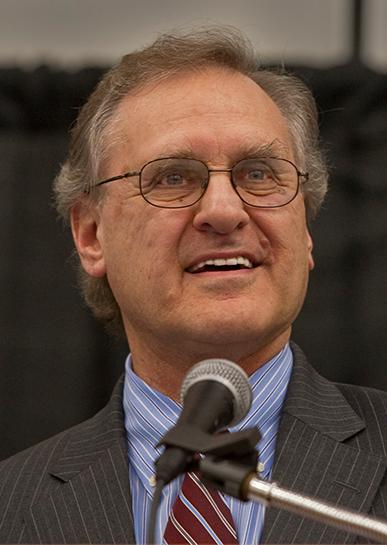
Stephen Henry Lewis, CC, politician, diplomat, author, journalist, labour arbitrator (born 11 November 1937 in Ottawa, ON; died 31 March 2026 in Toronto, ON). Stephen Lewis was one of Canada’s most respected politicians and diplomats. A skilled orator, Lewis was leader of the Ontario NDP (1970–77) and Canada's ambassador to the United Nations (1984–88). He was also a key figure in the fight against HIV/AIDs in Africa. A Companion of the Order of Canada, Lewis received more than 30 honorary degrees.
Family Connections
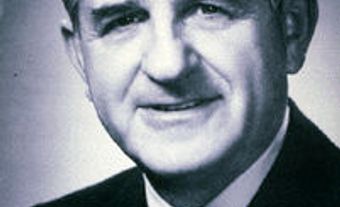
Stephen Lewis was part of an illustrious family of left-wing political activists and commentators. His grandfather, Moishe Lewis, was a labour activist in Russia and Montreal. Stephen’s father, David Lewis, served as national secretary of the Co-operative Commonwealth Federation (CCF). He was also leader of the federal NDP from 1971 to 1975.
Stephen’s wife, Michelle Landsberg, was a long-time columnist with the Toronto Star. They had three children together: daughters Ilana and Jenny and son Avi. Ilana Landsberg-Lewis became a labour and human rights lawyer. Avi Lewis became a high-profile journalist, TV personality and filmmaker. He is married to best-selling author, activist and filmmaker Naomi Klein.
Following in his paternal footsteps, Avi Lewis was elected leader of the federal NDP on 29 March 2026. Stephen Lewis died two days later after a long battle with cancer.
Early Life and Education
Born on Armistice Day (now Remembrance Day) in 1937, Stephen Lewis was given the Hebrew name Sholem, which means “peace.” He was born and raised in Ottawa but moved with his family to Toronto in 1950. He began studying at the University of Toronto in 1956. As a member of the Hart House debating team, he debated Massachusetts senator and future US president John F. Kennedy in November 1957.
Lewis spent his third year of university on exchange at the University of British Columbia. He returned to Toronto for his final year but didn’t graduate. He then entered the law schools at the University of Toronto and UBC but dropped out of both. (Lewis later joked that all his university degrees were honorary.)
While working as a clerk at the Socialist International in the 1960s, Lewis attended a conference in Ghana. He then spent a year travelling and teaching English in Africa.
Career in Politics
Stephen Lewis was urged to return to Canada by federal NDP leader Tommy Douglas. Lewis worked as director of organization for the federal NDP from 1961 to 1962. He was then elected as a member of the Ontario legislature for Scarborough West from 1963 to 1978.
Lewis became leader of the Ontario NDP in 1970. He was active in demanding the 1972 disbandment of the Waffle, a left-wing NDP faction. Lewis’s greatest electoral success occurred in 1975 when the NDP became the Official Opposition. A year after the NDP's electoral setback in 1977, Lewis resigned as leader. He then became a media commentator, lecturer and labour arbitrator.
Stephen Lewis becomes leader of the Ontario NDP
Stephen Lewis was elected to lead the Ontario New Democratic Party on 4 October 1970.
(photo by Dick Darrell, courtesy Toronto Star via Getty Images)
Diplomatic Career
From 1984 to 1988, Stephen Lewis was Canada's ambassador to the United Nations. He also served as special advisor to the UN's Secretary-General regarding African affairs until 1991. Lewis returned to the UN as the deputy executive director of UNICEF from 1995 to 1999.
In 1997, Lewis was appointed by the Organization of African Unity to a panel to investigate and issue a report in 2000 on the Rwandan genocide. From 2001 to 2006, Lewis served as a special envoy to UN Secretary-General Kofi Annan regarding HIV/AIDs in Africa.
Other Activities
Stephen Lewis was an honorary fellow of the Royal College of Physicians and Surgeons of Canada and a Senior Fellow of Massey College at the University of Toronto. In 2014, he was named Professor of Practice in Global Governance at Institute for the Study of International Development at McGill University. He was also a member of the World Health Organization (WHO) Commission on the Social Determinants of Health and a senior advisor to Columbia University's Mailman School of Public Health.
Lewis established the Stephen Lewis Foundation in 2003 to assist victims of AIDS in Africa. In 2005, Lewis presented the Massey Lectures. These, in turn, were transcribed into the best-selling book Race Against Time (2005).
Stephen Lewis, UN special envoy for HIV/AIDS
Stephen Lewis, UN special envoy for HIV and Aids, is briefed by a doctor at St. Gabriel Hospital near Lilongwe, Malawi, 30 October 2006.
(photo by Amos Gumulira, courtesy AFP via Getty Images)
Honours
In 2003, Maclean’s magazine named Stephen Lewis its inaugural “Canadian of the Year.” In 2005, TIME magazine named him one of the “100 most influential people in the world.” In 2006, two Toronto-area high school were named in Lewis’s honour. In a 2010 issue of Forbes magazine, playwright Eve Ensler named Lewis one of “the world’s seven most powerful feminists.”
Following Lewis’s death in 2026 at the age of 88, Prime Minister Mark Carney called Lewis “a pillar of compassionate leadership in Canadian democracy, and a renowned global champion for human rights and multilateralism.”
Awards
- Companion, Order of Canada (2002)
- Jonathan Mann Health and Human Rights Award, International Association of Physicians in AIDS Care (2003)
- Pearson Peace Medal, United Nations Association in Canada (2004)
- Human Rights Award, International Council of Nurses’ Health (2005)
- Baylor International Pediatric AIDS Leadership Award, Baylor International Pediatric AIDS Initiative, Baylor College of Medicine (2006)
- Harry Jerome President’s Award, Black Business and Professional Association in Toronto (2006)
- William G. Davis Children’s Champion Award, Peel Children’s Aid Foundation, Mississauga (2006)
- Libris Award for Non-Fiction Book of the Year (Race Against Time), Canadian Booksellers Association (2005)
- Author of the Year, Canadian Booksellers Association (2005)
- Knight Commander, Most Dignified Order of Moshoeshoe, Lesotho (2007)
- Bonham Centre Award, Mark S. Bonham Centre for Sexual Diversity Studies, University of Toronto (2013)
Honorary Degrees
- Honorary Doctorate, McMaster University (1979)
- Doctor of Laws, York University (1984)
- Doctor of Laws, Concordia University (1985)
- Doctor of Laws, University of Saskatchewan (1986)
- Doctor of Laws, McGill University (1987)
- Doctor of Laws, University of Windsor (1988)
- Doctor of Laws, Wilfrid Laurier University (1988)
- Doctor of Laws, Brock University (1988)
- Doctor of Laws, Lakehead University (1988)
- Doctor of Laws, Mount Allison University (1988)
- Doctor of Laws, University of Toronto (1991)
- Honorary Degree, University of British Columbia (1991)
- Honorary Degree, University of Prince Edward Island (2000)
- Honorary Degree, University of Calgary (2002)
- Doctor of Laws, University of Western Ontario (2003)
- Doctor of Laws, University of Victoria (2004)
- Doctor of Laws, Simon Fraser University (2004)
- Doctor of Laws, Cape Breton University (2005)
- Doctor of Laws, Dalhousie University (2006)
- Doctor of Laws, Laurentian University (2006)
- Doctor of Laws, University of Manitoba (2007)
- Doctor of Laws, Carleton University (2009)
- Doctor of Education, Nipissing University (2009)
- Doctor of Humane Letters, Mount Saint Vincent University (2010)
- Doctor of Laws, Brandon University (2010)
- Doctor of Humane Letters, Dartmouth College (2010)
- Doctor of Laws, Memorial University of Newfoundland (2011)
- Doctor of Laws, University of New Brunswick (1986)
- Doctor of Laws, University of Waterloo (2013)
- Honorary Degree, Royal Roads University (2015)
- Doctor of Laws, University of Alberta (2016)