
Browse "Nature & Geography"
-
Article
Gentian
Several plants of family Gentianaceae, of the genus Gentiana, are commonly known as gentian.
"https://thecanadianencyclopedia.ca/images/tce_placeholder.jpg?v=e9dca980c9bdb3aa11e832e7ea94f5d9" // resources/views/front/categories/view.blade.php
https://thecanadianencyclopedia.ca/images/tce_placeholder.jpg?v=e9dca980c9bdb3aa11e832e7ea94f5d9
-
Article
Geological Dating
For centuries people have argued about the age of the Earth; only recently has it been possible to come close to achieving reliable estimates.
"https://thecanadianencyclopedia.ca/images/tce_placeholder.jpg?v=e9dca980c9bdb3aa11e832e7ea94f5d9" // resources/views/front/categories/view.blade.php
https://thecanadianencyclopedia.ca/images/tce_placeholder.jpg?v=e9dca980c9bdb3aa11e832e7ea94f5d9
-
Article
Geological History
Fundamental to all ordering of events of the Earth's history is the principle of the positional relationships of rock and mineral bodies. For example, in any stratified rock sequence, younger rocks overlie older ones.
"https://d3d0lqu00lnqvz.cloudfront.net/media/media/e8e23bed-66e7-4173-9e92-b61c0b06e940.jpg" // resources/views/front/categories/view.blade.php
https://d3d0lqu00lnqvz.cloudfront.net/media/media/e8e23bed-66e7-4173-9e92-b61c0b06e940.jpg
-
Article
Geological Survey of Canada
The Geological Survey of Canada (GSC) is Canada's national agency for geoscientific information and research. It studies and reports on Canada’s geology, natural geological hazards, and the development of natural resources. Established in 1842 primarily to promote the mining industry, it is one of the country’s oldest scientific organizations. Throughout its history, the Survey has produced some of the most comprehensive and detailed maps of the Canadian landscape, and published several important reports on its ecology and natural history.
"https://d3d0lqu00lnqvz.cloudfront.net/media/media/2bebe9b8-7dbd-4569-9cc1-fb24d96fa6de.jpg" // resources/views/front/categories/view.blade.php
https://d3d0lqu00lnqvz.cloudfront.net/media/media/2bebe9b8-7dbd-4569-9cc1-fb24d96fa6de.jpg
-
Article
Geomorphology
Geomorphology is primarily concerned with the scientific study of landscapes and landforms on Earth's surface, and the processes acting on them, although geomorphic principles are also applied to the study of planetary bodies with solid crusts, such as the Moon and Mars. Geomorphologists seek to explain variations in surface form and evolution and the impact of geomorphological processes on human populations, including hazardous events such as landslides and river flooding, which may intensify in the future with climate change. Modern geomorphologists usually align themselves with a specialized branch of the subject, such as glaciers, rivers or coasts. In Canada, which was covered by several large ice sheets and still has permafrost underlying half its land mass, many geomorphologists are concerned with the Quaternary (last 2.6 million years) or with prevailing cold conditions.
"https://d3d0lqu00lnqvz.cloudfront.net/media/media/55353aa3-0ef5-4692-b755-9d08eca9972c.jpg" // resources/views/front/categories/view.blade.php
https://d3d0lqu00lnqvz.cloudfront.net/media/media/55353aa3-0ef5-4692-b755-9d08eca9972c.jpg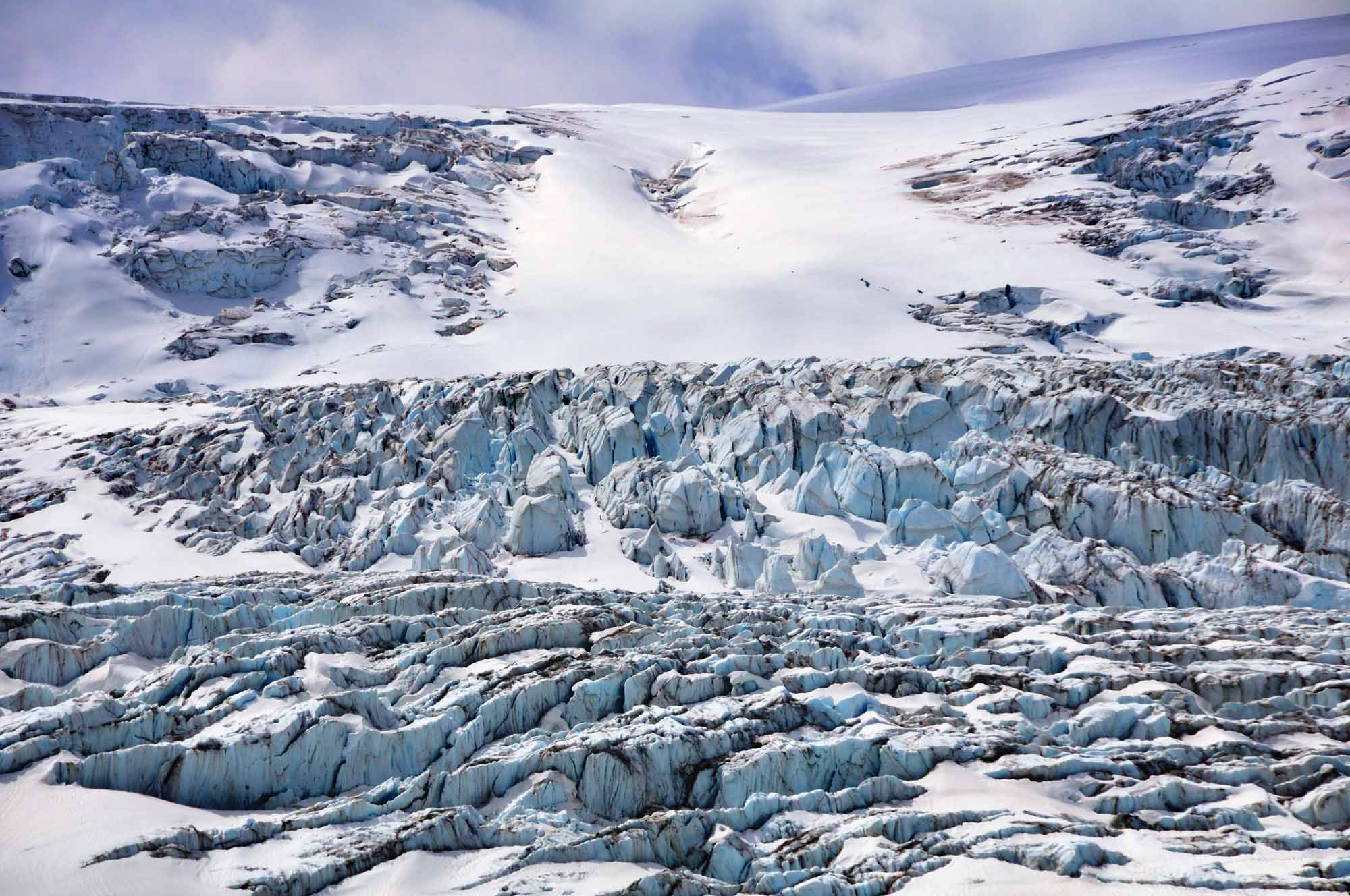
-
Article
Geranium
Geranium, annual, biennial or perennial plant of genus Geranium, family Geraniaceae, with opposite, palmate and often divided leaves.
"https://thecanadianencyclopedia.ca/images/tce_placeholder.jpg?v=e9dca980c9bdb3aa11e832e7ea94f5d9" // resources/views/front/categories/view.blade.php
https://thecanadianencyclopedia.ca/images/tce_placeholder.jpg?v=e9dca980c9bdb3aa11e832e7ea94f5d9
-
Article
Ginseng
Ginseng is a herbaceous perennial plant of genus Panax, ginseng family (Araliaceae), discovered in North America by Joseph-François Lafitau.
"https://thecanadianencyclopedia.ca/images/tce_placeholder.jpg?v=e9dca980c9bdb3aa11e832e7ea94f5d9" // resources/views/front/categories/view.blade.php
https://thecanadianencyclopedia.ca/images/tce_placeholder.jpg?v=e9dca980c9bdb3aa11e832e7ea94f5d9
-
Article
Gold
Gold (Au) is a bright, shiny, yellow metal, notable for its high density (19.3 times the weight of an equal volume of water) and valued for its extreme ductility, strong resistance to corrosion, lustrous beauty and scarcity. Pyrite, or fool's gold as it is sometimes known, can be distinguished from real gold by its brittleness and hardness as well as the fact that it appears black in powder form. As it is the least chemically active of all metals, gold usually occurs in a free or uncombined state. It is found as nuggets, flakes or dust in gravel and sand deposits along creeks and rivers, but more often gold is recovered from veins (called lodes) in bedrock. Gold is also produced as a by-product of base-metal mines; about one-fifth of Canada's gold production comes from this source. Gold is the mineral emblem of the Northwest Territories.
"https://d3d0lqu00lnqvz.cloudfront.net/media/media/3c415394-d1cf-4ac7-88df-cc405447770a.jpg" // resources/views/front/categories/view.blade.php
https://d3d0lqu00lnqvz.cloudfront.net/media/media/3c415394-d1cf-4ac7-88df-cc405447770a.jpg
-
Article
Goldenrod
Goldenrod, genus Solidago, showy, perennial, herbaceous plant of the Compositae or Asteraceae family.
"https://thecanadianencyclopedia.ca/images/tce_placeholder.jpg?v=e9dca980c9bdb3aa11e832e7ea94f5d9" // resources/views/front/categories/view.blade.php
https://thecanadianencyclopedia.ca/images/tce_placeholder.jpg?v=e9dca980c9bdb3aa11e832e7ea94f5d9
-
Article
Goose
The goose is a member of a widespread group of waterfowl ranging in size from the giant Canada goose to the diminutive cackling goose.
"https://d3d0lqu00lnqvz.cloudfront.net/media/media/5e311859-b5d7-46ef-befe-32aa173736d6.jpg" // resources/views/front/categories/view.blade.php
https://d3d0lqu00lnqvz.cloudfront.net/media/media/5e311859-b5d7-46ef-befe-32aa173736d6.jpg
-
Article
Grape
Vitis species are woody climbing vines that produce clusters of berries. There are about 60 Vitis species found mostly in temperate regions in the Northern Hemisphere. Vitis vinifera, the principal grape species cultivated for fine winemaking, is native to the Mediterranean and southwestern Asia. Several Vitis species are native to North America, from Canada to Mexico. In cultivation, V. vinifera wine grapes are commonly produced on grafted vines whose rootstocks were derived from North American species such as V. riparia and V. rupestris, which impart resistance to pests and tolerance to adverse soil conditions. Fruit-producing hybrids of V. vinifera and North American species were first developed for their resistance to the root aphid phylloxera. However, as many hybrids are more winter hardy than V. vinifera they are the most common cultivars planted in areas having cold winter climates. The quality of wines produced from hybrid cultivars is generally considered inferior to that from V. vinifera.
"https://d3d0lqu00lnqvz.cloudfront.net/media/media/55eb249c-1c46-4ed1-9490-224f6164762d.jpg" // resources/views/front/categories/view.blade.php
https://d3d0lqu00lnqvz.cloudfront.net/media/media/55eb249c-1c46-4ed1-9490-224f6164762d.jpg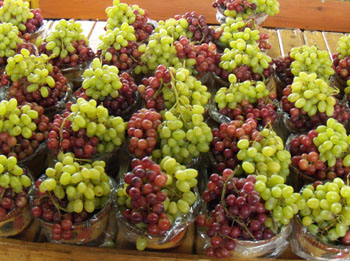
-
Article
Graphite
Graphite is one of the 4 allotropes of carbon. The other allotropes are Diamond, the fullerenes also known as "bucky balls" and amorphous carbon (charcoal, coke and carbon black). These allotropes of the same element carbon have very different crystal structures and physical properties. There are 2 types of graphite - natural and synthetic. Natural graphite is black with a sub-metallic lustre, feels greasy and stains the fingers. Graphite is found mainly in Metamorphic Rocks, most frequently in schist and as small crystals in impure marbles in association with other minerals.
"https://d3d0lqu00lnqvz.cloudfront.net/media/media/ccbf9884-f122-47b6-a979-572a2dfd24eb.jpg" // resources/views/front/categories/view.blade.php
https://d3d0lqu00lnqvz.cloudfront.net/media/media/ccbf9884-f122-47b6-a979-572a2dfd24eb.jpg
-
Article
Grasses
Emergence of GrasslandsGrasslands began to appear about 25 million years ago, changing the face of much of the world and providing food for grazing animals. Grasses and grazers evolved together. Grasses benefit because grazers control the growth of competing species and provide fertilizers.
"https://d3d0lqu00lnqvz.cloudfront.net/media/media/64128275-0625-4ef5-8669-b94e659285cb.jpg" // resources/views/front/categories/view.blade.php
https://d3d0lqu00lnqvz.cloudfront.net/media/media/64128275-0625-4ef5-8669-b94e659285cb.jpg
-
Article
Grasshopper
Grasshopper is the common name for straight-winged insects which, together with locusts, make up the order Orthoptera.
"https://thecanadianencyclopedia.ca/images/tce_placeholder.jpg?v=e9dca980c9bdb3aa11e832e7ea94f5d9" // resources/views/front/categories/view.blade.php
https://thecanadianencyclopedia.ca/images/tce_placeholder.jpg?v=e9dca980c9bdb3aa11e832e7ea94f5d9
-
Article
Gray Ratsnake
The gray ratsnake (Pantherophis spiloides) is a non-venomous snake native to eastern North America. It is one of the largest snake species in North America. In Canada, the gray ratsnake is only found in southern Ontario, where it is restricted to two disjunct regions. Canadian populations are declining due to a variety of threats, including road mortality, habitat loss and intentional persecution by people. It is classified as a species at risk under Canada’s Species at Risk Act.
"https://d3d0lqu00lnqvz.cloudfront.net/grayratsnake/Gray-Ratsnake.jpg" // resources/views/front/categories/view.blade.php
https://d3d0lqu00lnqvz.cloudfront.net/grayratsnake/Gray-Ratsnake.jpg