Share on Facebook
 Share on X
 Share by Email
 Share on Google Classroom
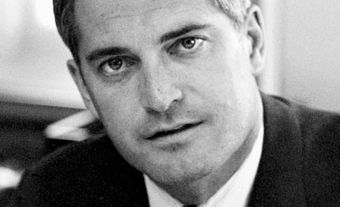
Lester Bowles “Mike” Pearson, PC, OM, CC, OBE, prime minister 1963–68, statesman, politician, public servant, professor (born 23 April 1897 in Newtonbrook, ON; died 27 December 1972 in Ottawa, ON). Lester Pearson was Canada’s foremost diplomat of the 1950s and 1960s. He helped devise Canada’s post-war foreign policy. In 1957, he received the Nobel Peace Prize for his work during the Suez Crisis. A skilled politician, Pearson rebuilt the Liberal Party. He was prime minister of two minority governments. He introduced the Canada Pension Plan, universal health care and a new national flag.
This article is a plain-language summary of Lester B. Pearson. If you are interested in reading about this topic more in depth, please see our full-length entry, Lester B. Pearson.

Early Life and Career
Lester Pearson was the son of a Methodist parson. He grew up moving from one parsonage to another. In 1914, he enlisted in the Canadian Army Medical Corps. He was a stretcher-bearer for two years in the First World War.
Pearson earned his BA at the University of Toronto in 1919. He won a fellowship to Oxford University. He then taught history at the University of Toronto.
Pearson married and soon had children. He then joined the Department of External Affairs (now Global Affairs Canada).

Representing Canada Abroad
In 1935, Lester Pearson began working as first secretary at the Canadian High Commission in London, England. He watched as Europe drifted into the Second World War. He later attached great importance to collective defence in the face of aggression.
Pearson returned to Canada in 1941. He was sent to Washington, DC, in 1942. In 1945, he was named Canadian ambassador to the United States. He was also at the founding conference of the United Nations (UN).
Deputy Minister of External Affairs
In September 1946, Lester Pearson became deputy minister of external affairs. He sought closer partnerships with Canada’s main allies. (See also Middle Power.) In 1949, Canada became a founding member of the North Atlantic Treaty Organization (NATO).

Minister of External Affairs
By the time NATO was in place, Lester Pearson had entered politics. As minister of external affairs, he helped lead Canada into the Korean War. In 1952, he served as president of the UN General Assembly. He tried to find a solution to the conflict.
In 1956, Pearson proposed creating a UN peacekeeping force to help ease the British and French out of Egypt during the Suez Crisis. His plan was used and it proved successful. As a reward, he received the Nobel Peace Prize in 1957.

Leader of the Liberal Party
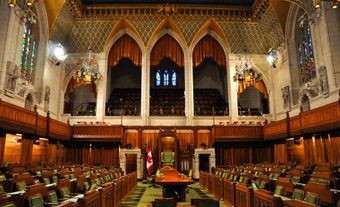
By 1957, Lester Pearson and the Louis St-Laurent government were no longer in office. They were widely blamed for not standing by Britain in 1956. The Liberals lost to John Diefenbaker and the Progressive Conservatives. St-Laurent resigned as leader. Pearson was voted the new Liberal Party leader in January 1958. But in the 1958 election, the Liberals lost again. They were reduced to 49 of 265 seats in the House of Commons.
Pearson began the slow task of rebuilding the party. In the 1962 election, the party raised its total to 100 seats. In 1963, the Diefenbaker government collapsed. In the election that February, the Liberals won 128 seats. They formed a minority government.
Prime Minister 1963–68
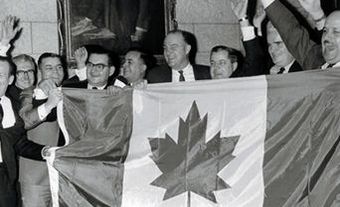
Lester Pearson took office on 22 April 1963. His government proved to be accident-prone. It aborted its first budget. Much of Parliament’s time was spent in bitter partisan debate. This culminated in the great flag debate of 1964. Pearson also tried to appease Quebec and the provinces with “co-operative federalism” and “bilingualism and biculturalism.”
In 1965, Pearson called an election. But he again failed to secure a majority. In 1966, the Munsinger scandal erupted. In 1967, Montreal hosted the world with Expo 67. Canada also celebrated its centennial.
In December 1967, Pearson announced he would retire. In April 1968, Pierre Trudeau was chosen as his successor. In retirement, Pearson worked on his memoirs. He also studied international aid for the World Bank.
Legacy
For all its chaos, the Pearson government left a notable legacy. This includes a Canada Pension Plan; a universal medicare system; a unified Armed Forces; and a new national flag. Not all Pearson’s programs proved fruitful. Some were costly. But they are often seen as the high point of the Canadian welfare state.