Share on Facebook
 Share on X
 Share by Email
 Share on Google Classroom
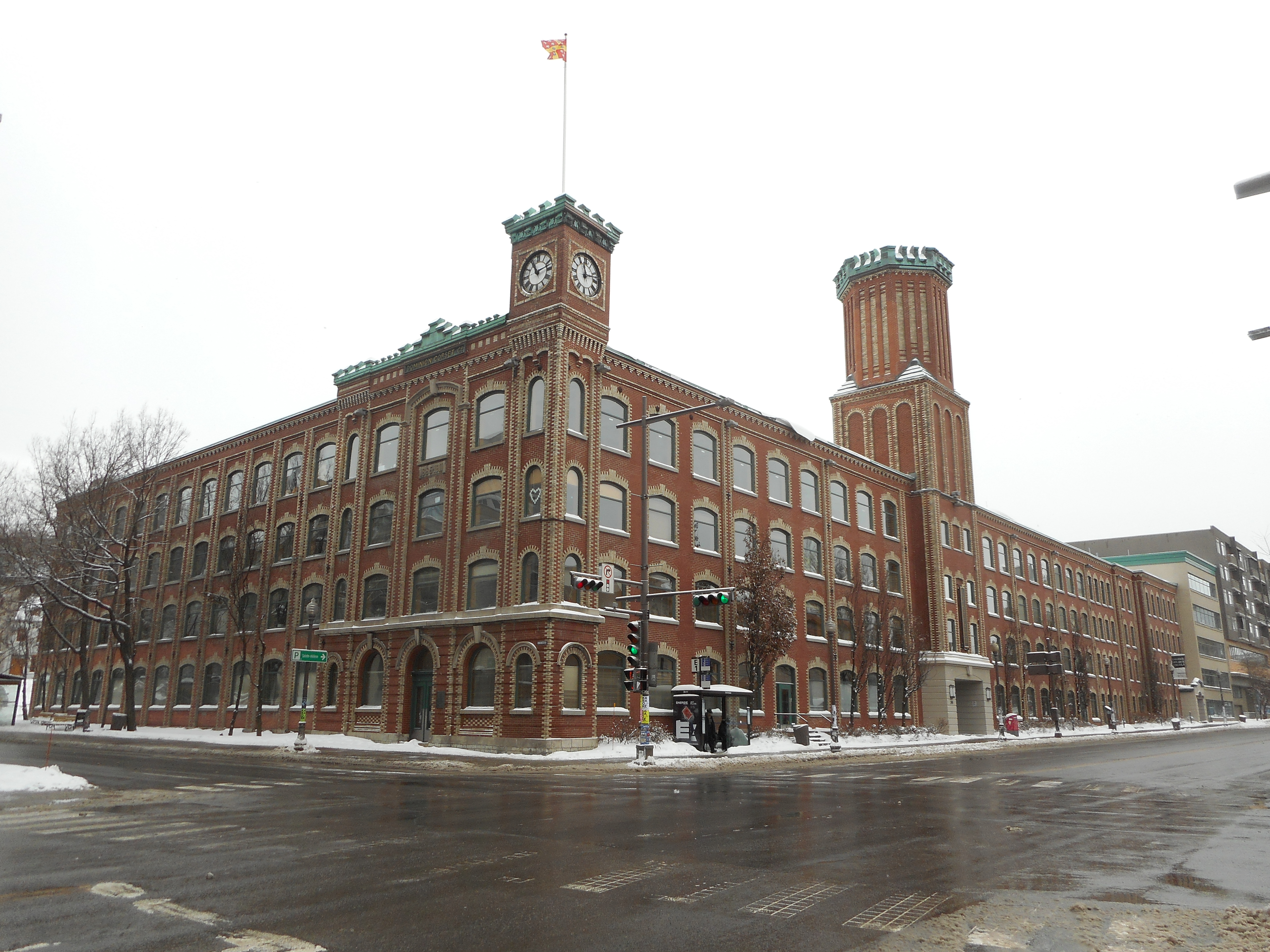
Dominion Corset, formally known as the Dominion Corset Company Ltd., was a manufacturer of women’s undergarments based in Quebec City. The company was founded by Georges-Élie Amyot and Léon Dyonnet in October 1886. For nearly a century, Dominion Corset was one of the largest manufacturers of women’s undergarments in Canada and employed many thousands of women. (See also Clothing Industries; Women in the Labour Force.) Its principal factory in Quebec City, now known as La Fabrique, has been preserved and listed as a National Historic Site due to its historical and architectural value.
Georges-Élie Amyot
Dominion Corset was founded by Georges-Élie Amyot from Saint-Augustin-de-Desmaures, Lower Canada (now Quebec). Amyot grew up on a farm until the age of ten and then apprenticed as a saddler. Like many French Canadians of the mid to late 19th century, he made his way to New England to ply his trade, living in both Connecticut and Massachusetts. (See also Franco-Americans; Emigration.) He returned to Quebec in 1877 and established himself in Montreal, taking various roles in different industries. He would relocate to Quebec City in 1879 and marry Joséphine Tanguay in November of 1881. They had six children, five of whom survived. Amyot opened his own business there in 1885, selling dry goods, fancy goods and novelties. He was forced into bankruptcy in 1886, apparently caused by local wholesaler and politician Isidore Thibaudeau.
In mid-October of 1886, Amyot began a partnership with Léon Dyonnet, who had himself been manufacturing corsets to support the corset shop run by his wife since 1882. This enterprise would form the foundation of what would become Dominion Corset. (See also Clothing Industries.) Amyot’s partnership with Dyonnet ended in 1889, though he continued running the business with two of his sisters as partners until 1897, when he took full control of the business.
Amyot also involved himself in other business ventures such as purchasing a brewery in 1895 that sold Fox Head beers. In 1909, Amyot sold the endeavour to National Breweries Limited at a considerable profit.
Amyot became involved in Liberal Party politics, chiefly as a fundraiser and part organizer, beginning in 1887. He was an active participant in the reciprocity debate of the late-1880s. He was an active member of the Quebec Chamber of Commerce (as its president) in 1906 and 1907. Though he was the Liberal Party favourite chosen to contest a 1906 by-election, he was defeated in an upset. In 1911, Quebec premier Jean-Lomer Gouin appointed Amyot to serve in the Legislative Council of Quebec, the province’s upper chamber. Amyot would sit on the council from 1912 to 1930.
Thanks to his considerable business prowess and political connections, Amyot was chosen in 1922 to help save the Banque Nationale. Ultimately, the bank was merged with the Banque d’Hochelaga in 1924 to create the Banque Canadienne Nationale, one of the precursors to today’s National Bank of Canada. Amyot would serve as vice-president of the newly created bank. Also in 1924, Amyot handed control of Dominion Corset to his son, Louis-Joseph Adjutor Amyot, who continued to expand and develop the business.
Georges-Élie Amyot passed away suddenly on 28 March 1930, in Palm Beach, Florida, aged 74. At the time of his death, he was one of the wealthiest men in Quebec, with an estimated fortune of $8 million.
Dominion Corset
Georges-Élie Amyot’s corset business developed rapidly. In 1888, it employed 60 workers, and within six years that number had tripled. Outlets had also been opened in Montreal and Toronto by that time. Amyot was a pioneer in the use of steam-driven machinery, which helped increase production. He also acquired other businesses in an effort to vertically integrate his business. From 1894, Amyot began producing his own cardboard boxes, an endeavour that would eventually be spun off as the Quebec Paper Box Company. In 1916, he founded the Canada Corset Steel and Wire Corporation to create the steel rods that were needed in the manufacture of corsets.
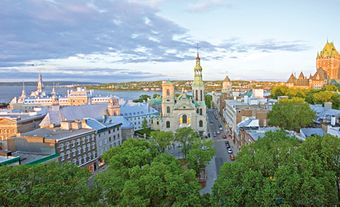
By 1897, Amyot required a much larger facility to produce corsets and acquired the factory of a defunct shoe manufacturer in Quebec City’s Saint-Roch district. This building was enlarged in 1907 to keep up with the growing business. A major fire damaged the building in 1911, leading Amyot to hire Georges-Émile Tanguay to renovate, expand and embellish the original building, a decision that earned both him and Tanguay considerable praise. The building was called “the continent’s loveliest factory.”
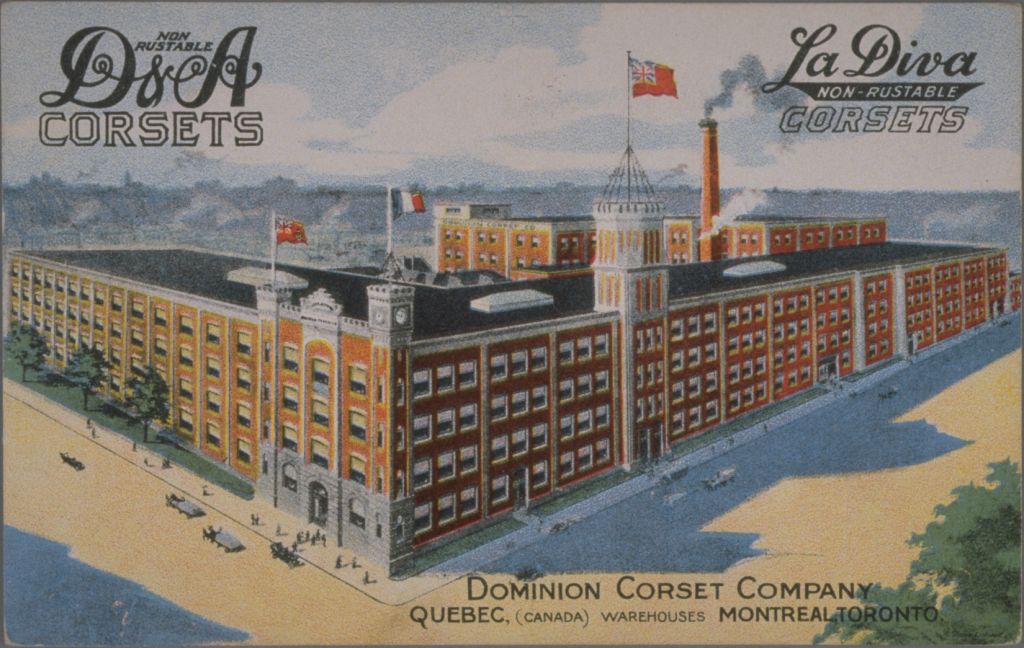
Around the turn of the century, Dominion Corset employed about 320 people and was producing 2,100 corsets each day, in 125 different models. In the early decades of the 20th century, Dominion Corsets were found across Canada, with a particularly strong presence in Ontario and Quebec, and were found as far abroad as Australia, England and New Zealand.
The business continued to expand throughout the 20th century, with the Amyot family retaining control until the 1970s. Some of its leading brand names included Daisy Fresh, NuBack and Gothic. Dominion Corset was sold to Canadelle WonderBra in 1973, which continued to operate from the same location until 1988, when it moved to a new facility in the suburbs of Quebec City. The building sat vacant for several years and was then renovated in 1992–93. It now serves as office space for government agencies, as well as the Université Laval’s School of Visual Arts. The building, now called La Fabrique, was listed as a national historic site in 2011.
Employment of Women and Labour Practices
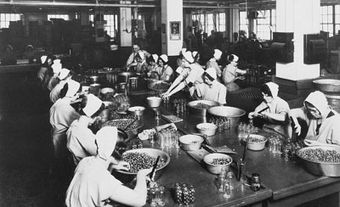
Dominion Corset was both representative of its era and ahead of its time, given that it was a source of industrial jobs for single women at the end of the 19th century and beginning of the 20th century, a period in which women were only beginning to enter the industrial workforce. (See also Women in the Labour Force.) The company also employed children, which was common at the time, though beginning to fall out of favour by the turn of the 20th century. (See also Child Labour.)
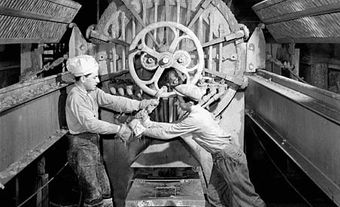
Working conditions were reportedly difficult. The factory was hot and dusty, and machinery was driven by steam power to maintain high levels of production. The environment would have been noisy, stifling and intense. Accidents would have been a fairly regular occurrence, though there were none of the protections workers of today are afforded. Moreover, the company maintained a strict policy of only employing single women to work on the shop floor well into the 1950s; women who became married while employed at Dominion Corset were fired, and women were essentially barred from management, advertising or design positions.
Public Morality Scandal
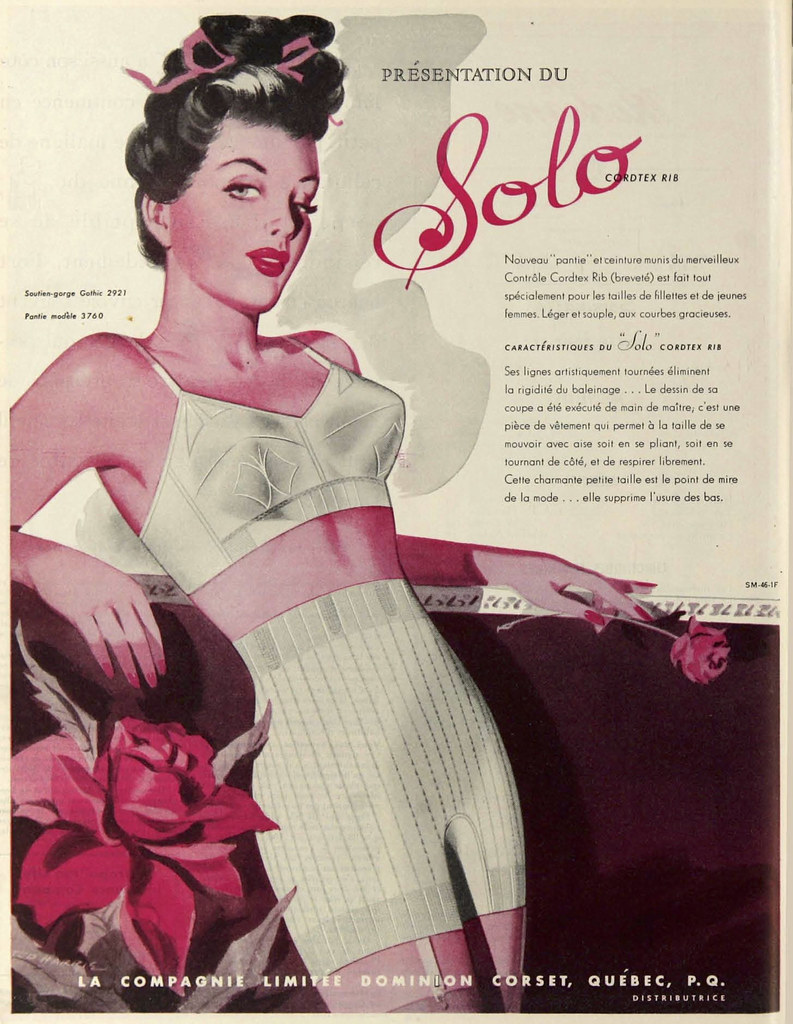
In the late-1940s, as Canadian society attempted a return to normality after the Second World War, there was considerable concern about vice and public morals, particularly in Quebec. The city of Montreal had earned a reputation as “Sin City” owing to its illegal gambling dens, burlesque shows, speakeasies and the massive influx of unmarried young men and women who came to the city either as part of the wartime industrial workforce or transited through Montreal while in the armed forces.
In late 1948, advertisements for Dominion Corset products began appearing in Montreal and Quebec City and were considered by some to be overly provocative. This led to a letter-writing campaign directed at the company and its advertising agency. Those offended by the advertisements considered them to be too suggestive and too similar to pin-up photos. The morality campaign was in large part driven by Catholic women whose opposition ranged from a desire to restore public morality to those who felt displaying women in their undergarments—even for advertising purposes—was demeaning. (See also Catholicism in Canada.) Dominion Corset ultimately replaced the offending images with new advertisements that were more impressionistic in style.