Share on Facebook
 Share on X
 Share by Email
 Share on Google Classroom
The blue-spotted salamander (Ambystoma laterale) is a forest-dwelling salamander native to northeastern North America. It has a large distribution in eastern Canada that extends from Manitoba to Nova Scotia, Prince Edward Island and Labrador. These salamanders belong to the Ambystomatidae family, also known as “mole salamanders” because they spend much of their lives underground.
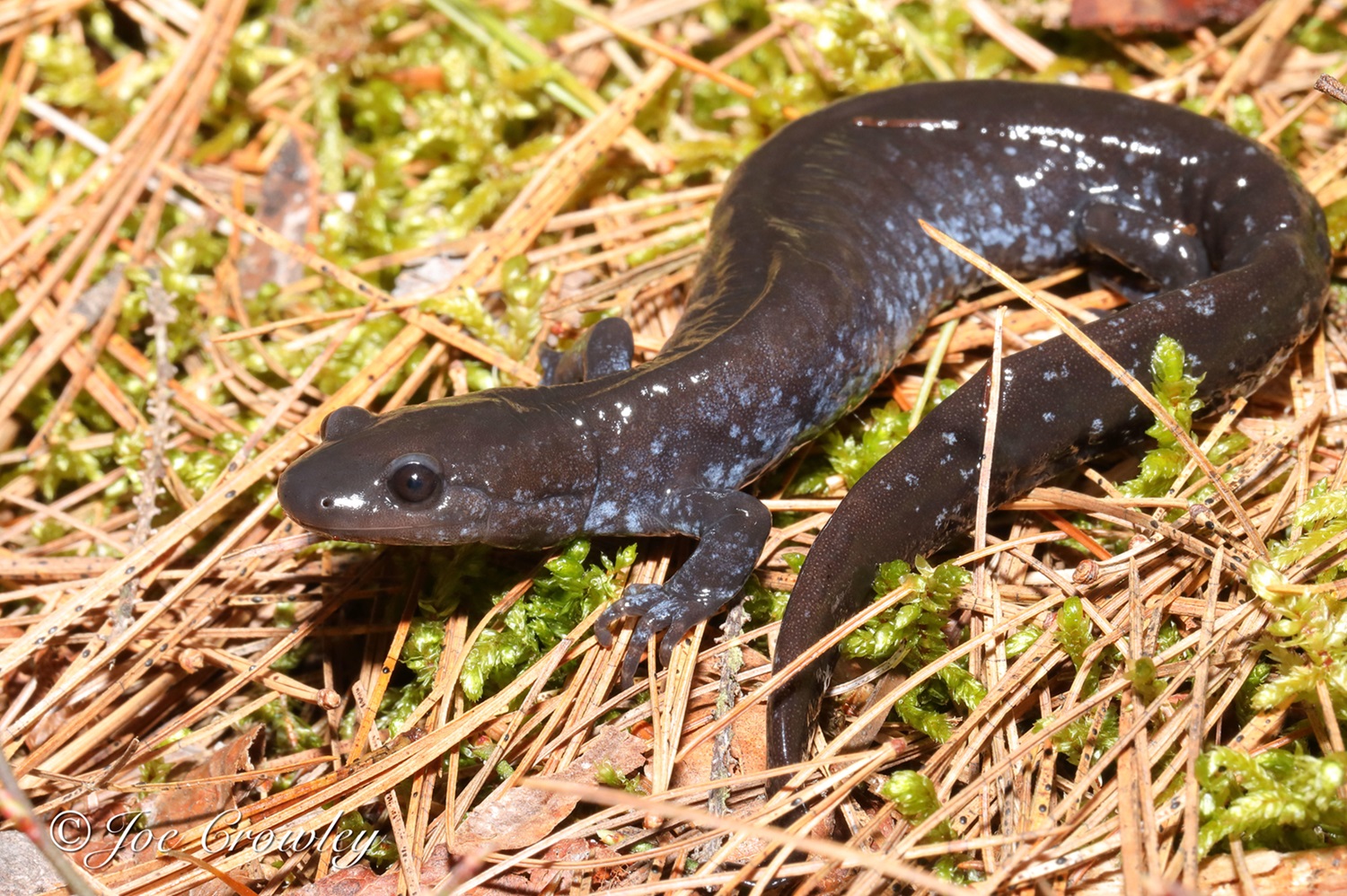
Description
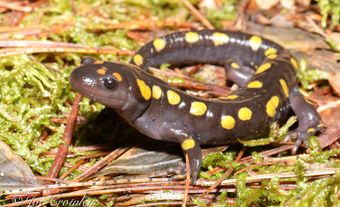
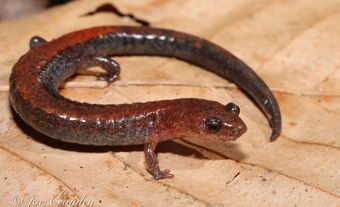
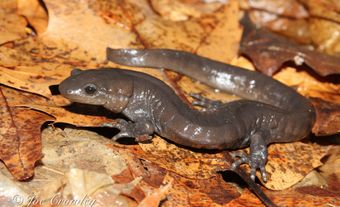
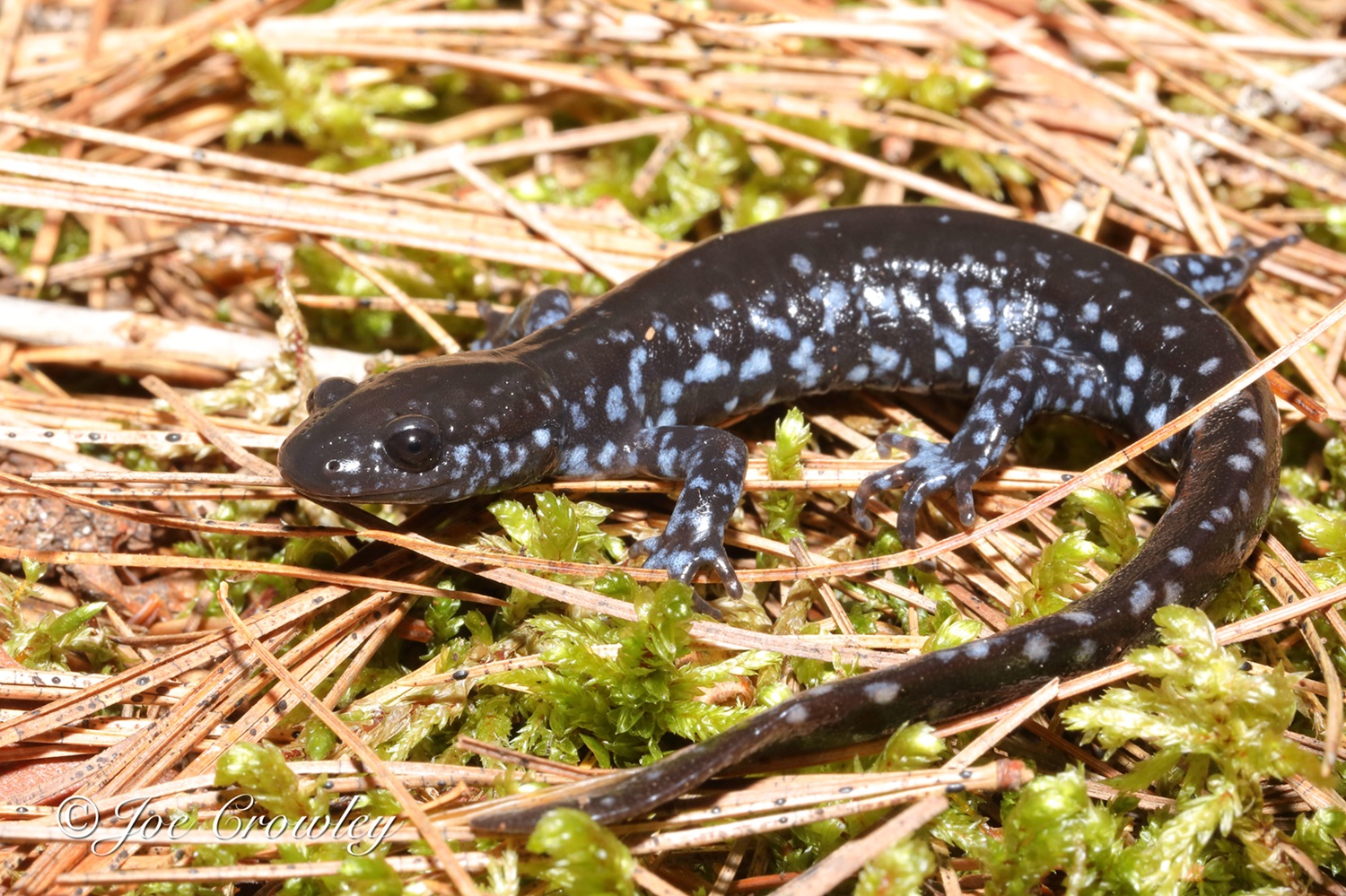
Adult blue-spotted salamanders are typically 7.5–13 cm in total length, with females reaching slightly larger sizes than males. Blue-spotted salamanders are thick-bodied with short legs. Adults are dark grey to black on the upper parts of the body, limbs and tail with blue flecks and spots. The underside is black, dark grey or brownish grey with light flecking. Young juveniles are lighter grey to brown with blue to yellow spots.
The aquatic larvae have a broad head, feathery external gills, a large tail fin and four legs that develop as the larvae grow. Larvae are typically olive green, brown or grey with varying amounts of yellow mottling and banding. Older larvae develop a pale stripe along the side of the body. The larvae are 8–10 mm long when they hatch and can grow to 4.0–5.5 mm in total length before undergoing metamorphosis.
Distribution and Habitat
Blue-spotted salamanders are widely distributed in eastern Canada. They are found in southwestern Manitoba, Ontario, Quebec, New Brunswick, Nova Scotia, Prince Edward Island and southern Labrador. The species is also found in the Northeastern United States from Maine south to New York and from Northeastern Ohio west to Minnesota and eastern Iowa.
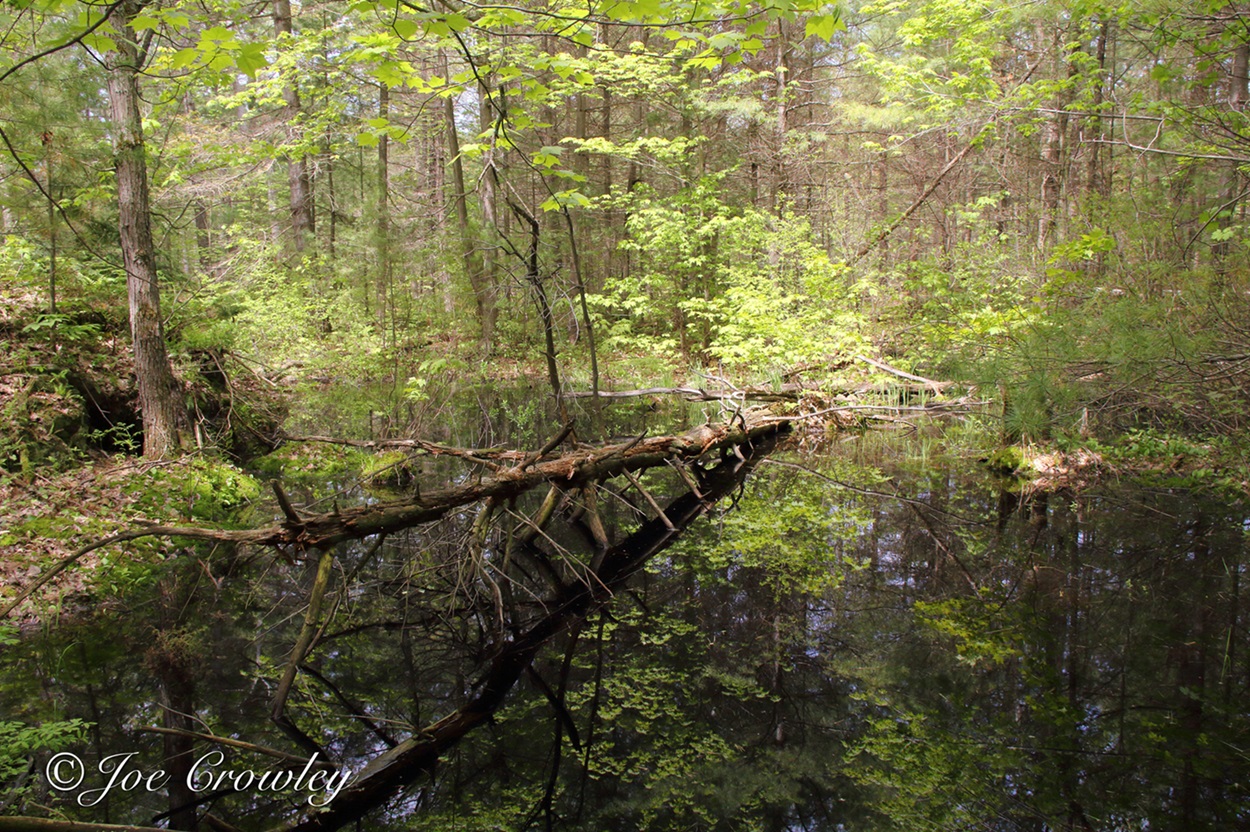
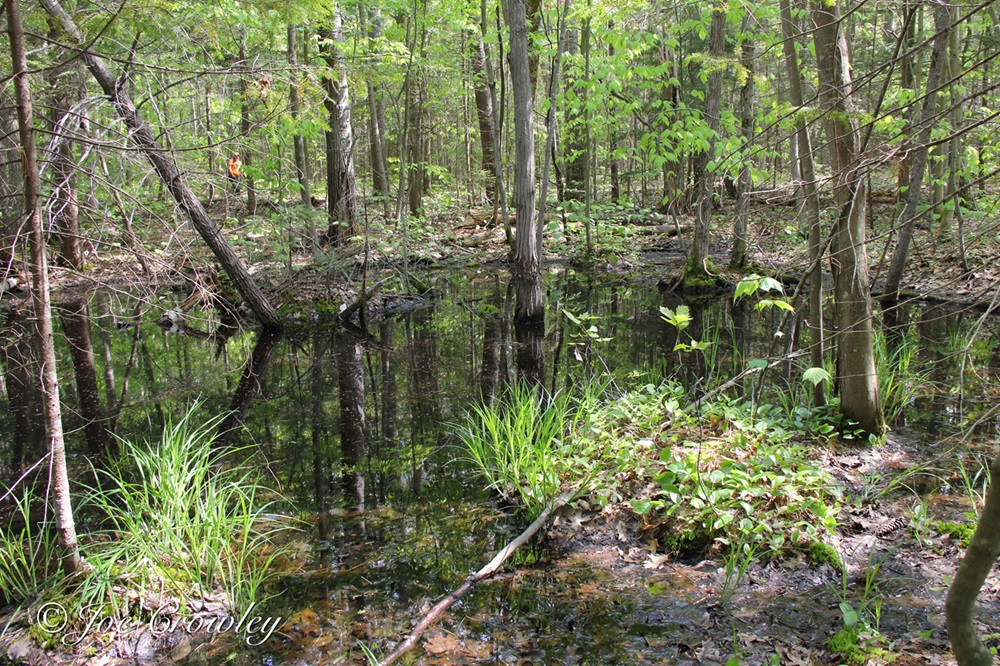
Blue-spotted salamanders usually live in deciduous and mixed forests. However, they can also be found in coniferous forests, particularly at the northern extent of their range. Like most amphibians, blue-spotted salamanders have moist, porous skin and can quickly dehydrate if exposed to hot, dry conditions. For this reason, they live in cool, moist environments on the forest floor. They spend most of their time under logs and in underground spaces such as mammal burrows and subterranean cavities left by rotting roots and stumps. They also depend on these underground spaces to get below the frost line and avoid freezing temperatures during the winter. Adults breed in shallow, fish-free habitats such as vernal pools (small wetlands that usually dry up during the late summer), wetlands, ponds and ditches. Outside the breeding season, individuals are typically found within a few hundred metres of their breeding site.
Did you know?
Blue-spotted salamanders have one of the northernmost distributions of any North American salamander and are well adapted to cold conditions. They become active in the early spring when air temperature is barely above 0°C, sometimes moving over ice and snow as they migrate to their breeding sites. During these migrations, their body temperature may even drop slightly below 0°C, but they are able to survive for a short time without freezing.
Reproduction and Development
Adults typically emerge from hibernation and migrate to their breeding sites in April or early May, depending on latitude and weather. These migrations usually occur on rainy nights when the air temperature is above 5°C. After courting the female, the male deposits a spermatophore (sperm packet), which the female picks up with her cloaca (a single opening at the base of the tail for the digestive, urinary and reproductive tracts). The female lays her eggs within a few days of mating. Clutch size has been documented to range from 82 to more than 538 eggs. The eggs are attached to sticks, vegetation or other structures in shallow water, either singly or in small masses that typically contain 2–10 eggs. The eggs have a dark centre surrounded by several jelly envelopes and hatch after three to four weeks. The larvae are aquatic and breathe through gills. The larvae typically undergo metamorphosis in two to three months, usually from July to early September in Canada. The newly transformed juveniles, which now have lungs and breathe air, disperse into the surrounding forest. Blue-spotted salamanders reach maturity at two years of age. Little information is available on lifespan, but some other Ambystoma salamanders can live for several decades.
Did you know?
The unisexual ambystoma are an all-female lineage of salamander that are found in many of the same areas as the blue-spotted salamander. Unisexual ambystoma typically reproduce by creating clones of themselves. However, they require the sperm from males of another ambystoma species (e.g., blue-spotted salamander) to initiate development of their eggs. In some cases, the genetic material from the sperm is incorporated into the unisexual ambystoma embryo. Because of this, the unisexual ambystoma that live alongside blue-spotted salamanders share much of their DNA and look virtually identical to them.
Diet and Predation
Adults and juveniles forage in the leaf litter on the forest floor, under woody debris and in underground spaces such as rodent burrows. They eat invertebrates such as earthworms, snails, centipedes, spiders and insects. The larvae likely eat a variety of aquatic invertebrates, including zooplankton and insect larvae.
Little is known about the predators of the blue-spotted salamander. Their predators are likely similar to those of other Ambystoma salamanders, which include snakes, forest birds and mammals such as raccoons and skunks. Spiders have also been known to prey on juvenile blue-spotted salamanders. Fish, aquatic insects and their larvae, adult eastern newts and other amphibian larvae are predators of Ambystoma salamander eggs and larvae. Like most amphibians, blue-spotted salamanders have poison glands that provide defence against predators. When confronted by a potential predator, the salamander will often raise its tail toward the predator and undulate or wave it to display the noxious secretions.
Status and Threats
Globally, the blue-spotted salamander is listed as “least concern” by the International Union for Conservation of Nature. This species is widespread and abundant in Canada, and its status has not been assessed by the Committee on the Status of Endangered Wildlife in Canada (see Species at Risk Legislation in Canada).
Activities that result in the permanent destruction of mature forest and breeding sites, such as clearing land for urban development or agriculture, are the most serious threats to this species. Roads also pose a serious threat to Ambystoma salamanders when they bisect the species’ habitat, since large numbers of salamanders can be killed during their spring migrations. Because their skin is permeable to chemicals in the environment, amphibians are especially sensitive to chemical pollution such as pesticides, fertilizers, industrial chemicals, road salt and heavy metals. Other threats include intensive forestry operations such as clear-cutting, acidification of breeding sites and stocking ponds with predatory fish.