Share on Facebook
 Share on X
 Share by Email
 Share on Google Classroom
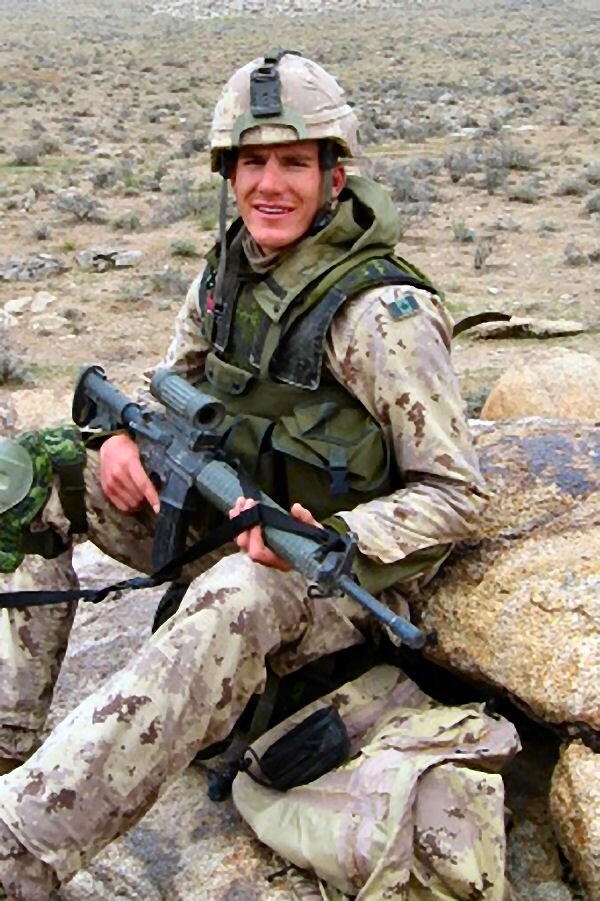
Andrew James “Boomer” Eykelenboom, soldier, medic (born 3 November 1982 in Edmonton, AB; died 11 August 2006 near Spin Boldak, Afghanistan). Eykelenboom was a medic with 1 Field Ambulance who was killed during the war in Afghanistan. He is believed to be the first Canadian medic killed in combat since the Korean War.
Early Life and Education
Andrew James Eykelenboom was the youngest of three sons born to Hans and Maureen Eykelenboom. He and his brothers, Steven and Gordon, grew up in Spruce Grove, Alberta, just west of Edmonton. Eykelenboom was an active youth who loved sports, including baseball, rugby, swimming, skiing and mountain biking. He was also an avid reader.
After his older brothers left home, Eykelenboom and his parents moved to Comox, British Columbia, where he completed his last two years of high school. Eykelenboom wanted to become a firefighter. He volunteered with the Comox Fire Department and did a work practicum with the 19 Wing Comox firefighters. When he graduated in 2001, he was too young to apply for firefighting school. Instead, he enlisted in the Canadian Forces as a medic, which would allow him to serve others and give him valuable medical experience.
Service in Afghanistan
Andrew Eykelenboom joined the Canadian armed forces in June 2001. Only a few months later, radical Islamist al-Qaeda terrorists launched a series of attacks on New York and Washington, D.C. (See Canada and 9/11.) Canada joined an international coalition to destroy the al-Qaeda terrorist network and the Taliban regime that sheltered it in Afghanistan. Canadians would be involved in the war until 2014.
Canada’s main contribution was the maintenance of an Army battle group of approximately 2,000 infantry soldiers, as well as armoured vehicles, tanks, artillery and other support units, including a field hospital in Kandahar. Soldiers were rotated in and out of Afghanistan on tours of duty and were drawn from Canada’s regular force brigades, augmented by part-time reservists.
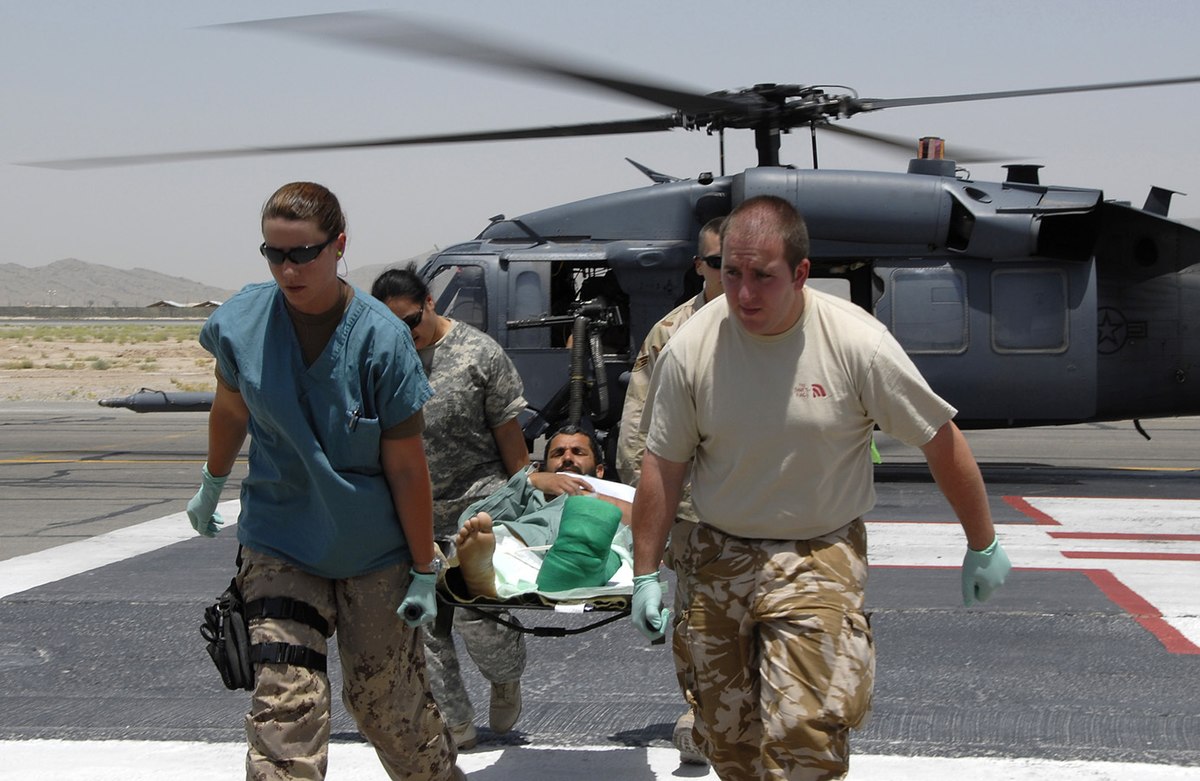
Eykelenboom began basic training in October 2001, followed by trade-specific training as a medic with 1 Field Ambulance (Edmonton), Canada’s oldest medical regiment. In February 2006, he deployed to Afghanistan for a seven-month tour. At that time, the Canadian battle group was tasked with providing security across Kandahar province and rooting out the Taliban.
During his time in Afghanistan, Eykelenboom was credited with saving several lives. Known as “Boomer” among friends and comrades, he was well liked for his kindness, humour and compassion for the local Afghan population. While on tour, Eykelenboom wrote home asking for supplies: “Mom, send me good stuff for the kids, they have nothing, and I have everything that I need. Just send stuff for them.” According to those who knew him, Eyklenboom’s compassion and commitment were inspired by his Christian faith.
Cpl. Eykelenboom embodied so many of the values that we hold dear as average citizens, such as compassion, forgiveness and believing in the goodness of people and God. He took pride in, and perfected, his skills as a caregiver and, because of his medical training and spiritual beliefs, he never hesitated to provide medical or spiritual support to his patients or comrades as required. (Mural of Honour, The Military Museums of Calgary, Alberta)
Death and Legacy
Andrew James Eykelenboom’s tour concluded on 9 August 2006. He was packing for his return home when he learned that the medical unit needed two medical technicians. Eykelenboom volunteered to stay on. He was killed on 11 August, while travelling back to base, near the town of Spin Boldak, about 100 km southeast of Kandahar City.
Corporal Andrew James Eykelenboom received the Sacrifice Medal (posthumous). In his honour, his family established “Boomer’s Legacy.” The foundation provides funding to support community-focused projects at schools, orphanages and hospitals wherever Canadian soldiers are deployed. A treatment room at 21 Forces Canadian Health Services Centre at 19 Wing Comox in British Columbia is also named after him.