
Browse "Things"
-
Article
Truth and Reconciliation Commission of Canada: Calls to Action
The Truth and Reconciliation Commission of Canada (TRC) was officially launched in 2008 as part of the Indian Residential Schools Settlement Agreement. This multi-faceted agreement was intended to compensate survivors for the harms they suffered in residential schools, and to work towards a more just and equitable future for Indigenous peoples. The TRC was also meant to lay the foundation for lasting reconciliation across Canada. The TRC’s six-volume final report was released on 15 December 2015. It argued that the residential school program resulted in cultural genocide and outlined 94 Calls to Action.
"https://d3d0lqu00lnqvz.cloudfront.net/media/media/a042133-v6.jpg" // resources/views/front/categories/view.blade.php
https://d3d0lqu00lnqvz.cloudfront.net/media/media/a042133-v6.jpg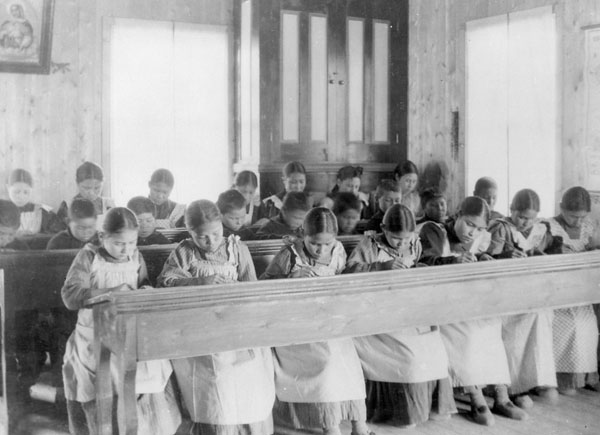
-
Article
Truth and Reconciliation Commission (Plain-Language Summary)
The Truth and Reconciliation Commission (TRC) started working in 2008. It was a result of the Indian Residential Schools Settlement Agreement (IRSSA). The IRSSA recognized the suffering and trauma experienced by Indigenous students at residential schools. It also provided financial compensation (money) to the students. The TRC performed many tasks. It created a national research centre. It collected documents from churches and government. It held events where students told their stories. Also, it did research about residential schools and issued a final report. (See also Reconciliation in Canada.)
"https://d3d0lqu00lnqvz.cloudfront.net/media/media/2bd71aaf-ebc5-44e0-9f91-e4d07b16e81d.jpg" // resources/views/front/categories/view.blade.php
https://d3d0lqu00lnqvz.cloudfront.net/media/media/2bd71aaf-ebc5-44e0-9f91-e4d07b16e81d.jpg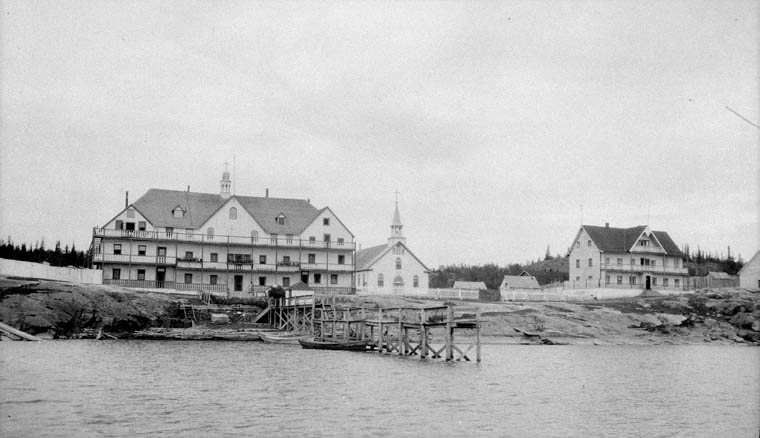
-
Article
Tseshaht (Sheshaht)
The Tseshaht (also Ts’ishaa7ath or Ć̓išaaʔatḥ; formerly Sheshaht) are a Nuu-chah-nulth First Nation living in Barkley Sound and Alberni Inlet, Vancouver Island, British Columbia. As of November 2025, the federal government counted 1,279 registered members of the Tseshaht First Nation, the majority of whom (781) live off reserve.
"https://d3d0lqu00lnqvz.cloudfront.net/media/media/d8ac030b-9728-428c-a546-17223668b49b.jpg" // resources/views/front/categories/view.blade.php
https://d3d0lqu00lnqvz.cloudfront.net/media/media/d8ac030b-9728-428c-a546-17223668b49b.jpg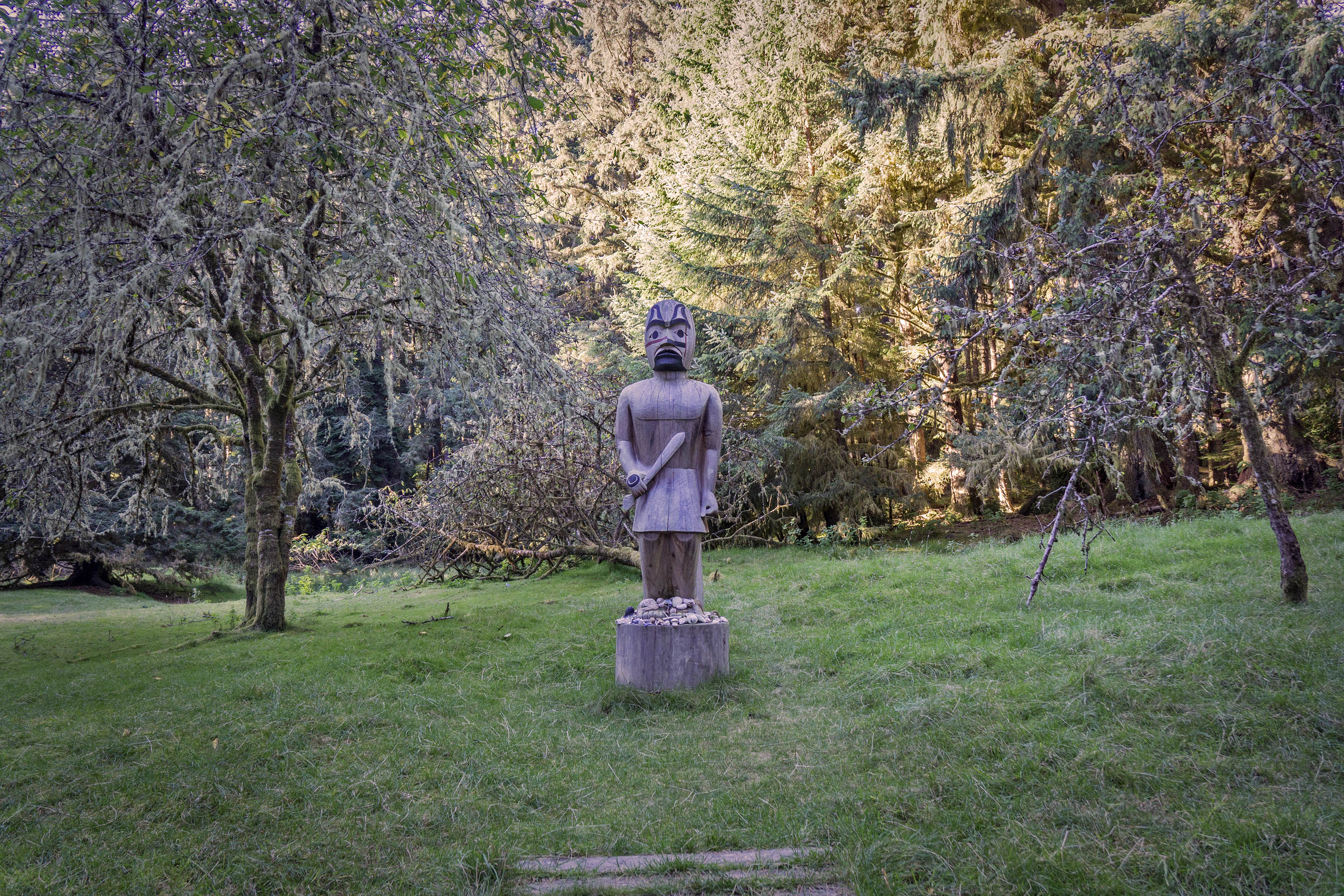
-
Article
Tsilhqot'in Case
In Tsilhqot’in Nation v. British Columbia (2014), the Supreme Court of Canada issued the first-ever declaration of Aboriginal title in Canadian history. It recognized the Tsilhqot’in Nation’s rights over 1,700 km² of their traditional territory (see also Indigenous Territory). This landmark ruling clarified the legal test for Aboriginal title. It also affirmed Indigenous land rights based on historical occupation (see also Rights of Indigenous Peoples in Canada). The decision overturned colonial-era assumptions like terra nullius, marked a significant step in reconciliation and set a powerful precedent for Indigenous nations across Canada pursuing land claims (see also Doctrine of Discovery; Colonialism in Canada).
"https://d3d0lqu00lnqvz.cloudfront.net/media/media/a4e59d7a-0581-47a1-a5ff-60757732f349.jpg" // resources/views/front/categories/view.blade.php
https://d3d0lqu00lnqvz.cloudfront.net/media/media/a4e59d7a-0581-47a1-a5ff-60757732f349.jpg
-
Article
TSN (The Sports Network)
The Sports Network (TSN) was established in 1984 as Canada's first national television network devoted exclusively to sports. Currently parented by CTV (since 2001), TSN has become the most widely viewed Canadian specialty channel, with nearly 8 million subscribers.
"https://thecanadianencyclopedia.ca/images/tce_placeholder.jpg?v=e9dca980c9bdb3aa11e832e7ea94f5d9" // resources/views/front/categories/view.blade.php
https://thecanadianencyclopedia.ca/images/tce_placeholder.jpg?v=e9dca980c9bdb3aa11e832e7ea94f5d9
-
Article
Tsunami
A tsunami is a series of travelling ocean waves usually caused by a large earthquake beneath or near the ocean. Volcanic eruptions, submarine landslides and coastal rockfalls can also generate one, as can a large meteorite impacting the ocean. Most tsunamis occur in the Pacific Ocean; however, people and property in all coastal areas are at risk. The 26 December 2004 tsunami in the Indian Ocean, which killed or displaced 230,000 people, was one of the largest tsunami events of the last 100 years. These very large tsunamis (called teletsunamis) can be destructive across entire ocean basins. This makes them the most far-reaching of all natural disasters.
"https://d3d0lqu00lnqvz.cloudfront.net/media/media/3498270b-80a2-4f3a-866c-6b89e901af97.jpg" // resources/views/front/categories/view.blade.php
https://d3d0lqu00lnqvz.cloudfront.net/media/media/3498270b-80a2-4f3a-866c-6b89e901af97.jpg
-
Article
Tuberculosis
Tuberculosis (TB) has been known and dreaded since Hippocratic times (460-377 BCE). It was once known as "consumption" and claimed the lives of such famous people as the Brontë sisters, Robert Louis Stevenson and Vivian Leigh.
"https://d3d0lqu00lnqvz.cloudfront.net/media/media/24478bd6-f253-477b-9a25-5061605c986c.jpg" // resources/views/front/categories/view.blade.php
https://d3d0lqu00lnqvz.cloudfront.net/media/media/24478bd6-f253-477b-9a25-5061605c986c.jpg
-
Article
Tumpline
A tumpline is a strap that crosses the head (sometimes the chest) and is used for carrying a pack. In Canada, Indigenous peoples and early settlers used this load-bearing device to carry goods over long distances. Tumplines are still used all over the world, from people in rural communities to modern outdoor outfitters.
"https://d3d0lqu00lnqvz.cloudfront.net/media/media/6a17e8ef-ea02-47b8-b371-6afc61d48f0a.jpg" // resources/views/front/categories/view.blade.php
https://d3d0lqu00lnqvz.cloudfront.net/media/media/6a17e8ef-ea02-47b8-b371-6afc61d48f0a.jpg
-
Article
Tuna
The tuna is a swift, elegant marine fish of class Actinopterygii, order Perciformes, family Scombridae (mackerels).
"https://d3d0lqu00lnqvz.cloudfront.net/media/media/6954bf65-e5dd-4309-b2be-fe3047da446d.jpg" // resources/views/front/categories/view.blade.php
https://d3d0lqu00lnqvz.cloudfront.net/media/media/6954bf65-e5dd-4309-b2be-fe3047da446d.jpg
-
Article
Tunagate
Tunagate (also known as the tainted tuna scandal) was a 1985 political scandal. It involved federal government interference with the work of food inspectors, and the subsequent sale of canned tuna that had previously been deemed unfit for human consumption. It was the first major scandal of the Brian Mulroney government and raised questions about his cabinet’s competency. The scandal led to the resignation of the federal fisheries minister, laws to prevent political interference in the work of food inspectors, stronger food quality regulations, and the closing of the only tuna canning plant in Canada.
"https://d3d0lqu00lnqvz.cloudfront.net/media/media/6954bf65-e5dd-4309-b2be-fe3047da446d.jpg" // resources/views/front/categories/view.blade.php
https://d3d0lqu00lnqvz.cloudfront.net/media/media/6954bf65-e5dd-4309-b2be-fe3047da446d.jpg
-
Article
Tungsten
Tungsten (W), also called Wolfram, lapis ponderosus or Heavy Stone, is a silver-grey metallic element with the highest melting point of any metal (3410° C). Tungsten has a high density, high strength at elevated temperatures and extreme hardness.
"https://thecanadianencyclopedia.ca/images/tce_placeholder.jpg?v=e9dca980c9bdb3aa11e832e7ea94f5d9" // resources/views/front/categories/view.blade.php
https://thecanadianencyclopedia.ca/images/tce_placeholder.jpg?v=e9dca980c9bdb3aa11e832e7ea94f5d9
-
Article
Tunnels
Unlike other mountainous countries such as Switzerland, and despite its size, Canada is not distinguished by well-known tunnels.
"https://thecanadianencyclopedia.ca/images/tce_placeholder.jpg?v=e9dca980c9bdb3aa11e832e7ea94f5d9" // resources/views/front/categories/view.blade.php
https://thecanadianencyclopedia.ca/images/tce_placeholder.jpg?v=e9dca980c9bdb3aa11e832e7ea94f5d9
-
Article
Tupiq
Historically, Inuit used a simple tent, known as a tupiq (the plural form is tupiit), while travelling or hunting during the summer months. Today, the traditional tupiq is rarely used (because modern variations have largely replaced it), but some Inuit elders and communities are working to keep the tupiq, and other Inuit traditions, alive. (See also Architectural History of Indigenous Peoples in Canada.)
"https://d3d0lqu00lnqvz.cloudfront.net/Tupiq/InuitFamilyTupiq1915.JPG" // resources/views/front/categories/view.blade.php
https://d3d0lqu00lnqvz.cloudfront.net/Tupiq/InuitFamilyTupiq1915.JPG
-
Article
TurboTrain
The United Aircraft Corporation’s TurboTrain (known in Canada as the CN Turbo or VIA Rail TurboTrain) was an early high-speed passenger train that operated in Canada, from 1968 to 1982. The TurboTrain was powered by a gas turbine engine and could attain a maximum speed of over 270 km/h, though it normally never exceeded 150 km/h. The TurboTrain operated on the Montreal–Toronto route, and under optimal conditions was supposed to complete the trip in less than four hours, though it often took about four and a half hours. Meant to revolutionize train travel in Canada, the TurboTrain suffered from technical problems in its first years of service and declining interest from travellers.
"https://d3d0lqu00lnqvz.cloudfront.net/cnturbtrain.jpg" // resources/views/front/categories/view.blade.php
https://d3d0lqu00lnqvz.cloudfront.net/cnturbtrain.jpg
-
Article
Turkish Music in Canada
Turkish immigration to North America is a recent phenomenon, occurring mainly after World War II. The main areas of settlement have been large cities such as Toronto, Montreal, and Vancouver, or industrial cities such as Hamilton and Brampton, Ont.
"https://thecanadianencyclopedia.ca/images/tce_placeholder.jpg?v=e9dca980c9bdb3aa11e832e7ea94f5d9" // resources/views/front/categories/view.blade.php
https://thecanadianencyclopedia.ca/images/tce_placeholder.jpg?v=e9dca980c9bdb3aa11e832e7ea94f5d9