
Browse "Things"
-
Article
The Disappearance of Ambrose Small
On 2 December 1919, a day after completing a million-dollar business transaction in Toronto, entertainment tycoon Ambrose Small mysteriously disappeared. Despite an international search, no trace of him was ever found. Police suspected foul play and investigated Small’s wife and personal secretary. However, neither the police nor a private investigator uncovered any evidence connecting them to his disappearance. The Ambrose Small case remains one of Canada’s most perplexing and legendary unsolved mysteries.
"https://d3d0lqu00lnqvz.cloudfront.net/media/media/5b98e440-d985-42f9-92c3-b7ac6c3c1ecd.jpg" // resources/views/front/categories/view.blade.php
https://d3d0lqu00lnqvz.cloudfront.net/media/media/5b98e440-d985-42f9-92c3-b7ac6c3c1ecd.jpg
-
Article
American Bullfrog
The American Bullfrog (Lithobates catesbeianus) is a large bullfrog native to Eastern and central North America. Within Canada, it is native to Ontario, Quebec, New Brunswick and Nova Scotia, and introduced in British Columbia. The bullfrog is the largest frog species in North America. It is known to be an opportunistic predator and will often attempt to eat anything smaller than itself. (See also Frog Species in Canada.)
"https://d3d0lqu00lnqvz.cloudfront.net/americanbullfrog/bullfrog.jpg" // resources/views/front/categories/view.blade.php
https://d3d0lqu00lnqvz.cloudfront.net/americanbullfrog/bullfrog.jpg
-
Article
American Civil War and Canada
The American Civil War (1861–65) was fought between the northern (Union) states and the southern (Confederate) states, which withdrew from the United States in 1860–61. The war left cities in ruins, shattered families and took the lives of an estimated 750,000 Americans. The war also involved those living in what is now Canada, including roughly 35,000 to 50,000 who joined the fight. The war played a significant role in how and when Canada became an independent country.
"https://d3d0lqu00lnqvz.cloudfront.net/Recruits_Wanted.jpg" // resources/views/front/categories/view.blade.php
https://d3d0lqu00lnqvz.cloudfront.net/Recruits_Wanted.jpg
-
Article
American Eel
The American eel (Anguilla rostrata) is an elongated fish with a round body and long dorsal fin. It is one of about 35 eel species found in Canadian waters and the only freshwater eel species found in North America. In Canada, the American eel is treasured and valued as food by many Indigenous peoples, including the Mi’kmaq, Innu, Abenaki, Haudenosaunee and Cree. Common names for the American eel include Atlantic eel, common eel and freshwater eel. Indigenous peoples in Canada have their own names for eel. For example, the Mi’kmaq call the eel katew (singular) and kataq (plural) while the Cree refer to it as kinebikoinkosew. Eels are fished recreationally and commercially in Canada.
"https://d3d0lqu00lnqvz.cloudfront.net/AmericanEel/BabyAmericanEel.jpg" // resources/views/front/categories/view.blade.php
https://d3d0lqu00lnqvz.cloudfront.net/AmericanEel/BabyAmericanEel.jpg
-
Article
American Mastodon
The American mastodon (Mammut americanum) is an extinct species of proboscidean. Although they likely resembled mammoths and elephants in external appearance, American mastodons belong to the taxonomic family Mammutidae and mammoths and elephants to Elephantidae. The earliest record of the American mastodon dates to about 3.75 million years ago, and comes from south-central Washington in the United States. In Canada, fossil evidence of American mastodons is restricted to the latter portions of the Pleistocene epoch (2.68 million–10,000 years ago). American mastodons lived across much of Canada. Paleontologists have found fossils in Yukon, the Northwest Territories, British Columbia, Alberta, Saskatchewan, Manitoba, Ontario, Quebec, Nova Scotia, and New Brunswick. Later records of mastodons in Canada overlap in time with archaeological records of Indigenous people. However, while there is evidence that people hunted American mastodons at the Manis Site in Washington, to-date no similar evidence has been found in Canada. American mastodons went extinct around 10,000 years ago.
"https://d3d0lqu00lnqvz.cloudfront.net/media/new_article_images/Mastodon/JuliusCsotonyiArcticMastos.jpg" // resources/views/front/categories/view.blade.php
https://d3d0lqu00lnqvz.cloudfront.net/media/new_article_images/Mastodon/JuliusCsotonyiArcticMastos.jpg
-
Article
Canada and the American Revolution
The American Revolution (1775–83) was a rebellion of 13 British colonies along the eastern seaboard of North America. The revolutionaries attempted to gain support from colonists in Quebec and Nova Scotia but were unsuccessful. In 1775, rebel armies invaded Canada, occupying Montreal and attacking Quebec City, but they withdrew the following year. American privateers also raided Atlantic ports, and revolutionary sympathizers in Nova Scotia attempted a rebellion in that colony. The American Revolution greatly influenced the future of Canada. Tens of thousands of Loyalists, including Black Loyalists, fled the United States and settled in British North America. This led to the creation of Upper Canada and New Brunswick. Britain’s Haudenosaunee (Iroquois) allies also lost territory when their lands were ceded to the United States at the end of the war. Many resettled along the Grand River or the Bay of Quinte.
"https://d3d0lqu00lnqvz.cloudfront.net/Invasion_of_Quebec.jpg" // resources/views/front/categories/view.blade.php
https://d3d0lqu00lnqvz.cloudfront.net/Invasion_of_Quebec.jpg
-
Article
American Robin
The American robin (Turdus migratorius) is the largest and best-known member of the thrush family in Canada. The term robin also applies to several other thrushes that are not closely related to the American robin.
"https://d3d0lqu00lnqvz.cloudfront.net/americanrobin/American-Robin-Adult.jpg" // resources/views/front/categories/view.blade.php
https://d3d0lqu00lnqvz.cloudfront.net/americanrobin/American-Robin-Adult.jpg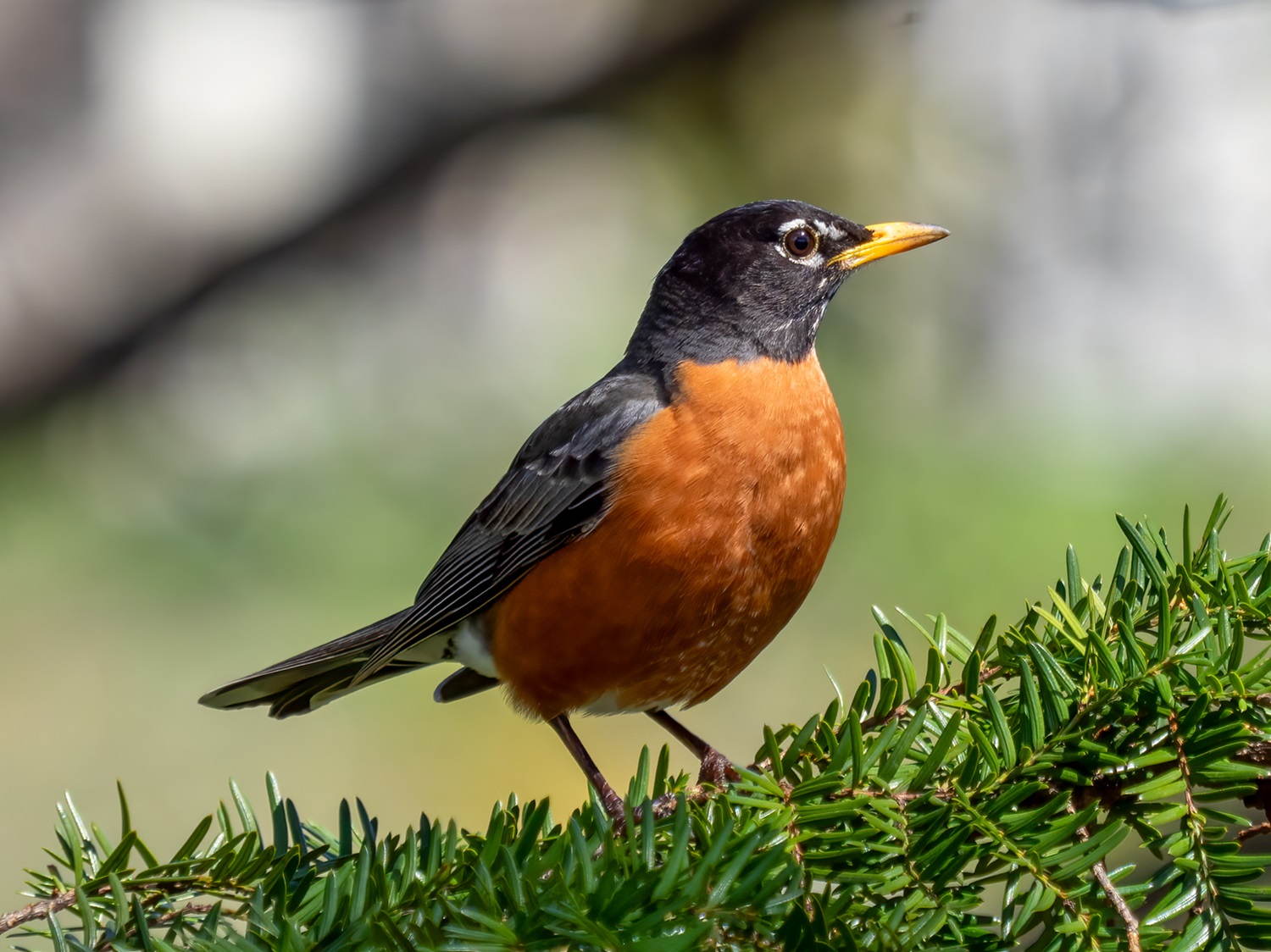
-
Article
American Toad
The American toad (Anaxyrus americanus, formerly Bufo americanus) is a large toad native throughout most of Eastern North America. They are the most broadly distributed toad species on the continent. In Canada, American toads are found in Manitoba, Ontario, Quebec, New Brunswick, Nova Scotia, Prince Edward Island and Newfoundland and Labrador. Typically brown, tan or grey, in the northern reaches of their Canadian range — which extends as far north as Labrador’s Arctic coast — American toads are brighter, with brick-red, white, yellow and black patterning.
"https://d3d0lqu00lnqvz.cloudfront.net/americantoad/Crowley-American-Toad-Anaxyrus-americanus-4.jpg" // resources/views/front/categories/view.blade.php
https://d3d0lqu00lnqvz.cloudfront.net/americantoad/Crowley-American-Toad-Anaxyrus-americanus-4.jpg
-
Article
Amherst Internment Camp
The Amherst internment camp in Nova Scotia was the largest such camp in Canada during the First World War, with a maximum capacity of about 850 men. In total, there were 24 internment camps and receiving stations across the country. While most camps housed “enemy aliens,” the majority of internees at Amherst were German prisoners of war. This included hundreds of German sailors from the SS Kaiser Wilhelm der Grosse, which was sunk by a British cruiser in 1915. Its most famous internee, however, was Russian socialist Leon Trotsky, who was held prisoner at Amherst in April 1917.
"https://d3d0lqu00lnqvz.cloudfront.net/Amherst/Amherst-Internment-Camp-POW-Group-79-119-52A.jpg" // resources/views/front/categories/view.blade.php
https://d3d0lqu00lnqvz.cloudfront.net/Amherst/Amherst-Internment-Camp-POW-Group-79-119-52A.jpg
-
Article
Amici Chamber Ensemble
Amici's first concert was held at Toronto's Harbourfront in 1985. Three years later, the group initiated a successful three-concert season held at St. Andrew's Church. In 1989, it relocated to Walter Hall at the University of Toronto, and was appointed the music faculty's Trio-in-Residence.
"https://d3d0lqu00lnqvz.cloudfront.net/media/media/d1c362ca-292d-4bf6-b545-c7f12d8eea23.jpg" // resources/views/front/categories/view.blade.php
https://d3d0lqu00lnqvz.cloudfront.net/media/media/d1c362ca-292d-4bf6-b545-c7f12d8eea23.jpg
-
Article
Amity Singers
Amity Singers. Mixed 25-voice choir begun in 1960 as the Varsity Singers of the University of Victoria under conductor Rodney R.A. Webster. Graduating members decided to continue the group ca 1963 under the name Amity Singers.
"https://thecanadianencyclopedia.ca/images/tce_placeholder.jpg?v=e9dca980c9bdb3aa11e832e7ea94f5d9" // resources/views/front/categories/view.blade.php
https://thecanadianencyclopedia.ca/images/tce_placeholder.jpg?v=e9dca980c9bdb3aa11e832e7ea94f5d9
-
Article
Amnesty Act
Amnesty Act, 1 February 1849, offered a pardon to all those involved in the 1837-38 Rebellions. It originated March 1838, when a conditional pardon was extended to minor participants.
"https://d3d0lqu00lnqvz.cloudfront.net/media/media/09cc7467-9233-453b-98b5-7535381dceed.jpg" // resources/views/front/categories/view.blade.php
https://d3d0lqu00lnqvz.cloudfront.net/media/media/09cc7467-9233-453b-98b5-7535381dceed.jpg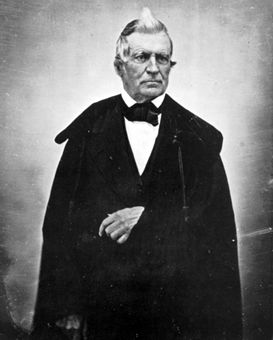
-
Article
Amphibians in Canada
Amphibians are members of a group of tetrapod (four-legged) vertebrate animals derived from fishes and are the common ancestor to mammals and reptiles. Amphibians are characterized by their lack of extraembryonic membranes in their eggs. Amphibians are represented by three living groups: Anura (frogs), Caudata (salamanders) and Gymnophiona (caecilians, tropical, none in Canada).
"https://d3d0lqu00lnqvz.cloudfront.net/jeffersonsalamander/Jefferson-Salamander-Adult.jpg" // resources/views/front/categories/view.blade.php
https://d3d0lqu00lnqvz.cloudfront.net/jeffersonsalamander/Jefferson-Salamander-Adult.jpg
-
Article
Analekta
Analekta is a Canadian independent record label specializing in classical music. It was founded in 1988 by Montréal impresario François Mario Labbé.
"https://thecanadianencyclopedia.ca/images/tce_placeholder.jpg?v=e9dca980c9bdb3aa11e832e7ea94f5d9" // resources/views/front/categories/view.blade.php
https://thecanadianencyclopedia.ca/images/tce_placeholder.jpg?v=e9dca980c9bdb3aa11e832e7ea94f5d9
-
Article
Anarchism
Anarchism, the political doctrine which teaches that government is evil and unnecessary and that society should be recognized on the basis of voluntary mutual-aid associations.
"https://thecanadianencyclopedia.ca/images/tce_placeholder.jpg?v=e9dca980c9bdb3aa11e832e7ea94f5d9" // resources/views/front/categories/view.blade.php
https://thecanadianencyclopedia.ca/images/tce_placeholder.jpg?v=e9dca980c9bdb3aa11e832e7ea94f5d9