Browse "Communities & Sociology"
-
Article
Potlatch
The Potlatch (from the Chinook word Patshatl) is a ceremony integral to the governing structure, culture and spiritual traditions of various First Nations living on the Northwest Coast (including the Kwakwaka’wakw, Nuu-chah-nulth and Coast Salish) and the Dene living in parts of the interior western subarctic. While the practice and formality of the ceremony differed among First Nations, it was commonly held on the occasion of important social events, such as marriages, births and funerals. A great Potlatch might last for several days and would involve feasting, spirit dances, singing and theatrical demonstrations.
"https://d3d0lqu00lnqvz.cloudfront.net/media/media/2c58511b-8b7a-4b34-963b-edfb3bab4f0d.jpg" // resources/views/front/categories/view.blade.php
https://d3d0lqu00lnqvz.cloudfront.net/media/media/2c58511b-8b7a-4b34-963b-edfb3bab4f0d.jpg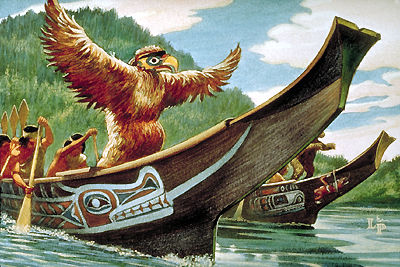
-
Article
Poverty
About nine per cent of Canadians live in poverty, although the percentage is generally higher among certain groups such as single mothers and Aboriginal people. Low-income Canadians include the "working poor" — those with jobs — and the "welfare poor" — those relying mainly on government assistance.
"https://d3d0lqu00lnqvz.cloudfront.net/media/media/bc62a9cc-7256-4500-818b-6f2cd7bab8e2.jpg" // resources/views/front/categories/view.blade.php
https://d3d0lqu00lnqvz.cloudfront.net/media/media/bc62a9cc-7256-4500-818b-6f2cd7bab8e2.jpg
-
Article
Powley Case
R. v. Powley was a legal case concerning Métis hunting rights in Canada. In 1993, the province of Ontario charged Steve and Roddy Powley with illegal hunting. The Powleys disputed their conviction, arguing that the Aboriginal rights enshrined in section 35 of the Constitution Act, 1982 protected their hunting rights as Métis people. The case concluded in 2003, when the Supreme Court of Canada ruled that the Powleys were, in fact, exercising lawful Métis hunting rights. The Powley case established criteria on who can legally qualify for Métis rights. It outlined 10 specific criteria, known as the Powley Test, which applies to Métis communities across Canada. The case also clarified that the Métis are a distinct people, separate from First Nations and Inuit peoples in Canada. Some legal experts believe the Powley case might lead to expanded Métis rights, including harvesting and fishing rights and possibly self-government.
"https://d3d0lqu00lnqvz.cloudfront.net/media/media/4de10db1-6b8b-45ef-a60a-55998c7afca0.jpg" // resources/views/front/categories/view.blade.php
https://d3d0lqu00lnqvz.cloudfront.net/media/media/4de10db1-6b8b-45ef-a60a-55998c7afca0.jpg
-
Article
Powwow Dances
Powwow dances are beautiful expressions of Indigenous spirituality, history and culture.
"https://d3d0lqu00lnqvz.cloudfront.net/media/media/2be60d63-a3cd-43f0-be85-0af738187639.jpg" // resources/views/front/categories/view.blade.php
https://d3d0lqu00lnqvz.cloudfront.net/media/media/2be60d63-a3cd-43f0-be85-0af738187639.jpg
-
Article
Powwow Music
Music is a central feature at powwows, as all powwow activities revolve around the beat of the drum and the sounds of the singers’ voices.
"https://d3d0lqu00lnqvz.cloudfront.net/media/media/da9de904-834e-4aca-b3c6-8333c48235a7.jpg" // resources/views/front/categories/view.blade.php
https://d3d0lqu00lnqvz.cloudfront.net/media/media/da9de904-834e-4aca-b3c6-8333c48235a7.jpg
-
Article
History of Settlement in the Canadian Prairies
The Canadian Prairies were peopled in six great waves of migration, spanning from prehistory to the present. The migration from Asia, about 13,300 years ago, produced an Indigenous population of 20,000 to 50,000 by about 1640. Between 1640 and 1840, several thousand European and Canadian fur traders arrived, followed by several hundred British immigrants. They created dozens of small outposts and a settlement in the Red River Colony, where the Métis became the largest part of the population. The third wave, from the 1840s to the 1890s, consisted mainly but not solely of Canadians of British heritage. The fourth and by far the largest wave was drawn from many nations, mostly European. It occurred from 1897 to 1929, with a pause (1914–22) during and after the First World War. The fifth wave, drawn from other Canadian provinces and from Europe and elsewhere, commenced in the late 1940s. It lasted through the 1960s. The sixth wave, beginning in the 1970s, drew especially upon peoples of the southern hemisphere. It has continued, with fluctuations, to the present. Throughout the last century, the region has also steadily lost residents, as a result of migration to other parts of Canada, to the United States, and elsewhere.
"https://d3d0lqu00lnqvz.cloudfront.net/media/media/e1c671ab-3dcf-459c-b108-0bc6e4a86b99.jpg" // resources/views/front/categories/view.blade.php
https://d3d0lqu00lnqvz.cloudfront.net/media/media/e1c671ab-3dcf-459c-b108-0bc6e4a86b99.jpg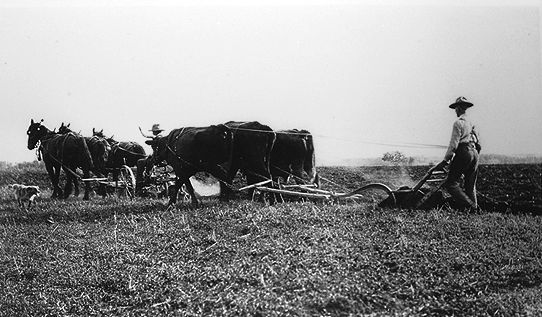
-
Article
Precious Blood Roman Catholic Church
The Église du Précieux Sang, built between 1967 and 1969 in St. Boniface, Manitoba, was designed by Étienne-Joseph Gaboury, of Gaboury, Lussier, Sigurdson Architects.
"https://thecanadianencyclopedia.ca/images/tce_placeholder.jpg?v=e9dca980c9bdb3aa11e832e7ea94f5d9" // resources/views/front/categories/view.blade.php
https://thecanadianencyclopedia.ca/images/tce_placeholder.jpg?v=e9dca980c9bdb3aa11e832e7ea94f5d9
-
Article
Prejudice and Discrimination in Canada
Prejudice refers to an unsubstantiated, negative pre-judgment of individuals or groups, usually because of ethnicity, religion or race. Discrimination is the exclusion of individuals or groups from full participation in society because of prejudice.
"https://d3d0lqu00lnqvz.cloudfront.net/media/media/53fa1c39-873e-4b13-ad8f-64872464d594.jpg" // resources/views/front/categories/view.blade.php
https://d3d0lqu00lnqvz.cloudfront.net/media/media/53fa1c39-873e-4b13-ad8f-64872464d594.jpg
-
Article
Presbyterian and Reformed Churches in Canada
All Christian churches of the "Reformed" tradition derive from the 16th-century Protestant Reformation and from Calvinism. Early Scottish settlers brought Presbyterianism to the Maritimes and central Canada in the late 18th century. In the 2011 National Household Survey (NHS), 472,385 Canadians identified as Presbyterian.
"https://d3d0lqu00lnqvz.cloudfront.net/media/media/a32c328a-2914-4151-88f8-78752391e954.jpg" // resources/views/front/categories/view.blade.php
https://d3d0lqu00lnqvz.cloudfront.net/media/media/a32c328a-2914-4151-88f8-78752391e954.jpg
-
Article
Sheila Na Geira
According to legend, Sheila Na Geira (also spelled NaGeira and Nagira) was an Irish aristocrat or princess who, 300 or 400 years ago, while travelling between France and Ireland, was captured by a Dutch warship and then rescued by British privateers. She fell in love and was married to one of the privateers, Lieutenant Gilbert Pike. They settled at western Conception Bay. By the early 20th century, the legend was being told as part of Newfoundland’s oral tradition, and has since been popularized by poems, novels, scholarly articles and several plays.
"https://d3d0lqu00lnqvz.cloudfront.net/dreamstime_resize_33120989-2.jpg" // resources/views/front/categories/view.blade.php
https://d3d0lqu00lnqvz.cloudfront.net/dreamstime_resize_33120989-2.jpg
-
Article
Protestantism
When a carefully engineered Catholic majority voted down certain reforms at the Diet of Speyer in Germany in 1529, the defeated minority earned the name "Protestant," derived from the Latin phrase meaning "to testify in favour of something.
"https://d3d0lqu00lnqvz.cloudfront.net/media/media/30714712-4e41-49c8-b7a6-da44f6fb0b80.jpg" // resources/views/front/categories/view.blade.php
https://d3d0lqu00lnqvz.cloudfront.net/media/media/30714712-4e41-49c8-b7a6-da44f6fb0b80.jpg
-
Article
Quebec Act, 1774
The Quebec Act received royal assent on 22 June 1774. It revoked provisions in the Royal Proclamation of 1763 that had aimed to assimilate the French-Canadian population under English rule. The Quebec Act was put into effect on 1 May 1775. It was passed to gain the loyalty of the French-speaking majority of the Province of Quebec. Based on recommendations from Governors James Murray and Guy Carleton, the Act guaranteed the freedom of worship and restored French property rights. However, the Act was unpopular in the Thirteen American Colonies and was one of the causes of the American Revolutionary War (1775–83). It was followed by the Constitutional Act in 1791. This is the full-length entry about the Quebec Act of 1774. For a plain language summary, please see The Quebec Act, 1774 (Plain-Language Summary).
"https://d3d0lqu00lnqvz.cloudfront.net/media/media/bcf0dcc3-ce34-4098-8543-00bcccbaabe0.jpg" // resources/views/front/categories/view.blade.php
https://d3d0lqu00lnqvz.cloudfront.net/media/media/bcf0dcc3-ce34-4098-8543-00bcccbaabe0.jpg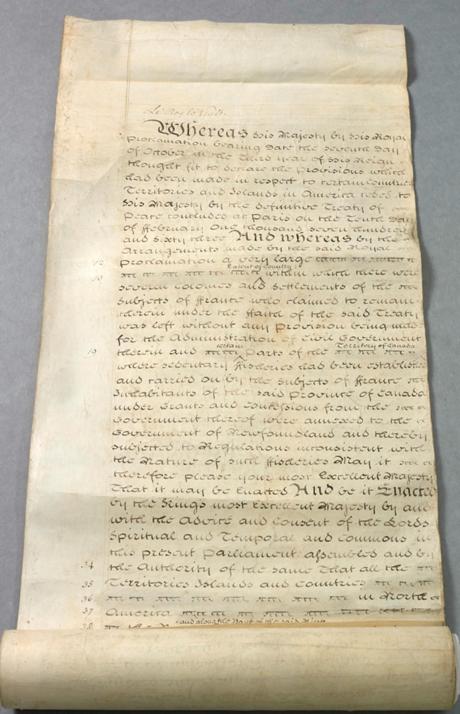
-
Article
Quebec as a Distinct Society
The concept of “distinct society” distinguishes Quebec from English Canada. This concept originated during the Quiet Revolution, at a time when French Canada came to no longer be seen as a single entity, but as a collection of regional francophone communities. It is found in the 1965 preliminary report of the Royal Commission on Bilingualism and Biculturalism shared by Laurendeau and Dunton. It was subsequently used on a number of occasions, notably during the negotiation of the Meech Lake Accord (1987–90). Today, the concept of “distinct society” continues to be used in debates regarding various political, social and cultural issues.
"https://d3d0lqu00lnqvz.cloudfront.net/media/media/98975740-c322-469b-9fe0-d603876f072d.png" // resources/views/front/categories/view.blade.php
https://d3d0lqu00lnqvz.cloudfront.net/media/media/98975740-c322-469b-9fe0-d603876f072d.png
-
Article
Quebec Biker War (1994–2002)
The Quebec Biker War was an almost decade-long territorial conflict between two outlaw motorcycle gangs in Quebec: the Hells Angels and the Rock Machine. The war centred on control over the narcotics trade in Quebec. It was also driven by intense rivalries and deep-seated animosities between major figures in Quebec’s criminal underworld. (See Organized Crime.) The conflict involved over 80 bombings, some 130 cases of arson and 20 disappearances. More than 160 people were killed and over 200 were injured, including many innocent bystanders.
"https://d3d0lqu00lnqvz.cloudfront.net/media/Hells_Angels_Quebec_-_Nomads.svg.png" // resources/views/front/categories/view.blade.php
https://d3d0lqu00lnqvz.cloudfront.net/media/Hells_Angels_Quebec_-_Nomads.svg.png
-
Article
Quebec Film History: 1970 to 1989
This entry presents an overview of Québec cinema, from the burgeoning of a distinctly Québec cinema in the 1970s, to the production explosion that followed Denys Arcand’s Le déclin de l’empire américain (1986). It highlights the most important films, whether in terms of box office success or international acclaim, and covers both narrative features and documentaries. It also draws attention to an aspect of filmmaking that still has difficulty finding its place: women's cinema.
"https://d3d0lqu00lnqvz.cloudfront.net/media/media/aa8cc00a-320d-4447-bb88-20c45fede6e0.jpg" // resources/views/front/categories/view.blade.php
https://d3d0lqu00lnqvz.cloudfront.net/media/media/aa8cc00a-320d-4447-bb88-20c45fede6e0.jpg