
Browse "People"
-
Article
Planters
The terms of settlement promised religious freedom, except to Roman Catholics, but the Church of England initially had advantages and gave leadership for schooling youths. Most of the settlers were Congregationalists.
"https://d3d0lqu00lnqvz.cloudfront.net/media/media/b025b87d-c65d-40cc-af2a-c487a30e8c2c.jpg" // resources/views/front/categories/view.blade.php
https://d3d0lqu00lnqvz.cloudfront.net/media/media/b025b87d-c65d-40cc-af2a-c487a30e8c2c.jpg
-
Article
Platinum Blonde
Platinum Blonde. Pop group. It was formed in Toronto in 1982 by the singer-songwriter and bass guitarist Mark Holmes with the guitarist Sergio Galli and the drummer Chris Steffler, who was replaced in 1987 by Sascha (Tukatsch). Kenny MacLean (guitar, bass guitar, keyboards) was added in 1985.
"https://thecanadianencyclopedia.ca/images/tce_placeholder.jpg?v=e9dca980c9bdb3aa11e832e7ea94f5d9" // resources/views/front/categories/view.blade.php
https://thecanadianencyclopedia.ca/images/tce_placeholder.jpg?v=e9dca980c9bdb3aa11e832e7ea94f5d9
-
Article
W. Gunther Plaut
W. Gunther Plaut, rabbi, author (born at Münster, Germany 1 Nov 1912, died at Toronto, 8 Feb 2012). He left Germany, where he was raised and educated, to escape the Nazis before WWII.
"https://thecanadianencyclopedia.ca/images/tce_placeholder.jpg?v=e9dca980c9bdb3aa11e832e7ea94f5d9" // resources/views/front/categories/view.blade.php
https://thecanadianencyclopedia.ca/images/tce_placeholder.jpg?v=e9dca980c9bdb3aa11e832e7ea94f5d9
-
Article
Plume Latraverse
Plume Latraverse, born Michel Latraverse, author, composer, performer and writer (b at Montréal 11 May 1946).
"https://thecanadianencyclopedia.ca/images/tce_placeholder.jpg?v=e9dca980c9bdb3aa11e832e7ea94f5d9" // resources/views/front/categories/view.blade.php
https://thecanadianencyclopedia.ca/images/tce_placeholder.jpg?v=e9dca980c9bdb3aa11e832e7ea94f5d9
-
Article
Plume Latraverse
Plume (b Michel) Latraverse. Singer-songwriter, author, b Montreal 11 May 1946.
"https://d3d0lqu00lnqvz.cloudfront.net/media/media/e722511e-813b-4525-9e29-002a65cab8a3.png" // resources/views/front/categories/view.blade.php
https://d3d0lqu00lnqvz.cloudfront.net/media/media/e722511e-813b-4525-9e29-002a65cab8a3.png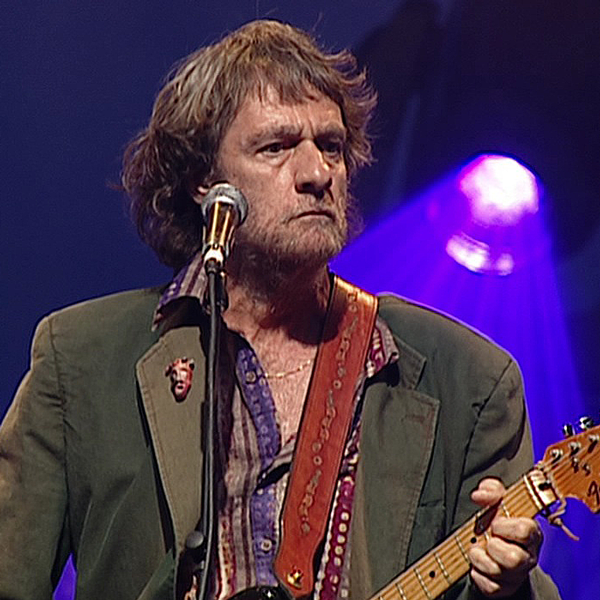
-
Article
Polish Canadians
Polish immigrants began to arrive in Canada shortly after the First Partition of Poland in the late 1700s. According to the 2021 census, in Canada, 982,820 people claimed full or partial Polish ancestry, and 176,010 people speak Polish as a mother tongue language.
"https://d3d0lqu00lnqvz.cloudfront.net/media/media/cce4c6dc-8b1d-48bb-b285-3ebf65f0bad0.jpg" // resources/views/front/categories/view.blade.php
https://d3d0lqu00lnqvz.cloudfront.net/media/media/cce4c6dc-8b1d-48bb-b285-3ebf65f0bad0.jpg
-
Article
Obwandiyag (Pontiac)
Obwandiyag (Pontiac), Odawa chief (born c. 1720 along the Detroit River; died 20 April 1769 in Cahokia, Illinois Country). Obwandiyag was the leader of a loose coalition of Indigenous nations that opposed British rule in what became known as Pontiac’s War (1763–66). The uprising is regarded by many as a historical antecedent to more contemporary Indigenous rights movements.
"https://d3d0lqu00lnqvz.cloudfront.net/media/media/f3d5c6d6-8340-49cb-84e9-433b460ee3a5.jpg" // resources/views/front/categories/view.blade.php
https://d3d0lqu00lnqvz.cloudfront.net/media/media/f3d5c6d6-8340-49cb-84e9-433b460ee3a5.jpg
-
Article
Porkeater
Porkeater [French, mangeur de lard ], in the parlance of the fur trade, was a derogatory term for a Voyageur hired by the North West Company who made only the short run between Montréal and Grand Portage (and not into the North-West) and whose staple diet was pork, unlike the Winterer, or homme du nord, who made do with fish and pemmican. Later it came to refer to any voyageur who was a newcomer to...
"https://thecanadianencyclopedia.ca/images/tce_placeholder.jpg?v=e9dca980c9bdb3aa11e832e7ea94f5d9" // resources/views/front/categories/view.blade.php
https://thecanadianencyclopedia.ca/images/tce_placeholder.jpg?v=e9dca980c9bdb3aa11e832e7ea94f5d9
-
Article
Portia White
Portia May White, contralto, teacher (born 24 June 1911 in Truro, NS; died 13 February 1968 in Toronto, ON). Portia White was the first Black Canadian concert singer to win international acclaim. She was considered one of the best classical singers of the 20th century. Her voice was described by one critic as “a gift from heaven.” She was often compared to the celebrated African American contralto Marian Anderson. The Nova Scotia Talent Trust was established in 1944 specifically to enable White to concentrate on her professional career. She was named a “person of national historic significance” by the Government of Canada in 1995.This article is a full-length entry about Portia White. For a plain-language summary, please see Portia White (Plain-Language Summary).
"https://d3d0lqu00lnqvz.cloudfront.net/!feature-img-thumbnails/port-white-twe.jpg" // resources/views/front/categories/view.blade.php
https://d3d0lqu00lnqvz.cloudfront.net/!feature-img-thumbnails/port-white-twe.jpg
-
Article
Portia White (Plain-Language Summary)
Portia May White, singer, teacher (born 24 June 1911 in Truro, NS; died 13 February 1968 in Toronto, ON). Portia White was one of the best classical singers of the 20th century. She was the first Black Canadian concert singer to become famous. Her voice was described by one critic as “a gift from heaven.” She was often compared to the African American singer Marian Anderson. The Nova Scotia Talent Trust was founded in 1944 to allow White to focus on her singing career. She was named a “person of national historic significance” by the Government of Canada in 1995. This article is a plain-language summary of Portia White. If you are interested in reading about this topic more in depth, please see our full-length entry, Portia White.
"https://d3d0lqu00lnqvz.cloudfront.net/PortiaWhiteHeader.jpg" // resources/views/front/categories/view.blade.php
https://d3d0lqu00lnqvz.cloudfront.net/PortiaWhiteHeader.jpg
-
Article
Portuguese Canadians
Portuguese explorers were among the first Europeans to lay eyes on what is now Canadian soil. Some early Portuguese settlers also lived on the Atlantic coast and in New France. In the 20th century, Portuguese immigration intensified in the 1950s and into the 1980s. In the 2021 Canadian census, 448,305 people reported being of Portuguese origin. In 2021, 266,555 people reported having Portuguese as their mother tongue language.
"https://d3d0lqu00lnqvz.cloudfront.net/media/new_article_images/PortugueseCanadians/Combined Portuguese_Canadian_Flag.jpg" // resources/views/front/categories/view.blade.php
https://d3d0lqu00lnqvz.cloudfront.net/media/new_article_images/PortugueseCanadians/Combined Portuguese_Canadian_Flag.jpg
-
Article
Pitikwahanapiwiyin (Poundmaker)
Pitikwahanapiwiyin (Poundmaker), Cree chief (born circa 1842 in central SK; died 4 July 1886 in Blackfoot Crossing, AB). Remembered as a great leader, Pitikwahanapiwiyin strove to protect the interests of his people during the negotiation of Treaty 6. Considered a peacemaker, he did not take up arms in the North-West Resistance. However, a young and militant faction of his band did participate in the conflict, resulting in Pitikwahanapiwiyin’s arrest and imprisonment for treason. His legacy as a peacemaker lives on among many Cree peoples, including the Poundmaker Cree Nation in Saskatchewan.
"https://d3d0lqu00lnqvz.cloudfront.net/!feature-img-thumbnails/poundmaker-th.jpg" // resources/views/front/categories/view.blade.php
https://d3d0lqu00lnqvz.cloudfront.net/!feature-img-thumbnails/poundmaker-th.jpg
-
Article
Powder Blues
Powder Blues. Vancouver blues-rock septet, formed in 1978 by Tom Lavin (vocals, guitar), with Jack Lavin (bass guitar), Willie MacCalder (piano), and others.
"https://thecanadianencyclopedia.ca/images/tce_placeholder.jpg?v=e9dca980c9bdb3aa11e832e7ea94f5d9" // resources/views/front/categories/view.blade.php
https://thecanadianencyclopedia.ca/images/tce_placeholder.jpg?v=e9dca980c9bdb3aa11e832e7ea94f5d9
-
Article
Powley Case
R. v. Powley was a legal case concerning Métis hunting rights in Canada. In 1993, the province of Ontario charged Steve and Roddy Powley with illegal hunting. The Powleys disputed their conviction, arguing that the Aboriginal rights enshrined in section 35 of the Constitution Act, 1982 protected their hunting rights as Métis people. The case concluded in 2003, when the Supreme Court of Canada ruled that the Powleys were, in fact, exercising lawful Métis hunting rights. The Powley case established criteria on who can legally qualify for Métis rights. It outlined 10 specific criteria, known as the Powley Test, which applies to Métis communities across Canada. The case also clarified that the Métis are a distinct people, separate from First Nations and Inuit peoples in Canada. Some legal experts believe the Powley case might lead to expanded Métis rights, including harvesting and fishing rights and possibly self-government.
"https://d3d0lqu00lnqvz.cloudfront.net/media/media/4de10db1-6b8b-45ef-a60a-55998c7afca0.jpg" // resources/views/front/categories/view.blade.php
https://d3d0lqu00lnqvz.cloudfront.net/media/media/4de10db1-6b8b-45ef-a60a-55998c7afca0.jpg
-
Article
Powwow Singers
Powwows feature distinct music that is recognized by many as the central, unifying feature of these culturally meaningful gatherings.
"https://d3d0lqu00lnqvz.cloudfront.net/media/media/824b051b-b939-4324-adbc-132f86ca5763.jpg" // resources/views/front/categories/view.blade.php
https://d3d0lqu00lnqvz.cloudfront.net/media/media/824b051b-b939-4324-adbc-132f86ca5763.jpg