
Browse "People"
-
Article
Frederick William Russell
Frederick William Russell, businessman, lieutenant-governor of Nfld (b at St John's, Nfld 10 Sept 1923). Russell was a fighter pilot with the RCAF in WWII and retired as a wing commander. He went into the automotive business in St John's and then expanded into insurance and fishing.
"https://thecanadianencyclopedia.ca/images/tce_placeholder.jpg?v=e9dca980c9bdb3aa11e832e7ea94f5d9" // resources/views/front/categories/view.blade.php
https://thecanadianencyclopedia.ca/images/tce_placeholder.jpg?v=e9dca980c9bdb3aa11e832e7ea94f5d9
-
Article
Fredrik Stefan Eaton
Fredrik Stefan Eaton, OC, OOnT, merchant, philanthropist (born 26 June 1938 in Toronto, ON; died 20 February 2021 in Caledon, ON). Eaton was the great-grandson of Timothy Eaton and the he was the former president and chief executive officer of the T. Eaton Company Limited (see Eaton’s).
"https://d3d0lqu00lnqvz.cloudfront.net/TCE_placeholder.png" // resources/views/front/categories/view.blade.php
https://d3d0lqu00lnqvz.cloudfront.net/TCE_placeholder.png
-
Article
Freeman Freeman-Thomas, 1st Marquess of Willingdon
Freeman Freeman-Thomas, Baron Willingdon of Ratton and 1st Marquess of Willingdon, governor general of Canada from 1926 to 1931 (born 12 September 1866 in Ratton, United Kingdom; died 12 August 1941 in London, United Kingdom). Willingdon was the first governor general to represent the Canadian Crown rather than the British government following the Balfour Report of 1926. He was also the first to undertake official foreign visits and the first to travel in Canada by air.
"https://d3d0lqu00lnqvz.cloudfront.net/Willingdon/Willingdon_Confederation_Jubilee.jpg" // resources/views/front/categories/view.blade.php
https://d3d0lqu00lnqvz.cloudfront.net/Willingdon/Willingdon_Confederation_Jubilee.jpg
-
Macleans
Freeman Patterson (Profile)
The photographer selected the 100 images in the book, culled from the 100,000 slides he keeps in his home on the family farm in Shamper's Bluff, N.B., because he feels that they are visual keys to his psyche.This article was originally published in Maclean's Magazine on January 20, 1997
"https://d3d0lqu00lnqvz.cloudfront.net/media/media/15783b4e-92ad-4d20-be6f-69a848cc1c1b.jpg" // resources/views/front/categories/view.blade.php
https://d3d0lqu00lnqvz.cloudfront.net/media/media/15783b4e-92ad-4d20-be6f-69a848cc1c1b.jpg
-
Article
Freeman Wilford Patterson
Patterson developed an interest in photography while studying for a Master's of Divinity at Union Theological Seminary, New York, during the early 1960s. In 1965 he gave up a position teaching religious studies in Alberta in order to devote himself to photography full time.
"https://d3d0lqu00lnqvz.cloudfront.net/media/media/15783b4e-92ad-4d20-be6f-69a848cc1c1b.jpg" // resources/views/front/categories/view.blade.php
https://d3d0lqu00lnqvz.cloudfront.net/media/media/15783b4e-92ad-4d20-be6f-69a848cc1c1b.jpg
-
Article
Freemasonry
Changing economic and religious conditions after the Gothic period brought a decline in majestic building projects, and by the 17th century, lodges could stay alive only by supplementing the membership of working ("operative") masons with nonmasons ("accepted masons").
"https://d3d0lqu00lnqvz.cloudfront.net/media/media/9cd311ef-e60d-424e-853c-2d818079595a.jpg" // resources/views/front/categories/view.blade.php
https://d3d0lqu00lnqvz.cloudfront.net/media/media/9cd311ef-e60d-424e-853c-2d818079595a.jpg
-
Article
French Canada and the Monarchy
French Canadian attitudes toward monarchical government and members of the French and, later, British royal families have changed over time. King Louis XIV of France made New France a crown colony and supported its expansion and economic development. King George III of Great Britain granted royal assent to the Quebec Act in 1774, which guaranteed freedom of worship and French Canadian property rights. Early royal tours of Quebec were well received by the public. There was republican sentiment expressed during the Lower Canada Rebellion of 1837, however, and support for the monarchy in Quebec declined sharply following the Quiet Revolution of the 1960s. Today, polling data indicates that a majority of people in Quebec support the abolition of the monarchy in Canada.
"https://d3d0lqu00lnqvz.cloudfront.net/FrenchCanadaMonarchy/QueenExpo67.jpg" // resources/views/front/categories/view.blade.php
https://d3d0lqu00lnqvz.cloudfront.net/FrenchCanadaMonarchy/QueenExpo67.jpg
-
Article
French Canadian Nationalism
French Canadian nationalism concerns a wide variety of manifestations of the collective will of much of Canada's French-speaking population to live as a distinct cultural community. Its innumerable ramifications have been not only cultural but also political, economic and social.
"https://d3d0lqu00lnqvz.cloudfront.net/media/media/04c5cf2b-940f-4410-b1a6-fa7105c8b99e.jpg" // resources/views/front/categories/view.blade.php
https://d3d0lqu00lnqvz.cloudfront.net/media/media/04c5cf2b-940f-4410-b1a6-fa7105c8b99e.jpg
-
Article
French Immigration in Canada
After New France was ceded to Great Britain in 1763, the migration of French colonists slowed considerably. A trickle of clergy members, farmers and professionals settled during the 19th century. However, after the Second World War, French immigration — which was then politically favoured — resumed with renewed vigour. This effort was geared towards recruiting francophone professionals and entrepreneurs, who settled in Canada’s big cities. The French spawned many cultural associations and had a large presence in French-Canadian schools.
"https://d3d0lqu00lnqvz.cloudfront.net/media/media/d698c031-e790-4c17-906a-5b880e71e24d.jpg" // resources/views/front/categories/view.blade.php
https://d3d0lqu00lnqvz.cloudfront.net/media/media/d698c031-e790-4c17-906a-5b880e71e24d.jpg
-
Article
French in the West
The French came to the North-West from Montréal in search of furs and an overland route to the Mer de l'Ouest which would lead to a short route to China (see coureurs de bois).
"https://d3d0lqu00lnqvz.cloudfront.net/media/media/89ed12ff-4e88-4efb-aca4-d26cd48ca4c3.jpg" // resources/views/front/categories/view.blade.php
https://d3d0lqu00lnqvz.cloudfront.net/media/media/89ed12ff-4e88-4efb-aca4-d26cd48ca4c3.jpg
-
Article
French Language in Canada
French is one of Canada’s two official languages. Although every province in Canada has people whose mother tongue is French, Québec is the only province where speakers of French are in the majority. In 2011, 7,054,975 people in Canada (21 per cent of the country’s population) had French as their mother tongue.
"https://thecanadianencyclopedia.ca/images/tce_placeholder.jpg?v=e9dca980c9bdb3aa11e832e7ea94f5d9" // resources/views/front/categories/view.blade.php
https://thecanadianencyclopedia.ca/images/tce_placeholder.jpg?v=e9dca980c9bdb3aa11e832e7ea94f5d9
-
Article
Frère Luc
Since works of art were generally imported from France at this time, he was most influential through his paintings for local churches, both during his sojourn in the colony and after his return to France.
"https://d3d0lqu00lnqvz.cloudfront.net/media/media/5ea75972-309a-4c62-b31d-e5bb7421f456.jpg" // resources/views/front/categories/view.blade.php
https://d3d0lqu00lnqvz.cloudfront.net/media/media/5ea75972-309a-4c62-b31d-e5bb7421f456.jpg
-
Article
Frère Marie-Victorin
Frère Marie-Victorin (born Conrad Kirouac), member of the Brothers of the Christian Schools, botanist, teacher (born 3 April 1885 in Kingsey Falls, QC; died 15 July 1944 in St-Hyacinthe, QC). A self-taught botanist, Frère Marie-Victorin was the first chair of botany at Université de Montréal, founder of the Institut de Botanique and the Montréal Botanical Garden, and author of Flore laurentienne (1935). He also co-founded the Association canadienne-française pour l'avancement des sciences, the Société canadienne d'histoire naturelle, and the Cercles des jeunes naturalistes, and actively promoted science in popular as well as academic publications. A French Canadian nationalist, Marie-Victorin believed that knowledge of Québec’s natural world would inspire pride in French Canadians and enable them to take possession of their land.
"https://d3d0lqu00lnqvz.cloudfront.net/media/new_article_images/Marcellegauvreau/Le_frere_Marie-Victorin_en_Minganie.jpg" // resources/views/front/categories/view.blade.php
https://d3d0lqu00lnqvz.cloudfront.net/media/new_article_images/Marcellegauvreau/Le_frere_Marie-Victorin_en_Minganie.jpg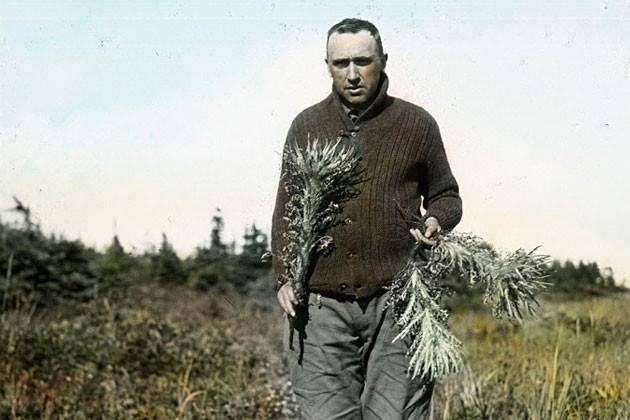
-
Article
Fridtjof Nansen
Fridtjof Wedel-Jarlsberg Nansen, arctic explorer, scientist, artist, author, diplomat, humanitarian (born 10 October 1861 in Christiana [later Kristiana, now Oslo], Norway; died 13 May 1930 at Polhogda, near Oslo, Norway). Nansen was an influential polar explorer, one of several Norwegian adventurers (such as Otto Sverdrup) who explored the arctic. The Nansen sled, which he based on a traditional Inuit design, was used by renowned polar explorer and Geological Survey of Canada glaciologist Roy Koerner and is still in use today. Among his many accomplishments, Nansen won the 1922 Nobel Peace Prize “for his leading role in the repatriation of prisoners of war, in international relief work and as the League of Nations' High Commissioner for refugees.” In 1986, Canada became the first nation to receive the Nansen Refugee Award. Mount Nansen, Yukon, was named in his honour.
"https://d3d0lqu00lnqvz.cloudfront.net/Nansen/Portrett_av_Fridtjof_Nansen-_1922.jpg" // resources/views/front/categories/view.blade.php
https://d3d0lqu00lnqvz.cloudfront.net/Nansen/Portrett_av_Fridtjof_Nansen-_1922.jpg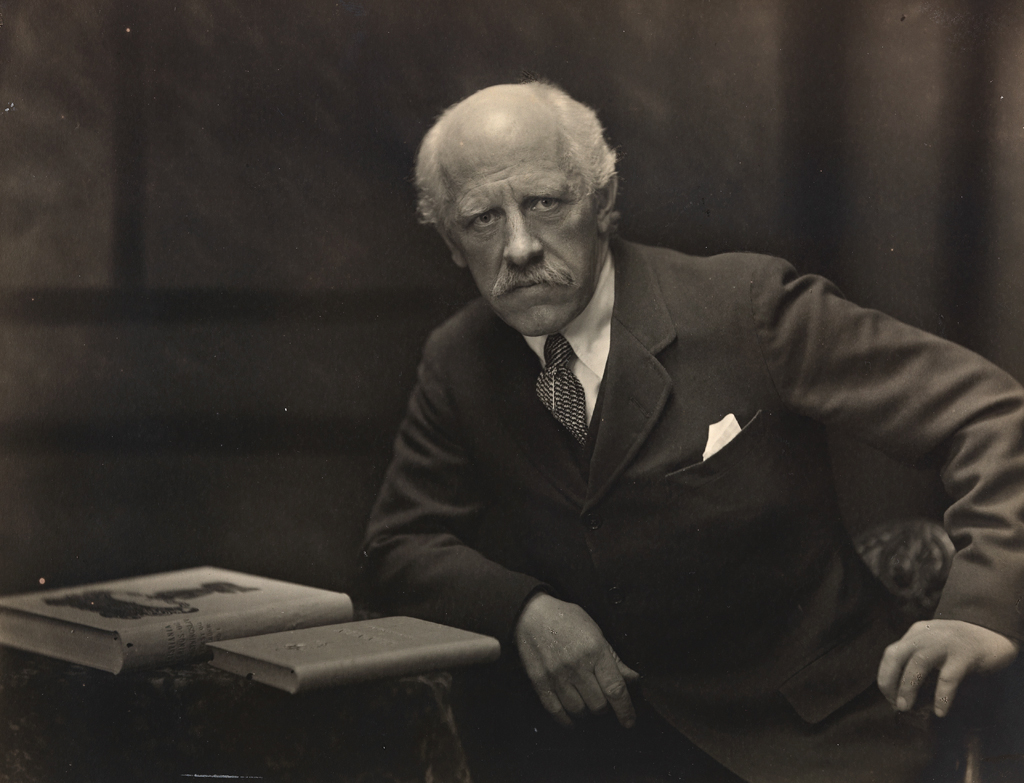
-
Article
Fritz Brandtner
Fritz Brandtner, painter (b at Danzig [Gdansk, Poland], Germany 28 July 1896; d at Montréal 7 Nov 1969). Generally considered to have introduced German expressionism to Canada, Brandtner was trained in Berlin and came to Winnipeg in 1928. He worked as a house painter until L.L.
"https://thecanadianencyclopedia.ca/images/tce_placeholder.jpg?v=e9dca980c9bdb3aa11e832e7ea94f5d9" // resources/views/front/categories/view.blade.php
https://thecanadianencyclopedia.ca/images/tce_placeholder.jpg?v=e9dca980c9bdb3aa11e832e7ea94f5d9