
 Share on Facebook
 Share on X
 Share by Email
 Share on Google Classroom
Frederick (Fred) William Wallace, photographer, maritime journalist, novelist, Canadian fisheries advocate (born 11 December 1886 in Glasgow, Scotland; died 15 July 1958 in Montreal, QC). Through photography, film, journalism and fiction, Wallace preserved the memory of a maritime world that was rapidly disappearing. His most important work came during seven voyages aboard fishing schooners between 1911 and 1916, when he documented in words and photographs the closing years of commercial fishing under sail on the banks off Nova Scotia. The photographs, taken with a box camera in often rough conditions, provide a rare record of the last generation to fish those waters solely by sail, making Wallace one of the principal visual chroniclers of Canada’s age-of-sail fishery.
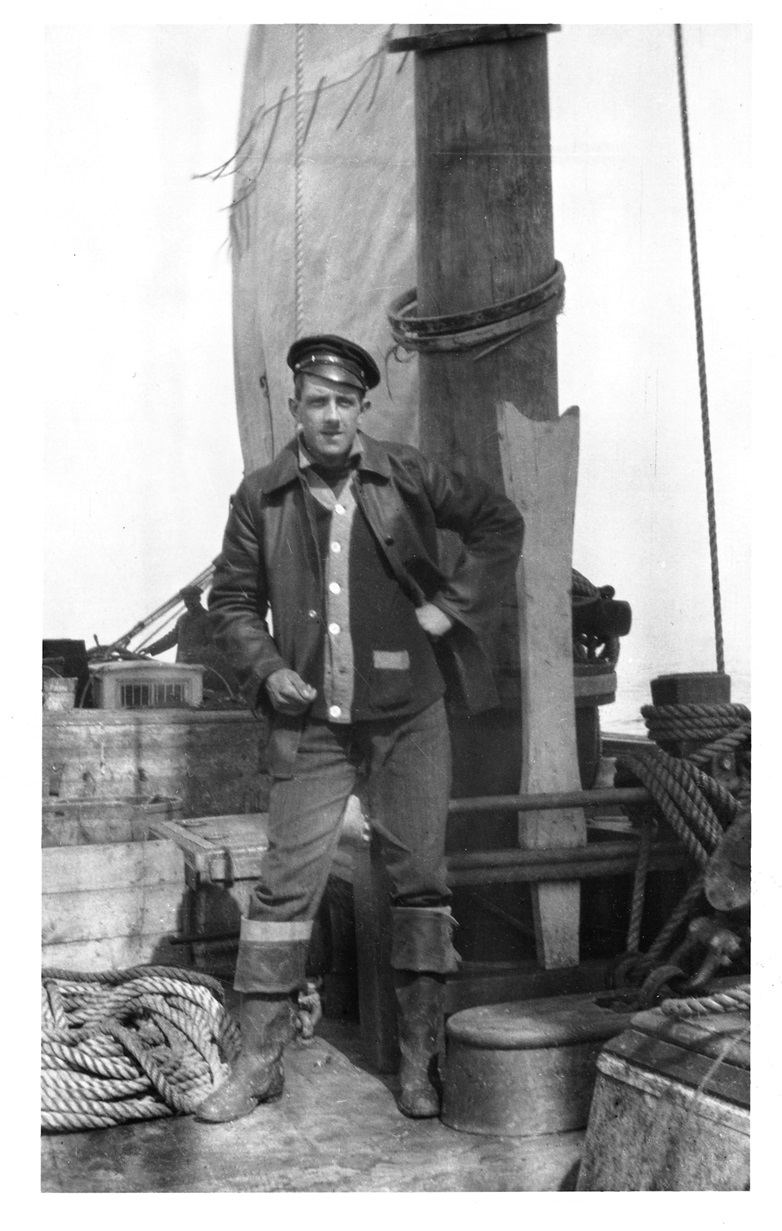
Early Life
Frederick “Fred” Wallace was the eldest son of William Wallace, a master mariner who had been raised on a farm in southern Scotland but, seeking adventure, left home as a teenager to sail the world’s oceans on commercial trading vessels. William Wallace eventually swapped a life aboard wooden sailing ships for the more predictable schedules of the Allan Steamship Line, which ran people and goods on transatlantic routes between British and North American ports. He married, had five children and rose to the rank of captain, returning to Glasgow for short home stays between voyages.
His son, Fred, grew up in working-class Glasgow neighbourhoods near the docks along the River Clyde, where the rhythms of the shipping trade formed the backdrop of daily life. Both parents encouraged Fred to write, draw and play piano, determined to steer him away from seafaring and into a white-collar profession. In 1905, with Captain Wallace nearing retirement and hoping to see more of his children, the family moved to Hudson, Quebec, 50 km west of Montreal, the western terminus of his transatlantic trips.
As a young adult, Fred chafed at the restrictions of his first desk-bound jobs in Montreal. By 1909, he had quit his position in an insurance company to take his chances as a fiction writer, borrowing heavily from his father’s experiences at sea for the plots and settings of his stories. He subsidized his aspirations as a novelist with income from freelance magazine journalism, as well as from illustrations.
Photography
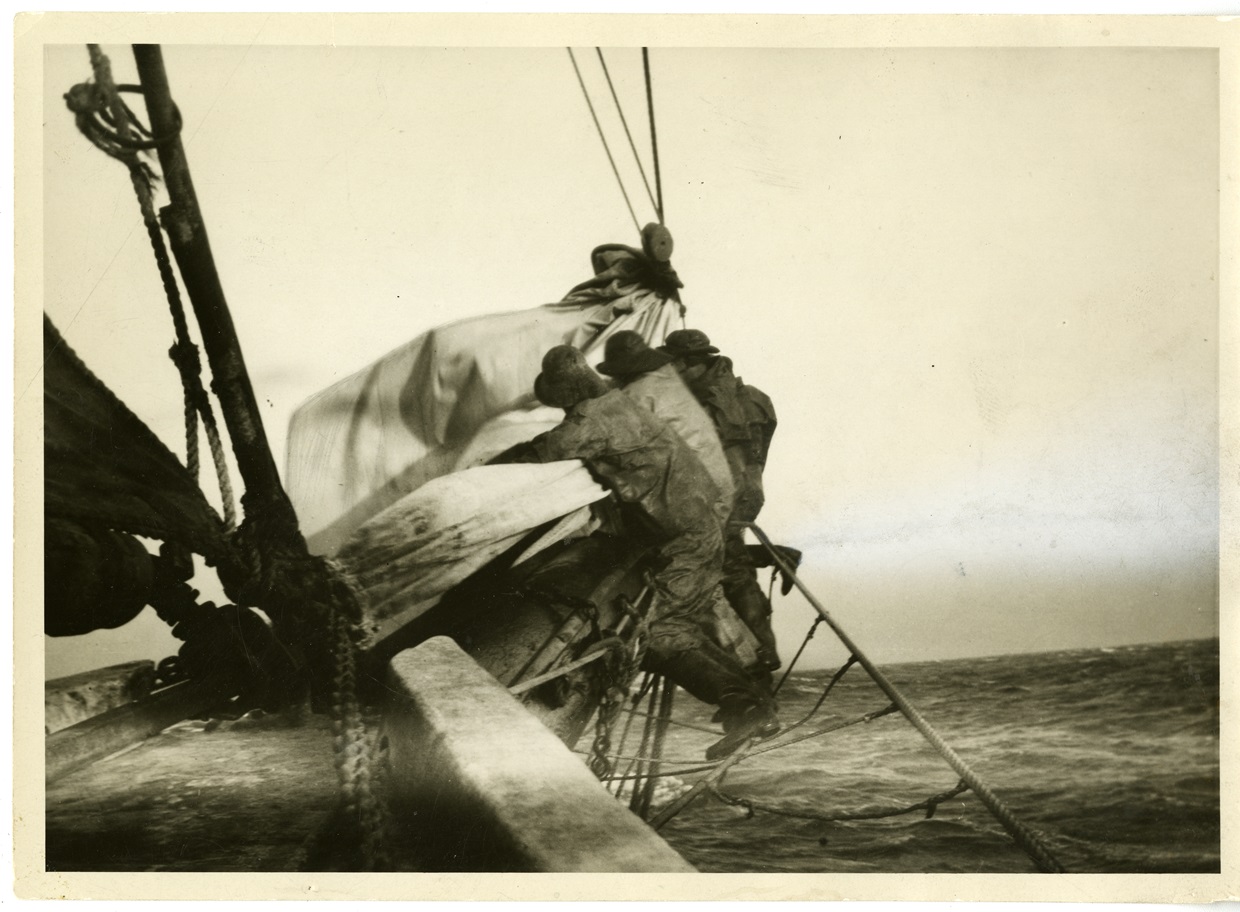
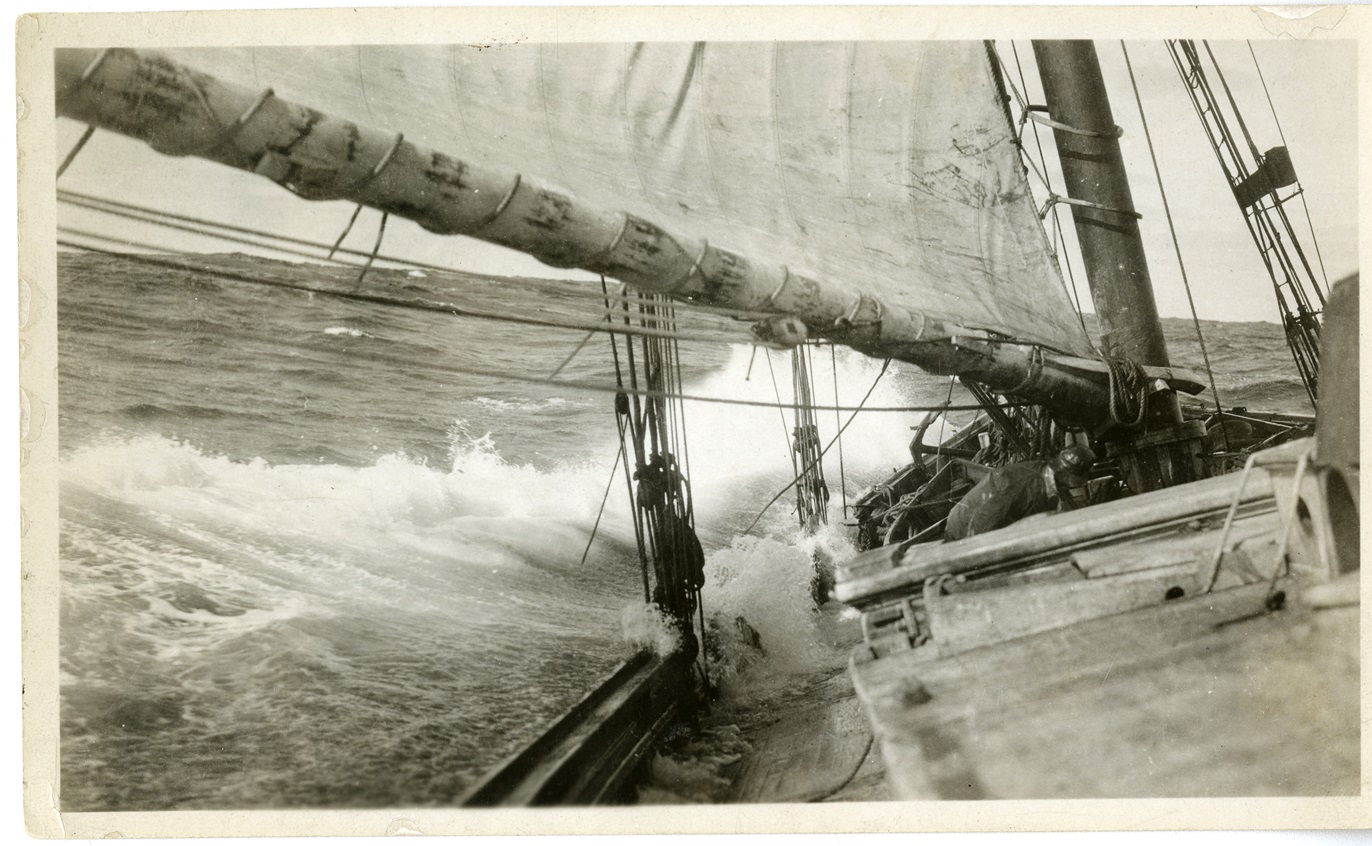
Determined to gain first-hand experience at sea, Fred Wallace found his muse in the people of the fishing ports of the Maritimes. In the summer of 1911, he was assigned by the weekly Canadian Century magazine to cover a fishermen’s regatta in Digby, Nova Scotia, that featured a marquee race between two fishing schooners. He reported the race from the decks of the eventual winner, the Dorothy M. Smart, armed with a notebook, sketchbooks and what he described as “a simple box camera.” Exhilarated by the experience, he convinced the boat’s captain to take him along on a subsequent three-week trip to fishing grounds off the province’s southern coast.
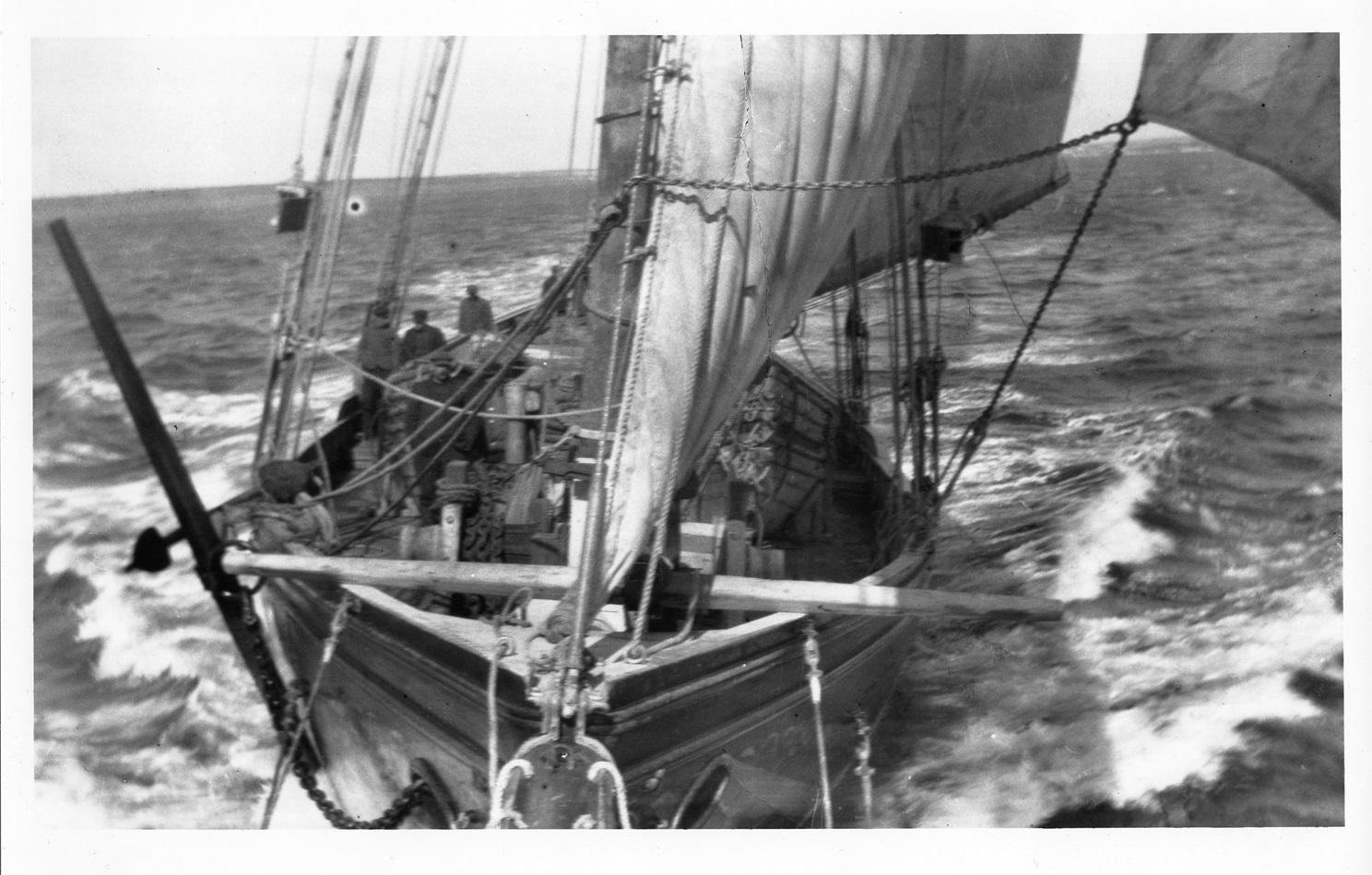
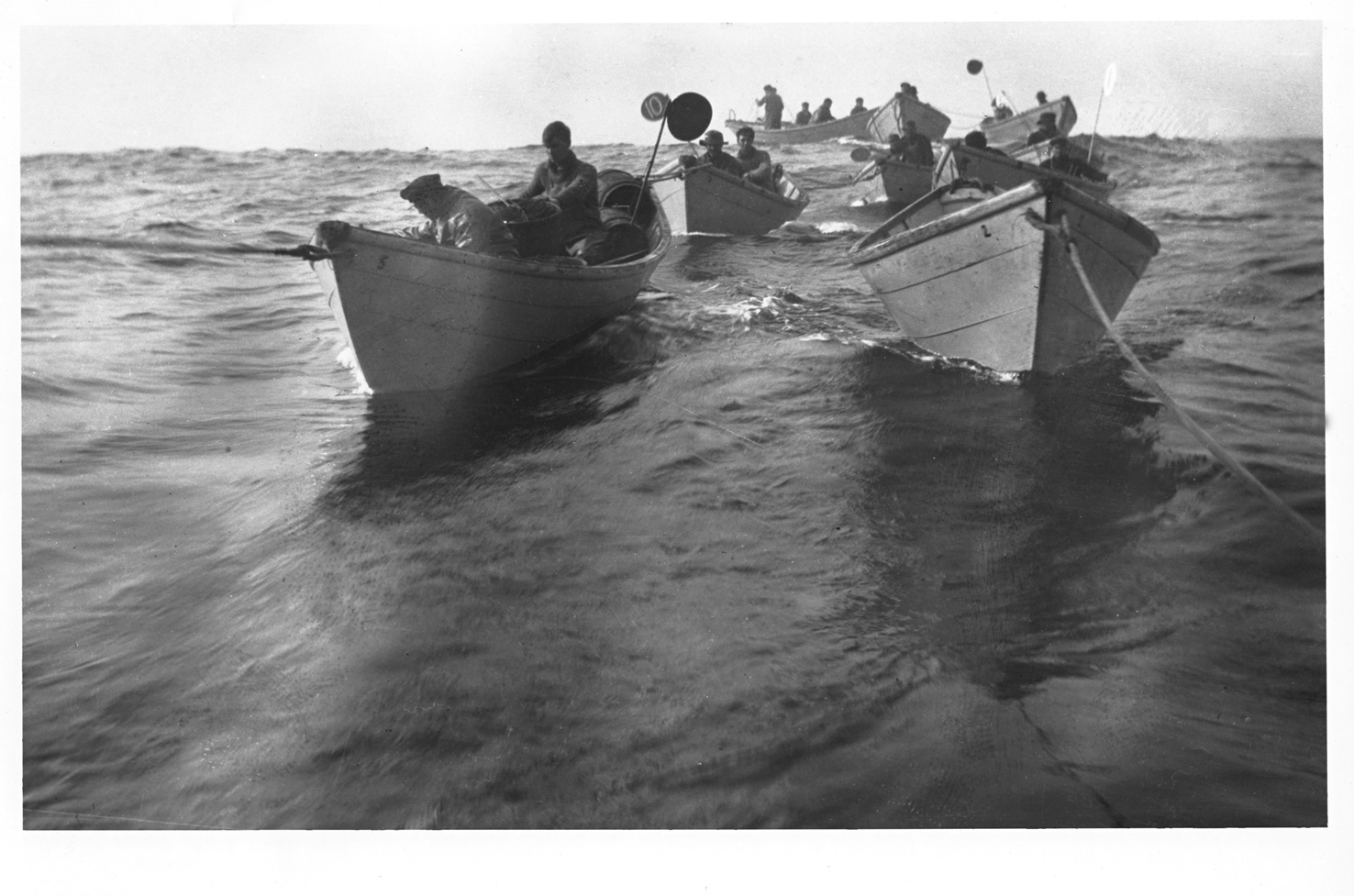
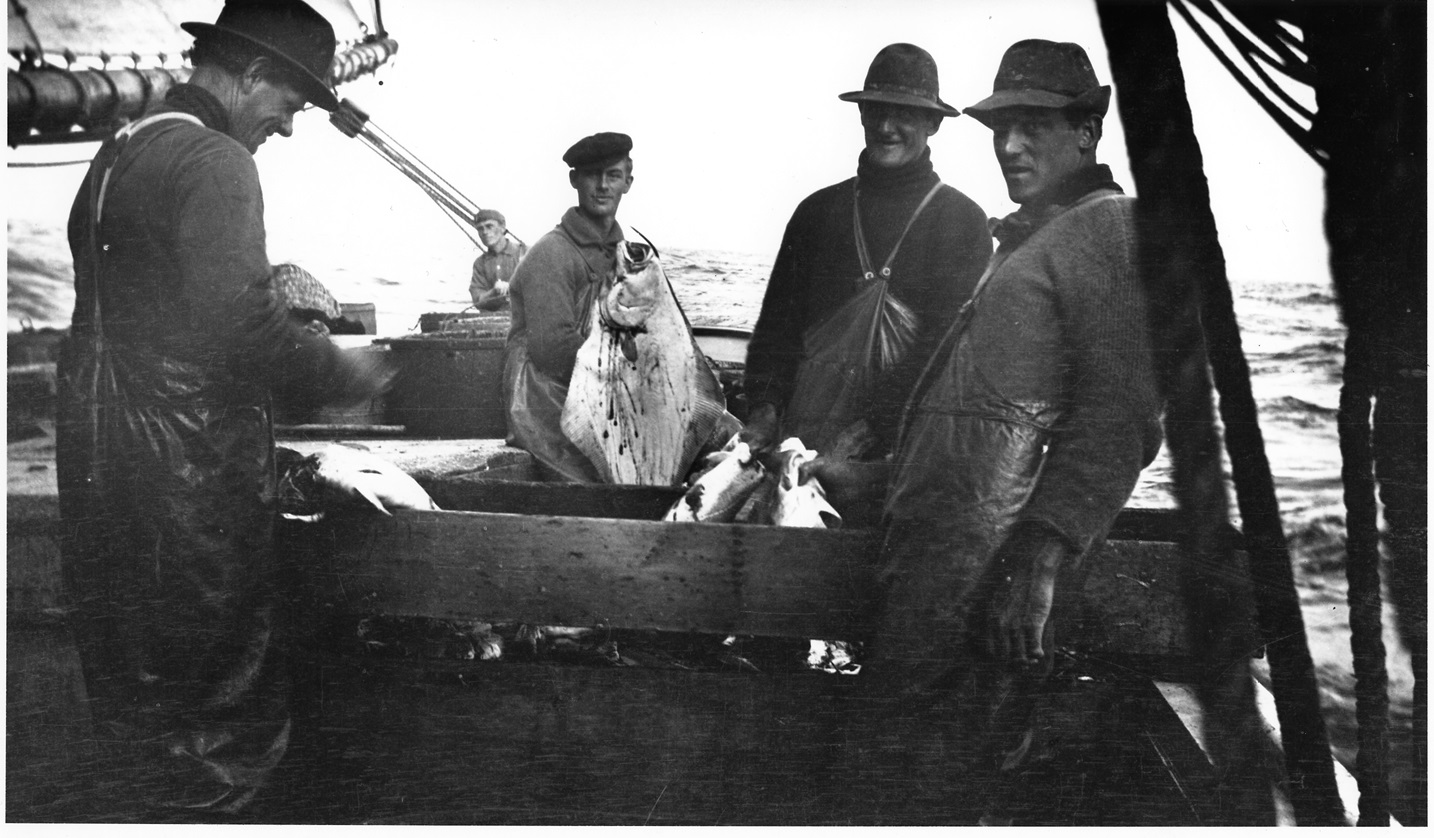
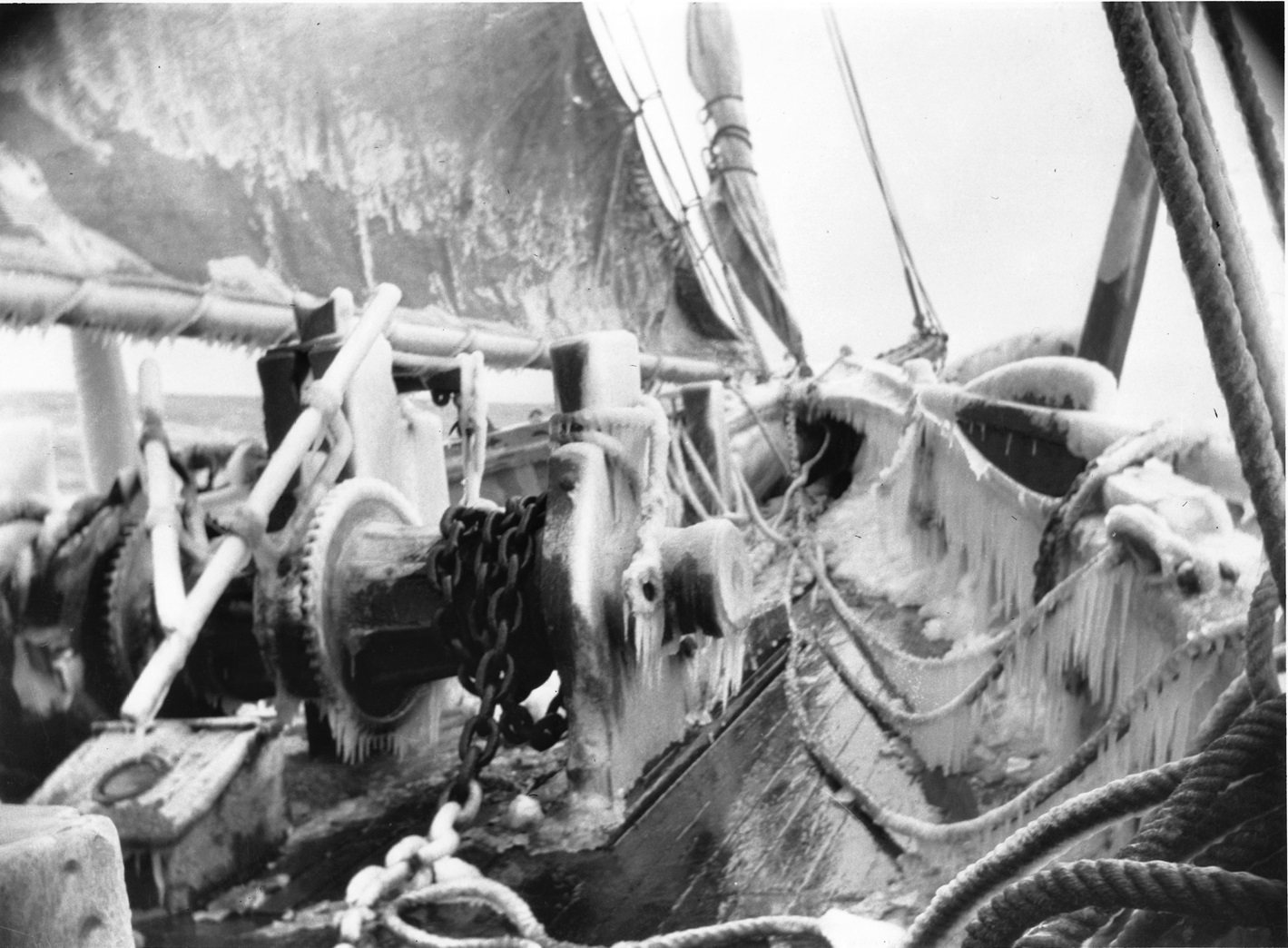
Between 1912 and 1916, Wallace made six more trips out to the banks. By the early 20th century, commercial fishing under sail was increasingly giving way to motorized vessels that were faster, more reliable and could power onboard equipment. Wallace’s photographs captured what was disappearing: fishermen struggling with sails, schooners sheathed in winter ice, dories bouncing through swells as they returned to the mother schooner with their catch. On his last trip in March 1916, he took a Williamson cine-camera and 3,000 feet of film to shoot one of the earliest documentaries. Called Seamen Courageous, it screened in Digby and across the United States before the film’s only negative disappeared. Five frames survive.
Wallace’s photographs and written accounts of his trips were published in national magazines such as Saturday Night and Canadian Fisherman, the latter a trade publication Wallace helped found in 1914 to promote the industry. His aim, he later wrote, was to show Canadians “the gamble inherent in fishing, and the hard struggle of resolute men to wrest a living from it.”
Advocacy
Fred Wallace spent the remainder of his career documenting, promoting and preserving Canada’s maritime heritage. He published three novels, Blue Water, The Viking Blood and Captain Salvation, two of which were adapted for film. He also produced collections of sea stories and compiled detailed records of Atlantic Canada’s sailing vessels and shipbuilding industry. As editor of Canadian Fisherman from its founding in 1914 until his retirement in 1953 (with a short interregnum in the 1920s to publish the Fishing Gazette from New York), he covered the industry on both coasts and the Great Lakes, becoming one of the country’s most influential fisheries journalists. Wallace was also an active industry advocate. He helped found the Canadian Fisheries Association, now the Fisheries Council of Canada, and later served as its president.
Legacy
Fred Wallace’s life and work coincided with a period of profound change in Atlantic Canada. He witnessed the transition from sail to motorized fishing vessels, the growing industrialization of the fishery and the shifting economic centre of gravity within Canada. His work continued to attract attention long after his death. In 2006, the Maritime Museum of the Atlantic in Halifax mounted A Camera on the Banks, an exhibition of enlarged reproductions of his photographs. Several of his images are also displayed at the Fisheries Museum of the Atlantic in Lunenburg. His photographs and writings remain among the most important records of Atlantic Canada’s fishing culture during the transition from sail to motorized vessels.