Share on Facebook
 Share on X
 Share by Email
 Share on Google Classroom
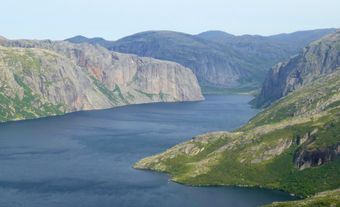
According to Innu oral histories, they have lived in their ancestral homeland of Nitassinan, along the Labrador-Quebec peninsula, since time immemorial. Some archaeologists believe that ancestors of the Innu may have lived in the region as long ago as 9,000 years ago when the glaciers retreated. The Sheshatshiu Innu First Nation represents Innu residing in the community of Sheshatshiu. It governs the Sheshatshiu reserve (see also Reserves in Newfoundland and Labrador). Located in central Labrador, along the North West River, Sheshatshiu Innu First Nation had 2,121 registered members, with 1,877 members living on the Sheshatshiu reserve, as of October 2026. Sheshatshiu is one of two Innu communities in Labrador, with the other, Natuashish (Mushuau Innu First Nation), located along Labrador’s north coast (see also First Nations in Newfoundland and Labrador). Together, the Innu of Sheshatshiu and Natuashish are represented by their respective governments, the Sheshatshiu Innu First Nation and the Mushuau Innu First Nation, while Innu Nation represents both at the federal and provincial levels. They are in the process of land claim negotiations.
Community History
The history of the Sheshatshiu community starts with almost 7,000 years of Innu occupation before the establishment of trading operations by Europeans on traditional gathering grounds of the Innu. The French established trading posts in the mid-17th century. Later, the British established trading posts in the 1800s. During this time, the Innu were a nomadic people; they travelled throughout Nitassinan, following the seasons and caribou migrations, often travelling thousands of kilometres in a single year.
However, they would gather in North West River, formerly called Fort Smith, to trade furs and other materials with Europeans starting in 1743. Once the Grenfell Mission was established and Europeans started settling permanently in North West River, Innu moved across the river to Sheshatshiu to set up trading camps (see also Sir Wilfred Thomason Grenfell).
The Innu continued to live a nomadic way of life until the 1960s and 1970s. Colonial pressures forced them to adopt a more settled way of life. Sheshatshiu became a permanent settlement for Innu in central Labrador.
Struggle for Recognition
Like all other First Nations and Inuit in Newfoundland and Labrador, Sheshatshiu Innu were not recognized under the Indian Act as Status Indians when Newfoundland joined Canada in 1949 (see also First Nations in Newfoundland and Labrador; Newfoundland and Labrador and Confederation). This lack of recognition prevented Sheshatshiu Innu from accessing services and programs available to other First Nations in Canada. Following extensive activism and resilience by Sheshatshiu Innu, along with Mushuau Innu and their representative body, Innu Nation, they were recognized as Status Indians in 2002 under the Indian Act. However, the community of Sheshatshiu was not recognized as a reserve until 2006 (see Reserves in Newfoundland and Labrador). After recognition, Sheshatshiu Innu were able to make decisions on how to manage their community, including in areas such as education, health and development. As of 2026, Innu are still fighting to settle a land claim in Labrador with the federal and provincial governments.
Governance
Sheshatshiu is governed by a First Nations band government, consisting of an elected chief, six councillors and two Elders. The chief and council oversee the various departments of Sheshatshiu Innu First Nation, including Operations & Band Support, Human Resources, Primary and Social Health, Capital and Housing, Finance and Youth and Community Services. Within these departments, the band government provides health services through the Mani-Ashini Health Centre, runs youth programming and a dedicated youth centre, operates the Nukum Munik Women’s Shelter and the Hart Haven Personal Care Home, and provides other services to community members.
Traditional & Cultural Activities
Sheshatshiu Innu First Nation offers various traditional and cultural activities to its members.
Traditional Crafting Workshops
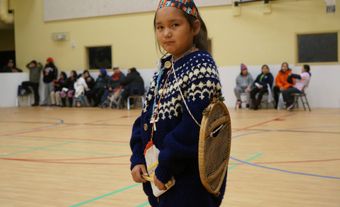
These workshops offer community members the opportunity to learn traditional Innu crafts, including canoe building and sewing.
Outpost Program
These trips provide participants with the opportunity to travel throughout Nitassinan, highlighting the importance of connection with and respect for the environment and the land. These important seasonal trips provide Innu with the opportunity to travel to significant parts of Nitassinan, areas that hold memories of relatives and ancestors before them, evidenced by the Innu-Aimun names left on the land for a very long time. The Outpost Program is an important way to maintain ties to the former way of life, cultural practices and language associated with Nutshamit (also spelled Nutshimit) life, which means life “on the land” or “in the country.”
Gull Island Gathering
This gathering is located 83 km from Happy Valley-Goose Bay, taking place in the fall, when Sheshatshiu Innu gather to reconnect with family and community on the land. Innu Elders, community members and youth connect and participate in traditional land-based activities, including live music, games, sports, scavenger hunts, crafting and various other cultural practices. This week-long gathering allows families and friends to step away from the business of everyday life to participate in time on the land. Sheshatshiu Innu member Mary Jane Nui notes that the gathering helps her stay in touch with “people [she’d] never be able to visit” and that, due to the gathering, “they were right there close to [her].” While this event is meant for Innu, everyone is welcome, with Innu often welcoming folks from nearby communities such as Happy Valley-Goose Bay and North West River.
Greg Penashue Music Festival
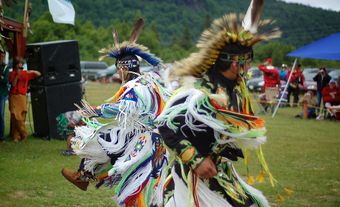
The Greg Penashue Music Festival is hosted in Sheshatshiu every year. Innu from across Nitassinan join to celebrate their culture. The festival is a celebration of Indigenous cultures, featuring music, art and traditional activities from Indigenous communities across Turtle Island. This gathering is one of the largest Innu meetings of the year.
Labrador Innu Nation Cultural Facility
The Labrador Innu Nation Cultural Facility is not yet constructed. However, it will be operated by Innu Nation and located in Sheshatshiu. The facility will provide a home for Sheshatshiu and Mushuau Innu belongings and artifacts that have been taken from and returned to Nitassinan. It will teach visitors about Innu culture.
Future
Despite the lack of recognition, ongoing negotiations to settle a land claim and colonial pressures, Innu display their commitment to cultural preservation and advancement of the community. By taking over their own schooling, they are able to offer Innu-Aimun immersion and give credits for high school students to go into Nutshamit and learn traditional Innu culture. Innu youth are graduating at higher rates than ever before and are returning from post-secondary education with degrees that are helping them prepare for self-government and taking control of their future. Innu laws are being developed by Innu for child protection. Culture is being reclaimed, and old ways are being brought back for the youth to take them into the future. For example, Innu Elder Bridget Nuna is well-known for her efforts to pass down the practice of creating Innu tea dolls, which are traditionally meant for children to play with as well as to hold tea leaves for their families. Further, the Labrador Innu Cultural Facility is in development to bring Innu belongings back to Nitassinan, where Innu can have access to them and teach visitors about Innu culture.