Share on Facebook
 Share on X
 Share by Email
 Share on Google Classroom
The “Great Canadian Road Trip” is a rite of passage for many Canadians, and roadside attractions offer fun stopping points and detours on long journeys, providing learning opportunities, laughter and a sense of welcome to visitors. Here are some of Canada’s iconic roadside attractions.
Mr. PG (Prince George, British Columbia)
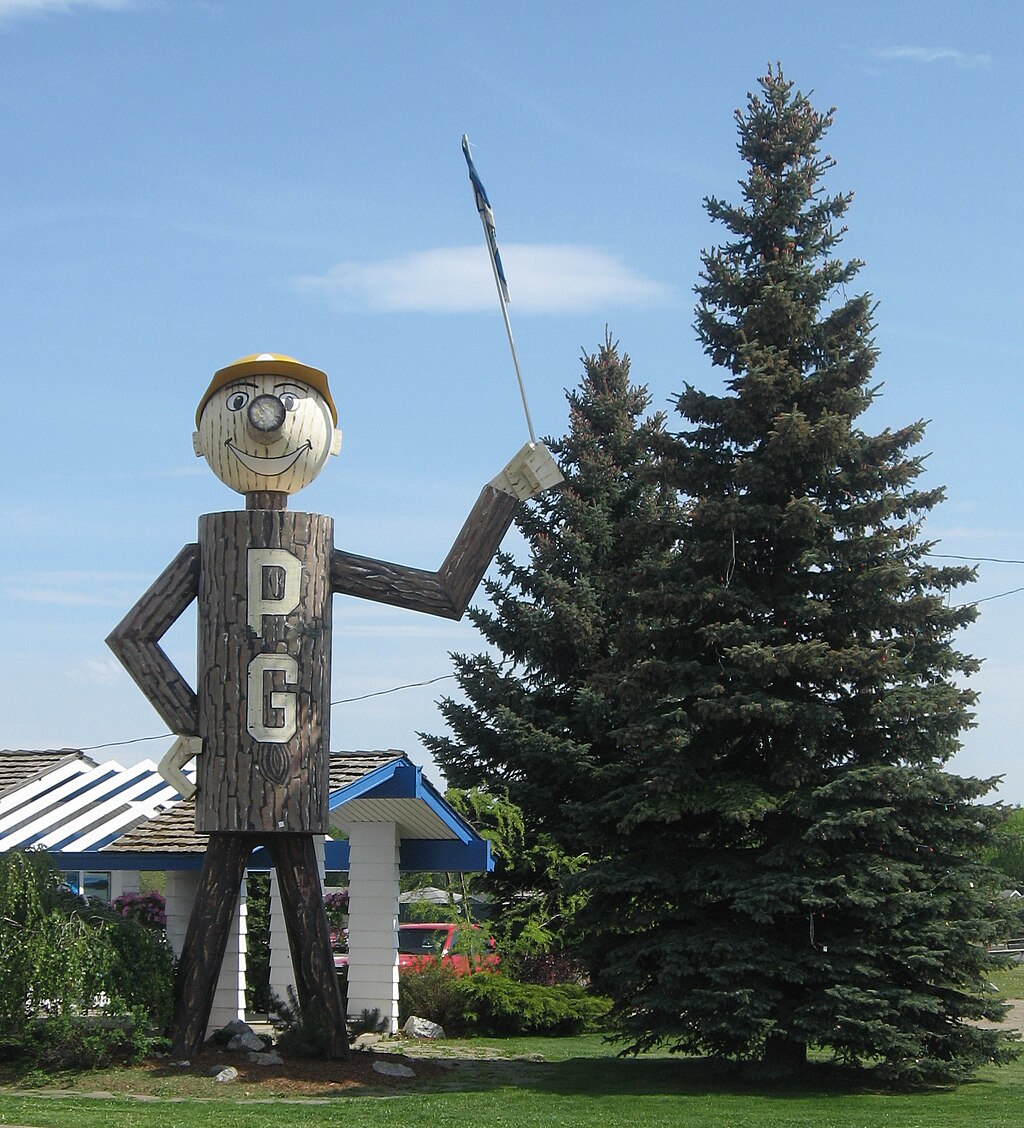
At the intersection of highways 16 and 97 stands Mr. PG, a smiling log-man statue representing Prince George’s forestry industry. The original Mr. PG, made of wood, was introduced in 1960 at the Rotary International Conference. Over the years, there have been several versions of the mascot, including one small metal version that toured BC in the 1960s before mysteriously disappearing. More than a decade later, the statue was discovered in a Scottish pub, dressed in a kilt made of biscuit tins. That version was later returned to BC and displayed in an exhibit celebrating Mr. PG in 2019. The current statue, made of painted metal and fibreglass, stands at 8.14 m tall. Mr. PG is a trademark of the city of Prince George.
Vegreville Pysanka (Vegreville, Alberta)
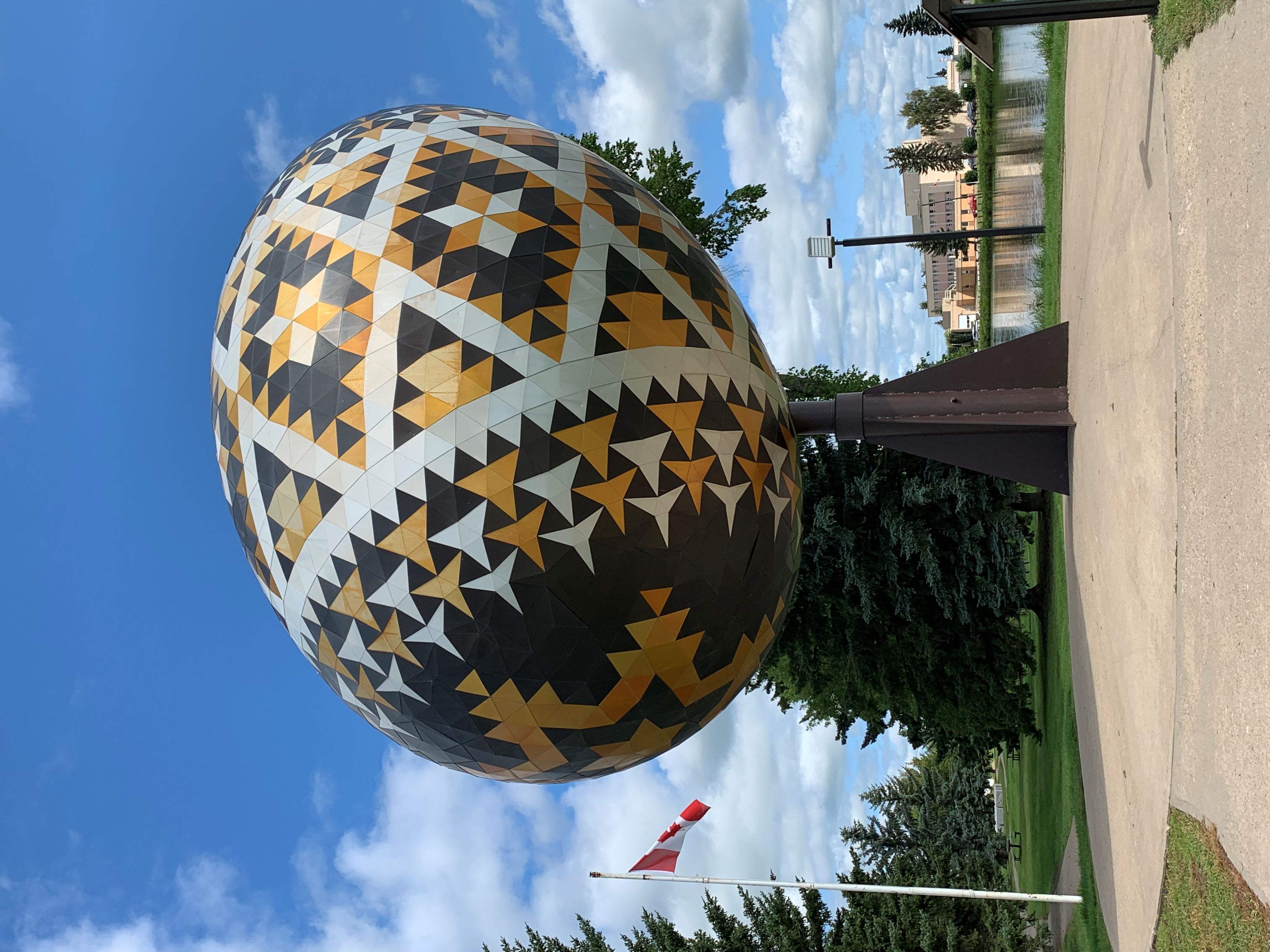
The Vegreville pysanka is a giant statue, about 9.5 m tall, 7.8 m long and 5.5 m wide, of a pysanka, or Ukrainian Easter egg. The aluminum structure is designed to turn in the wind like a weathervane. Vegreville’s Chamber of Commerce sought to commemorate the centennial of the RCMP in 1973 with a unique monument representing the community, which has a large Ukrainian Canadian population. Suggested by town council member Kay McKenzie, the idea was taken up by a committee led by Ralph Gorrie, with architectural designs by George Chernenko and conceptual and graphic design by Paul M. Sembaliuk. Sembaliuk brought the project to Ron Resch, a computer scientist at the University of Utah. An expert in using computer modelling to build structures in freeform shapes, Resch devoted time and effort well beyond his initial budget to the project, visiting Vegreville to complete its construction. Construction was almost abandoned several times, due to lack of funding or the difficulty of the design, which posed a significant engineering problem. Reportedly, Resch became so frustrated that he nearly quit, at which point a friend told him: “you can’t NOT do this egg!” Many of the contractors involved in the project donated their time, materials or expertise for its construction. After several delays, the egg was finally unveiled in 1975, and continues to draw tourists to the small town of Vegreville.
World’s Largest Bunnock (Macklin, Saskatchewan)
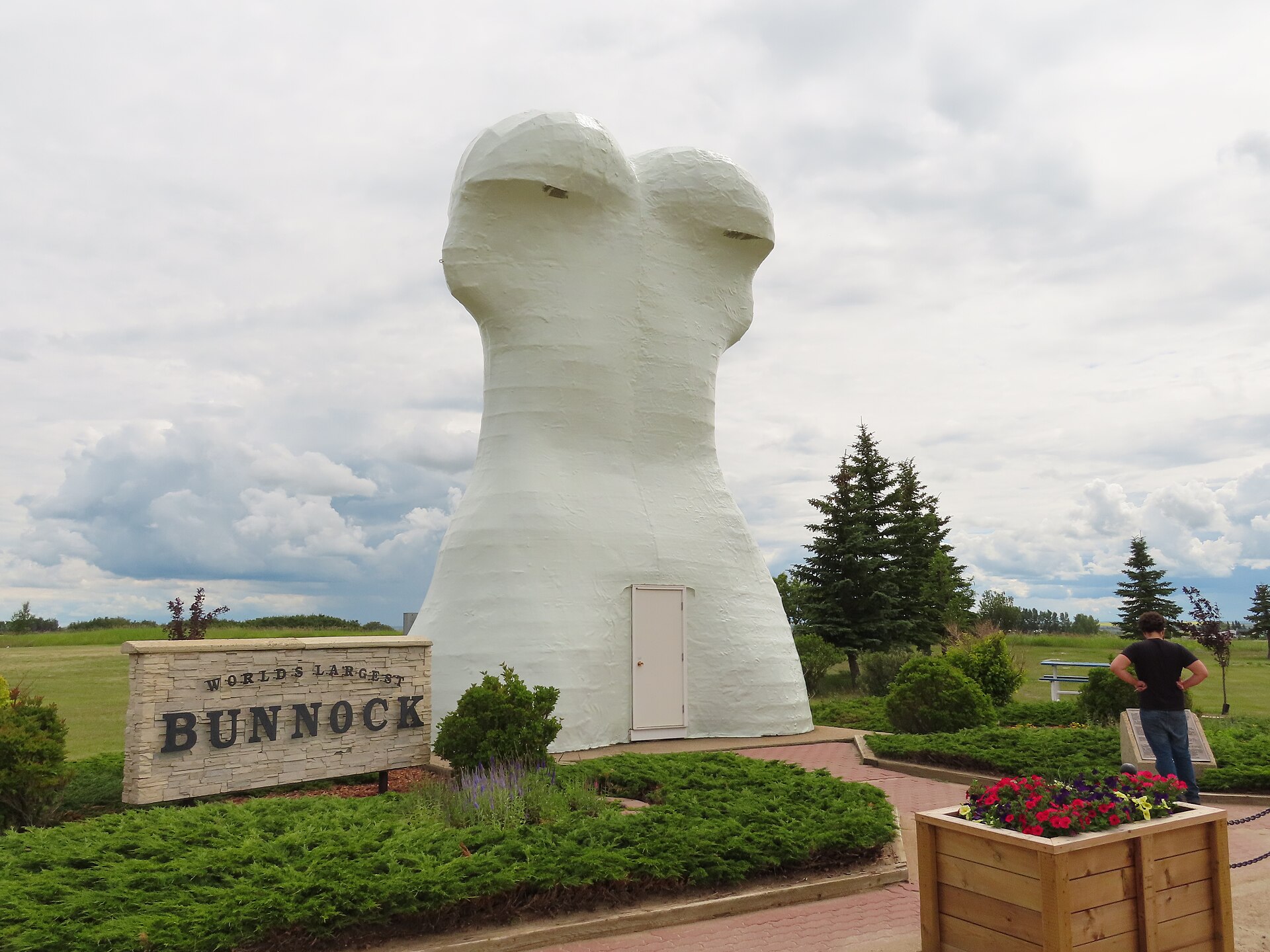
The town of Macklin is seriously devoted to the game of bunnock — so much so that they built the world’s largest bunnock, or horse ankle bone, at 9.75 m tall. Bunnock is a bone-tossing game for 2–8 players. Two rows of bones are set up like pins, and each team tries to knock down the opposing team’s row using “tossing” bones in the fewest moves. The game is said to have originated from German-Russian immigrants in the early 1900s. According to legend, Russian soldiers invented it when they were unable to hammer in a stake to play horseshoes in the frozen Siberian landscape. While originally played with genuine horse bones, replicas are now used. Today, bunnock is extremely popular in Macklin and the surrounding area. Every August, Macklin hosts the World Championship Bunnock Tournament, attended by as many as 320 teams of players.
The Big Nickel (Sudbury, Ontario)
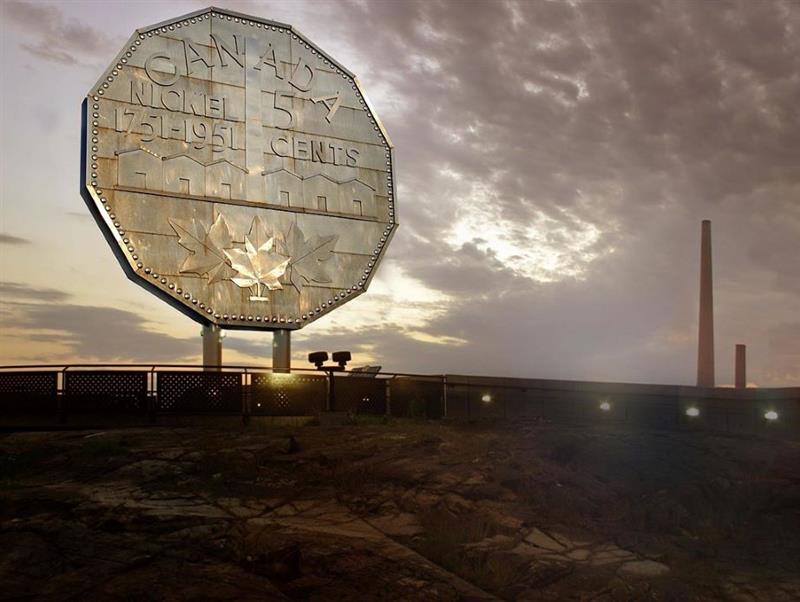
In 1963, when the city of Sudbury held a contest for ideas to celebrate the city’s upcoming centennial, firefighter Ted Szilva thought he had a brilliant one: to build a giant nickel coin as a tribute to the city’s nickel mining industry. The city had other ideas, so Szilva decided to build the attraction himself, raising the funds by selling miniature medallions of the monument. Since the city wouldn’t allow him to build the Big Nickel in Sudbury itself, he leased land adjacent to the city for the project.
Completed in 1964, the Big Nickel is modelled on a 1951 nickel, with the head of King George VI on one face and a nickel refinery on the other. The largest coin in the world, it is 9 m tall and weighs 13,000 kg. A model underground mine for visitors was added in 1965. The giant coin is now a part of Dynamic Earth, a science centre that offers immersive experiences about earth science and mining.
World’s Largest Lobster (Shediac, New Brunswick)
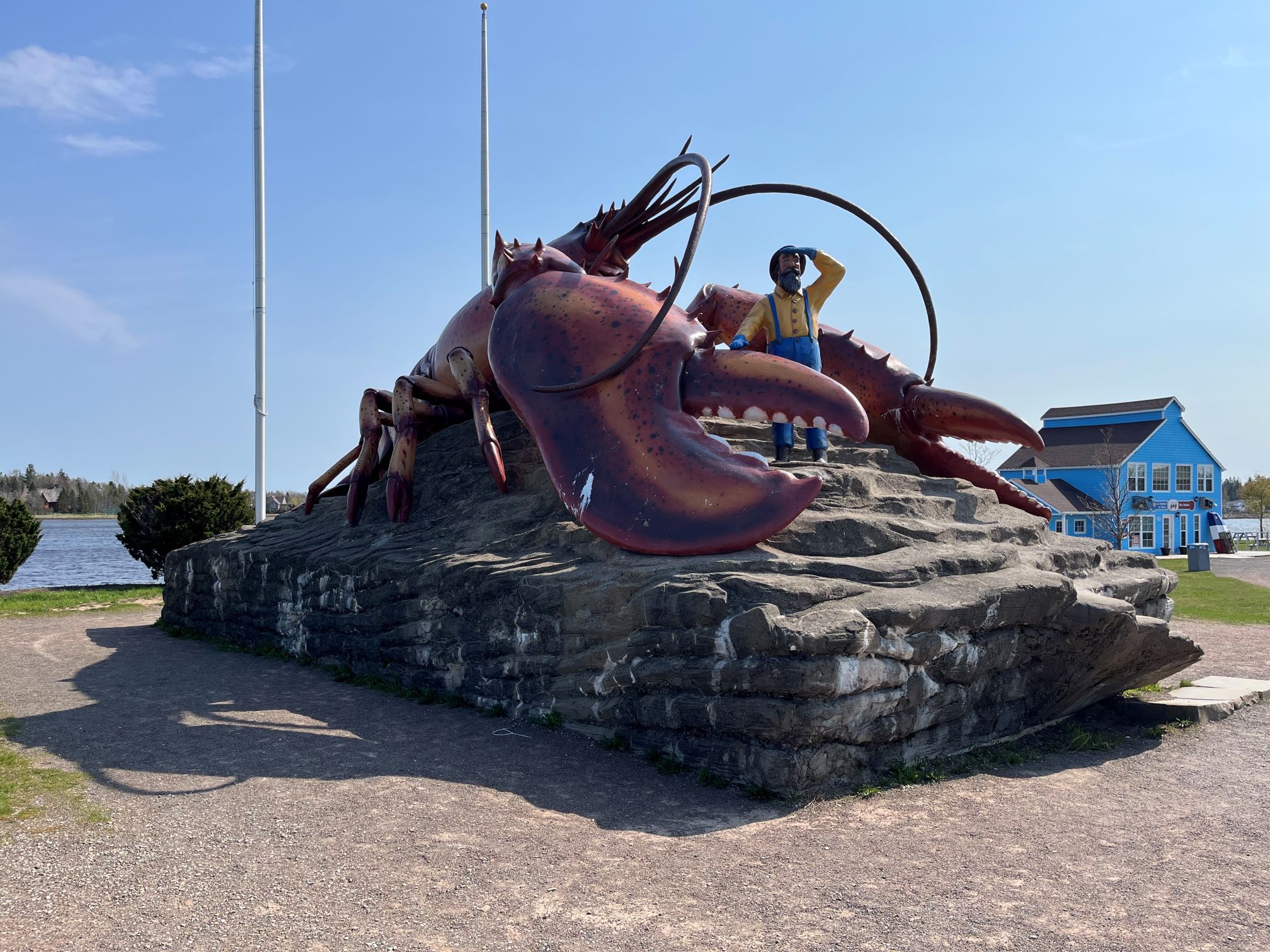
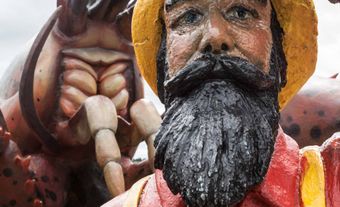
The Acadian seaside town of Shediac bills itself the “lobster capital of the world.” Its annual lobster festival, running since 1949, attracts around 30,000 visitors each July. In 1989, the Shediac Rotary Club decided to honour the town’s lobster fishing history by commissioning a statue of the world’s largest lobster. Created by artist Winston Bronnum, the statue is 11 m long, 5 m wide, and 5 m high. The lobster rests on a pedestal resembling a rock, with a fisherman in yellow waders standing between its claws, looking outward and shading his eyes. Despite its moniker, it is no longer the largest lobster statue in the world; that record belongs to a sculpture built in 2015 in Hubei, China.
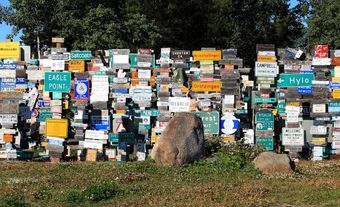
Signpost Forest (Watson Lake, Yukon)
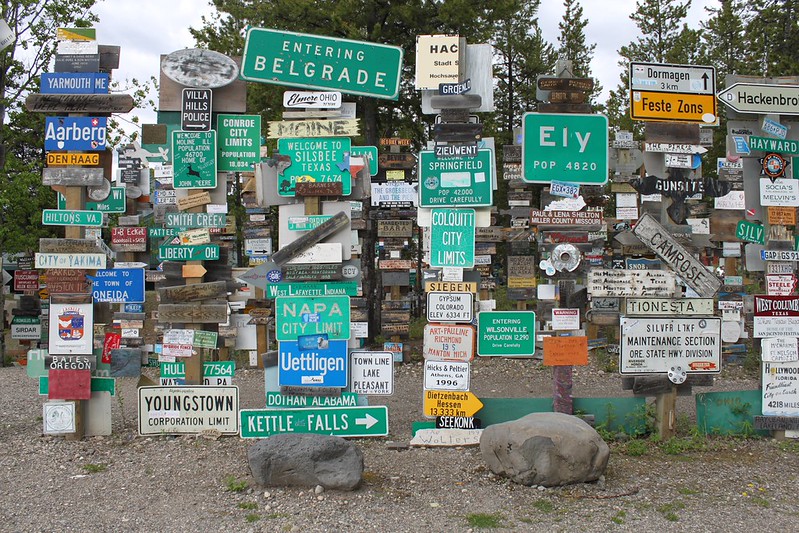
In 1942, during the building of the Alaska Highway, Private Carl K. Lindley of the 341st Engineer Regiment was recuperating at an aid station in what is now Watson Lake. It was common for army stations in the area to have signposts pointing to nearby towns, and Lindley was asked to repair the directional signage. Homesick, he added a sign pointing to his hometown of Danville, Illinois. Visitors began adding their hometowns, and the signpost forest grew. Today, there are nearly 100,000 signs. Visitors can bring their own or make one in the Visitors’ Interpretive Centre. The original Danville, Illinois sign is no longer there. In 1992, during the 50th anniversary celebration, Carl Lindley and his wife replaced it with a new one. A time capsule was also buried, set to be opened in 2042. The Signpost Forest was one of several roadside attractions featured on a series of stamps by Canada Post in 2009.