Share on Facebook
 Share on X
 Share by Email
 Share on Google Classroom
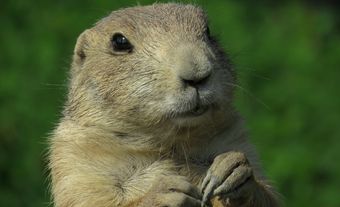
The marmot is a large, diurnal, burrowing rodent of the squirrel family, native to Eurasia and North America. Marmots are rotund and stocky, weigh 2–9 kg, and have thick fur, short bushy tails and small ears.

Distribution and Habitat
Of the 13 species that exist worldwide, 4 occur in Canada, inhabiting grassy areas and rocky slopes of mountains and lowlands. Yellow-bellied, hoary and Vancouver Island marmots (Marmota flaviventris, M. caligata and M. vancouverensis, respectively) are found only in the Western provinces; the woodchuck (possibly originating from the Cree word wuchak) or groundhog (M. monax), in patchy distribution throughout Canada, excluding Nunavut and Newfoundland. The Vancouver Island marmot, found only in Canada, inhabits a few subalpine sites on Vancouver Island.

Habits
Marmots eat green plants and can become pests in vegetable gardens. They signal danger by shrill calls. Marmots hibernate in burrows for 4–9 months; on awakening, they may be almost half their autumn weight. The whimsical observance of Groundhog Day (February 2) recognizes the marmot's impending emergence from a long winter's rest (much later in colder climates).
Reproduction and Development
Females mate after spring emergence and after a short gestation bear 2–9 young.
Status and Threats
One species of marmot, the Vancouver Island marmot, is critically endangered. With only two subpopulations left, a total of about 427 individuals, less than 10 km2 of viable habitat combined and continued deforestation, they are at a very high risk of extinction within the foreseeable future. In 2003, only 30 wild marmots remained. Conservation efforts continue, but much work remains to be done to preserve the species (see Endangered Animals).