Share on Facebook
 Share on X
 Share by Email
 Share on Google Classroom
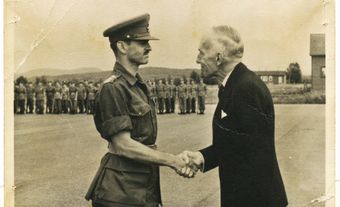
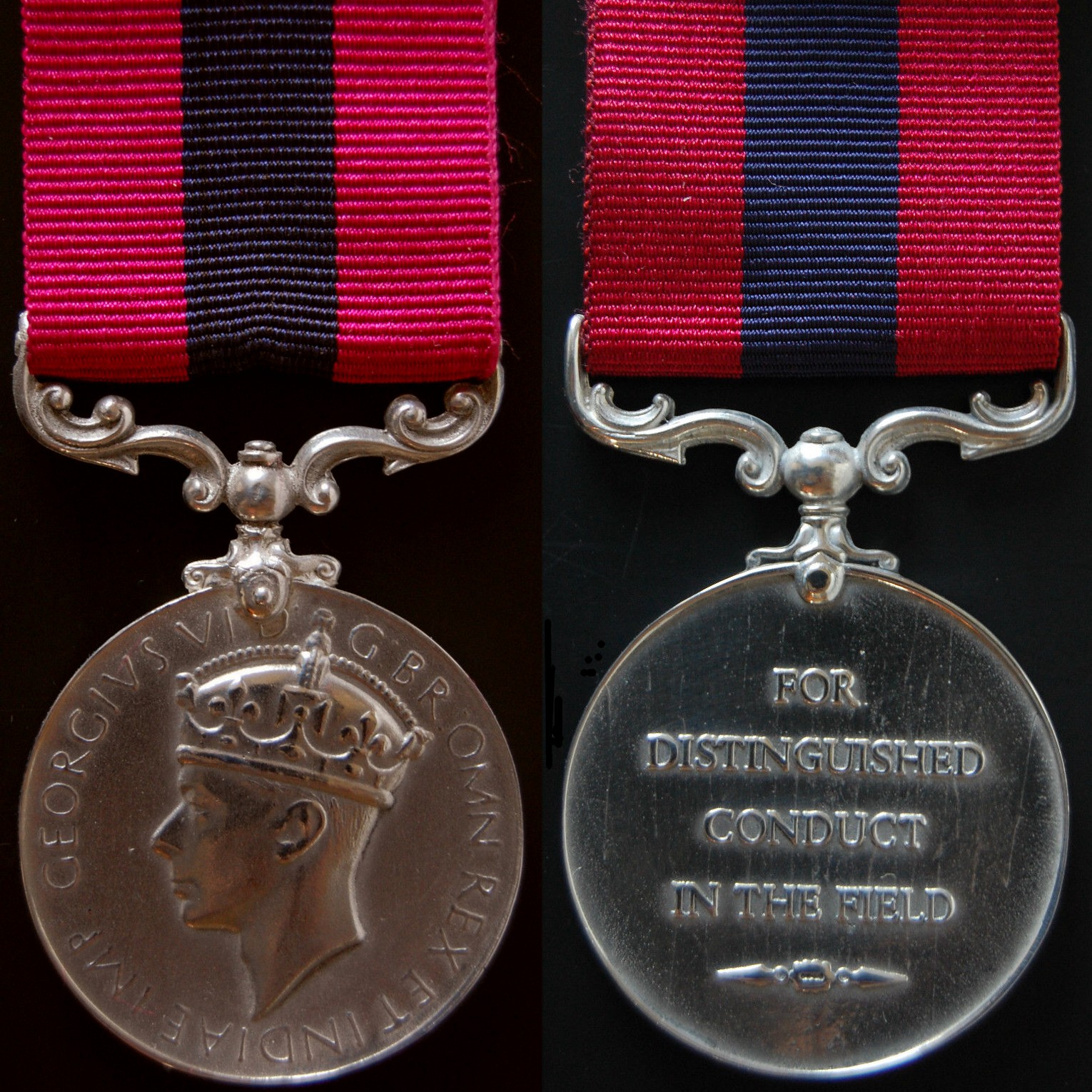
Ernest William Poole, DCM, soldier (born 19 February 1931 in Regina, SK). Poole was a medical corporal in the Royal Canadian Army Medical Corps (RCAMC) and served during the Korean War. For his bravery tending the wounded under fire, he was recommended for the Victoria Cross. Instead, he was awarded the Distinguished Conduct Medal, the second highest decoration for gallantry. The decision to downgrade his award was controversial.
Education and Enlistment
Ernest William Poole finished 11th grade at Balcarres, Saskatchewan, in 1949. He then became a psychiatric aide at Weyburn Mental Hospital. On 7 August 1950, Louis St-Laurent, the Canadian prime minister, announced the creation of the Canadian Army Special Force (CASF) to fight in the Korean War. Poole volunteered for service with the Royal Canadian Army Medical Corps and joined the CASF on 24 August. In Korea, Corporal Poole was attached to B Company, 2nd Battalion, The Royal Canadian Regiment.
Operation Commando
In early October 1951, Canadian troops of the 2nd Battalion participated in Operation Commando. This was one of two offensives to destroy a bulge in the allied line created by the Imjin River. Phase I was carried out on 3 October, during which No. 4 Platoon of the battalion succeeded in their attack. On 4 October, No. 6 Platoon, under the command of Lieutenant W. D. Smallman, participated in the second phase. However, No. 6 Platoon came under intense fire, and casualties were heavy.
Bravery Under Heavy Fire
Finding the wounded was difficult owing to the steep slopes and thick underbrush of the terrain. There was also the risk that the Canadians would fall into enemy hands. Corporal Ernest Poole ran to the front, searching for the wounded while under heavy fire. Despite the danger, Poole did not stop until he was certain that all wounded personnel had been safely evacuated.
Private H.J. Roach, wireless operator with B Company, 2nd Battalion, provided the following account of Poole’s actions:
In spite of the casualties, and in spite of the heavy volume of fire, Corporal Poole went from one to the other of those wounded and administered first aid, applying tourniquets and giving morphine. Corporal Poole carried each of the wounded back to the crest of the hill, out of the line of direct fire. Each time he returned to one of the men, he submitted himself to extreme danger, yet he was calm and cheerful throughout. I called to him to keep his head down, that he was going to get killed and he answered, “I can’t help it, I have a job to do and I’m going to do it.”
At 5:45 p.m., No. 4 Platoon under Lieutenant E. H. Devlin was ordered to take over. As they joined the attack, two of the platoon’s men were wounded. Poole promised Devlin that he would look after the wounded men and urged him to continue pushing forward with the attack. “He threw himself down beside them,” Devlin later reported, “and proceeded to apply tourniquets, despite machine gun fire in heavy volume.”
Evacuation of the Wounded
During the night, Ernest Poole constructed stretchers from rifles and tree branches to transport the wounded. He also organized stretcher bearers, whose task was to evacuate the wounded to the Regimental Aid Post, more than 2,700 m away. Shortly after they started transporting the wounded men, the group came under fire, and their guide, a section leader from No. 6 Platoon, was wounded. Poole took over and changed the route, avoiding enemy fire. He successfully led the others to the aid post through unfamiliar territory, and did so amid enemy patrols, land mines and natural hazards. Moreover, according to Lieutenant Devlin, Poole returned to the battlefront at 4:00 a.m. and joined an early morning assault with the platoon.
Lifesaving Actions
As a Non-Commissioned Officer in charge of B Company stretcher bearers, Ernest Poole’s courage was attested to by witnesses such as Medical Officer Captain H. C. Stevenson and Lieutenant Devlin. According to a statement by Stevenson on October 5, Poole saved the lives of at least four wounded men: Lt. W.D. Smallman, Lance Corporal E. R. Souliere, Lance Corporal R. P. Turgeon and Private A. J. Davies. Stevenson also credited Poole’s efforts with preventing the capture of at least two wounded men by Chinese forces. Moreover, thanks to Poole’s actions, many other wounded men were successfully evacuated and received medical treatment. Notably, although Pool was an unarmed medic, he is credited as having inspired his comrades to keep fighting. “Corporal Poole’s courage and devotion to duty was beyond anything I have ever seen,” remarked Private H.J. Roach, “and his example gave all of us great encouragement.”
Decoration and Controversy
The Commanding Officer of 2nd Battalion, The Royal Canadian Regiment was Lieutenant-Colonel Robert A. Keene. On 21 October, he recommended that Ernest Poole receive the Victoria Cross, the highest award for gallantry. The senior Canadian military officer in Korea, Brigadier John M. Rockingham, Commander of 25th Canadian Infantry Brigade, expressed his agreement on 20 November. On 23 January 1952, the British General Officer Commanding the 1st Commonwealth Division, Major-General A. J. H. Cassels, downgraded the award to a Distinguished Conduct Medal, which was the second highest award for bravery. The Commander-in-Chief of British Commonwealth Forces Korea, Australian Lieutenant-General Sir William Bridgeford, confirmed Cassels’ action. This decision has been controversial, as many have argued that Poole should have received the Victoria Cross as originally recommended.