Share on Facebook
 Share on X
 Share by Email
 Share on Google Classroom
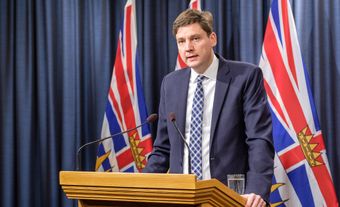
David Robert Patrick Eby, lawyer, BC MLA 2013–present, attorney general 2017–2022, premier of BC 2022–present (born 21 July 1976 in Kitchener, ON). David Eby has been a member of British Columbia’s Legislative Assembly for the riding of Vancouver-Point Grey since 2013. He has served as attorney general, minister responsible for liquor, gambling and the Insurance Corporation of British Columbia (ICBC), and minister of Housing. Eby became the premier of BC in 2022 when he was acclaimed as leader of the BC NDP following the resignation of John Horgan. Eby and the NDP were re-elected with a narrow majority government in 2024. Known as a hard-working and ambitious policy reformer, Eby has reorganized the ICBC and combatted money laundering in the gaming, real estate and luxury vehicle sectors.

Early Life and Education
David Eby (pronounced ee-bee) was born and raised in Kitchener, Ontario, the eldest of four siblings. His mother, Laura, was an elementary school principal. His father, Brian, was a personal injury lawyer who supported the Liberals and “always enjoyed sparring on public policy issues,” as Eby later recalled.
From a young age, Eby was a vegetarian and a supporter of animal rights. He first became politically active in his early teens to protest the treatment of circus elephants. He was elected president of the student council at St. Mary’s High School. His peers described him as principled, studious and hard-working. Eventually growing to 201 cm, or 6-foot-7, Eby was also encouraged to play basketball. But by his own account, he lacked the coordination for it.
In 1999, Eby graduated from the University of Waterloo with a degree in rhetoric and professional writing. Becoming involved in anti-globalization politics, he joined the protests at the Summit of the Americas in Quebec City in 2001. He was inspired by the involvement of lawyers in the movement. Within a year, he moved to Halifax to attend law school at Dalhousie University. While there, he began making connections with the BC Civil Liberties Association (BCCLA) and the Law Foundation of BC. In 2003, he published The Arrest Handbook: A Guide to Your Rights with the BCCLA. The booklet garnered significant attention and has since been translated into three other languages.
Early Career
Following his graduation from Dalhousie, David Eby moved to Vancouver, where he articled with the federal Department of Justice. He was called to the bar in 2005. After briefly working as a prosecutor, he took a job at the Pivot Legal Society, an anti-poverty advocacy group focused on Vancouver’s Downtown Eastside. Eby helped prevent low-income tenants from illegal evictions. His advocacy work helped motivate the province to make significant new investments in social housing.
In 2008, Eby left Pivot to become executive director of the BCCLA, a position he held until 2012. During this time, he also worked as president of the Canadian HIV/AIDS Legal Network, as a research associate at the Canadian Centre for Policy Alternatives, and as an adjunct professor of law at the University of British Columbia.
Entry into Politics
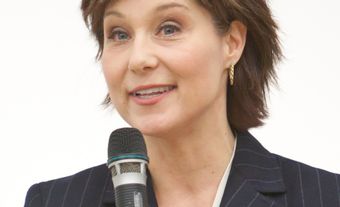
David Eby campaigned for a nomination as a Vision Vancouver candidate in the 2008 municipal elections but narrowly fell short. Three years later, he ran against Liberal premier Christy Clark in the riding of Vancouver-Point Grey but again lost by a small margin. In 2013, he challenged Clark again and this time unseated the premier. The Liberals nonetheless won a majority of seats in the Legislative Assembly. Clark later regained a seat in a by-election elsewhere in the province. Eby became the NDP critic for advanced education.
Attorney General and Cabinet Minister (2017–22)
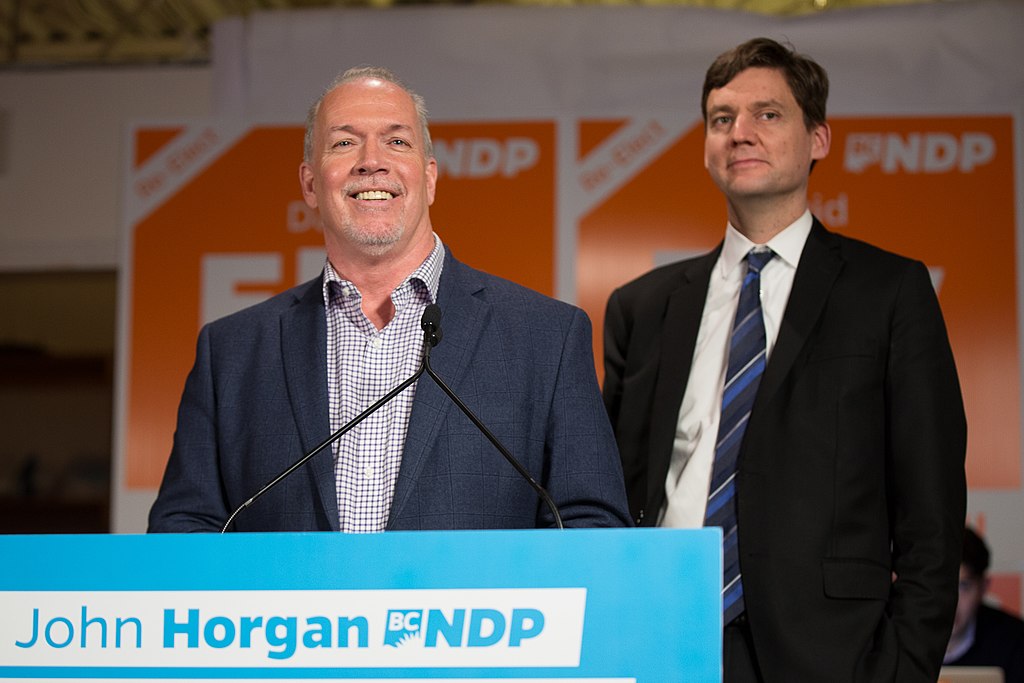
In the 2017 provincial election, the BC NDP under leader John Horgan won two fewer seats than the Liberals. However, Horgan struck a supply-and-confidence agreement with the BC Green Party to secure a narrow minority government. David Eby was appointed to the dual cabinet positions of attorney general and minister responsible for liquor, gambling and the Insurance Corporation of British Columbia (ICBC). Later, he also served as minister of Housing.
In the following five years, Eby became one of BC’s highest-profile politicians. He garnered attention as a hard-working and ambitious policy reformer. His policy objectives broadly fell into the areas of judicial reform, electoral reform, law enforcement, housing, and insurance policy.
On the judicial file, Eby advanced legislation designed to protect the public from “strategic lawsuits against public participation,” a.k.a. SLAPP lawsuits. These have historically been used by litigants (especially corporations) to silence their critics. In terms of judicial reform, Eby spearheaded the creation of a human rights commissioner for BC. He also introduced new legal protections for government whistleblowers.
In the area of electoral reform, Eby spearheaded a 2018 referendum on whether BC should switch from its first-past-the-post electoral system to some form of proportional representation. Over 60 per cent of voters favoured the traditional system, so no change was enacted. Eby did succeed in passing another reform, however. He oversaw the passage of a bill to end corporate and union donations to political campaigns and limit individual contributions to $1,200 a year.
As attorney general, Eby stepped up efforts to combat money laundering in the gaming, real estate and luxury vehicle sectors. He worked with municipal governments to maintain and expand homeless shelters and the stock of social housing. He also overhauled the leadership of BC Housing after an audit highlighted problems related to the organization’s oversight and spending patterns.
Finally, Eby significantly reorganized ICBC, which was losing money by the end of the Clark administration. He implemented a system of no-fault car insurance to minimize costly litigations. He also mandated the ICBC to retain its surpluses rather than divert them toward the government’s primary balance. These reforms enabled a reduction in premiums for motorists.
2020 Provincial Election
In the election on 24 October 2020, the BC NDP won a decisive majority. David Eby won re-election in Vancouver-Point Grey with a 20-point lead over second-place finisher Mark Bowen of the Liberals. In November 2020, in addition to attorney general, Eby was also appointed minister of Housing.
Premier (2022–24)
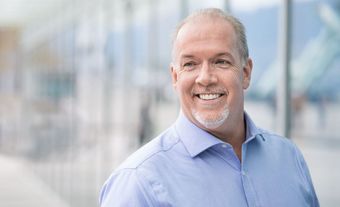
In 2022, following a successful battle with throat cancer, John Horgan announced he would be stepping down as premier. (He died from cancer in November 2024.) David Eby and climate activist Anjali Appadurai ran for the leadership of the BC NDP. However, after Appadurai was disqualified for using third-party resources to sign up new NDP members, Eby won by acclamation. He was sworn in as British Columbia’s 37th premier on 18 November 2022.
On top of his long-standing interest in growing BC’s housing stock, Eby prioritized issues around health care and environmental policy. In health care, Eby’s government worked to streamline and expand delivery by allowing pharmacists to prescribe birth control as well as treatments for 21 minor illnesses. It also passed a law to expedite the recognition of international credentials for paramedics, doctors and nurses, as well as architects, engineers and other professionals.
On the environment, Eby’s government has pursued various progressive initiatives. It phased out oil and gas subsidies and offered rebates on energy-saving heat pumps and electric vehicles. However, Eby also expedited various energy and mining projects, including methane-emitting liquefied natural gas infrastructure. While these initiatives are intended to enhance BC’s economic independence from the United States, they have also raised concerns from environmental advocates.
2024 Provincial Election
In the election on 19 October 2024, David Eby and the NDP faced a significant challenge from a resurgent Conservative Party of British Columbia. The BC Liberals, which had been the official opposition, rebranded themselves as BC United before withdrawing from the race altogether to avoid vote-splitting with the Conservatives. This left the NDP and the BC Green Party to draw from votes on the left. This was also the first election to take place after the redistribution of electoral districts in 2023, which increased the size of the BC legislature from 87 seats to 93.
The hard-fought campaign resulted in an incredibly close election. The NDP won the popular vote by only 1.59 percentage points over the Conservatives. The NDP lost 8 seats but still won a narrow majority with 47, compared to 44 seats for the Conservatives and 2 for the Greens. Eby won re-election in Vancouver-Point Grey by a 22-point margin.
Premier: 2024–Present
The beginning of David Eby’s second term as premier was largely shaped by the second term of US president Donald Trump. He launched a trade war with Canada in early 2025 with the stated goal of annexing the country as the 51st state. In early June, Eby undertook a 10-day trade mission to Asia. He met with officials in Japan, South Korea and Malaysia to try to open new markets for BC products. In July, Eby signed agreements with Ontario, Manitoba and Yukon, committing to removing trade barriers between the provinces and territory.
In June 2025, Eby came out in support of an oil tanker ban on BC’s North Coast. He also expressed conditional support for an oil pipeline to the North Coast, provided it is not paid for with public funds. “What I don't support is tens of billions of dollars in federal subsidy going to build this new pipeline when we already own a pipeline that empties into British Columbia and has significant additional capacity — 200,000 barrels,” Eby said, referring to the Trans Mountain pipeline.
On 17 July, Eby reshuffled his cabinet in what he said was a strategic shift to focus on jobs and the economy. Eby said that the main priorities of the new cabinet would be growing the economy, pursuing investment opportunities and strengthening public services. However, in early August it came to light that the province’s debt increased almost 50 per cent in his first two years as premier, from $89 billion to $133 billion. Finance Minister Brenda Bailey also forecast that the debt would grow to $157 billion in 2025, $184 billion in 2026 and $209 billion in 2027.
(See also Premiers of British Columbia; Politics in British Columbia.)