Share on Facebook
 Share on X
 Share by Email
 Share on Google Classroom
Cod is the common name for fishes of the class Actinopterygii, order Gadiformes, family Gadidae. This family contains about 30 species of mostly bottom-living fishes found in cool seas. In Canada, about nine species occur in Atlantic waters, three in the Pacific and five in the Arctic. The family includes many important food fishes, e.g., Atlantic cod (Gadus morhua), haddock (genus Melanogrammus), pollock (Pollachius virens), Pacific cod (Gadus macrocephalus) and tomcods (genus Microgadus). Fishes recently removed from the family Gadidae include cusk, burbot, rocklings and lings (now family Lotidae) and hakes (now family Phycidae).
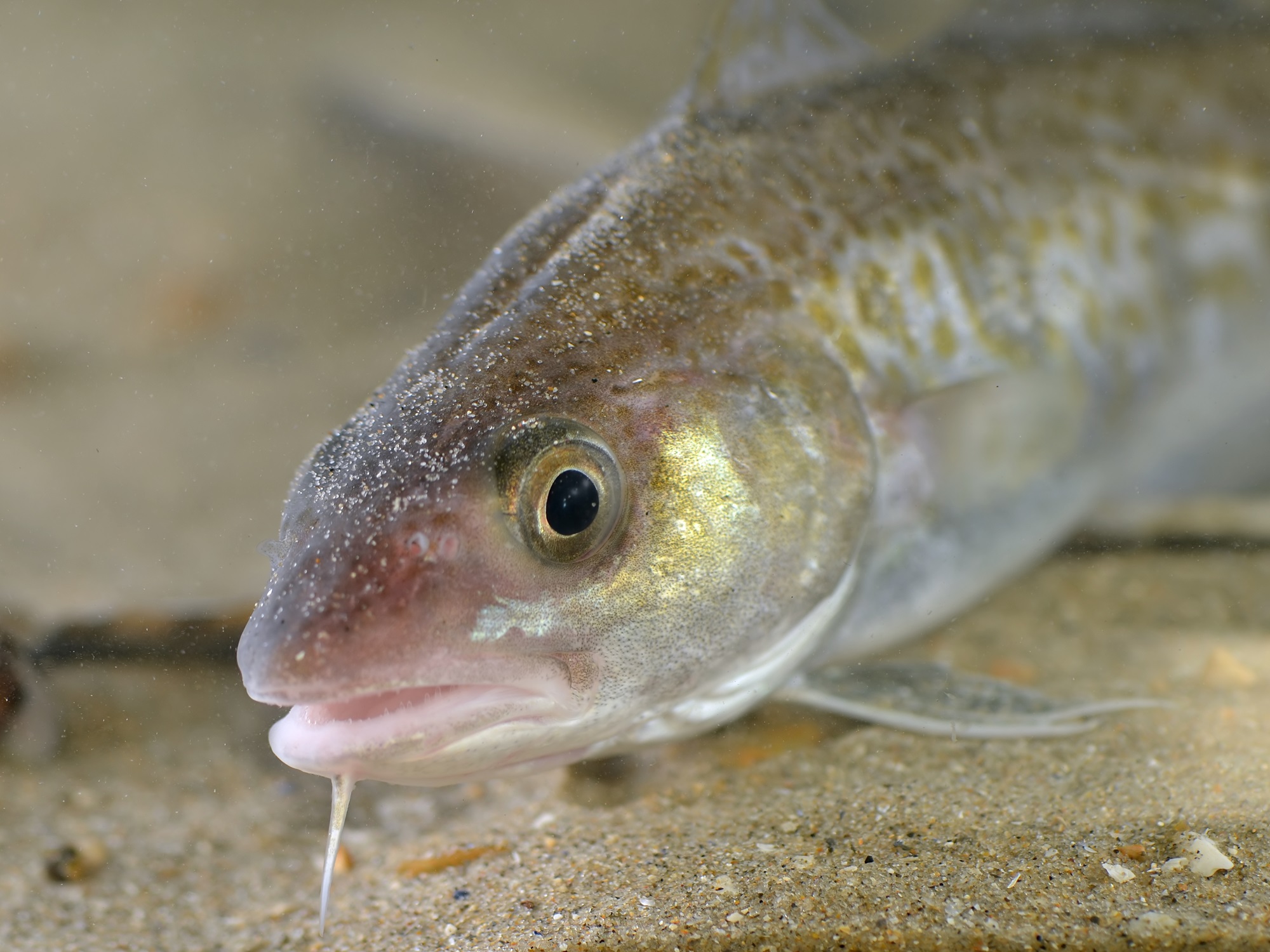
Description
Cods have elongate bodies, large heads with strong mouths and three dorsal and two anal fins (with the exception of Raniceps raninus of the eastern North Atlantic, with single, long dorsal and anal fins). Most species have a single, fleshy barbel (hairlike projection near the tip of the lower jaw). The most important Canadian cod, the Atlantic cod (Gadus morhua), is heavy-bodied, with a large head and an almost square caudal (tail) fin. Scales are small and smooth. The lateral line is pale. It may weigh up to 90 kg, but usually averages 3–4 kg. Colour varies from grey or silvery green to brown or red, depending on the bottom type and locality. The head and body are covered with many brown to reddish spots. Atlantic cod occurs on both sides of the North Atlantic. Off the North American coast, it ranges from Cape Hatteras to southern Baffin Island, but its greatest abundance historically has been off Newfoundland and Labrador. The closely related Pacific cod ranges from central California waters to the Bering Sea.

Reproduction
Spawning usually occurs during cool months, but the exact time depends on water temperature and the location of the spawning grounds. On the Grand Banks (specifically, the Grand Bank proper), spawning occurs in April–August, and on Nantucket Shoals, in October–February. Atlantic cod are prolific: a 100 cm long female may produce about 5 million buoyant eggs. Hatching time depends on water temperature and may take several weeks. Young cod grow at different rates in different areas: the colder the temperature, the slower their growth rate. Young cod eat plankton and, as they mature, bottom creatures, but adults are voracious and feed mainly on other fishes (e.g., capelin, herring), crustaceans and squids.
Cod Fishery
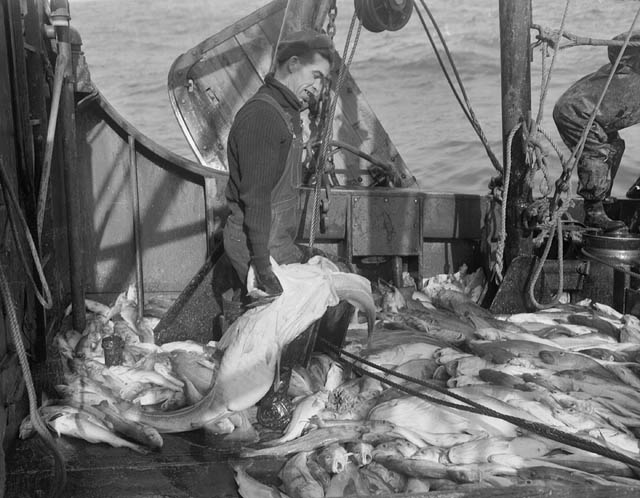
Atlantic cod, one of the world's leading food fishes, has been fished on the Grand Banks for centuries, first by Indigenous peoples and later by European sailors. After the Second World War, fishing was modernized, leading to massive increases in yields. This overfishing, as well as other changes in ocean conditions, led to an 82 per cent decline in harvestable cod between 1962 and 1977. By 1992, the spawning stock of northern cod had fallen to below 1 per cent of its estimated peak. On 2 July 1992, a moratorium on cod fishing was announced to prevent the potential imminent extinction of these species. This also led to the largest layoff in Canadian history (see Cod Moratorium of 1992). The damage from overfishing was so extensive that, despite closures and strict management, it took until 2008 for any substantial increase in cod stocks to be observed, though numbers continue to fluctuate and are nowhere near historical levels. In 2024, commercial cod fishing reopened off the coast of Newfoundland and Labrador, a decision that some scientists expressed concern about, given uncertainty about the sustainability of harvesting a species that has yet to fully rebound.
Conservation and Threats
Multiple cod populations have been assessed as at risk by the Committee on the Status of Endangered Wildlife in Canada (COSEWIC). Notably, the Arctic lakes population of Atlantic cod is of special concern, and the Laurentian north, Laurentian south, southern, and Newfoundland and Labrador populations of Atlantic cod are Endangered. None of these assessments by COSEWIC has led to these species being listed under the Canadian Species at Risk Act’s (SARA) Schedule 1, and as such, they do not receive special protections at the federal level from SARA (see Species at Risk Legislation in Canada). The main threat to cod is commercial overfishing.