Share on Facebook
 Share on X
 Share by Email
 Share on Google Classroom
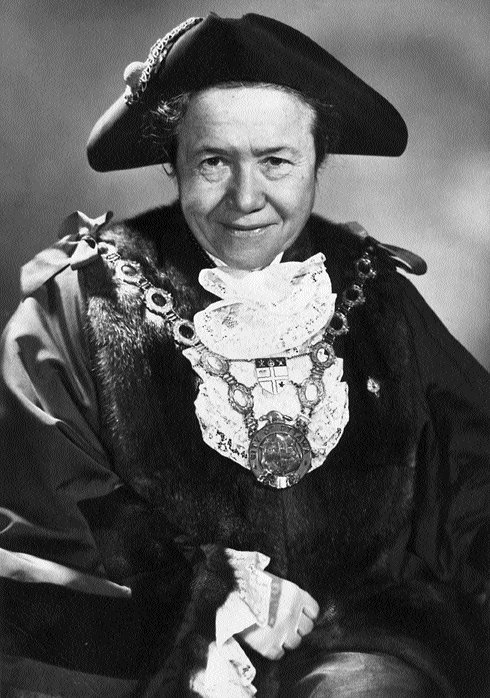
Charlotte Whitton, social worker, politician, feminist (born 8 March 1896 in Renfrew, ON; died 25 January 1975 in Ottawa, ON). Whitton was one of this century's most colourful and controversial women. Pugnacious and energetic, she is best remembered as Ottawa's flamboyant and outspoken mayor during the 1950s and 1960s. Her election in 1951 made her the first female mayor of a major Canadian city. Her more significant accomplishments, however, occurred during her earlier career as the director of the Canadian Council on Child Welfare.

Child Welfare
Charlotte Whitton was the driving force behind the Canadian Council on Child Welfare (later the Canadian Welfare Council and the Canadian Council on Social Development) from 1920 to 1941. Whitton joined the fledgling council after a brilliant academic career at Queen's University during the First World War. In the 1920s, she crusaded relentlessly for professional standards in the care of juvenile immigrants and neglected and dependent children. During the Great Depression, she became a key adviser on federal unemployment relief policy.
An arch social conservative, however, Whitton's opposition to more liberal spending on the unemployed in the 1930s placed her increasingly on the margins of Canadian social work. After resigning from the Welfare Council in 1941, Whitton championed women's equality in politics and the workplace. However, her views on women, as on the welfare state, were contradictory. She opposed more liberal divorce laws and criticized married women who worked.
Mayor of Ottawa
Charlotte Whitton was elected as a controller to Ottawa's municipal council in 1950. The following year, she was elected as Ottawa’s mayor, becoming the first woman mayor of a major Canadian city. She was re-elected mayor in 1952 and 1954, and again in 1960 and 1962. Whitton was defeated in 1964, but continued as an alderman until her retirement from politics in 1972. Her tenure as mayor was notable chiefly for her stormy verbal — and, in one celebrated instance, physical — battles with hostile male colleagues.