Share on Facebook
 Share on X
 Share by Email
 Share on Google Classroom
Canadians use computers in many aspects of their lives, including education, work and leisure. (See also Computers and Canadian Society.) The presence and significance of computers in everyday life has contributed to the growing field of computer science, which explores how computers work and how they can be used in new ways. The subfield of artificial intelligence (AI) has also inspired new advances and questions about the theory, design and application of technology and society. This list overviews the research and work of five Canadian computer scientists and describes how they have contributed to the field.
Calvin Carl Gotlieb
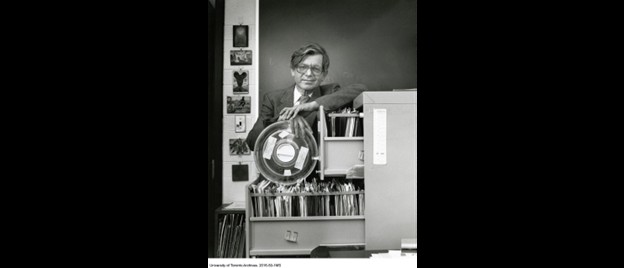
Calvin Carl “Kelly” Gotlieb, CM, FRSC, computer scientist, university professor (born 27 March 1921 in Toronto, ON; died 16 October 2016 in Toronto). Gotlieb contributed to the growth and professionalization of computer science. He was a founding member of the University of Toronto’s Computation Centre as well as the university’s first graduate department of Computer Science. Gotlieb also played a key role in the founding of the Computing and Data Processing Association of Canada (now the Canadian Information Processing Society (CIPS)). Sources refer to Gotlieb as the “Father of Computing in Canada.”
Beatrice Worsley
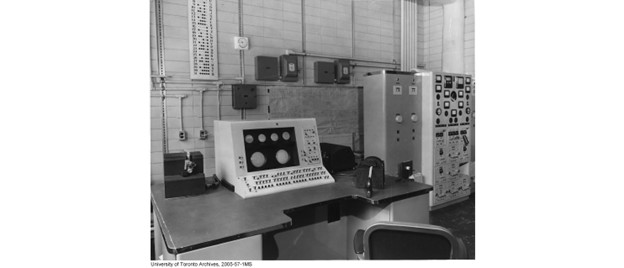
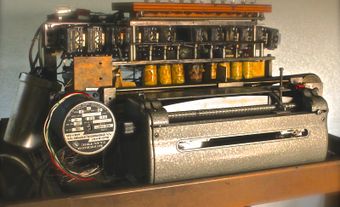
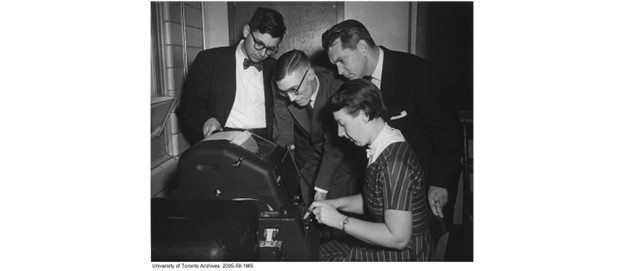
Beatrice (Trixie) Helen Worsley, computer scientist, professor (born 18 October 1921 in Queretaro, Mexico; died 8 May 1972 in Waterloo, Ontario). Beatrice Worsley is considered the first female computer scientist in Canada. While at the University of Toronto she worked with the Ferranti Mark I, an electronic computer that she nicknamed “Ferut” (for Ferranti computer at the University of Toronto). In collaboration with J.N. Patterson Hume, Worsley helped develop Transcode, a coding language for Ferut. Transcode made programming easier for scientists because they could write instructions for Ferut in a simplified language. Later in her career, Worsley would become a founding member of the Department of Computing and Information Science at Queen’s University. In recognition of her research and career, Worsley was posthumously awarded the lifetime achievement award from the Canadian Association of Computer Science in 2014.
Geoffrey Hinton
Geoffrey Hinton
Geoffrey Hinton, co-laureate of the 2024 Nobel Prize in Physics, 7 December 2024.
(Photo by JONATHAN NACKSTRAND/AFP via Getty Images)
Geoffrey Everest Hinton, CC, FRS, FRSC, computer scientist, cognitive psychologist (born 6 December 1947, in Wimbledon, London, England). Geoffrey Hinton has received international recognition for his AI research. Hinton’s research involves artificial neural networks. These digital systems modelled on the human brain enable machine learning. He was awarded the 2024 Nobel Prize in Physics for his work and has been called the “Godfather of AI.” (See also Nobel Prizes and Canada.) Despite his pioneering research, Hinton has publicly voiced concern about the misuse of AI. (See also Computers and Canadian Society; Internet in Canada.)
James Gosling
James Gosling
Portrait of James Gosling, the “father of Java,” c. 1998.
(photo by Bromberger Hoover Photography/Getty Images)
James Arthur Gosling, OC, computer scientist, software engineer, executive (born 19 May 1955 in Calgary, AB). Java is a programming language that James Gosling developed while working with Sun Microsystems in the 1990s. Java could be used on major operating systems and was considered programmer friendly when it was released. (See also Computer Science.) Gosling was appointed to the Order of Canada in 2006. His award citation recognized him as the “father of Java” and noted his “significant contributions to the computing landscape.”
Richard Sutton
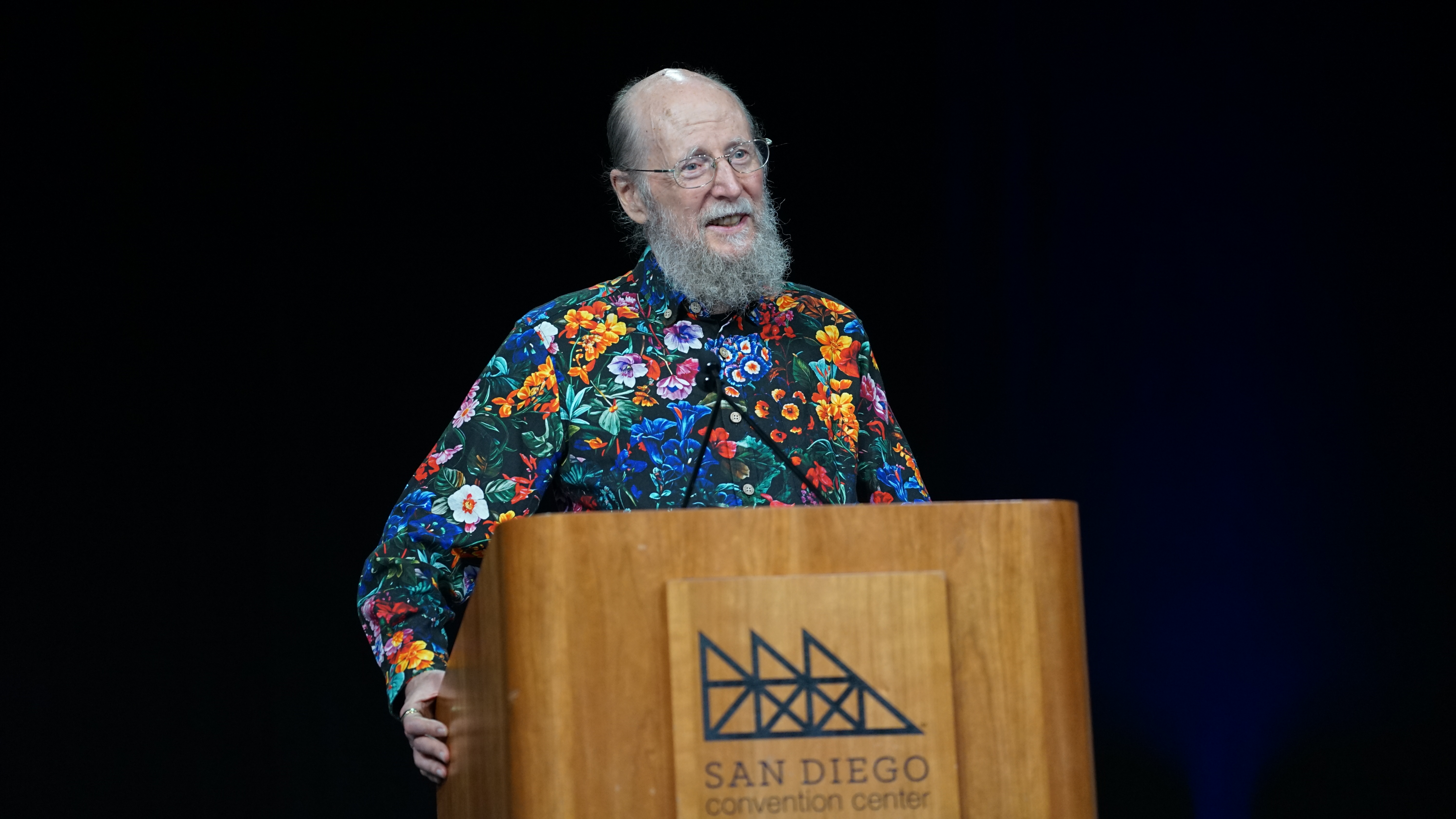
Richard Stuart Sutton, FRS, FRSC, computer scientist and author (born circa 1957, Toledo, Ohio). Richard Sutton joined the University of Alberta’s Department of Computing Science in 2003 and has contributed towards the growth of AI research at the university and Canada. He is recognized for his work in reinforcement learning. Reinforcement learning is a type of machine learning model that uses the process of trial and error. In 2024 he was the co-recipient of the Turing Award, which is regarded as the “Nobel Prize in Computing.” (See also Computer Science.)