Share on Facebook
 Share on X
 Share by Email
 Share on Google Classroom
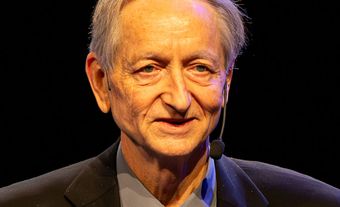
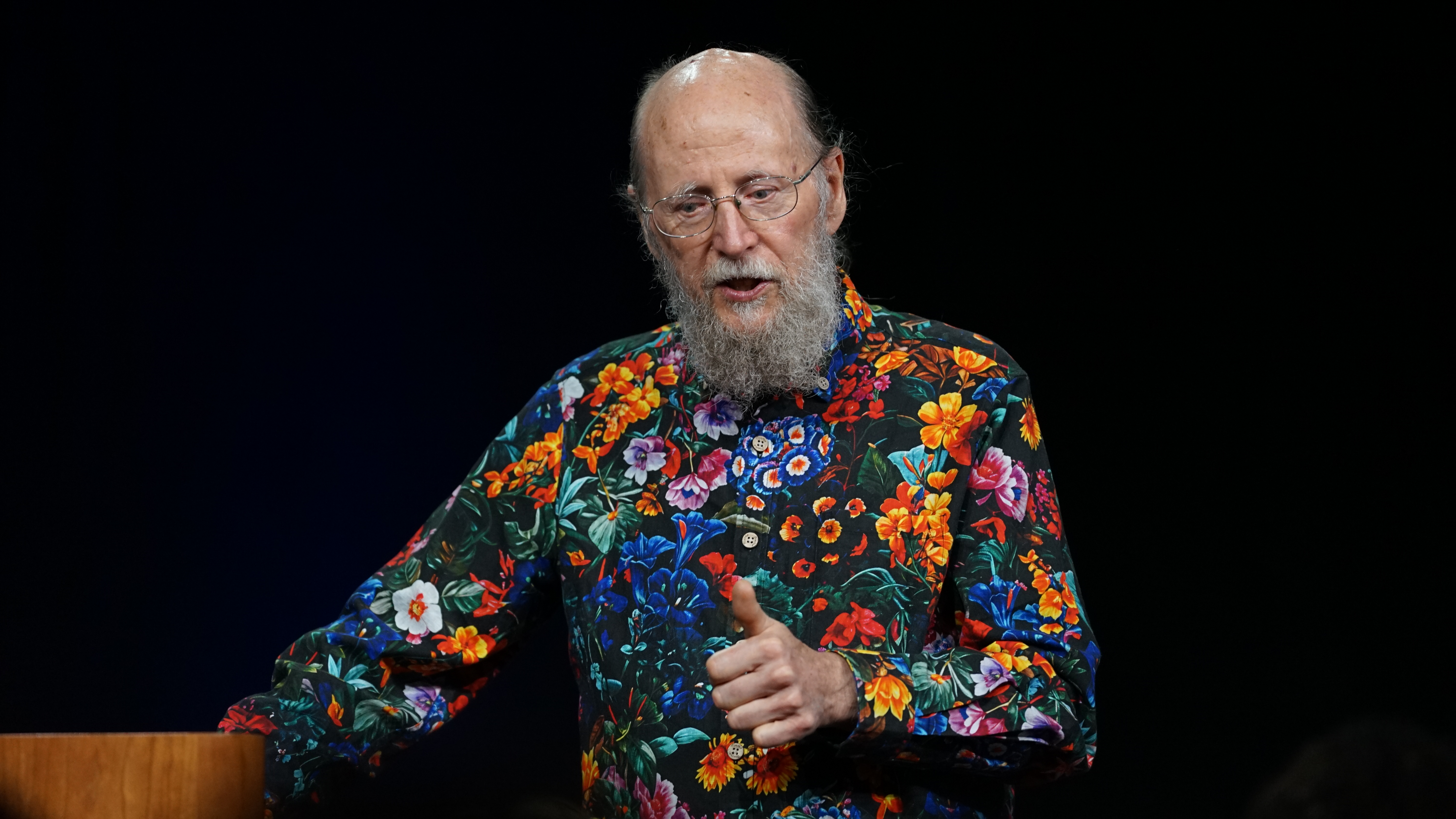
Richard Stuart Sutton, FRS, FRSC, computer scientist and author (born circa 1957, Toledo, Ohio). Richard Sutton’s pioneering work in the field of reinforcement learning in human and computerized settings has provided key fundamentals in the development of artificial intelligence (AI).
Early Life and Education
Richard Sutton’s father was a business executive whose positions included specializing in mergers and acquisitions for Interlake Steel, while his mother was an English teacher. The family moved frequently during his early childhood before settling in Oak Brook, Illinois, when Sutton was seven. He later noted that the numerous moves during his early life made his decision to relocate to Canada easier.
Sutton was first introduced to computers in high school and was fascinated by how they could only perform what they were instructed to do and the possibility of machines having minds. With few computer-science-degree programs available when Sutton began his postsecondary studies, he entered Stanford University as a psychology student. He took computer-science courses on the side that introduced him to AI. He found himself frustrated with the set ways of thinking within the field of psychology, especially its resistance to new ideas.
After receiving a bachelor of arts in psychology in 1978, Sutton continued his studies in computer science at the University of Massachusetts Amherst, where he earned a master of science in 1980 and a doctorate in 1984.
Development of Reinforcement Learning
Richard Sutton’s research career in the United States included positions in the Computer and Intelligent Systems Laboratory at GTE Corporation from 1985 to 1994; as a senior research scientist in computer science at the University of Massachusetts Amherst from 1995 to 1998; and in the AI department at AT&T Labs in Florham Park, New Jersey, from 1998 to 2002.
Sutton is considered a pioneer in the field of reinforcement learning. On its website, the Alberta Machine Intelligence Institute (Amii) describes reinforcement learning as “a type of AI that learns through experience. Instead of relying on fixed datasets, [reinforcement learning] interacts with its environment, takes actions and learns from feedback to improve over time.”
In a 2017 interview with Gregory Piatetsky, Sutton described reinforcement learning as “learning from rewards, by trial and error, during normal interaction with the world. This makes it very much like natural learning processes and unlike supervised learning, in which learning only happens during a special training phase in which a supervisory or teaching signal is available that will not be available during normal use.”
With Andrew Barto, who was Sutton’s supervisor at the University of Massachusetts Amherst, Sutton worked on a series of papers, starting in the 1980s, that discussed what would become the ideas, mathematics and algorithms that evolved into reinforcement learning. Their main contribution was temporal difference learning, which helped solve problems surrounding the prediction of rewards.
In 1998, Andrew Barto and Sutton wrote the textbook Reinforcement Learning: An Introduction, which they revised in 2018. The book is regarded as the standard reference work in this field and has been credited as a major influence on the development of AI.
Sutton has often had issues with the term “artificial intelligence,” preferring to see his work as the study of any form of intelligence, whether it is human or machine. He believes that understanding intelligence in general would lead to a better understanding of the place of humanity in the world and how we can work to solve its problems. (See also Computers and Canadian Society.)
Asked in 2019 about what he wished people would understand about AI and reinforcement learning, Sutton observed that “it’s not a bizarre artificial alien thing. AI is really about the mind and people trying to figure out how it works.”
Canadian Career
During a period in which AI-related employment and funding were scarce (termed an “AI winter” by researchers in the field), Richard Sutton joined the University of Alberta’s Department of Computing Science in August 2003. In a 2019 interview with correspondent Craig Smith, Sutton cited three reasons for the move: the opportunity to work as a tenured professor; the impressive staff that the university was hiring at the time; and his distaste for American politics following the U.S. invasion of Iraq (he would become a Canadian citizen in 2015). Sutton was also dealing with melanoma, which he was diagnosed with in 1999. He was given a poor long-term prognosis, but the disease ended up going into remission.
As an instructor, Sutton developed a reputation for challenging his students, encouraging them to keep notebooks to record their thoughts and “develop them into something worth sharing.”
Sutton was assigned to launch a $6.75-million AI program at the university. He founded the Reinforcement Learning and Artificial Intelligence lab, whose objectives included creating new methods of reinforcement learning, which would allow it to overcome its limitations and evolve into an AI model that approaches human abilities. He also became the chief scientific advisor of Amii.
In 2017, Sutton was hired by the Royal Bank of Canada as head academic advisor to RBC Research in machine learning. That same year, along with his University of Alberta colleagues Michael Bowling and Patrick Pilarski, he was hired by Google’s parent company, Alphabet, to head an Edmonton branch of its British-based AI subsidiary DeepMind Technologies (now Google DeepMind).
In 2022, Sutton, Bowling and Pilarski published The Alberta Plan for AI Research, which proposed a path for reviewing “continual” reinforcement learning that involved having machines learn constantly instead of incrementally. They proposed to develop a form of AI they called “artificial general intelligence,” which would operate at a near-human capacity.
Following the shutdown of DeepMind’s Edmonton lab in 2023 due to corporate cutbacks, Sutton left Alphabet and became a founder of Openmind Research Institute. He also joined Keen Technologies to work on the science of AI, including finding ways to understand and create computational agents to deal with the increasing complexity of the world. At the time, Sutton felt that reinforcement learning was becoming more diluted amid the broader AI world as demand grew for more intelligent AI-driven platforms.
In his more recent work, Sutton felt that large language models were popular but “the flavour of the month” and not “the most fruitful way to make fundamental progress.”
Assessing his career in 2023, Sutton observed that he had always gone his own way. “I’ve always been somewhat out of favour—it’s more normal to be in the contrarian role. In science, that’s not uncommon. And it’s often those who’ve been in a contrarian role [that] are proven right. That’s an old story.”
Honours and Awards
- Fellow, Royal Society of Canada (2016)
- Lifetime Achievement Award, Canadian Artificial Intelligence Association (2018)
- Fellow, Royal Society of London for Improving Natural Knowledge (2021)
- M. Turing Award, Association for Computing Machinery (with Andrew Barto) (2024)
- King Charles III Coronation Medal (2025)
- IEEE Frank Rosenblatt Award (with Andrew Barto), Institute of Electrical and Electronics Engineers (2025)