Share on Facebook
 Share on X
 Share by Email
 Share on Google Classroom
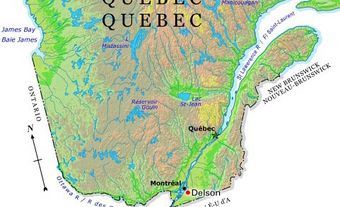
Boucherville, Quebec, incorporated as a city in 1957, population 41,743 (2021 census), 41,671 (2016 census). From 2002 to 2006, Boucherville was a borough of the new city of Longueuil, which was created from the amalgamation of eight distinct municipalities, including Boucherville. In a 2004 referendum, its residents voted to reconstitute their city, and on 1 January 2006, Boucherville again became its own municipality. Boucherville stretches for 7 km along the South Shore of the St. Lawrence River. It is connected to Montreal via the tunnel-bridge Louis-Hippolyte-Lafontaine (1967).
History of Boucherville
Boucherville is one of the oldest municipalities in Quebec. In 1668, Pierre Boucher began farming in the area; four years later received his seigneury, consisting of Îles-Percées and the adjacent islands. Boucher secured the community against Haudenosaunee (Iroquois) attacks by constructing a palisade. In 1843, a tragic fire destroyed almost the entire village.
In 1856, Boucherville was divided into two distinct municipalities: village and parish. In 1956, the parish lots with frontage on the St. Lawrence River rejoined the village and a year later Boucherville was incorporated as a city. In 1963, the remaining territory of the municipality of the parish and the city of Boucherville merged. In 2002, Boucherville lost its municipal status when it was amalgamated into the new city of Longueuil. Its residents voted for its to reconstitute the city in a 2004 referendum, and Boucherville thus became a city again on 1 January 2006.
Boucherville’s population increased considerably in the decades following World War II, going from 3,030 (1951 census) to 19,997 (1971 census). The city became an economic centre of the Montérégie region as the tunnel-bridge and the Trans-Canada Highway spurred the development of industry. The residence of the prominent mid-19th-century politician Louis-Hippolyte LaFontaine, Maison dite Louis-Hippolyte-La Fontaine (1766), is an art gallery and museum.