Share on Facebook
 Share on X
 Share by Email
 Share on Google Classroom
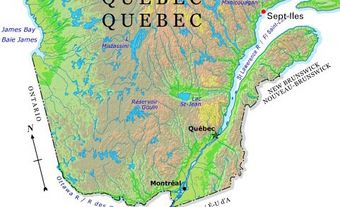
Drummondville, Quebec, incorporated as a city in 1875, population 79,258 (2021 census), 75,423 (2016 census). Drummondville is located on the Saint-François River, a tributary of the St. Lawrence River, in the St. Lawrence Lowland. At the crossroads between highways 20 and 55, between 75 km and 150 km of Montreal, Quebec City, Trois-Rivières and Sherbrooke, it is also known as the “Coeur-du-Québec” (the Heart of Quebec.)
History of Drummondville
In 1815 Major General Frederick G. Heriot installed an agricultural military camp on the site at the request of the colonial administrator, Sir Gordon Drummond, who feared an American invasion. The Abenaki called the site "the big waterway."
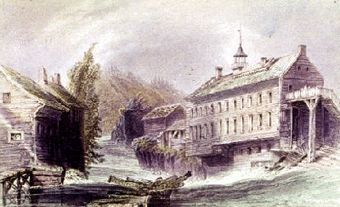
Originally settled by English soldiers and French settlers, it became a focal point for people because it was easy to cross the river at the foot of the falls. Potash manufacturing was the town's first economic activity. Later, the post-Confederation era brought industrialization with the development of sawmills, tanneries, forges, railways, hydroelectric plants and cement factories. In 1915, during the First World War, a factory manufacturing "smokeless gunpowder" opened and transformed the town's economy. However, real development began with the establishment of the textile industry in 1918.
Nowadays, the town has a large diversified industrial park. Its proximity to major roadways between the main cities of Quebec and the United States has made it a favoured location for numerous trucking companies. Le Village québécois d'antan, with some 50 historical buildings recalling life in the 19th century, and the Trent Manor (1838) are located on an Indigenous site near the river. Drummond is host to Le Mondial des cultures — the largest folklore festival in North America — which draws over 500,000 visitors.