Share on Facebook
 Share on X
 Share by Email
 Share on Google Classroom
Transportation involves moving of people, natural resources and goods from one place to another. Transportation is an important part of Canada’s economy. It allows trade goods to move between mines, farms, cities and countries. (See also International Trade). Transportation is part of Canada’s history. It helped build social and political unity. It continues to connect people and regions across the country.
This article is a plain-language summary of transportation. If you are interested in reading about this topic more in depth, please see our full-length entry, Transportation in Canada.
History of Transportation in Canada
Canada’s history is tied to the history of transportation. Transportation has changed over time. Indigenous peoples used canoes to travel along lakes and rivers (see Canoeing). Canals allowed boats and supplies to navigate inland waterways. Railways helped people move longer distances. Roads and highways, helped people and goods travel to areas without railway lines. Today, air transport facilitates travel to remote areas and overseas.
Railway History in Canada
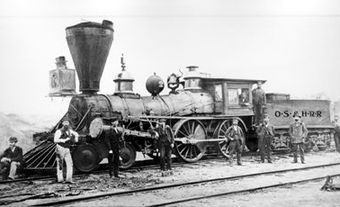
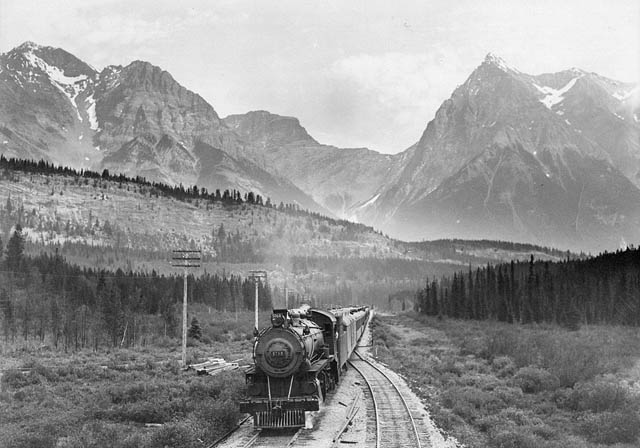
Railway transportation played an important role in Canada’s history. (See also Railway History in Canada (Plain-Language Summary).) The first railway in Canada was the Champlain and Saint Lawrence Railroad. It was built in 1836. Some of the earliest railways were built for profit. They were not well planned or constructed.
The Intercolonial Railway was completed in 1870. It contributed to Confederation. It helped unite and defend different provinces.
The Canadian Pacific Railway connected Canada from coast to coast. Its construction encouraged British Columbia to join Confederation.
Modes of Transportation
Different modes of transportation are used across Canada. The main modes of transportation are water, rail, motor carrier, air and pipeline.
Did you know?
Intermodal transportation involves using two or more modes of transport. For example, a ship from Japan can move cargo to Vancouver. The same cargo can travel by rail to Canada’s eastern ports.
Water Transportation
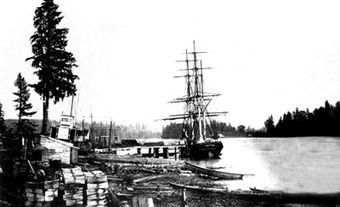
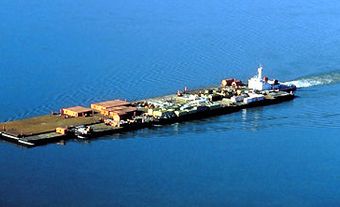
Water transportation, or boats, can move bulky commodities like coal or lumber. Water transportation falls into three general categories. Ocean transportation moves overseas. Inland water transportation operates on lakes and canals. Coastal transportation moves along coastal waters. Canada uses water transportation to export goods to other countries.
Rail Transportation
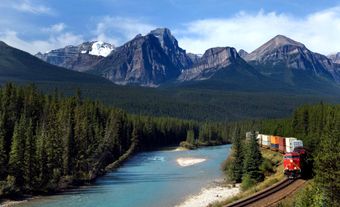
Rail transportation, or trains, help move large amounts of commodities. It can move commodities long distances.
People can use passenger railway trains to travel throughout Canada. VIA Rail Canada offers cross-country passenger service. (See also Railway History in Canada (Plain-Language Summary).)
Motor Carrier Transportation
Motor carrier transportation includes trucks and motor vehicles, like cars (see Automobile). They can travel across flat surfaces or networks of streets, roads and highways. Large trucks can transport logs and other cargo. Smaller trucks can deliver items in cities and towns.
Air Transportation
Air transportation, like planes, move large and small cargo. It is a fast mode of transportation. Air transportation also makes it possible to access remote areas. (See also Transportation in the North.)
Pipeline
Pipelines transport petroleum, petroleum products, gas and certain chemicals. Pipelines transport these resources over long distances. Pipelines are expensive to construct. They require large quantities of products to be cost-efficient.
Did you know?
Passenger transportation includes many modes of transport. Many Canadians travel by car. Some use public transport. Urban transport systems can include subways, buses or ferries. These systems move multiple passengers.
Transport Infrastructure
Every mode of transportation requires two things. The first is a transport vehicle. A train wagon is an example of a transport vehicle. The second is infrastructure. A transport vehicle uses infrastructure to move. For example, a train wagon moves on a railway track (see Railways, Track and Yards). A truck travels on a road.
Who is Responsible for Transportation in Canada?
Federal, provincial and municipal governments are responsible for transportation. They promote, regulate, fund and operate transportation systems. Transport Canada is a federal government department. It is responsible for aviation, marine, rail and road safety. It also aims for transport to be environmentally sustainable (see Sustainability in Canada). Provincial governments manage most roads and highways. Most streets have been built by cities. Municipalities or transit authorities operate urban transportation systems.
There are many jobs in the transportation sector. Workers construct, maintain and operate transportation systems.
Technological Change
Transportation has changed with the introduction of new inventions, technologies and human creativity. Transport is faster, less expensive and more efficient. For example, modern jets are larger than earlier models. But they are quieter and more fuel efficient. Aviation technology is changing in other areas. Radar and other devices help planes operate safely in bad weather. Airlines developed better systems for reservations and ticketing. Passengers can easily order and pay for their tickets electronically.