Share on Facebook
 Share on X
 Share by Email
 Share on Google Classroom
The first official, annual Thanksgiving in Canada was celebrated on 6 November 1879. However, Indigenous peoples in Canada have a history of celebrating the fall harvest that predates the arrival of European settlers. Sir Martin Frobisher and his crew are credited as the first Europeans to hold a Thanksgiving ceremony in North America, in 1578. They were followed by the inhabitants of New France under Samuel de Champlain in 1606. The feast featuring the uniquely North American turkey, squash and pumpkin was introduced to Nova Scotia in the 1750s. Loyalists who immigrated to Canada continued to practice an annual Thanksgiving dinner. It became common across Canada by the 1870s. In 1957, Thanksgiving was proclaimed an annual event to occur on the second Monday of October. It is an official statutory holiday in all provinces and territories except Prince Edward Island, New Brunswick, and Nova Scotia.

Origins and history of Thanksgiving in Canada
Indigenous peoples in North America have a history of holding communal feasts to celebrate the fall harvest that predates the arrival of European settlers. The Smithsonian Institute has noted that some First Nations “sought to insure a good harvest with dances and rituals.” The European settlers brought with them a similar tradition derived from peasant societies. The common symbol of these harvest celebrations was the cornucopia, or horn of plenty.
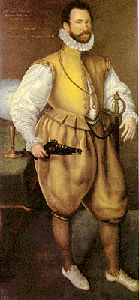
The first Thanksgiving by Europeans in North America was held by Sir Martin Frobisher and his crew in the Eastern Arctic in 1578. They ate a meal of salt beef, biscuits and mushy peas to celebrate and give thanks for their safe arrival in what is now Nunavut. They celebrated Communion and formally expressed their thanks through the ship’s Chaplain, Robert Wolfall. According to explorer Richard Collinson, Wolfall “made unto them a godly sermon, exhorting them especially to be thankefull to God for theyr strange and miraculous deliverance in those so dangerous places [sic].”
In New France the winter of 1604–05, a scurvy epidemic decimated the settlement at Île Ste. Croix. To prevent this from happening again, Samuel de Champlain founded a series of rotating feasts at Port Royal. They were called the Ordre de Bon Temps (“Order of Good Cheer”). Local Mi'kmaq families were also invited to attend. The first feast was held on 14 November 1606 to celebrate the return of Jean de Biencourt de Poutrincourt from an expedition. Having attended the festivities, Marc Lescarbot remarked that they consisted of “a feast, a discharge of musketry, and as much noise as could be made by some fifty men, joined by a few Indians, whose families served as spectators.”
This was 17 years before what is often recognized as the first American Thanksgiving — the Pilgrims’ celebration of their first harvest in Massachusetts in 1621. (It was also predated by several similar events in the New England colonies by at least 14 years).
The prototypical Thanksgiving feast featuring the uniquely North American turkey, squash and pumpkin was introduced to Nova Scotia in the 1750s. In 1763, the citizens of Halifax commemorated the end of the Seven Years’ War with a day of Thanksgiving. Loyalists who fled to Canada during the American Revolution brought the celebration with them to other parts of the country.
When and Why has Thanksgiving been Observed in Canada?
The first national Thanksgiving in Canada was celebrated in the Province of Canada in 1859. It was organized at the behest of leaders of the Protestant clergy. They appropriated the holiday of American Thanksgiving, which was first officially observed in the US in 1777. It was established as a national day of “public thanksgiving and prayer” there in 1789. It became an annual national holiday in 1863.
In Canada, the holiday was intended for the “public and solemn” recognition of God’s mercies. As historian Peter Stevens has noted, some citizens “objected to this government request, saying it blurred the distinction between church and state that was so important to many Canadians.” The first Thanksgiving after Confederation was observed on 5 April 1872. A national civic holiday rather than a religious one, it was held to celebrate the recovery of the Prince of Wales (later King Edward VII) from an illness.
Thanksgiving was first observed as an annual event in Canada on 6 November 1879. The date for each of the following years was determined annually by Parliament. It also set a unifying theme for which to give thanks. The theme usually concerned the harvest, though celebrations related to the British monarchy were also very common. The holiday occurred as late in the year as 6 December and even coincided several times with American Thanksgiving. The most popular date to observe Thanksgiving was the third Monday in October, when the fall weather is generally still amenable to outdoor activities.

Beginning in 1921, Thanksgiving and Armistice Day (introduced in 1919) were celebrated on the same day — the first Monday in the week of 11 November. To give more recognition to veterans, 11 November was set solely as Remembrance Day in 1931. Thanksgiving was again proclaimed annually and typically observed on the second Monday in October. It was not until 31 January 1957 that Parliament proclaimed the observance of the second Monday in October as “a day of General Thanksgiving to Almighty God for the bountiful harvest with which Canada has been blessed.” E.C. Drury, the former "Farmer-Premier" of Ontario, lamented later that “the farmers’ own holiday has been stolen by the towns” to give them a long weekend when the weather was better.
Differences among Provinces
Thanksgiving is an official statutory holiday in all provinces and territories except Prince Edward Island, New Brunswick and Nova Scotia. It is called Action de grâce in Quebec. However, it is celebrated to a much lesser extent there than in the rest of the country. The holiday’s Protestant origins and its strong association with British nationalism tended to alienate Catholic French Canadians.
The main differences among the other provinces tend to concern the dishes that are served with the meal. In Newfoundland, Jigg’s dinner (a salt meat stew derived from Ireland), is often preferred over turkey, scalloped potatoes are preferred over mashed, and cranberry sauce is used instead of gravy. In Western Canada, ham is sometimes served with or instead of turkey, and Brussels sprouts are a popular side. Many ethnic groups will often include some of their traditional dishes. For example, perogies and cabbage rolls are Thanksgiving staples for many Ukrainian Canadians. Indigenous people — some of whom see Thanksgiving as a celebration of indigenous foods (turkey, squash, corn, cranberries, etc.) that predate colonial settlement — will typically serve a side of bannock.
The real regional differences around Thanksgiving in Canada tend to concern the dessert. Pumpkin pie is still a staple in most of the country, but people in Quebec and Atlantic Canada tend to prefer apple pie or apple crisp. The pie of choice is often accompanied by different desserts in different regions. Ontarians love their butter tarts, while people out west favour Nanaimo bars.
The First Thanksgiving Disputed
Some have argued that the ceremony of giving thanks celebrated by Sir Martin Frobisher was not a “real” Thanksgiving. The argument stems from the reason for giving thanks; that the holiday can only be associated with the celebration of the harvest. Europeans who brought the tradition to North America did mark the day by giving thanks for a successful harvest. However, the Canadian and American holidays are no longer restricted to harvest activities. Thanksgiving has become a day for gathering family to give thanks for their general well-being. In that sense, one might observe that the tradition has come full circle.
(See also Editorial: The First Thanksgiving in North America.)