Share on Facebook
 Share on X
 Share by Email
 Share on Google Classroom
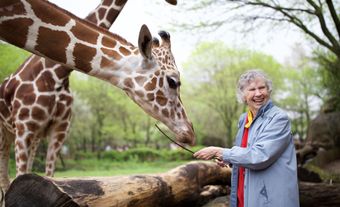
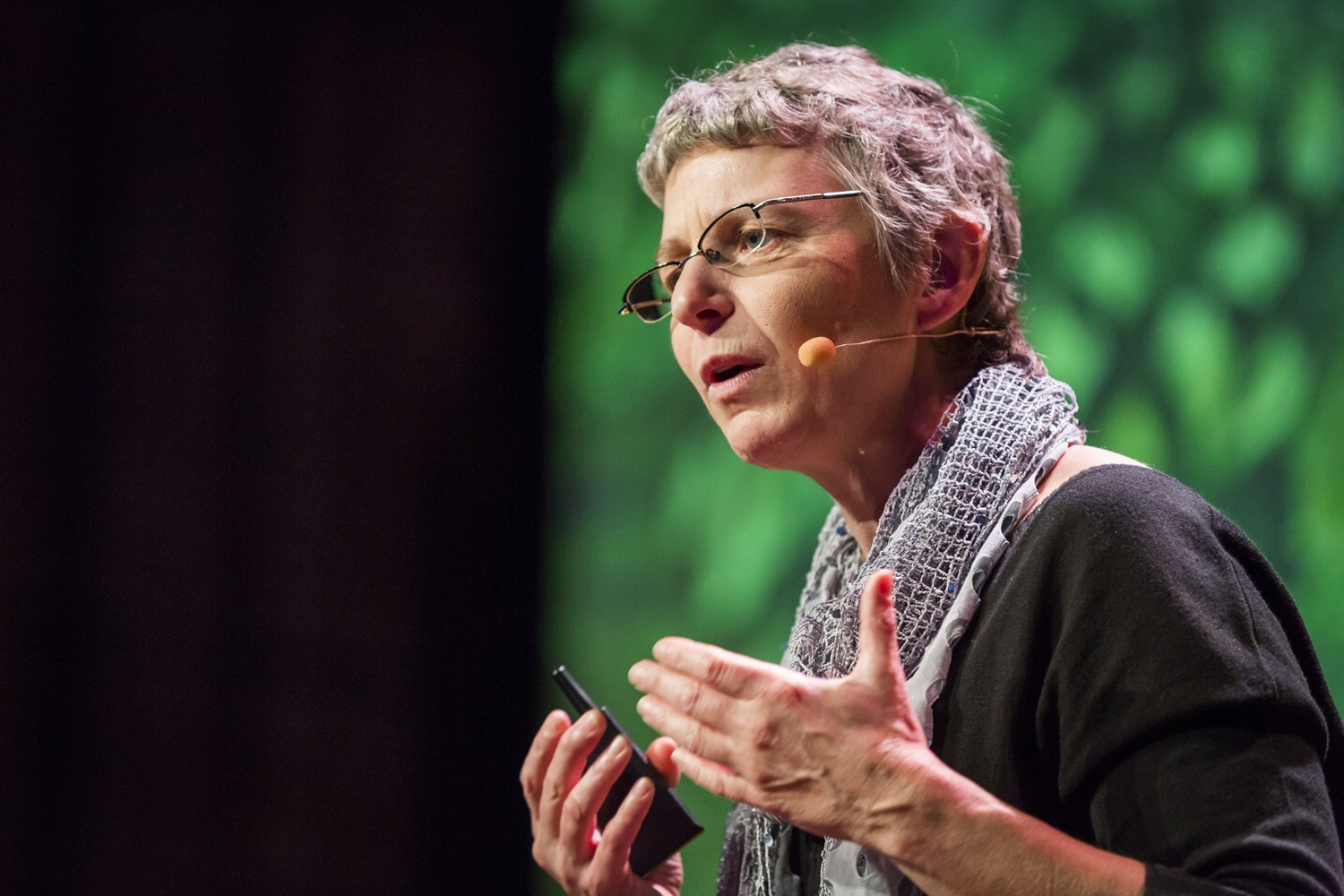
Suzanne Winette Simard, conservationist, educator, researcher (born 1960 or 1961 in BC). Simard’s innovative research on the ways trees cooperate, nurture, warn each other and share resources through the “wood-wide web” has garnered significant attention from the scientific community, filmmakers and Canadians across the country. Her 2021 book, Finding the Mother Tree: Discovering the Wisdom of the Forest, has changed popular understanding of forests, depicting them as vibrant, intelligent and resilient systems. In her book, Simard also wrote about her experiences as a woman in a male-dominated industry and her battle against breast cancer.
Education and Early Career
Suzanne Simard was born in British Columbia in 1960 or 1961, in the Monashee Mountains, where she spent time cataloguing the trees of the rainforests as a child. Hailing from a family of loggers, she began work with a commercial logging company. Her experience there, monitoring seedlings, led her to question whether young trees benefit from the resources of a diverse forest. This curiosity led her to obtain a Bachelor of Science in Forest Management, in 1983, from the University of British Columbia (UBC). She went on to pursue master's and PhD degrees in forest ecology from Oregon State University. Subsequently, she became a researcher with the BC Ministry of Forests.
Career Highlights
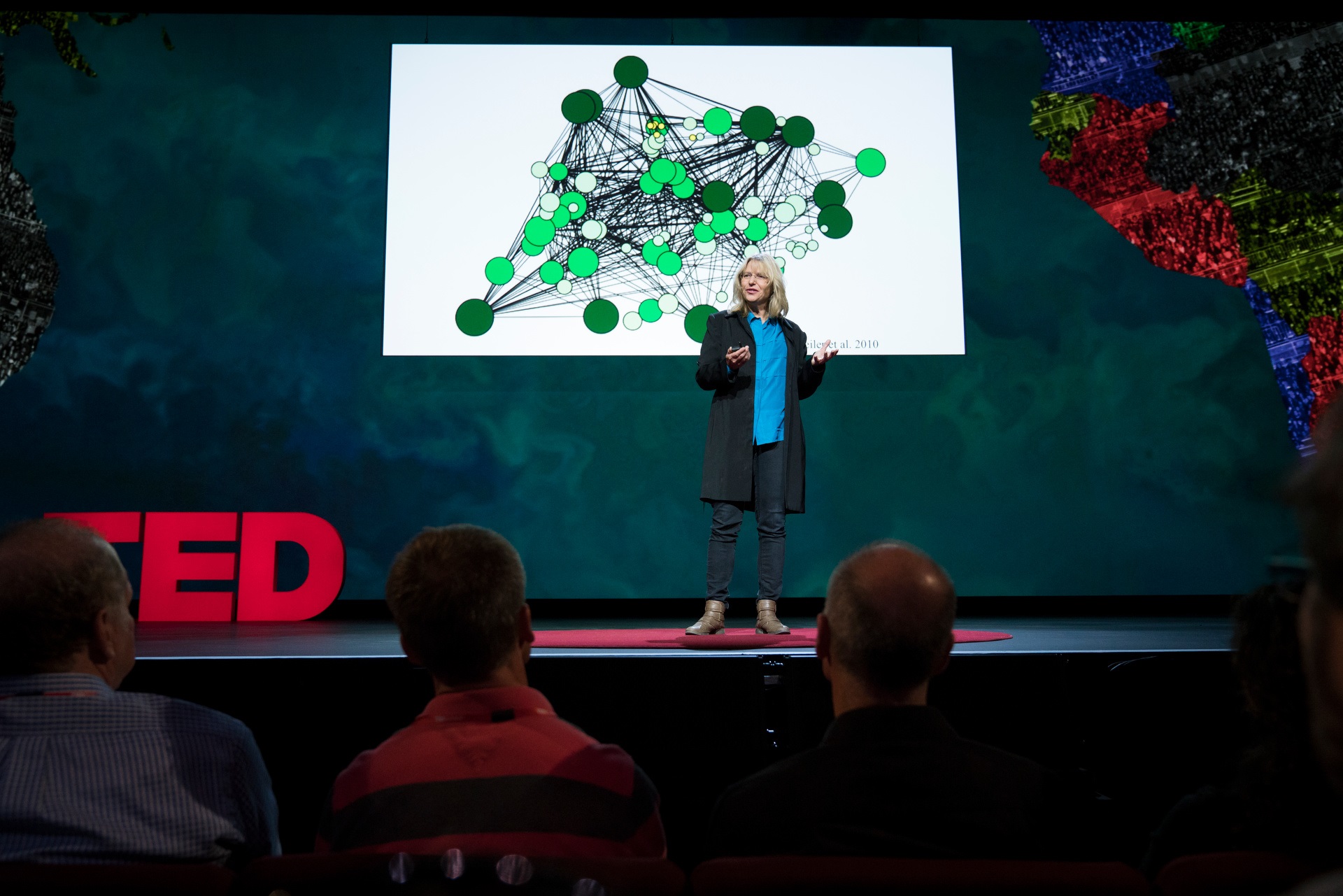
Suzanne Simard is currently a professor of forest ecology in the Faculty of Forestry at UBC. Throughout her career, she has published around 200 scientific articles on topics such as forest conservation, tree cognition, reciprocal relationships among wildlife, fungi, and plants in forests, and more. Her first and most popular book, Finding the Mother Tree: Discovering the Wisdom of the Forest, published in 2021, explores how trees have evolved to learn, cooperate, compete, recognize one another, adapt their behaviour, and warn each other of threats. She explains these concepts in her TED Talks. In 2015, Simard established the Mother Tree Project (MTP), an initiative that brings together academics, Indigenous communities, businesses and government agencies to conduct regenerative forest research for the protection of BC’s forests against climate change.
Activism and Community Work
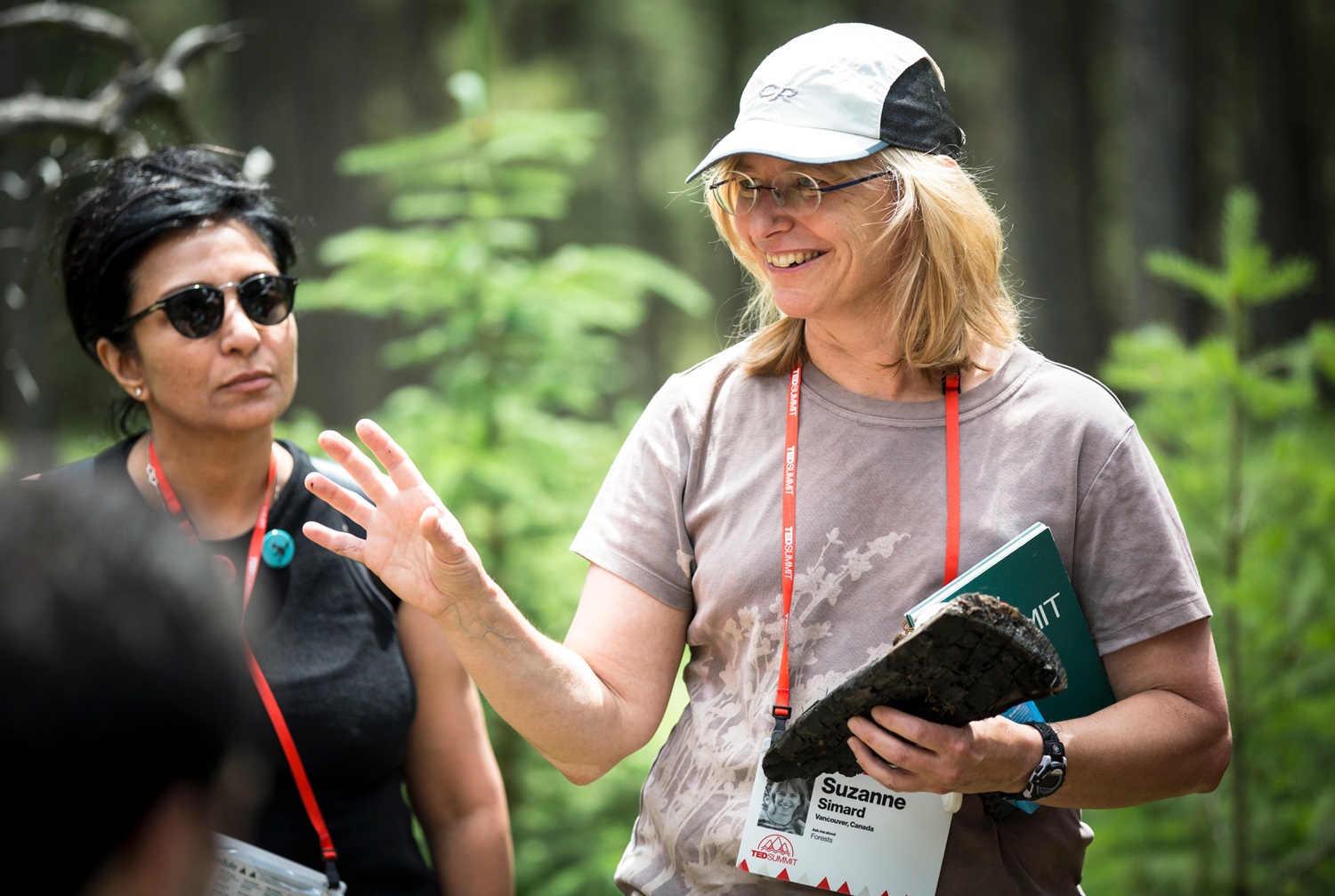
Suzanne Simard is an advocate for the recognition of forests as sophisticated, interconnected, cooperative systems that perform many intelligent functions: communicating, remembering, warning and learning. The forest network is known as the “wood-wide web.” Her work aims to transform the practice of forestry from simple clear-cutting logging operations to holistic and sustainable methods. The Mother Tree Project (MTP) is founded on the idea that interconnected forests are worthy of protection from climate change and intensive resource extraction. As a conservationist, Simard calls on society to increase involvement with local forests, reduce clear-cutting practices, preserve old-growth forests and tree networks, and regenerate forests with a diversity of tree species.
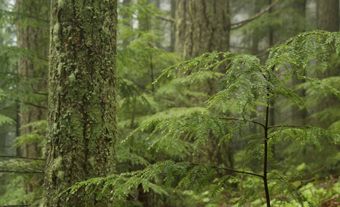
The MTP also works with communities, such as the Harrop-Proctor Community Forest in southeastern British Columbia. The Harrop-Proctor Community Forest is home to the Narrows Creek research site, an over 100-year-old stand of Douglas fir, western red cedar and western hemlock trees, which helps to evaluate the effects of timber harvesting and regeneration treatments on biodiversity in forests.
Legacy
Suzanne Simard’s seminal 1997 paper demonstrated the transfer of carbon (which functions as a nutrient) between birch and Douglas fir. This paper launched decades of research on tree communication and collaboration. Throughout her career, Simard faced numerous challenges: difficulty securing funding for her research, skepticism regarding her research, pushback from the male-dominated institutions in forestry and science, and breast cancer. Nonetheless, Simard’s legacy as an author, educator, scientist and woman in a male-dominated field remains significant. Some of the first tree plots she established in 1997 are still growing, and the Mother Tree Project (MTP) has now been active for over 10 years. She continues to publish research in the UBC Faculty of Forestry, and to inspire generations of scientists and science communicators. Her second book, titled When the Forest Breathes, is set to be published in March 2026.
Honours and Awards
In 2024, Suzanne Simard was recognized by Time magazine as one of the 100 most influential people in the world for her research on tree communication and the cooperative resilience of forests to disease (see Four Major Insect Pests of Forests in Canada), drought, wildfire and climate change. That same year, the Canadian Institute of Forestry awarded the Canadian Forestry Scientific Achievement Award to Simard for her “innovative and outstanding achievements in forestry research in Canada.” Her book Finding the Mother Tree has earned her four awards, including the Hubert Evans Non-Fiction Prize, awarded in 2022. Furthermore, the Canadian Botanical Association awarded Simard the Lawson Medal in 2022 for lifetime achievements and cumulative distinguished contributions with a notable influence on Canadian botany. TED Talks has featured Simard several times.
“The trees, Simard teaches us, are talking. It is our job to start listening.”
– Jeffrey Kluger, Time magazine