Share on Facebook
 Share on X
 Share by Email
 Share on Google Classroom
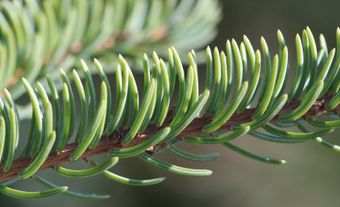
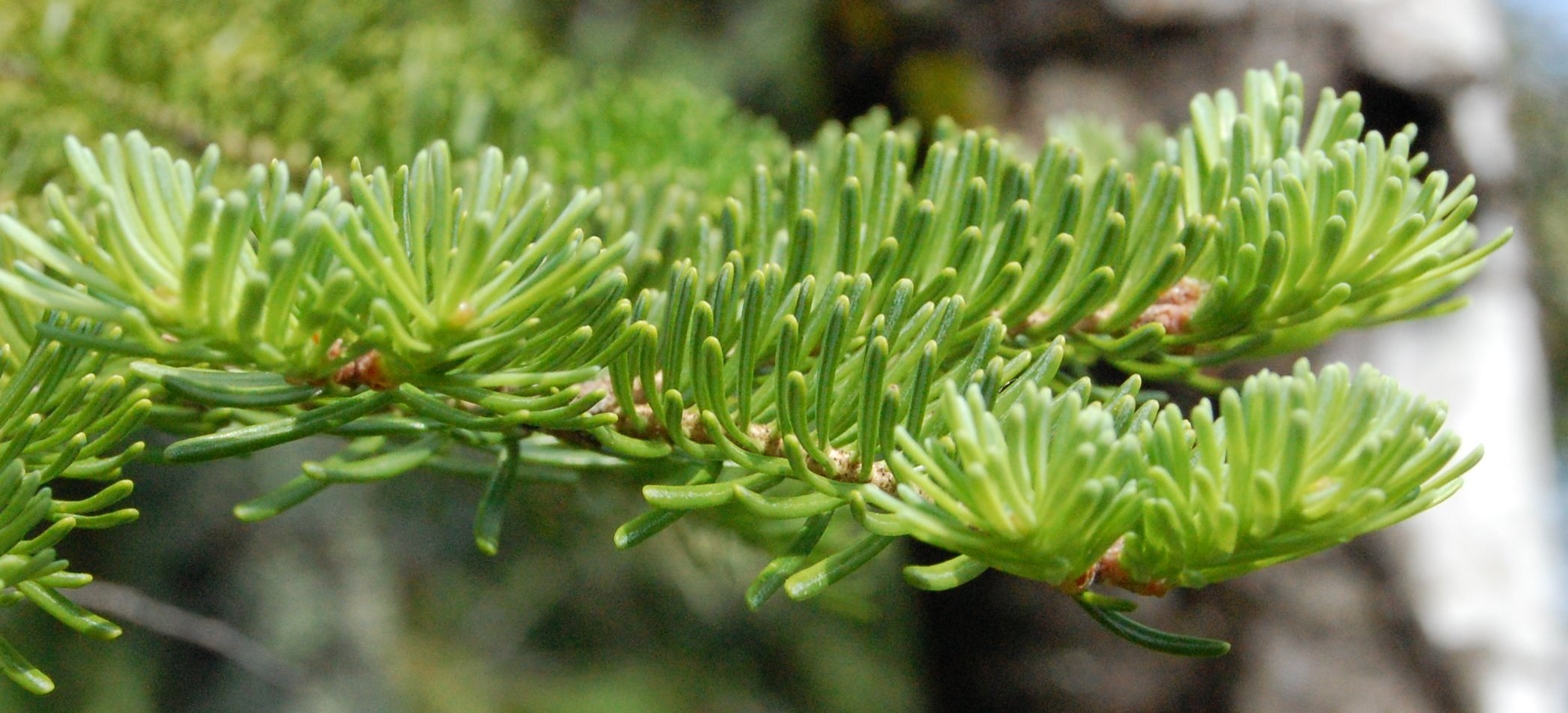
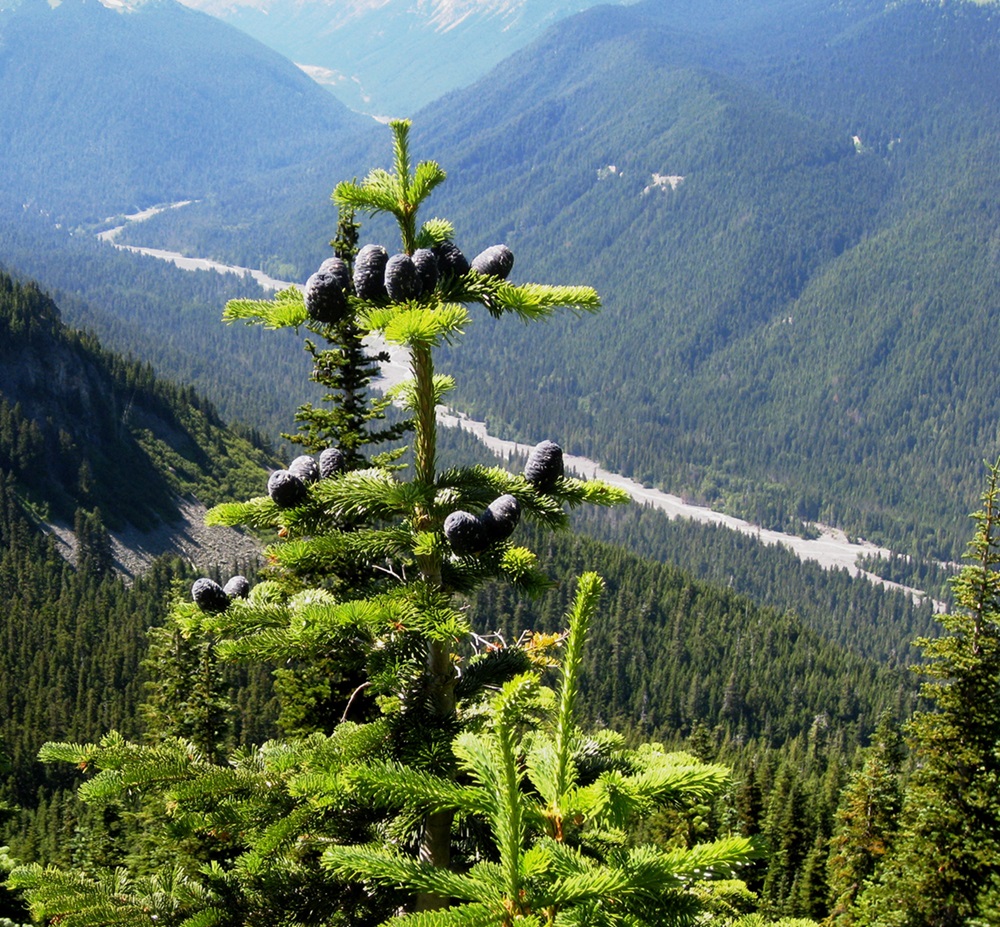
Fir trees (Abies) are conifers within the Pinaceae family. While about 50 species of fir are found worldwide, only four are found in Canada. Two fir trees act as provincial or territorial emblems: the balsam fir in New Brunswick and the subalpine fir in Yukon. Firs can often be identified by their straight trunks, soft and flat needle-like leaves, and their cones, which stand vertically on the branches. Contrary to popular belief, Douglas firs are not considered true firs and fall under their own genus Pseudotsuga.
Canada’s Fir Trees
|
Species |
Description |
Habitat and Range |
|---|---|---|
|
Abies amabilis Amabilis fir
(also known as Pacific silver fir) |
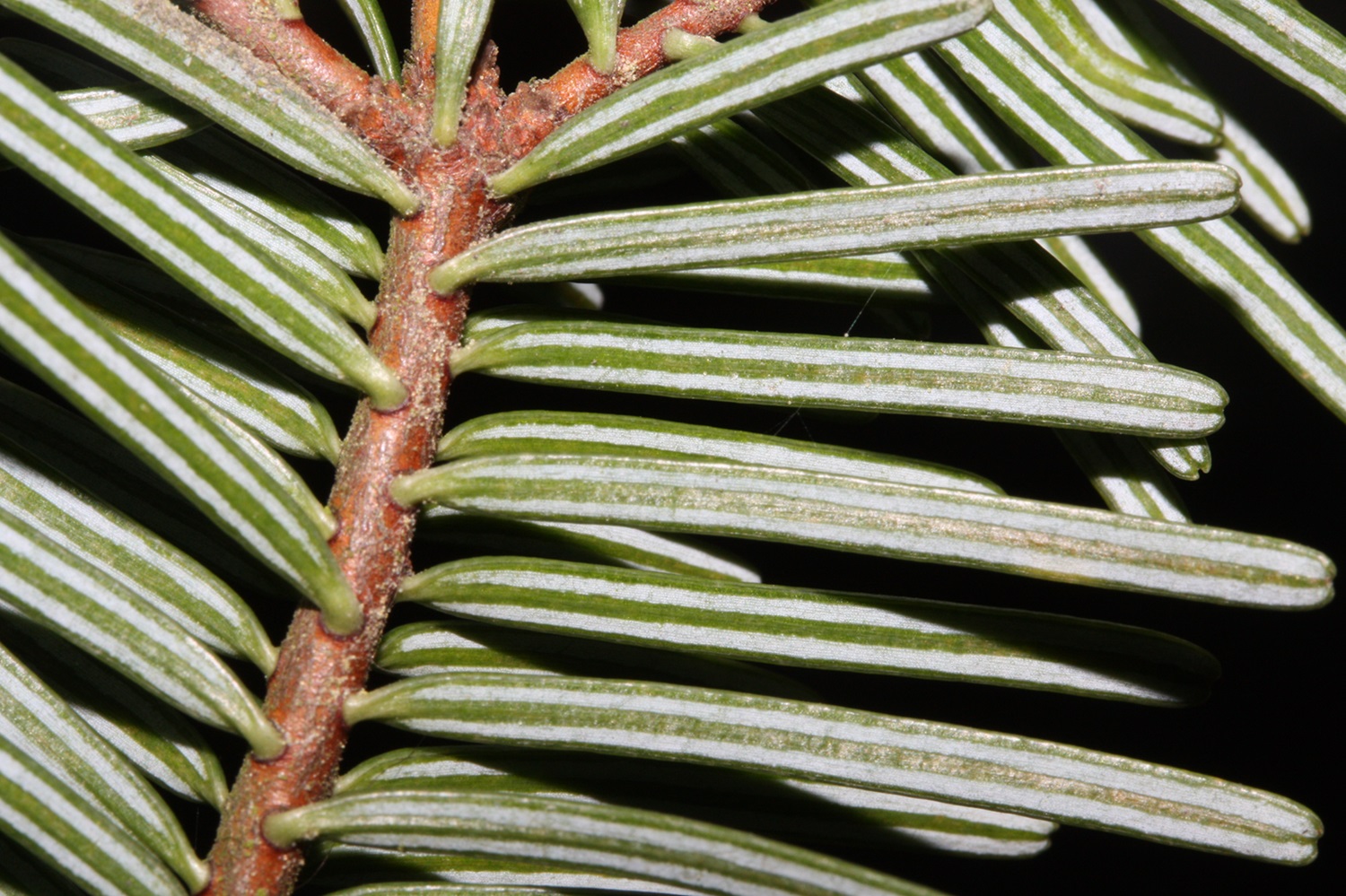
The amabilis fir grows to 40 m and lives for 300 years. The leaves are thin and have a notched tip, smelling like an orange when crushed. They are a shiny dark green, and lined with white dots along the lower surface. The light-grey bark is smooth and becomes scaly as it ages. The inner wood is soft and pale. |
This fir is found on the west coast of British Columbia in subalpine climates. It thrives in a variety of soils and is shade-tolerant. |
|
Abies balsamea Balsam fir
(also known as Canada balsam) |
The balsam fir can grow up to 25 m and can live for 150 years. The leaves can be round or notched at the tip and form in two lines on either side of the twig. The upper side is dark green, and the bottom is covered in 10–12 lines of white dots. The barrel-shaped cones stand upright on the branches. The bark, smooth and grey when young, becomes scaly and brown as it ages, and is often covered in resin blisters. The inner wood is soft and white. |
This fir reaches from Alberta to the East Coast, largely in northern forests. It grows in a variety of soils and climates, and is often found with other trees in the Pinaceae family. |
|
Abies grandis Grand fir
(also known as lowland fir) |
The grand fir can grow up to 40 m along the coast but can reach 75 m on Vancouver Island. It can live up to 250 years. The dark-green leaves have a notched tip and grooved along the top surface. They are shiny and dark green, with white dots lining the underside, and smell of citrus when crushed. The bark is smooth when young but develops scales and ridges when older. The wood is soft, weak and light brown. |
This tree is found in southern British Columbia, both along the coast and inland. It thrives at lower elevations in nutrient-dense, well-drained soil. |
|
Abies lasiocarpa Subalpine fir
(also known as alpine fir) |
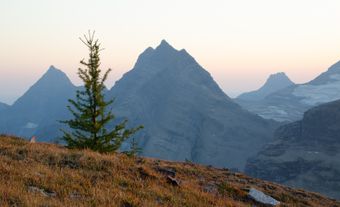
The subalpine fir can grow up to 30 m tall and live for 200 years. The leaves are greyish- to bluish-green with notched or rounded tips. White dots line the bottom surface of the leaves. The cones stand upright on the branches and are seed-abundant. The bark is smooth but develops scales as it ages. When young, the bark is ash-grey and becomes greyish-brown when older. The wood is soft and pale. |
This tree is found in British Columbia, western Alberta and Yukon. It is found in a variety of soils and grows in high altitudes between 600–2,000 m. |
Wildlife
Fir trees are used as food and shelter sources for many animals. Especially in the winter, these trees provide valuable shelter for wildlife like rodents and ungulates to stay warm. Both large and small animals feed on the seeds, bark and wood of certain fir trees, including moose, deer, squirrels and grouse.
Indigenous Peoples
Firs like the balsam fir are widely used for their medicinal properties to heal colds, aches and pains. Needles are often boiled into tea for consumption. Certain coastal Indigenous communities use fir tree knots to make fishhooks and the resin to create a secure grip on paddles.
Uses
Since fir wood is soft and weak, it is often used for pulp and lightweight construction lumber like particle board and plywood. The balsam fir is considered one of the most popular choices for Christmas trees due to its strong scent and ability to hold onto its leaves after being cut down.
Threats
The fir engraver beetle is one of the most common insects to use firs as their hosts. They primarily occur in the western United States but extend south into Mexico and north into southern British Columbia. Native to North America, these insects burrow into the wood and live there until adulthood, when they exit the tree to find a new host. Their damage results in foliage discolouration, turning the leaves from green to orange, and the eventual death of the tree.
Other insects, like the poplar-and-willow borer and the pale-winged grey, can also use fir trees as hosts, but it is less common.
Firs are also susceptible to multiple pathogens and fungi, such as fir broom rust, fir needle cast and fir-ostrich fern rust. Depending on the pathogen, the infection can result in limb loss, growth deformation or foliage discolouration. These pathogens can make the trees even more susceptible to insects and wildfires.
None of the four fir species in Canada are listed as at risk by the Committee on the Status of Endangered Wildlife in Canada (COSEWIC).