Share on Facebook
 Share on X
 Share by Email
 Share on Google Classroom
In the early 20th century, the Canadian school system was organized according to the two main Christian denominations. Since the schools were Catholic or Protestant, the enrolment of Jewish children gave rise to fierce debates, particularly in Montreal. In 1901, Jacob Pinsler was awarded a high school scholarship, but was ultimately denied on various grounds, including the fact that he was Jewish. In response, Pinsler’s parents, who were representatives of the Jewish community, filed an unsuccessful lawsuit. These events contributed to the amendment to the Public Education Act in 1903. (See Jewish School Question.)
Organization of Education in the Late 19th Century
Under section 93 of the British North America Act, the organisation of education in Quebec was based on religious criteria. School boards and the public schools they managed had to be either Protestant or Catholic.
In 1869, to secure funding of schools, the National Assembly of Quebec passed a law introducing a property tax in Montreal and Quebec City. The Protestant Board of School Commissioners of the City of Montreal (PBSCCM) was financed through taxes levied on Protestant property owners. At the same time, this school board entered into an agreement with the Jewish community to take charge of the education of Jewish children. This meant that the taxes paid by Jewish property owners would be paid to this school board.
At that time, most parents of the Montreal Jewish community owned their homes. In addition, the Jewish population remained small and the number of students was not particularly high. The agreement was therefore particularly advantageous for the PBSCCM.
Jewish Immigration and the Education Issue
Towards the end of the 19th century, the persecution of the Jewish communities in the Russian Empire led to significant levels of immigration. (See also Antisemitism in Canada.) Thousands of Jews from this region began to settle in Canada, mainly in Montreal, Toronto and Winnipeg. In 1881, the Jewish community of Montreal consisted of only 814 people. It had grown to nearly 2,500 people by 1891, and rose even more to about 7,000 in 1901.

This population growth meant a significant influx of Jewish children into the schools of the Protestant Board of School Commissioners of the City of Montreal (PBSCCM). Unlike the members of the Jewish community who settled in Montreal from the 18th century onwards, the parents of this wave of immigrants generally did not own the homes in which they lived.
The growing number of Jewish students whose parents did not own property, renewed the debate over the PBSCCM’s responsibility for Jewish children. The PBSCCM’s attitude towards the Jewish community and the Jewish children who attended its schools changed profoundly. The PBSCCM commissioners questioned the agreement that made them responsible for schooling Jewish children. Thus, the representatives of the Jewish community had to renew their efforts to demand that Jewish children have the same rights as Protestant students in terms of education. The Pinsler Case is a powerful example of this situation.
Pinsler Case
The Pinsler Case arose from a decision made by the Protestant Board of School Commissioners of the City of Montreal (PBSCCM) at the start of the 1901-02 school year. At that time, the education of Jewish children had become a financial burden rather than a source of revenue for the school board. The PBSCCM commissioners therefore decided to no longer award them scholarships. However, Protestant children remained eligible for scholarships. Representatives of the Jewish community denounced the decision in the Jewish Times newspaper. They believed the school board’s decision contravened the British Constitution, which was meant to ensure equality for all.
In 1901, Jacob Pilsner, a young Jewish student, was refused a scholarship that would have allowed him to attend secondary school for free. His father decided to challenge the decision. He was represented by Samuel Jacobs, a Jewish lawyer involved in the community. Jacobs filed a court order to reverse the situation. As British subjects, members of the Jewish community believed that they were entitled to the same rights as Protestants and Catholics.
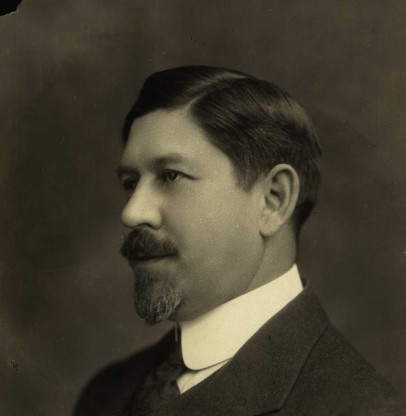
However, in the specific Canadian context, the courts gave precedence to section 93 of the British North America Act. This article guaranteed the rights of Catholic and Protestant religious minorities only. This decision went against the Pinsler family. In addition, the courts affirmed that access to Protestant schools was not a right, but a privilege. However, this brought to light that there was need for a better framework for the education rights of religious minorities.
In February 1903, Pinsler was denied the scholarship that was supposed to be awarded to him on the basis of the excellent results obtained in his exams.
Implications
The Pinsler Case revived the debate on the education of Jewish children. This debate was marked by tensions between the Protestant Board of School Commissioners of the City of Montreal (PBSCCM) and the Catholic School Board over each of their responsibility in this regard. The proposal to create a Jewish school board, which did not come to fruition, was widely discussed. (See Jewish School Question.)
A few days after the court's decision, the Jewish community organized itself and formed a committee to negotiate with the Protestant commissioners. This meeting led to the adoption of an amendment to the Education Act in April 1903 which stipulated that in terms of education, members of the Jewish community were integrated into the Protestant system. Thus, the PBSCCM was required to continue to collect the school tax from Jewish property owners to admit Jewish children to its schools. This law also had the effect of protecting Jewish children’s freedom of conscience.
The Pinsler Affair bears witness to the inequalities experienced by Jewish communities at that time and to the efforts of community leaders to ensure equality and respect for rights.