Share on Facebook
 Share on X
 Share by Email
 Share on Google Classroom
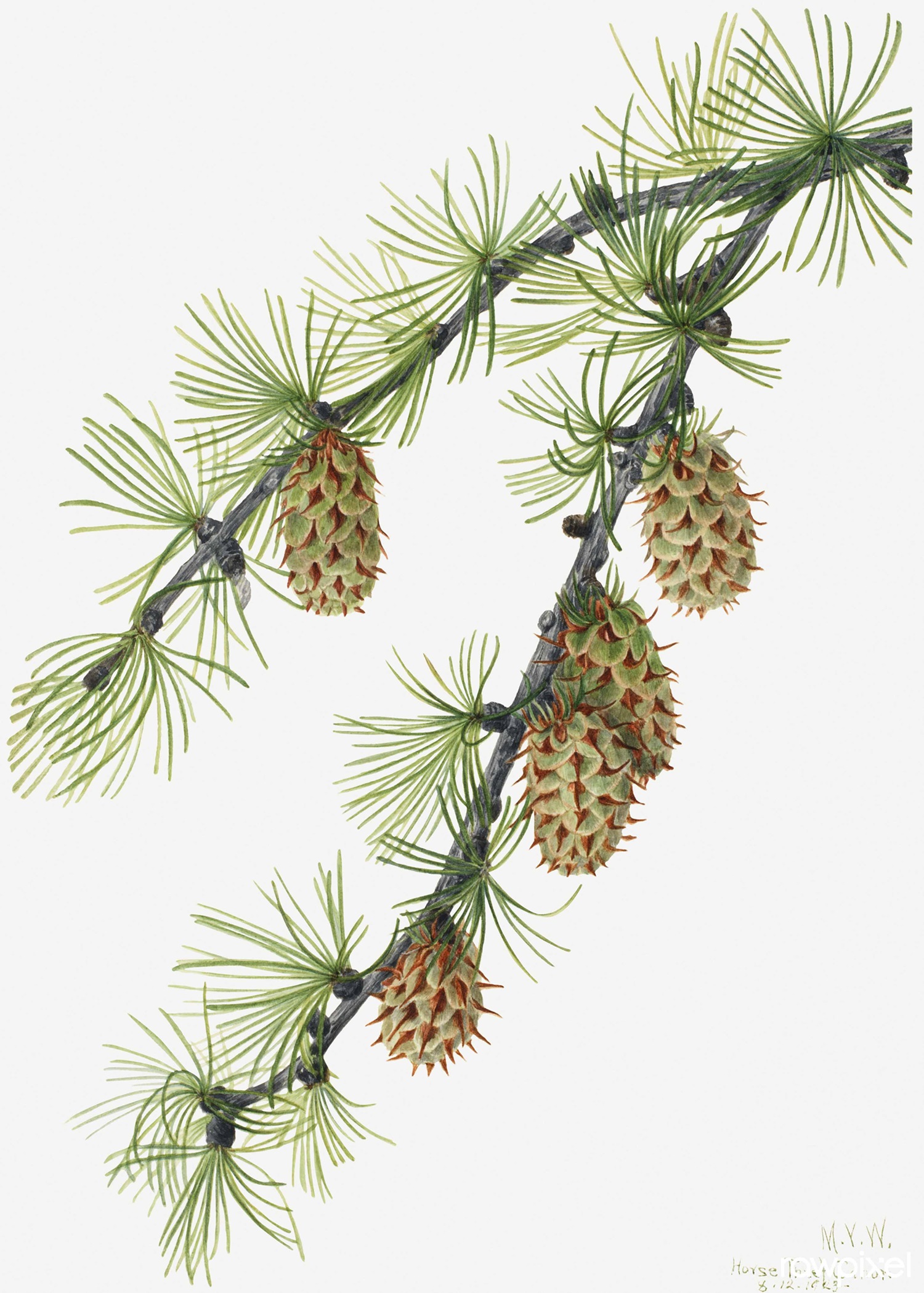
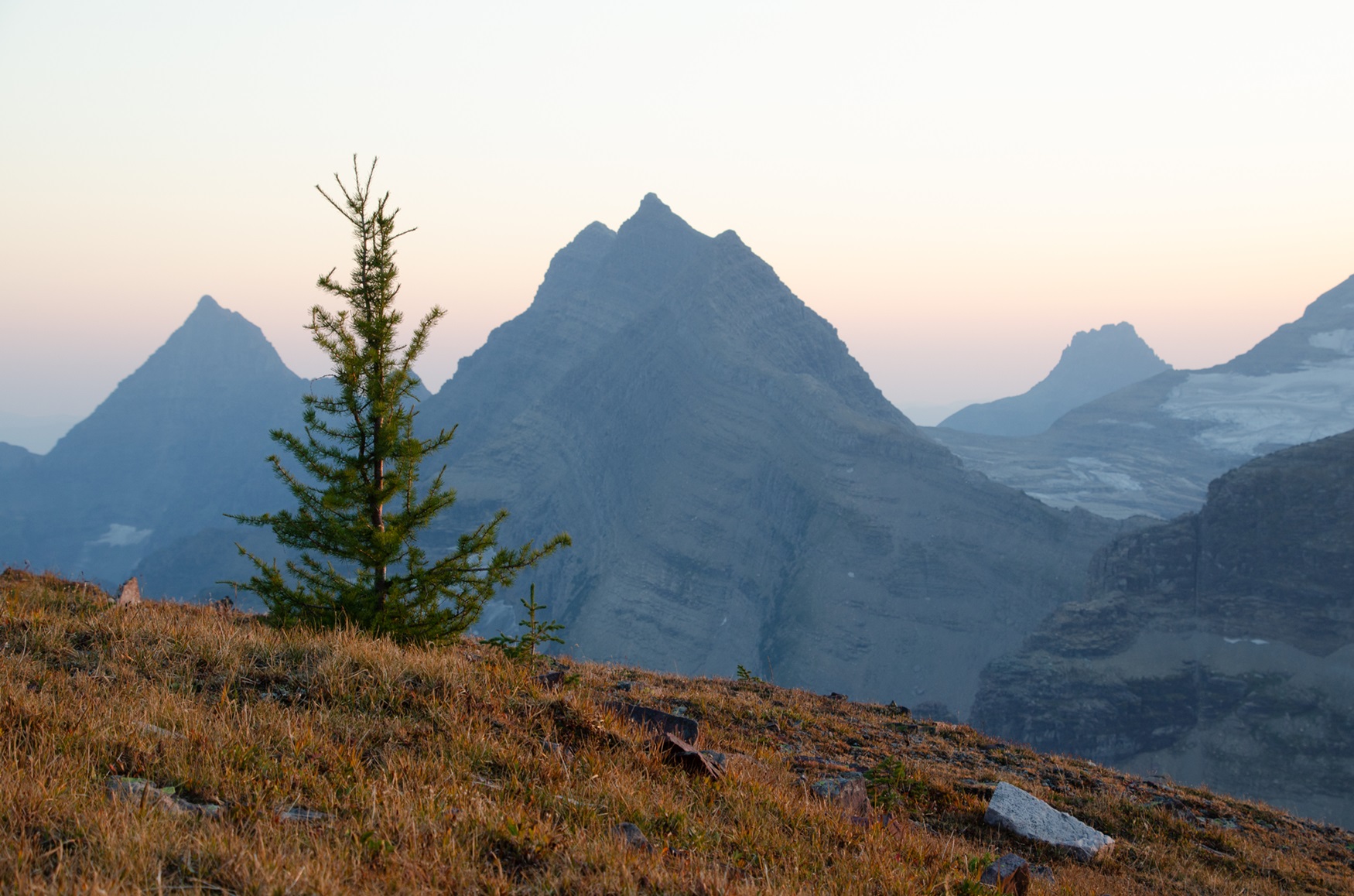
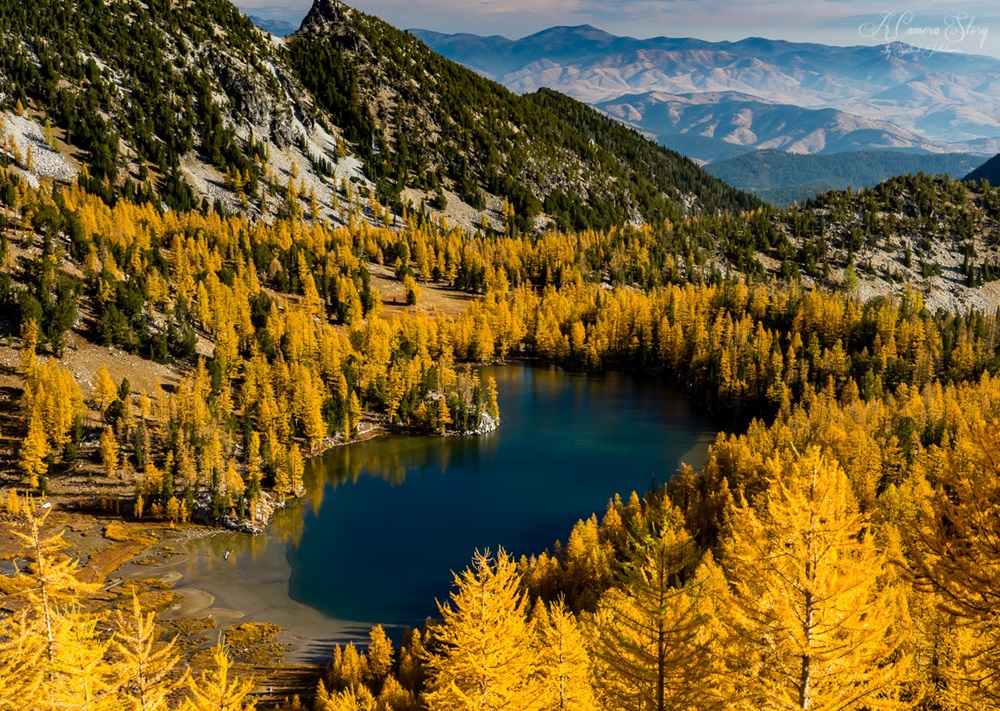
Larch trees (genus Larix) are conifers in the family Pinaceae. There are 10–12 species of larch worldwide, all of which grow in the northern hemisphere. Three among these grow in Canada: subalpine larch, tamarack and western larch. They are Canada’s only deciduous conifers, meaning they shed their needles in the fall. Before shedding, their needles turn a vibrant golden yellow, making them easily identifiable and attracting visitors from around the world (see Autumn Colours). The Northwest Territories designated the tamarack as their territorial tree emblem in 1999.
Canada’s Larch Trees
|
Species |
Description |
Habitat and Range |
|---|---|---|
|
Larix lyallii Subalpine larch
Also known as alpine larch, Lyall’s larch or timberline larch |
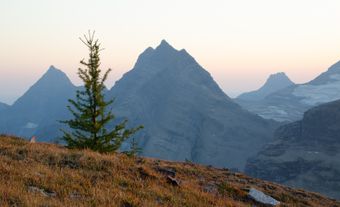
The subalpine larch typically lives for 400–500 years, but can reach up to 700 years old. Some of the oldest of this species may be over 1,000 years old (see Oldest Trees in Canada). They grow to 15 m tall with a sturdy, straight trunk. Their needles are a pale blue-green, forming in dense bundles along the twigs. The bark is smooth and grey when young, becoming scaly and reddish as it ages. The crown is ragged, with branches placed irregularly along the trunk. It has a deep root system, making them extremely wind tolerant. |
This species grows best at high elevations, between 1,500–3,000 m, often forming the alpine tree line. It is very shade-intolerant and grows in acidic or rocky soils. It is found in southern British Columbia and Alberta, often in boreal forest throughout the Rocky Mountains. |
|
Larix laricina Tamarack
Also known as Alaska larch, American larch, eastern larch or hackmatack |
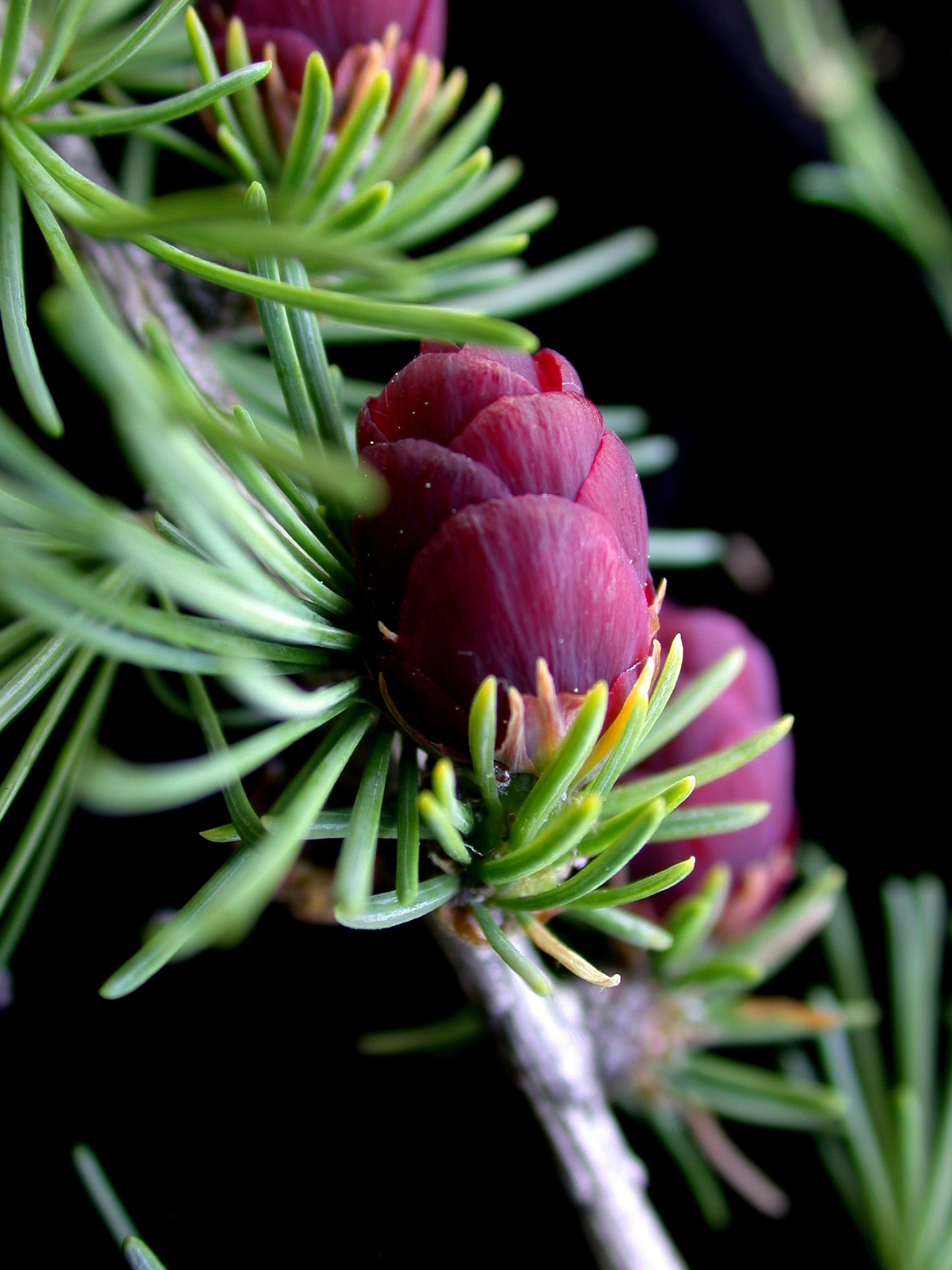
The tamarack lives for 180 years and can grow to 25 m in favourable conditions. The needles are bluish-green and grow in bundles of 10–30. The bark is grey and smooth when young, then becomes scaly and reddish-brown as it ages. The trunk is straight and narrow, and the crown is conical, but becomes irregular with age. |
This tree is found in wet, poorly drained soils like bogs or swamps (see Wetlands in Canada), and thrives in well-drained, moist soils. It is widely distributed throughout every province and territory in Canada. |
|
Larix occidentalis Western larch
Also known as western tamarack |
The western larch can live for 900 years and grows up to 80 m. Its needles are a shiny pale green and grow in bundles of 15–30. The bark is scaly and reddish-brown from a young age and can grow to be 15 cm thick. The trunk is straight and remains branch-free near the lower third of the tree. The crown is narrow and short. |
This tree thrives in well-drained, moist soils at low to mid-level elevations. It grows well following a wildfire, but is very shade-intolerant and sensitive to frost damage. It is found in southeastern British Columbia and reaches into southwestern Alberta. |

Wildlife
Larches are not a primary food source for wildlife, but many animals still browse on the trees. Smaller animals like squirrels eat the seeds and cones from the tree, while larger animals like deer and elk snack on the fallen needles and lower-hanging branches.
While many birds use larch trees for food and nesting, woodpeckers rely heavily on them for foraging and nesting and are often found living in hollowed-out sections of the trunks.
Indigenous Peoples
Larch trees are highly versatile, and Indigenous peoples have used them for centuries.
The sap of the tree can be harvested by hollowing out cavities in the trunk. After the sap has naturally collected and concentrated within the hollowed-out section, it can be used as a sweet drink or boiled down into syrup.
The tamarack has medicinal properties, as its bark, roots and needles can be used to help treat coughs and colds. The bark is also useful for treating burns.
As larch wood is very hard and sturdy, Indigenous peoples have historically and contemporarily used it to build toboggans, snowshoes and canoes.
Did you know?
Larches are pioneer species, meaning they are often among the first to grow back after a natural or human-made landscape disturbance, such as wildfire or logging. The tree is incredibly resistant to fire, wind and exposure, allowing it to bounce back quickly in poor soils and barren lands.
Uses
Western larch and tamarack wood is heavy, dense and durable, making it ideal for many construction purposes. From pulpwood and lumber to poles and crates, the wood is very versatile. It is also used for railroad crossties and mine timbers.
The wood can also be visually appealing and is used for interior decoration and flooring.
Threats
Larch trees can be susceptible to invasive species, such as the larch casebearer (Coleophora laricella) and Lachnellula willkommii, which causes European larch canker. The eastern larch beetle, a native insect, infects tamaracks in every province and the Yukon. When a tree is infected, the needles will discolour, starting at the bottom of the crown. Trees already under stress from flooding, fire, drought or logging are more susceptible to eastern larch beetle infection. Oftentimes, infected trees will fail to produce needles the following year, eventually leading to their death (see Four Major Insect Pests to Forests in Canada).
Many other insects and fungi infect larches and can damage stands.
Did you know?
Larch trees are known for their longevity. In E.C. Manning Park, British Columbia, there may be some subalpine larches that are nearly 2,000 years old (see Oldest Trees in Canada).