Share on Facebook
 Share on X
 Share by Email
 Share on Google Classroom
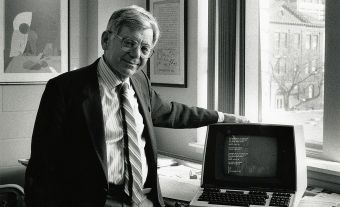
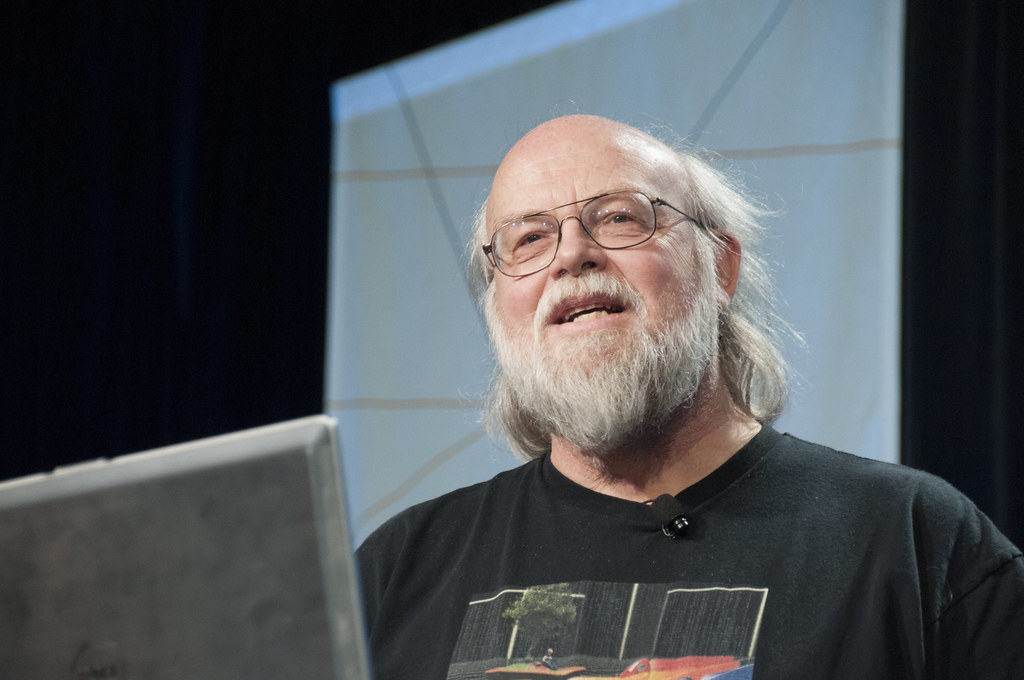
James Arthur Gosling, OC, computer scientist, software engineer, executive (born 19 May 1955 in Calgary, AB). James Gosling is known as the “father of Java” for developing the versatile Java programming language that underpins many modern computer devices and software. (See also Technology; Computer Science.)
Background
James Gosling’s mother, Joyce, was a high school home economics teacher, while his father, Dave, dabbled in a variety of fields, including organizing the logistics of geological expeditions in northern Canada. Much of his family was involved in farming.
A key value he learned growing up was hard work. “One of the things that I later realized was peculiar was in my extended family, there was essentially nobody who had a career,” he reflected in a 2019 interview with the Computer History Museum. “I never had this view that I need to get the next promotion, and getting promoted was never a thing for me because in my extended family, it was kind of like, well, you had a good year, you had a bad year?”
Gosling described himself as “a ridiculously geeky kid.” From an early age, he enjoyed playing with old farm equipment on his grandfather’s farm. As his family could not afford to buy parts for electronics projects, Gosling dumpster-dived for materials he could use to tinker with, building his first computing device from items thrown out by a phone company.
Education
While attending William Aberhart High School in Calgary, James Gosling was taken on a tour of the University of Calgary’s computer facilities by a friend of his father’s. “I was just hooked,” he recalled in a 2025 interview with The New Stack. As he lived near the university, he was easily able to bike or walk over and figured out the passwords to access labs and libraries, where he taught himself programming (see Computer Science). Despite his young age, Gosling was large enough to pass as a university student.
Gosling was hired by the university’s physics department when he was still in high school to work on data processing software for the ISIS-II satellite, which was collecting data on the aurora borealis (northern nights). Though he cut his high school classes to perform this work, his teachers accepted his absences as being beneficial to him and knew exactly where he was.
After Gosling officially enrolled as a student in the university’s computer science department, his professors encouraged him to continue his side work. He received his BSc in 1977 after the department head arranged to have his lack of elective courses overlooked.
Gosling moved on to graduate work at Carnegie Mellon University in Pittsburgh, Pennsylvania. Gosling’s work at Carnegie Mellon revolved around programming for the UNIX operating system. His final doctoral thesis was “The Algebraic Manipulation of Constraints” (1983).
Sun Microsystems and Java
James Gosling worked for just over a year and a half at IBM Research, where he felt the company was “dedicated to shooting themselves in the foot.” (See also International Business Machines Corporation (IBM).) In 1984 he joined Sun Microsystems, where he found an atmosphere that encouraged creativity, fun and technical excellence.
His first major project for Sun was NeWS (Network extensible Window System), which would allow any computer screen to display programs running on other computers within its network. Though it was unsuccessful commercially, it showed the potential for distributing computer processing power across a network.
The programming language that became Java evolved out of a failed project in the early 1990s to create interactive televisions for consumers. It was initially called Oak, after a tree that sat outside his office window. When lawyers found many potential conflicts with the proposed name, meetings were held to come up with a suitable replacement. Gosling disliked the initially favoured name, Silk, because it reminded him too much of spiders.
When the television project faltered, Sun executives saw possibilities for the language with the emergence of the internet. Gosling believed that Java needed to be programmer-friendly to improve the extent that it could be used.
Java created plenty of excitement in the computer industry because it could be used on any of the major operating systems of the mid-1990s. When it proved successful, Gosling was dubbed “the world’s greatest programmer.” The attention Gosling received reportedly made him feel like a rock star.
Among the titles Gosling held at Sun were chief technology officer of the company’s developer products and Client Software Group. He developed carpal tunnel syndrome in the late 1990s and, for a time, was unable to work as a programmer. During this period, he travelled to conferences and speaking engagements to promote Java.
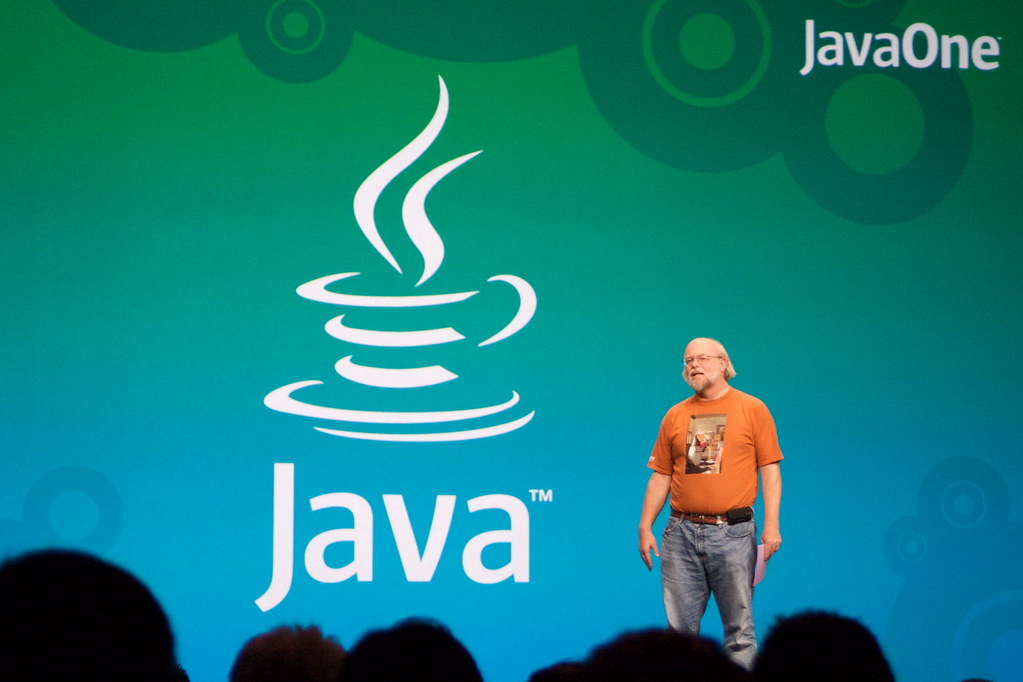
Gosling was called as a witness by the United States government during its anti-trust lawsuit against Microsoft in 1998. In his 35 pages of written testimony, Gosling noted that one of the reasons he created Java was to free programmers from being limited by platform-specific software. He noted that Microsoft had retooled Java for Windows in ways that made it incompatible with the standard version produced by Sun.
Reflecting on the legacy of Java in 2025 with journalist Darryl K. Taft, Gosling observed that the language was “never about being stylish” but being practical. “It was always about being effective in getting the job done, helping engineers get their job done.”
Post-Sun
Shortly after Sun Microsystems was purchased by Oracle, James Gosling left the company in 2010 after 26 years of service. His reasons included a pay cut, diminished responsibilities and the new ownership’s micromanaging. “All of our authority to decide anything evaporated,” he noted in a 2010 interview with eWeek. He also found the new owners “ethically challenged.”
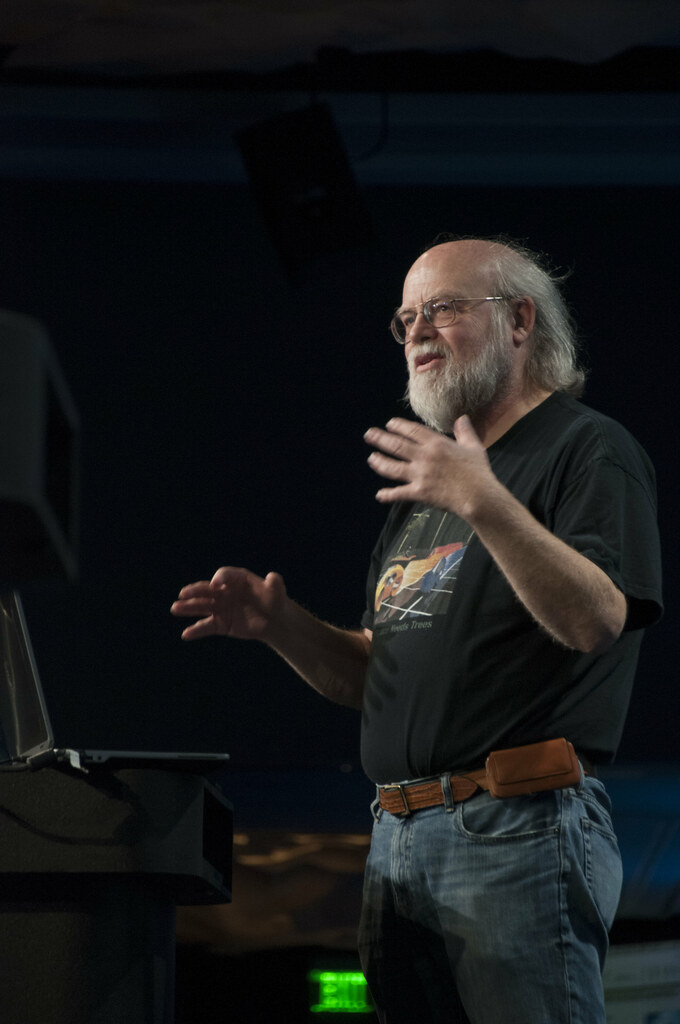
After a brief stint at Google, Gosling worked as chief software architect for Liquid Robotics, where he worked on control systems for robots used for oceanographic research, including monitoring temperatures in the polar regions. (See also Robotics in Canada.) He left after the company began developing products with defensive applications.
In 2017, Gosling joined Amazon Web Services as a distinguished engineer. His primary project was AWS IoT Greengrass, which was a platform used for the rapid development and deployment of IoT software.
Gosling announced his retirement in July 2024. As he noted on his website, “I will be doing a little consulting, but not enough to get in the way of fun.”
As for the future, Gosling believes that computer programming will continue to be an essential skill. In a 2025 interview for The New Stack, he shared, “If I had a young kid today, I would absolutely be teaching them programming. Even if AI takes over, people have to understand how their systems work.” (See also Artificial Intelligence (AI) in Canada.)
Honours and Awards
- Innovation Award, The Economist (2002)
- Officer, Order of Canada (2007)
- Fellow, Association for Computing Machinery (2013)
- IEEE John von Neumann Medal, IEEE Board of Directors (2015)