Share on Facebook
 Share on X
 Share by Email
 Share on Google Classroom
The Geological Survey of Canada (GSC) was established in 1842 and played a significant role in the early geological surveying of Canada. Yet, it wasn’t until 1909 that Alice Wilson became the first Canadian female geologist. Systemic barriers prevented many women from receiving university degrees and pursuing science-related careers. Pioneers in their fields, Alice Wilson and, later, Diane Loranger, Helen Belyea and Frances Wagner helped open the doors for women to work in geology in Canada.

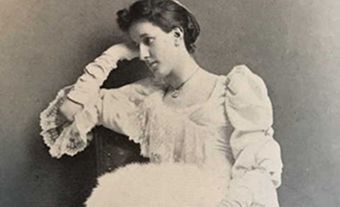
Alice Wilson (1881–1964)
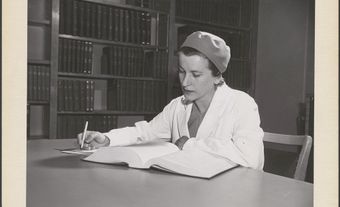
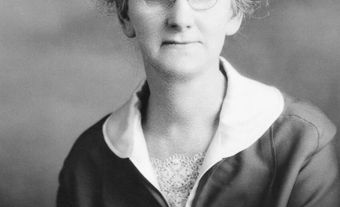
Educated at the universities of Toronto and Chicago, Alice Evelyn Wilson spent her entire professional career, from 1909 to 1946, with the Geological Survey of Canada. She was Canada’s first female geologist and the recognized authority on the fossils and rock of the Ottawa-St. Lawrence Valley.
While she did rise through the ranks of the GSC, her ascent was more gradual than that of her male colleagues. In 1920, she was promoted from clerk to assistant paleontologist, and in 1926 to assistant geologist (“geologist” was considered a higher designation). In 1940, six years before her retirement, she was promoted to associate geologist.
Wilson’s work focused on invertebrate fossils found throughout Canada from the Paleozoic era (252–541 million years ago) and in Ontario from the Ordovician period (444–485 million years ago). She also studied the stratigraphy (i.e., rock layers) of Ontario and Quebec, and initiated studies of Ordovician fauna in the Rocky Mountains and the Arctic (see Geological History of Canada).
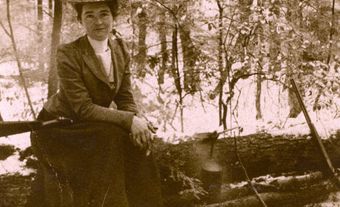
While she wanted to conduct fieldwork, the Survey would not allow her to travel to remote locations with male colleagues (the survey generally barred women from conducting fieldwork until 1970). Instead, she convinced them to let her make short, solo trips into the relatively unstudied Ottawa-St. Lawrence Valley. She studied the area on foot and by bicycle. When the survey refused to buy her a car (something they provided to men in the field), she bought her own.
While she repeatedly faced barriers as a woman in a profession dominated by men, Wilson was gradually recognized for her work through various honours, including becoming the first Canadian female Fellow of the Geological Society of America in 1936 and the first female Fellow of the Royal Society of Canada (1938). In 1960, she became the first woman to receive an honorary Doctor of Laws from Carleton University.

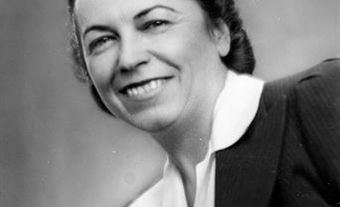
Diane Loranger (1920–2004)
Diana “Diane” Mary (May) Lally Loranger was the first person to graduate from high school in Red Lake, Ontario, in 1939. She was reportedly the first woman to earn a geology degree from the University of Manitoba and one of just 10 women to graduate in science in her year.
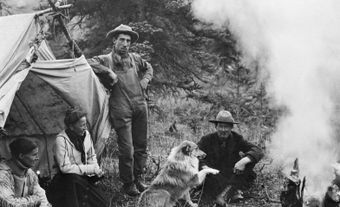
After earning a Bachelor of Science in geology, Loranger began her career in the male-dominated field of petroleum geology as a fieldworker for Imperial Oil. She was one of the first women in Canada to conduct geological fieldwork alongside male colleagues in the 1940s. It was uncommon for women to carry out fieldwork at that time, and Loranger was the first woman geologist to work alongside men in the field in Canada’s oil industry.
One of the first women in the country to work in micropaleontology, her work studying microfossils was instrumental in locating oil fields in Canada.
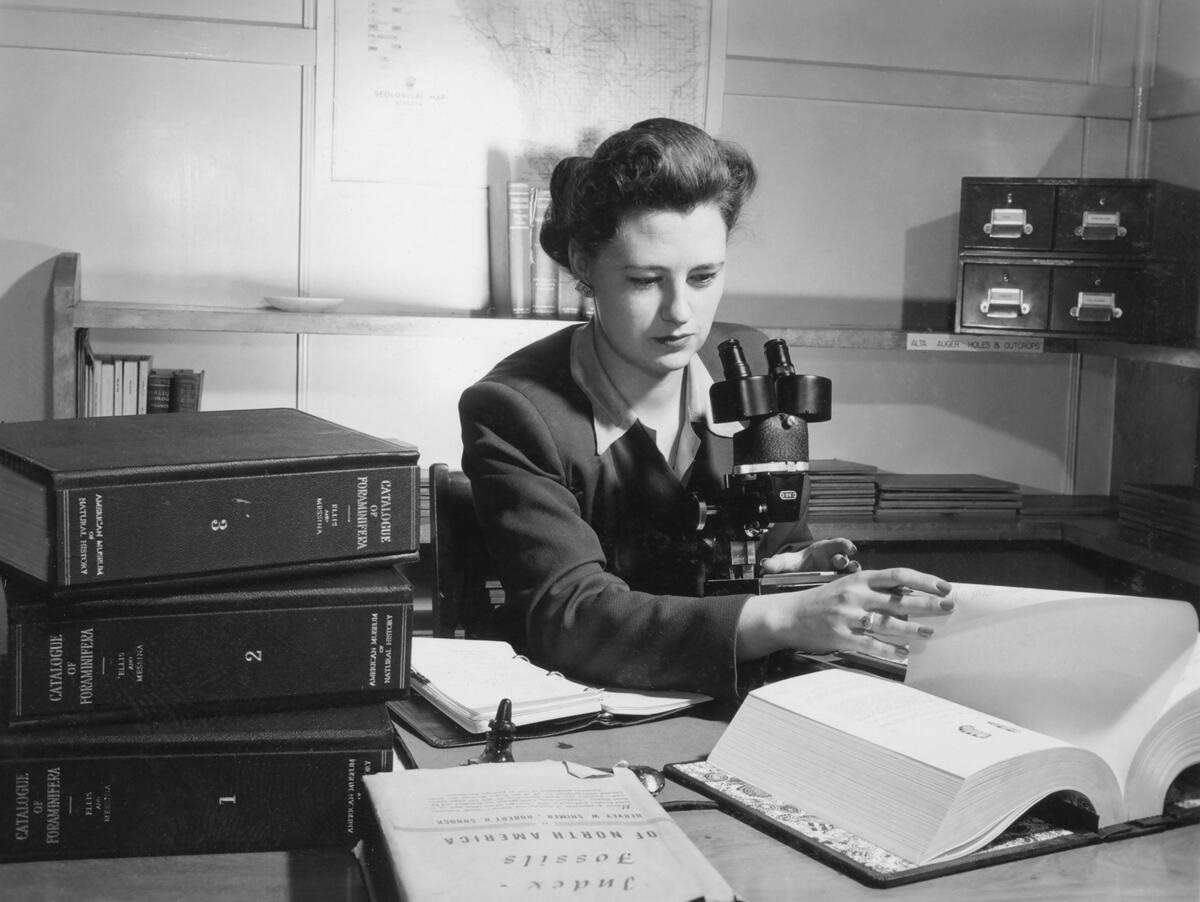
Helen Belyea (1913–1986)
Helen Reynolds Belyea was the only woman in her class at Dalhousie University in 1936. While at Dalhousie, she was president of the Dawson Geology Club.
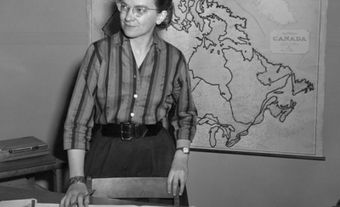
Belyea was the second woman to work for the Geological Survey of Canada, after Alice Wilson. At that time, Belyea was one of the only women geologists at the GSC to work in the field alongside male colleagues. She would remain so until the 1970s. Based out of the Calgary GSC office, Belyea carried out both field and interpretive work and was the only woman to hold a senior scientific post.
She spent the majority of her career in Alberta after the discovery of oil at Leduc. She was a recognized authority on the Devonian geologic system in Western Canada (see Geological History of Canada).
In 1958, she became the first woman to win the Barlow Memorial Medal from the Canadian Institute of Mining, Metallurgy and Petroleum for one of her papers. Her work developing a stratigraphic (the study of rock layers) framework of parts of the southern Northwest Territories was included in a volume of the Geological History of Western Canada. Her book The Story of the Mountains in Banff National Park (1960) was the first in a series of geological pamphlets created for the national park’s interpretation staff.

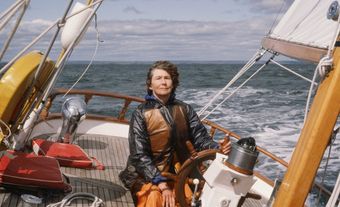
Frances Wagner (1927–2016)
During her master’s degree at the University of Toronto, Frances Joan Estelle Wagner was mentored by Alice Wilson. Later, at Stanford University, Wagner was mentored by A. Myra Keen, a pioneering female scientist and professor who specialized in paleontology and malacology (the study of molluscs).
Wagner became one of the first three women hired by the GSC. In 1950, Wagner and fellow geologist Helen Belyea were the first women allowed to participate in overnight fieldwork.
In the summer of 1965, Wagner joined the crew of the CSS Hudson, a 90 m scientific research ship, to conduct research on the floor of Hudson Bay. This made her one of the first women to conduct research aboard a Canadian government research vessel. Geologist Charlotte Keen had become the first woman to do so when she stowed aboard the ship the year before.
A geologist and a pioneer in micropaleontology, Wagner mapped and dated the geological layers of Canada’s land and oceans by studying microscopic fossils.